Keto Scrambled Eggs with Butter and Chives – The 3-Minute Breakfast
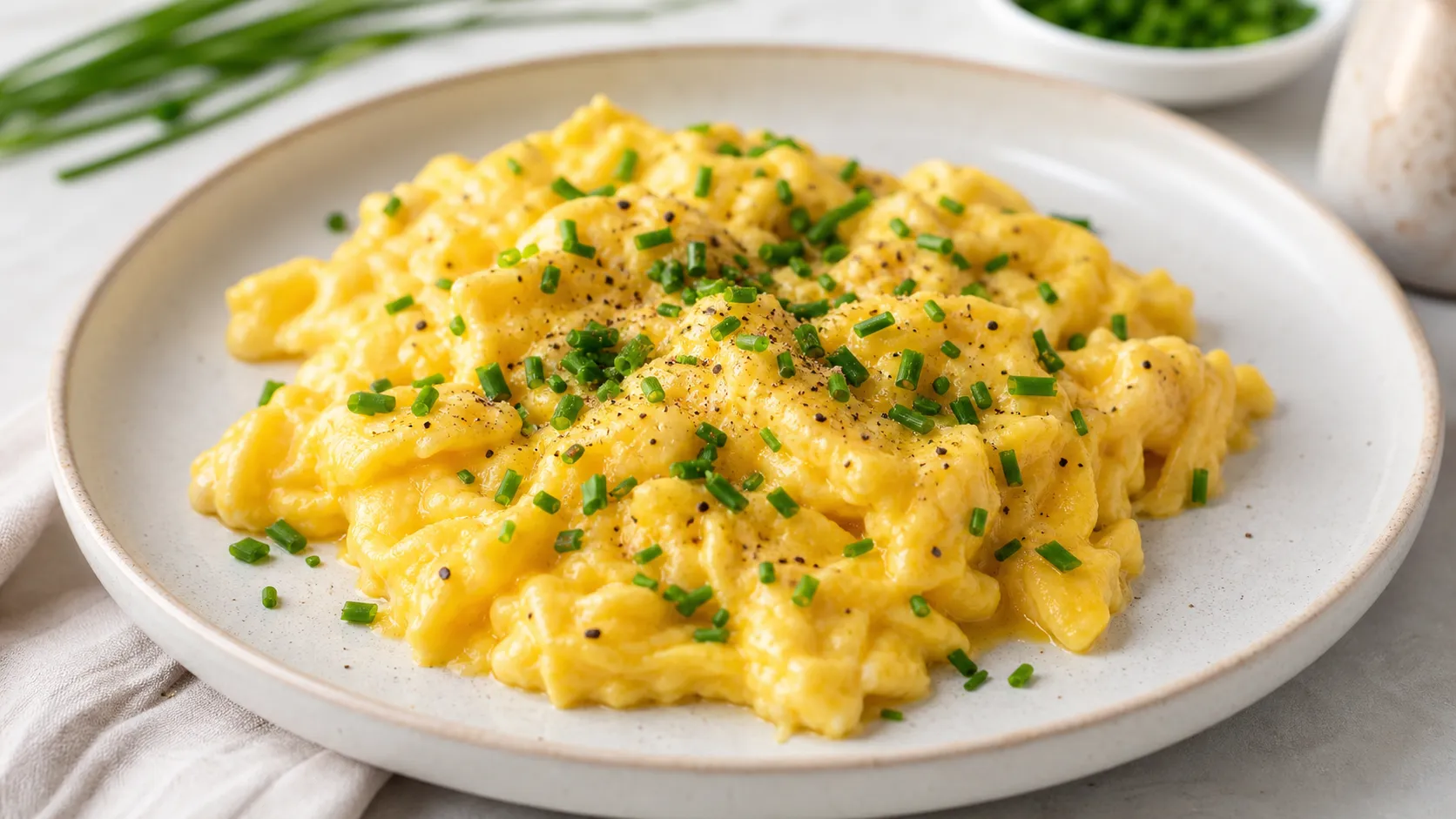
Scrambled eggs with butter and chives is the quintessential keto breakfast classic. In 3 minutes you have a warm, creamy meal on the table – with just 1 g of net carbs and 29 g of fat. No other breakfast is faster, easier, and at the same time as keto-friendly.
Key facts at a glance
- Prep time: approx. 3 minutes – pan, eggs, butter, done.
- Only approx. 1 g net carbs and 29 g fat per serving.
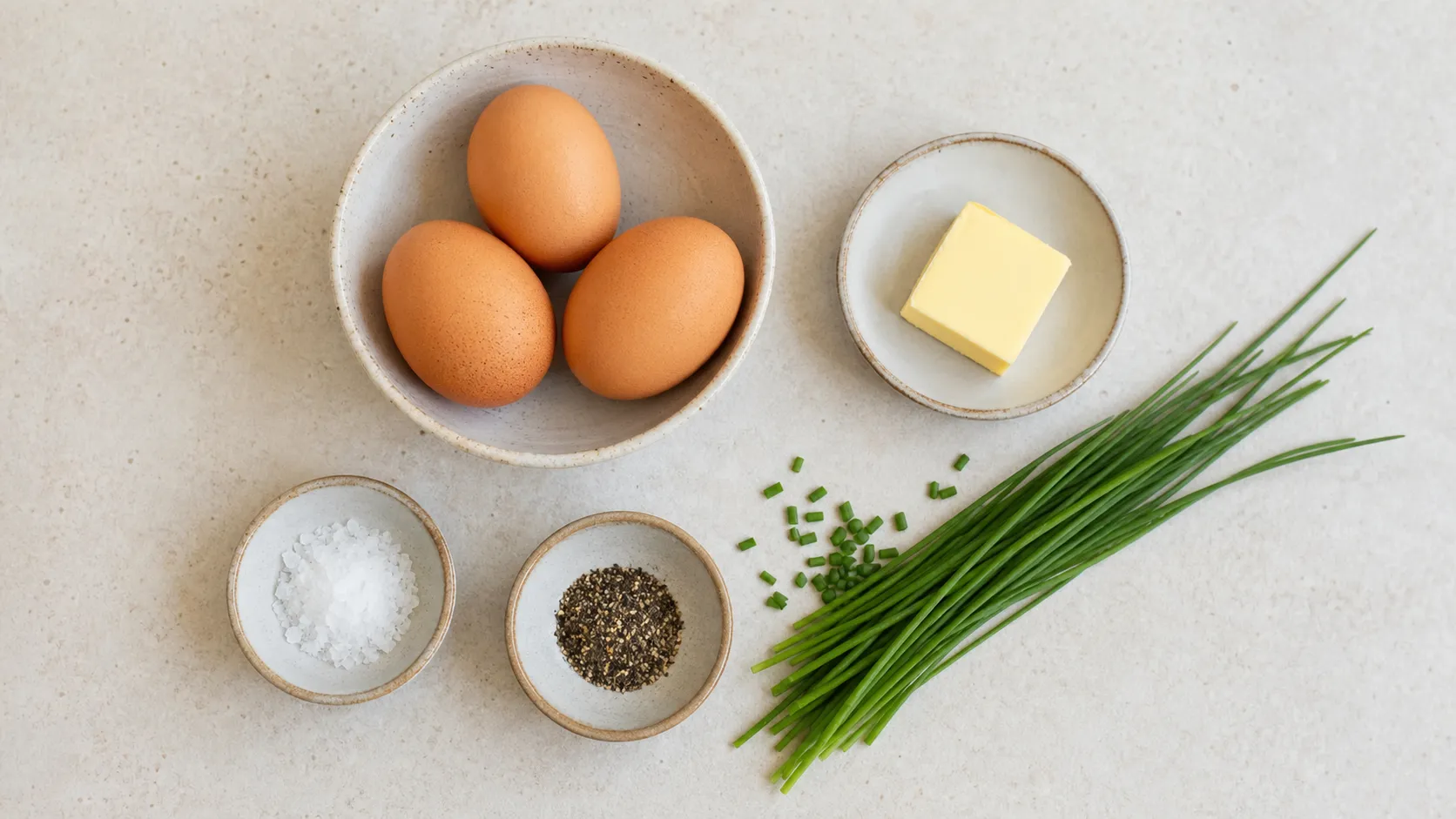
- Ingredients: eggs, butter, chives, salt, pepper.
- Perfect for anyone who wants a warm keto breakfast with minimal effort.
Ingredients
One serving as a warm keto breakfast; if you are very hungry, add a fourth egg or some avocado on the side.
| Amount | Ingredient | Note | ||
|---|---|---|---|---|
| Eggs | - | |||
| Butter | - | |||
| Chives | 1 tbsp, chopped | |||
| 1 tbsp, chopped | ||||
| Salt | to taste | |||
| to taste | ||||
| Pepper | to taste | |||
| to taste | ||||
Preparation
-
Melt the butter
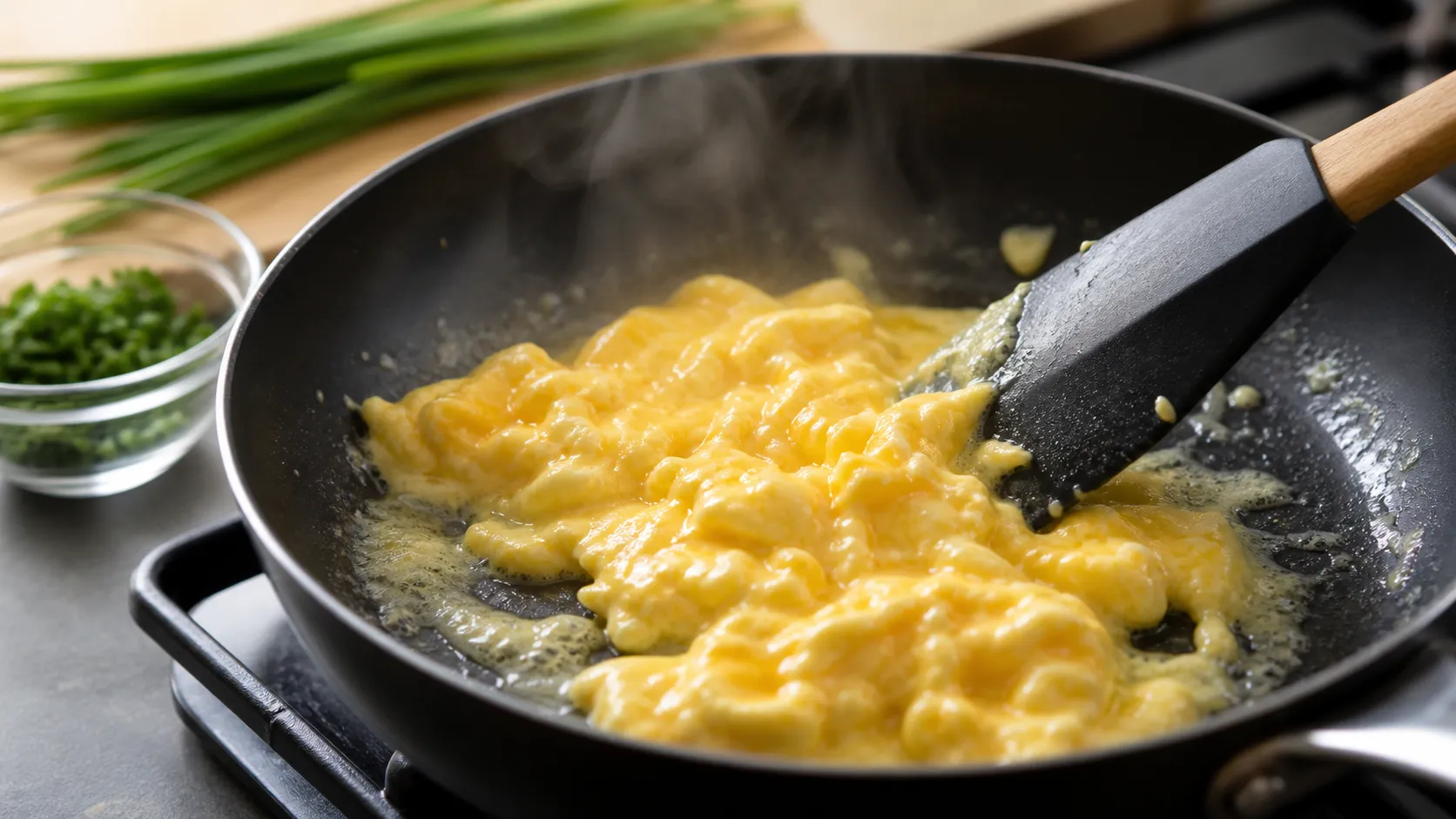
approx. 30 seconds15 g Butter Melt the butter (15 g) in a non-stick pan over medium to low heat.
-
Set the eggs
approx. 2 minutes3 piece Eggs 0.5 tsp Salt to taste Briefly whisk the eggs (3 pieces), season lightly with salt, and pour into the pan. Stir slowly with a spatula until the eggs are creamy and just set – the goal is large, soft curds.
-
Serve
approx. 30 seconds5 g Chives 1 tbsp, chopped 0.3 tsp Pepper to taste Take the pan off the heat, slide the scrambled eggs onto a plate, and top with chopped chives (1 tbsp) and freshly ground pepper.
Which tips make scrambled eggs perfect?
- Use low to medium heat – too hot makes the eggs dry and rubbery.
- Melt the butter first, then add the eggs; the eggs should gently set, not fry.
- Stir slowly, not constantly; a few large strokes produce bigger, creamier curds.
- Take the pan off the heat half a minute early – the residual heat finishes the eggs.
- Add the chives at the very end so they stay fresh.
Why butter scrambled eggs are the perfect keto start
Eggs may be the single best keto food: one egg delivers about 5 g of fat and 6 g of protein with less than 0.5 g of carbs. With 15 g of butter, the fat content rises to around 29 g per serving without raising carbs in any meaningful way – butter contains virtually zero carbs. Per serving you end up with a macro profile of 29 g fat, 21 g protein, and just 1 g net carbs. That beats nearly every other warm breakfast: a scrambled egg sandwich on toast would add 25 to 30 g of carbs from the bread alone. The combination of fat and protein keeps you full for several hours because it slows gastric emptying and keeps insulin levels low.
Source: USDA FoodData Central – Eggs
Butter as a keto fat source
Butter is around 82% fat, most of it saturated. On a ketogenic diet, butter is one of the most straightforward fat sources – it delivers zero carbs and adds flavor to dishes. Grass-fed butter additionally contains slightly more vitamin K2 and omega-3 fatty acids than conventional butter.
Source: Harvard T.H. Chan – Types of Fat
The nutritional profile of eggs
Beyond fat and protein, eggs also contain choline, vitamin D, vitamin B12, and selenium. The yolk supplies the majority of these micronutrients – which is why on keto you should always use whole eggs, not just the whites.
How do I serve and vary the scrambled eggs?
Slide the scrambled eggs straight from the pan onto your plate, sprinkle chives over the top, and season with freshly ground pepper. From personal experience, I recommend taking the eggs off the heat about half a minute before they look fully done – the residual heat finishes the cooking, and the inside stays creamy instead of drying out.
Scrambled eggs and meal prep
Scrambled eggs are best fresh. Reheated scrambled eggs turn rubbery and lose their creamy texture. If you truly cannot spare 3 minutes in the morning, hard-boil eggs the night before instead – they taste just as good cold.
Quick variations with little extra effort
For variety: stirring in 1 tbsp of cream cheese makes the eggs even creamier. 20 g of shredded cheddar gives a savory melt. Or toss a handful of baby spinach into the pan – it wilts in seconds and adds extra nutrients with zero carbs.
| Nutrient | Per 100 g | Per serving | Keto rating |
|---|---|---|---|
| Calories | approx. 210 kcal | approx. 350 kcal | Filling warm meal; almost all energy comes from fat and protein. |
| Fat | approx. 17 g | approx. 29 g | High fat content from butter and yolk – ideal for keto. |
| Net carbs | approx. 0.6 g | approx. 1 g | Extremely low; one of the lowest-carb warm breakfasts. |
| Sugar | approx. 0.3 g | approx. 0.5 g | Minimal; eggs contain hardly any sugar. |
| Protein | approx. 13 g | approx. 21 g | Solid protein value; add a fourth egg for more protein. |
| Salt | approx. 0.5 g | approx. 0.8 g | Low; salt to taste. |
FAQ
Are scrambled eggs the best keto breakfast?
They are one of the best: extremely low in carbs, quick to prepare, inexpensive, and versatile. Combined with butter, the fat-to-protein ratio is nearly perfect for keto.
How many eggs can I eat per day on keto?
Most keto followers eat 2 to 4 eggs per day. Studies show that eating up to 3 eggs daily does not negatively affect blood lipid levels in most people.
Should I use grass-fed or regular butter?
Both work for keto. Grass-fed butter has a slightly better fatty acid profile and more vitamin K2, but it is more expensive. For the macros, it makes no difference.
Can I prepare scrambled eggs the night before?
Not recommended – reheated scrambled eggs turn rubbery. Instead, hard-boil eggs the night before and eat them cold if you cannot spare 3 minutes in the morning.