Eggs: The Powerhouse of Keto Nutrition
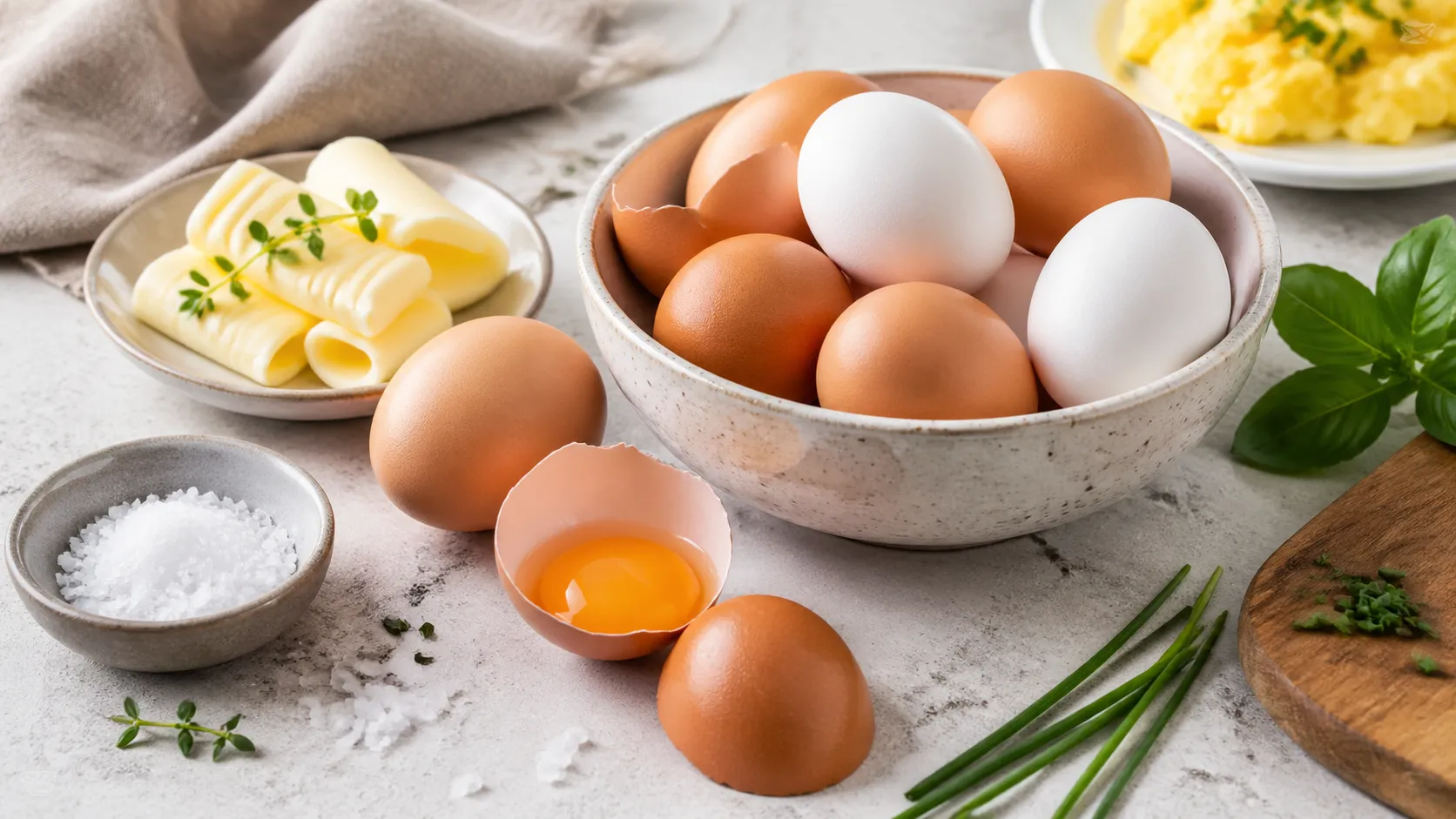
Eggs are one of the most nutrient-dense packages in the keto kitchen: a medium egg (about 50 g) provides, according to USDA FoodData Central, roughly 0.4 g of carbs, 6 g of protein, 5 g of fat and 70 kcal (USDA). Per 100 g of egg mass that adds up to 0.6 g of net carbs, 11.9 g of protein and 9.5 g of fat. Eggs contain all nine essential amino acids, are the highest-quality natural protein source (PDCAAS score 1.0) and deliver vitamin D, B12, choline and lutein. A comprehensive BMJ meta-analysis also showed that egg consumption in healthy individuals is not associated with an increased risk of cardiovascular disease (BMJ, 2020).
Is it recommended for keto?
Eggs are among the most highly recommended keto foods because they are extremely nutrient-dense and versatile. A medium egg supplies just 0.4 g of net carbs alongside 6 g of high-quality protein and 5 g of fat (USDA FoodData Central). That means a breakfast of 3 eggs and 30 g of butter already hits 18 g of protein, 17 g of fat and under 2 g of carbs, a perfect keto profile. Eggs are also the only natural food source that delivers all 9 essential amino acids in optimal ratios (PDCAAS score 1.0). Pro tip: Eggs are ideal for an 'egg fast', a short-term diet variation lasting 3 to 5 days based almost exclusively on eggs, butter and cheese. This method is used to break weight-loss plateaus or quickly deepen ketosis. Important: at least 6 to 8 eggs per day plus plenty of water and electrolytes.
What pairs well with it?
Eggs go perfectly with all high-fat keto companions. Avocado adds another 15 g of healthy fats and is the ideal partner for 2 eggs in a filling breakfast with under 8 g of net carbs. With salmon (smoked or pan-seared) it becomes an omega-3-rich meal with 30 g of protein per serving. A classic combination is bacon and eggs: 100 g of bacon plus 3 eggs deliver around 40 g of fat and 25 g of protein at under 2 g of carbs. Cheese in the form of cheddar, Gouda or alpine cheese further boosts the profile. With spinach and eggs you get a classic frittata or Florentine-style dish. Asparagus season from May to June offers a perfect combo with poached egg and hollandaise. In keto baking, eggs are an indispensable binder: keto bread, cloud bread, keto pancakes or keto waffles are all based on eggs as the main ingredient. A loaf or pancake batch easily uses 4 to 6 eggs.
Pros & cons of organic
With eggs, going for organic or pasture-raised really pays off, both nutritionally and ethically. Pros: Organic eggs (code 0) and free-range eggs (code 1) show a clearly better nutrient profile: up to twice as much vitamin D, three times as much vitamin E, significantly more omega-3 fatty acids and a healthier omega-6 to omega-3 ratio (often 2:1 instead of 15:1 in caged eggs). Beta-carotene content is also higher, recognizable by the deeper yellow-orange tone of the yolk. Brands such as Demeter eggs go beyond the EU organic standard with mother-bonded rearing and a complete ban on male chick culling. Cons: Organic eggs cost 0.40 to 0.80 euros each compared to 0.20 to 0.30 euros for barn-raised eggs. With a keto consumption of 4 to 6 eggs per day, that adds up. Compared to industrial meat, however, organic eggs remain one of the cheapest organic protein sources per gram of high-quality protein.
Intolerances & allergens
Eggs are one of the most common food allergens, especially in children. About 2 percent of infants and 0.5 percent of adults react allergically, often to the egg white protein ovomucoid. A hen's egg allergy is serious and requires complete avoidance, including processed products containing eggs. Baking alternative: A flax egg (1 tablespoon of ground flaxseed plus 3 tablespoons of water, soaked for 10 minutes) replaces 1 egg in many recipes, though with a different nutrient profile and without the protein boost. A chia egg works similarly. With yolk intolerance but tolerance to egg whites (rare but possible), egg white powder or pure egg white products can be used. Salmonella risk from raw eggs is very low in modern hygiene standards, but pregnant women, small children and immunocompromised individuals should still avoid raw eggs (in mayonnaise, tiramisu). Pasteurized egg products are a safe alternative.
Where to buy online or locally?
The best source for organic eggs is buying directly from a regional farmer or farm shop. There you can often see animal husbandry with your own eyes and get very fresh eggs, sometimes still warm. Prices: Direct farmers sell organic free-range eggs for 0.40 to 0.60 euros each. In supermarkets you'll find top-quality organic eggs from brands like Alnatura, Demeter, Bioland or store labels such as 'Edeka Bio' and 'Rewe Bio' (0.50 to 0.80 euros each). Organic delivery services such as Oekokiste or Etepetete deliver to your door. Watch for the stamp: 0 stands for organic (KAT organic association), 1 for free-range, 2 for barn-raised, 3 for caged (only small-group housing is still permitted). Code 0 or 1 are the only recommended options. Store eggs at 4 to 7 degrees Celsius in the fridge; unwashed they keep for 4 to 6 weeks. Freshness test: a fresh egg sinks in a glass of water, an old one floats.
Best keto recipes with it
- Keto bread (German bread) (Breakfast / Savory) - View recipe
- Breakfast waffles with avocado (Breakfast) - View recipe
- Shrimp scrambled eggs (Lunch / Dinner) - View recipe
Nutrition values
| Nutrient | Per 100 g |
|---|---|
| Net carbs | 0.6 g |
| Fat | 9.5 g |
| Protein | 11.9 g |
| Calories | 137 kcal |
FAQ
How many eggs can I eat per day on keto?
There is no scientifically established upper limit for healthy individuals. A BMJ meta-analysis with over 215,000 participants showed that even higher egg consumption is not associated with increased cardiovascular risk (<a href="https://www.bmj.com/content/368/bmj.m513" target="_blank" rel="noopener">BMJ, 2020</a>). Most keto followers eat 3 to 6 eggs daily without any issues. With diagnosed familial hypercholesterolemia, individual medical advice is sensible.
Do eggs raise cholesterol levels?
In most healthy people, blood cholesterol levels barely respond to dietary cholesterol because the body adjusts its own production accordingly. About 25 percent of the population are 'hyper-responders' in whom LDL rises slightly. Even then, the HDL-to-LDL ratio and LDL particle size often improve, which is generally considered favorable.
Are white or brown eggs better?
Shell color depends only on the hen breed and has no effect on nutritional value or taste. Far more important are housing conditions (organic preferred) and freshness. A deep orange yolk indicates beta-carotene-rich feed (corn, grass), which is more typical of organic and free-range hens than of barn housing with standard feed.
Keto recipes with Eggs
67 recipes on KetoWizard use Eggs. These put the ingredient front and centre.
Keto Herb Mayonnaise
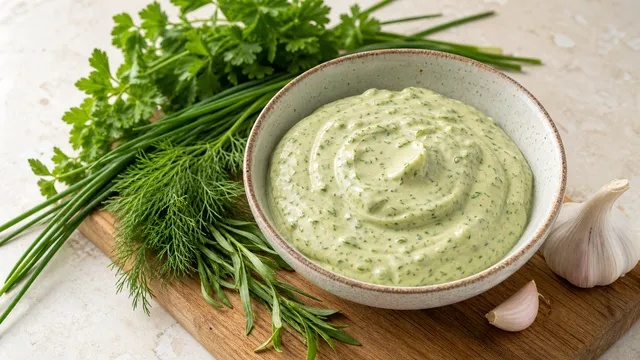
Homemade keto herb mayonnaise: ready in approx. 12 minutes, with only approx. 0.3 g net carbs and 24 g fat per serving, entirely without sugar.

Keto Aioli - Homemade Garlic Mayonnaise
Homemade keto aioli: creamy garlic mayonnaise in approx. 10 minutes, with only approx. 0.3 g net carbs and 26 g fat per serving, without sugar.
Keto Spinach Salmon Frittata with Parmesan
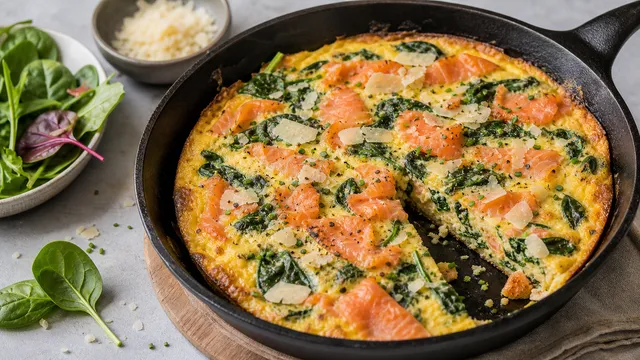
Keto spinach salmon frittata with Parmesan – approx. 2 g net carbs, 19 g fat per serving. Potassium from spinach and salmon, magnesium from spinach, in 30 minutes.

Warm Keto Eggnog with Vanilla (Alcohol-Free)
Creamy warm keto eggnog with egg yolks, cream, and vanilla: 3 g net carbs, 32 g fat, 9 g protein, alcohol-free, sugar-free, ready in 8 minutes.

Keto Egg Muffins with Bacon and Cheddar
Keto egg muffins with bacon and cheddar: approx. 52 g protein, 5 g net carbs and 58 g fat - a hearty keto breakfast from the muffin tin, ready in 20 minutes.
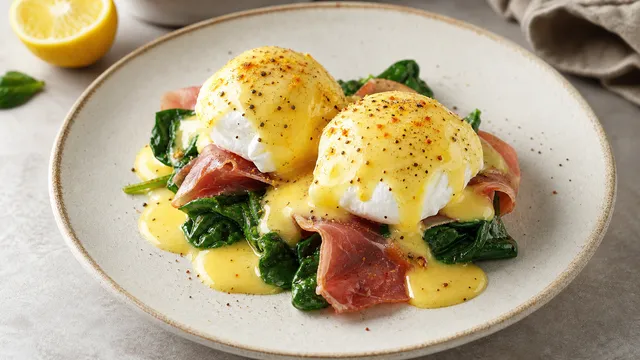
Keto Eggs Benedict with Spinach and Hollandaise Sauce
Keto eggs Benedict with poached egg, baby spinach, serrano ham, and quick hollandaise sauce: just 3 g net carbs and 58 g fat per serving in 30 minutes.
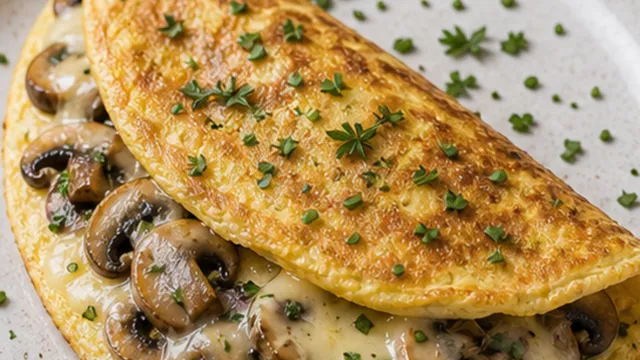
Keto Mushroom Omelet with Gruyère and Herbs
Keto mushroom omelet with Gruyère, chives, and parsley: approx. 3 g net carbs, 32 g fat, and 28 g protein per serving, breakfast in 15 minutes.
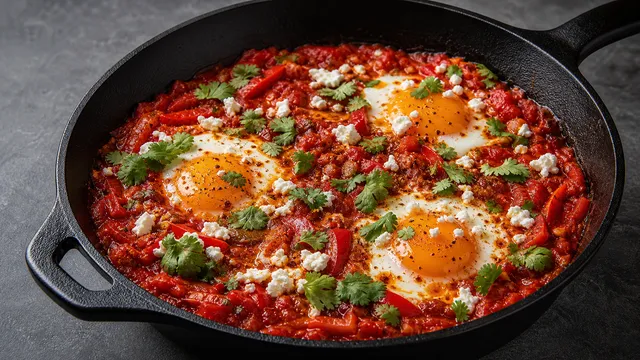
Keto Shakshuka with Harissa
Keto shakshuka with harissa: poached eggs in spicy tomato sauce, 7 g net carbs and 22 g fat per serving - vegetarian and ready in 20 minutes.

Keto Artichoke Frittata with Goat Cheese and Bacon
Keto artichoke frittata with fresh goat cheese, bacon and spinach: approx. 54g protein, 3g net carbs and 50g fat — a Mediterranean keto breakfast from the pan.
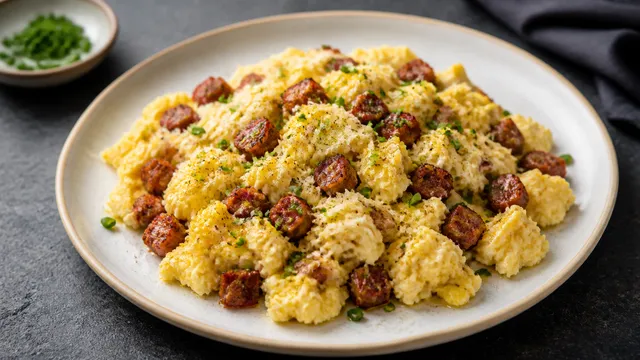
Keto Chorizo Scrambled Eggs with Manchego
Keto chorizo scrambled eggs with Manchego: approx. 52 g protein, 2 g net carbs and 56 g fat. A spicy Spanish-style keto breakfast ready in 11 minutes.

Keto Cloud Bread with Smoked Salmon and Cream Cheese
Light keto cloud bread, no flour, topped with cream cheese, smoked salmon and dill: 2 g net carbs, 22 g fat, 26 g protein. Ready in 30 minutes.
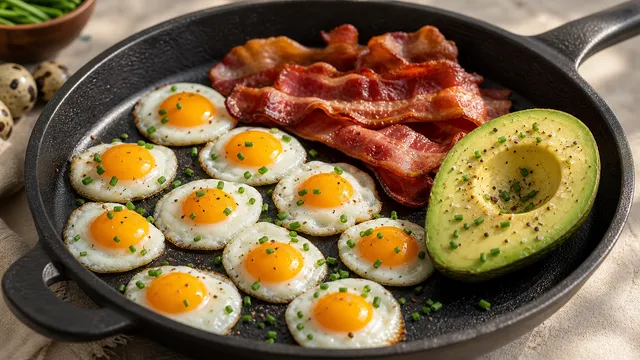
Keto Quail Egg Breakfast with Bacon and Avocado
Keto breakfast with eight quail eggs in butter, crispy bacon and half an avocado: 3 g net carbs, 38 g fat, 26 g protein. Ready in 12 minutes.