Matcha: Concentrated Green Tea Power for Keto
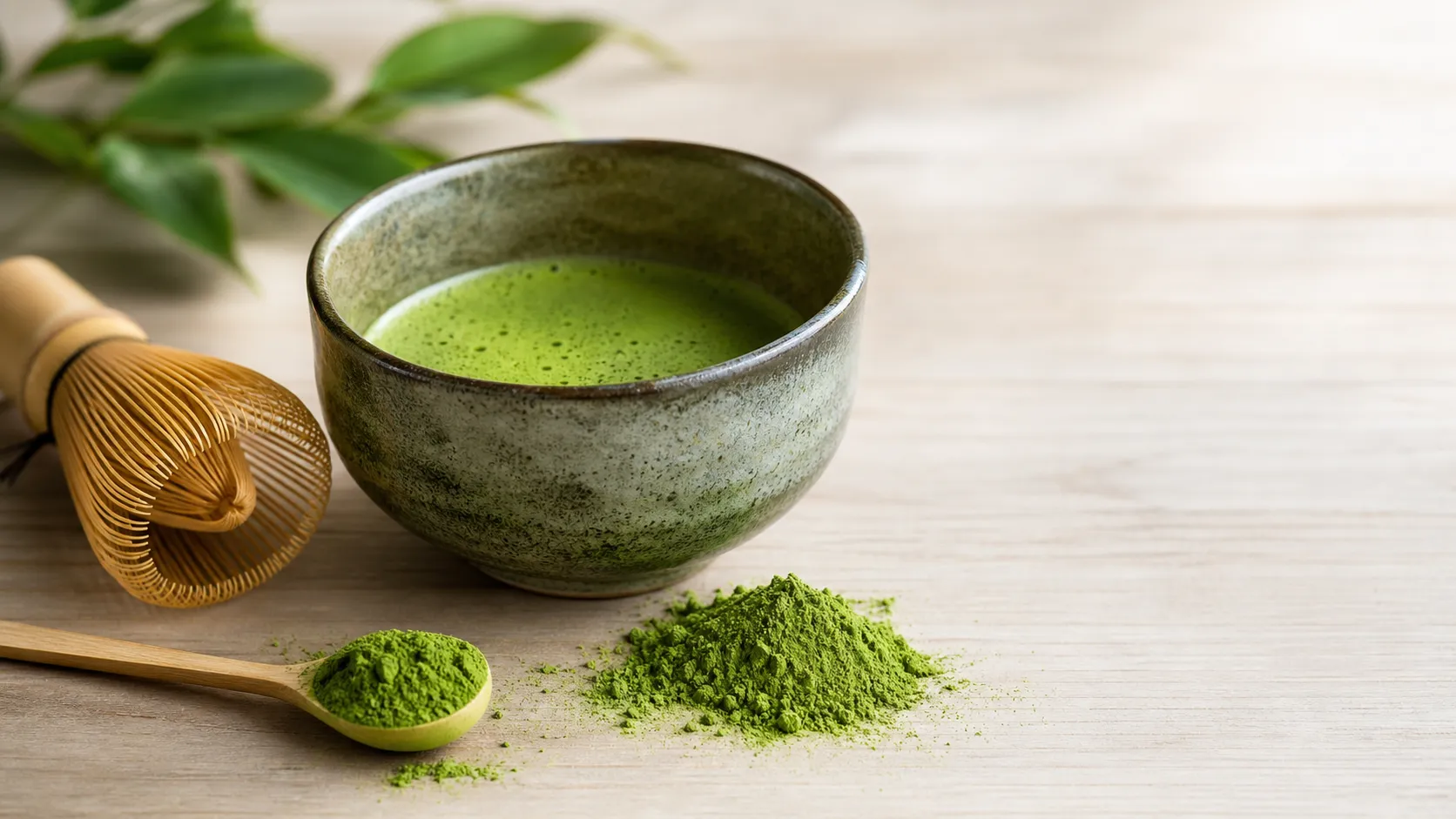
Matcha is finely ground green tea powder made from shaded tea leaves, making it a unique outlier among tea varieties. Unlike regular tea, you drink the whole leaf, which roughly triples the concentration of EGCG, L-theanine and chlorophyll (Harvard T.H. Chan School of Public Health). Per serving (1 to 2 g of powder), matcha provides only about 0.3 g of net carbs, making it fully keto-friendly. The L-theanine in matcha gently buffers the effect of caffeine, so you get 4 to 6 hours of calm, focused alertness without jitters or a crash. For many keto users, matcha becomes the better coffee substitute with a measurable EGCG effect.
Is this recommended for keto?
Matcha is highly recommended on keto. Per serving of 1 to 2 g of powder, you get only about 0.3 g of net carbs, which does not impair ketosis. The EGCG concentration is roughly three times higher than in brewed green tea because you consume the entire ground leaf. Caffeine content is 60 to 70 mg per serving, comparable to half a cup of coffee. Unlike coffee, however, the caffeine acts more evenly and without nervousness thanks to the L-theanine present at the same time (around 20 mg per serving). One study showed that the combination of caffeine and L-theanine improves attention and cognitive performance. EGCG itself has been linked to increased fat oxidation (Venables et al., Am J Clin Nutr 2008). As a keto latte with cream, coconut cream or almond milk, matcha turns into a creamy indulgent drink. Brand recommendation: For the highest quality, choose Japanese organic matcha from Uji, Nishio or Kagoshima. Brands such as Aiya, Ippodo, Marukyu Koyamaen, Matcha Tea or Tea Mountains offer ceremonial grade. For daily drinking, culinary grade from Pukka, Lebensbaum or Bio-Wagner is sufficient.
What pairs well with it?
Matcha unfolds its full potential as a keto latte with coconut cream, heavy cream or unsweetened almond milk, sweetened with erythritol. The warm, slightly bitter aroma harmonizes perfectly with creamy textures. For a breakfast energy booster: matcha latte with a tablespoon of MCT oil or coconut oil, which provides hours of satiety. In keto smoothies with avocado, almond milk and erythritol, matcha creates a nutrient-rich drink with healthy fat and antioxidants. As a flavoring, matcha works excellently in keto desserts: matcha mousse with mascarpone and cream, matcha fat bombs with coconut oil and erythritol, matcha chia pudding with almond milk or matcha ice cream from frozen cream. Even in savory applications matcha works: a pinch in salad dressing or over grilled chicken adds an umami, slightly bitter note. Traditionally, you drink matcha pure, whisked into a creamy froth with a bamboo whisk (chasen).
Pros & cons of organic
Benefits of organic matcha: With matcha, organic quality is especially important because you consume the entire leaf. Pesticide residues end up unfiltered in your body. Japanese matcha has stricter quality controls in the EU; since Fukushima in particular, heavy metals and radioactivity are tested regularly. Organic farming guarantees pesticide-free processing and sustainable shading with rice straw instead of synthetic nets. Drawbacks: High-quality organic matcha from Japan is expensive; ceremonial grade costs 30 to 60 euros per 30 g. However, a 30 g tin yields about 15 to 30 servings, which puts the price per cup into perspective. Culinary organic matcha from Japan costs 15 to 25 euros per 100 g and is perfectly adequate for lattes and smoothies. Avoid cheap matcha from China under 10 euros per 100 g, which often contains more stems, fewer catechins and higher pesticide levels.
Intolerances & allergens
Matcha contains caffeine (60 to 70 mg per serving) and should be dosed carefully if you are sensitive to caffeine. Thanks to the shading before harvest, matcha has an elevated L-theanine content that gently buffers the effect of caffeine. During pregnancy, limit yourself to a maximum of 1 to 2 servings per day due to caffeine content. Tannins can inhibit iron absorption, so do not drink matcha directly with iron-rich meals. Allergies to matcha are extremely rare; isolated reports of reactions to cha-no-yu components exist.
Where to buy online or locally
You can buy high-quality matcha online from specialized tea retailers (Aiya, Ippodo, Tea Mountains, Matcha Karu), in organic stores or at sushi specialty shops. Always look for Japanese origin with a clear region label (Uji, Nishio, Kagoshima, Shizuoka). Color is a reliable quality indicator: intense, vibrant emerald green signals top quality, while yellowish or brownish green points to inferior or aged stock. Culinary grade is sufficient for lattes and smoothies; ceremonial grade is intended for pure enjoyment. Store matcha airtight in the refrigerator, as the powder is highly sensitive to oxidation. Use within 4 to 6 weeks after opening. Avoid cheap matcha from China under 10 euros per 100 g.
Nutrition values
| Nutrient | Per 100 ml (brewed) |
|---|---|
| Net carbs | 0.3 g (per 1 g of powder) |
| Fat | 0 g |
| Protein | 0.3 g |
| Calories | 3 kcal |
FAQ
How much caffeine does a cup of matcha contain compared with coffee?
A serving of matcha (1 to 2 g of powder) contains 60 to 70 mg of caffeine, while a cup of coffee has 95 to 120 mg. However, thanks to the L-theanine it contains, matcha works more evenly over 4 to 6 hours without the typical coffee crash. The combination of caffeine and L-theanine has been shown to improve concentration and cognitive performance.
Will matcha kick me out of ketosis?
No. A serving of matcha with 1 to 2 g of powder contains only about 0.3 g of net carbs, which does not affect ketosis. Even 3 to 4 cups per day stay well below 2 g of total carbs. With matcha lattes, watch the sweetener (erythritol or stevia instead of sugar) and the milk (cream or coconut cream instead of oat milk).
What is the difference between ceremonial and culinary matcha?
Ceremonial matcha comes from the first harvest in May, is made from the youngest leaves and has the finest, sweet-umami flavor. It is intended for drinking pure (whisked with water). Culinary matcha comes from later harvests, tastes more bitter and is cheaper. It is perfectly suitable for lattes, smoothies and baked goods, but too intense for pure enjoyment.