Handkase in the Wok – Asian Style with Bok Choy, Ginger and Sesame Oil
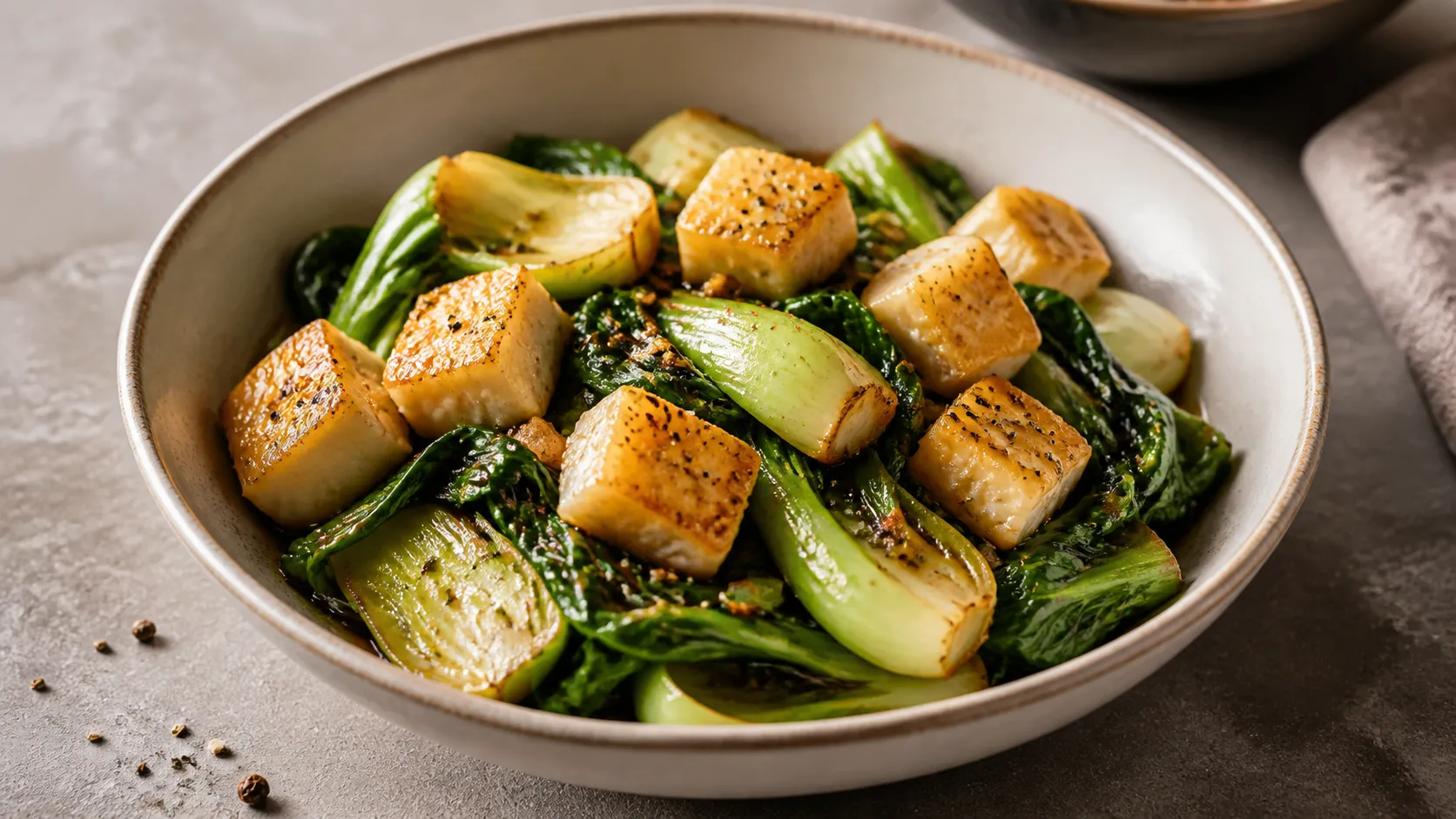
Handkase in the wok is an unexpected combination that works: the diced cheese is briefly seared over high heat, develops a light golden crust and stays creamy inside. Bok choy, ginger and soy sauce turn this Hessian sour-milk cheese into an Asian-inspired keto dish with approx. 3 g net carbs and 16 g fat per serving.
Key points at a glance
- Ready in approx. 16 minutes – stir-fry the vegetables, fold in the handkase at the end.
- Approx. 3 g net carbs and 16 g fat per serving.
- Add the handkase only at the end so it does not melt into the sauce.
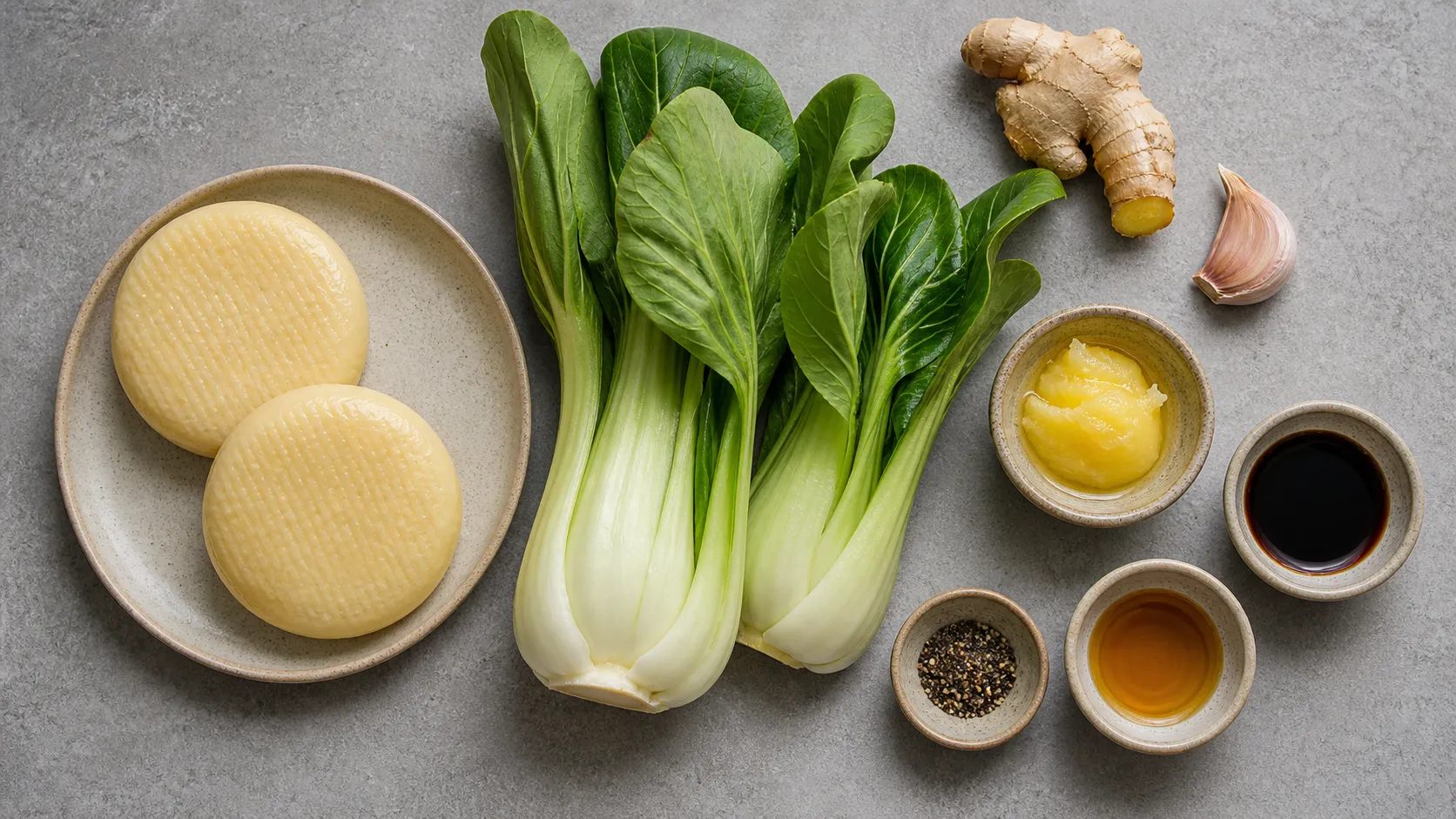
- Ingredients: handkase, bok choy, ginger, garlic, soy sauce, sesame oil.
Ingredients
1 handkase wok portion per person, straight from the wok onto the plate.
| Amount | Ingredient | Note | ||
|---|---|---|---|---|
| Handkase | approx. 60 g each, cut into 2 cm cubes | |||
| approx. 60 g each, cut into 2 cm cubes | ||||
| Bok choy | washed, cut into pieces | |||
| washed, cut into pieces | ||||
| Ginger | freshly grated | |||
| freshly grated | ||||
| Garlic clove | finely chopped | |||
| finely chopped | ||||
| Ghee | approx. 1 tbsp; or refined coconut oil | |||
| approx. 1 tbsp; or refined coconut oil | ||||
| Soy sauce | approx. 1 tbsp | |||
| approx. 1 tbsp | ||||
| Sesame oil | approx. 1 tsp; add at the end | |||
| approx. 1 tsp; add at the end | ||||
| Pepper | - | |||
Preparation
-
Prep
approx. 8 minutes2 piece Handkase approx. 60 g each, cut into 2 cm cubes 200 g Bok choy washed, cut into pieces 1 cm Ginger freshly grated 1 clove Garlic clove finely chopped Cut the handkase (2 x 60 g) into approx. 2 cm cubes. Wash the bok choy (200 g) and cut into bite-sized pieces. Finely chop the garlic and grate the ginger.
-
Stir-fry
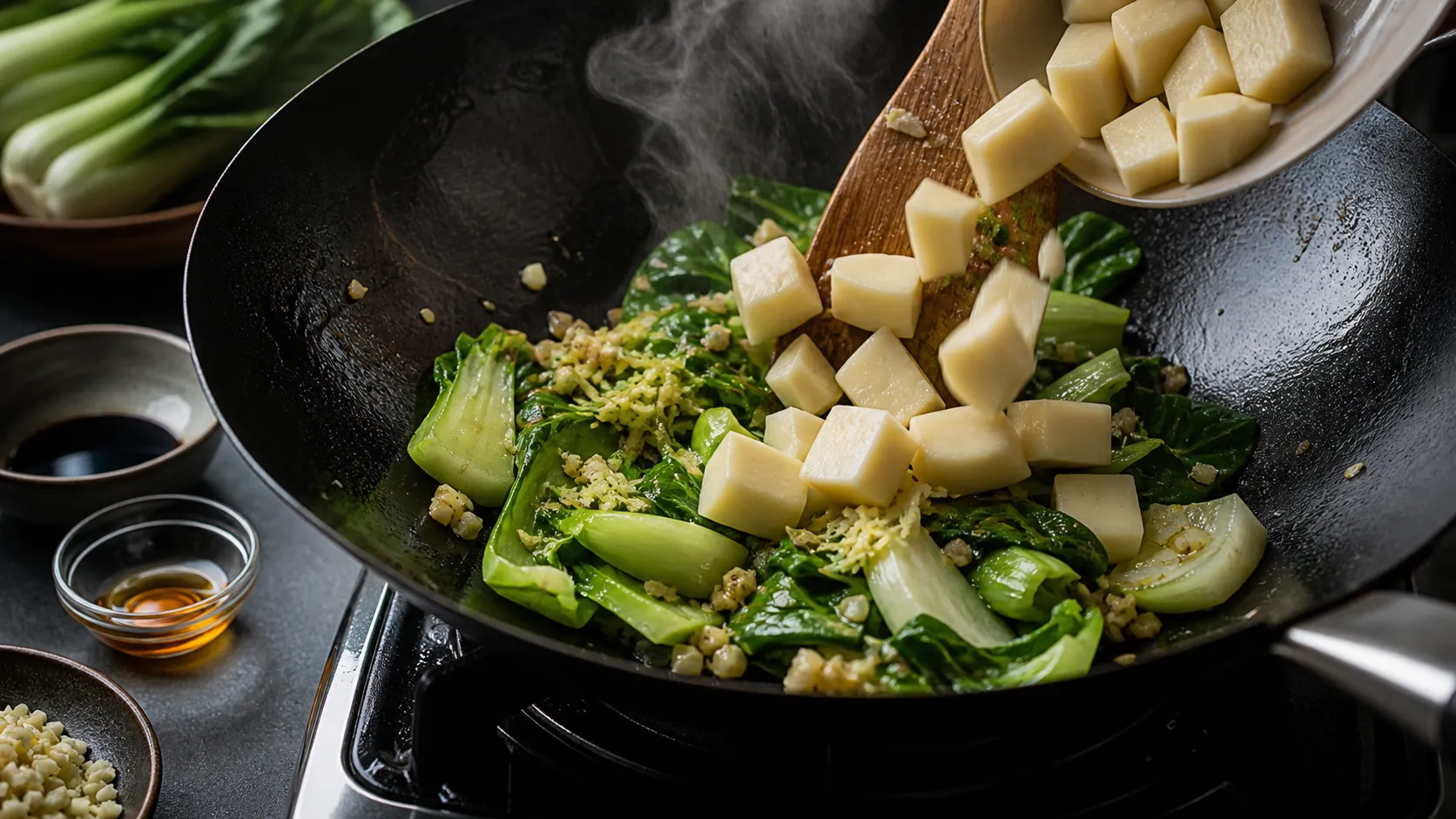
approx. 5 minutes15 ml Ghee approx. 1 tbsp; or refined coconut oil Heat the wok until very hot. Add 1 tbsp ghee, then stir-fry the garlic and ginger for 30 seconds. Add the bok choy and stir-fry over high heat for 3 to 4 minutes until just wilted.
-
Handkase and seasoning
approx. 3 minutes15 ml Soy sauce approx. 1 tbsp 5 ml Sesame oil approx. 1 tsp; add at the end 1 pinch Pepper Gently add the handkase cubes and sear for 2 minutes, turning carefully. Add 1 tbsp soy sauce and toss. Remove the wok from the heat, stir in 1 tsp sesame oil, season with pepper and serve immediately.
Tips for handkase in the wok
- Heat the wok very hot before adding the oil – the most important rule of wok cooking.
- Cut the handkase into approx. 1.5 to 2 cm cubes so it does not fall apart immediately.
- Add the handkase only 2 minutes before the end – it needs only brief heat.
- Be gentle when turning: the cheese cubes break up if stirred too aggressively.
- Add the sesame oil only at the end – prolonged heat destroys its aroma.
- Serve immediately – handkase turns hard once it cools and loses its creaminess.
Why is handkase wok keto-friendly?
Bok choy contains only about 2 g net carbs per 100 g and is one of the most keto-friendly Asian vegetables. Soy sauce delivers umami at around 6 to 7 g carbs per 100 ml, but with just 1 tbsp per serving that comes to roughly 0.9 g carbs. Sesame oil and ghee provide the fat you need.
Source: FDDB nutrition database – bok choy and soy sauce values
Bok choy: the most keto-friendly leafy green
Bok choy (Chinese white cabbage) contains roughly 2.2 g net carbs, 1.5 g protein and around 13 kcal per 100 g – one of the lowest-carb vegetables overall. It also supplies vitamin K, vitamin C and folate.
Why add the handkase only at the end?
Handkase becomes very soft when heated and falls apart if it stays in the wok too long. Once the vegetables are almost done, the cheese cubes go in, sear briefly (approx. 1 to 2 minutes) and are served right away. That way they keep their shape and develop a light golden crust.
How can I vary the handkase wok?
Shiitake mushrooms, zucchini julienne, bean sprouts or bamboo shoots (canned, rinsed) also work well. For more protein, top the handkase with a fried egg.
Variation: with miso paste instead of soy sauce
Dissolve 1 tsp shiro miso in 2 tbsp water and use as the sauce – it adds a deeper, more umami-rich note. Miso contains about 5 g carbs per 100 g, so 1 tsp adds roughly 0.3 g carbs extra per serving.
Variation: scrambled-egg handkase wok
Beat 2 eggs and add them to the wok just before the handkase, let them set, then fold in the cheese. The result is a higher-protein, more complete keto main.
Nutrition values
| Nutrient | Per 100 g | Per serving | Keto rating |
|---|---|---|---|
| Calories | approx. 115 kcal | approx. 295 kcal | Moderate. Balanced keto dish with vegetables. |
| Moderate. Balanced keto dish with vegetables. | |||
| Fat | approx. 6.2 g | approx. 16 g | Good for keto. Sesame oil, ghee and handkase supply the fat. |
| Good for keto. Sesame oil, ghee and handkase supply the fat. | |||
| Net carbs | approx. 1.2 g | approx. 3 g | Good for keto. Bok choy and soy sauce are the main carb sources. |
| Good for keto. Bok choy and soy sauce are the main carb sources. | |||
| Sugar | approx. 0.9 g | approx. 2.5 g | Low. No added sugar. |
| Low. No added sugar. | |||
| Protein | approx. 6.3 g | approx. 16 g | Very good. Handkase and bok choy create a balanced protein profile. |
| Very good. Handkase and bok choy create a balanced protein profile. | |||
| Salt | approx. 0.9 g | approx. 2.2 g | Moderate to high. Soy sauce and handkase are both salty. |
| Moderate to high. Soy sauce and handkase are both salty. | |||
Note: Nutrition values are estimated averages per 100 g and per serving and may vary depending on ingredients, brands, portion size, and preparation. They do not replace individual nutrition or medical advice.
FAQ
Which oil is best for handkase in the wok?
Ghee or refined coconut oil have the highest smoke points (approx. 230 and 200 C respectively) and are perfect for the high temperatures of a wok. Extra virgin olive oil has too low a smoke point for hard stir-frying – it is better for moderate searing. Always add sesame oil only at the end, for flavour.
Can I substitute handkase in the wok?
Halloumi is the most obvious alternative – it has more structure and falls apart less. Feta can also be heated briefly, but crumbles more easily. Compared to halloumi, handkase contributes a milder, slightly tangy note thanks to its protein-rich character.
What can I use instead of bok choy?
Keto-friendly alternatives: napa cabbage (approx. 3 g carbs/100 g), pak choi (identical to bok choy), baby spinach (approx. 1.5 g carbs/100 g, cook briefly), zucchini (approx. 2.4 g carbs/100 g). All work well in wok dishes.
Is this recipe suitable for beginners?
Yes, with one caveat: the critical element is the timing of when the handkase goes in. Too early = it dissolves completely into the sauce. Too late = no golden crust. Two minutes before serving is ideal.