Keto for Beginners
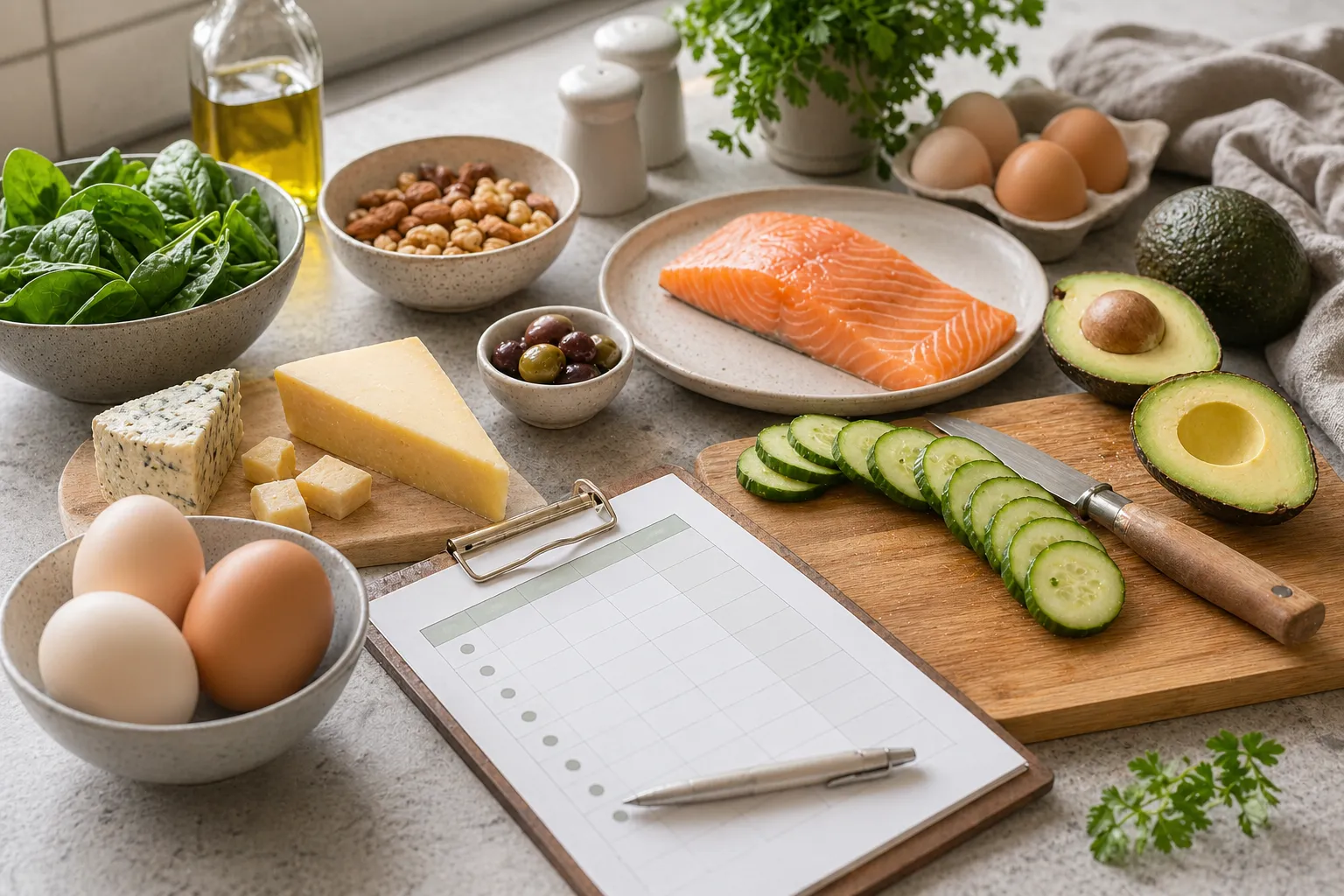
Starting keto is easier when you focus on food choices first instead of trying to perfect every macro on day one. Most successful beginners begin by reducing the four biggest carbohydrate sources (bread, pasta, rice, and sugary drinks) before worrying about ketone strips or net-carb math. A typical beginner target is 20 to 50 grams of net carbs per day, with meals built around protein, low-carb vegetables, and a practical fat source like olive oil or butter. Expect a one to two week adaptation period during which energy and sleep may dip before stabilizing, and plan for electrolyte support (sodium, potassium, magnesium) from day one. This guide covers the simple food rules, beginner macros, common mistakes, and a practical first-week structure.
Quick answer
A beginner keto diet usually keeps carbohydrates low enough that your body starts using more fat for energy. Most people begin by reducing bread, pasta, rice, sweets, and sugary drinks while building meals around protein, low-carb vegetables, and healthy fats.
How to start
Start with simple meals, track net carbs for the first week, drink enough fluids, and keep easy low-carb foods available.
Common beginner mistakes
The most common mistakes are eating hidden carbs, underestimating electrolytes, relying only on packaged keto snacks, and expecting weight loss to be perfectly linear.
Starter foods
- eggs
- chicken
- salmon
- avocado
- spinach
- olive oil
| Food | Use | Net carbs |
|---|---|---|
| Eggs | Breakfast or quick meal | Low |
| Spinach | Side dish or salad | Low |
| Avocado | Fat source | Low |
FAQ
How long does it take to get into ketosis?
Many people need a few days of consistent low-carb eating, but timing varies based on carb intake, activity level, and individual metabolism.
Do beginners need keto supplements?
Most beginners do not need special keto supplements. Electrolytes can be useful for some people, but food quality and consistency matter more.