Keto Tuna Egg Salad – Protein Breakfast in 3 Minutes
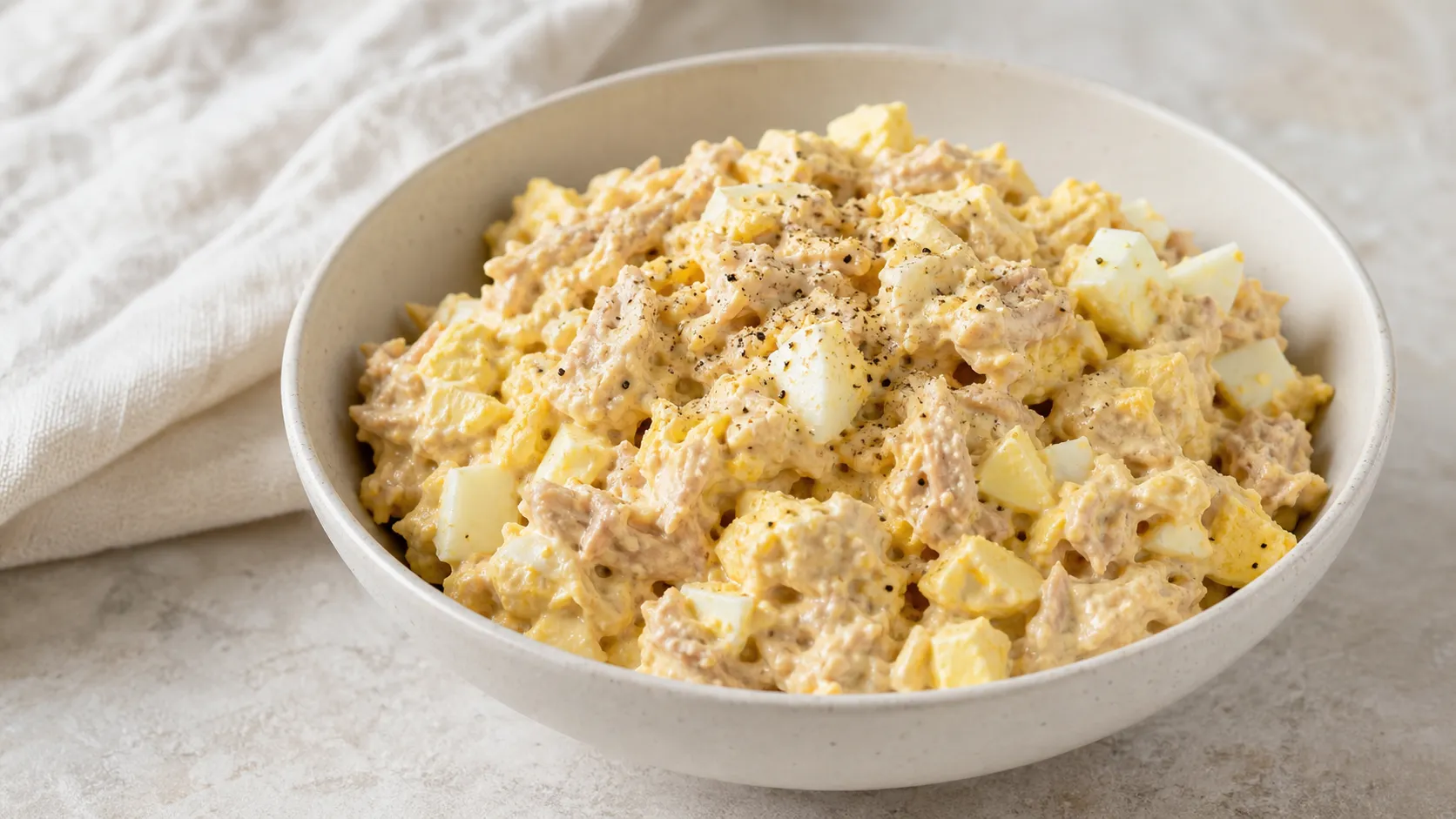
This keto tuna egg salad delivers 35 g of protein with just 1 g of net carbs and is on the table in 3 minutes. A can of tuna, a hard-boiled egg, a little mayo and mustard – keto breakfast doesn't get cheaper or faster than this.
Key facts at a glance
- Prep time: approx. 3 minutes – open the can, chop the egg, mix.
- 35 g protein and just 1 g net carbs, 22 g fat per serving.
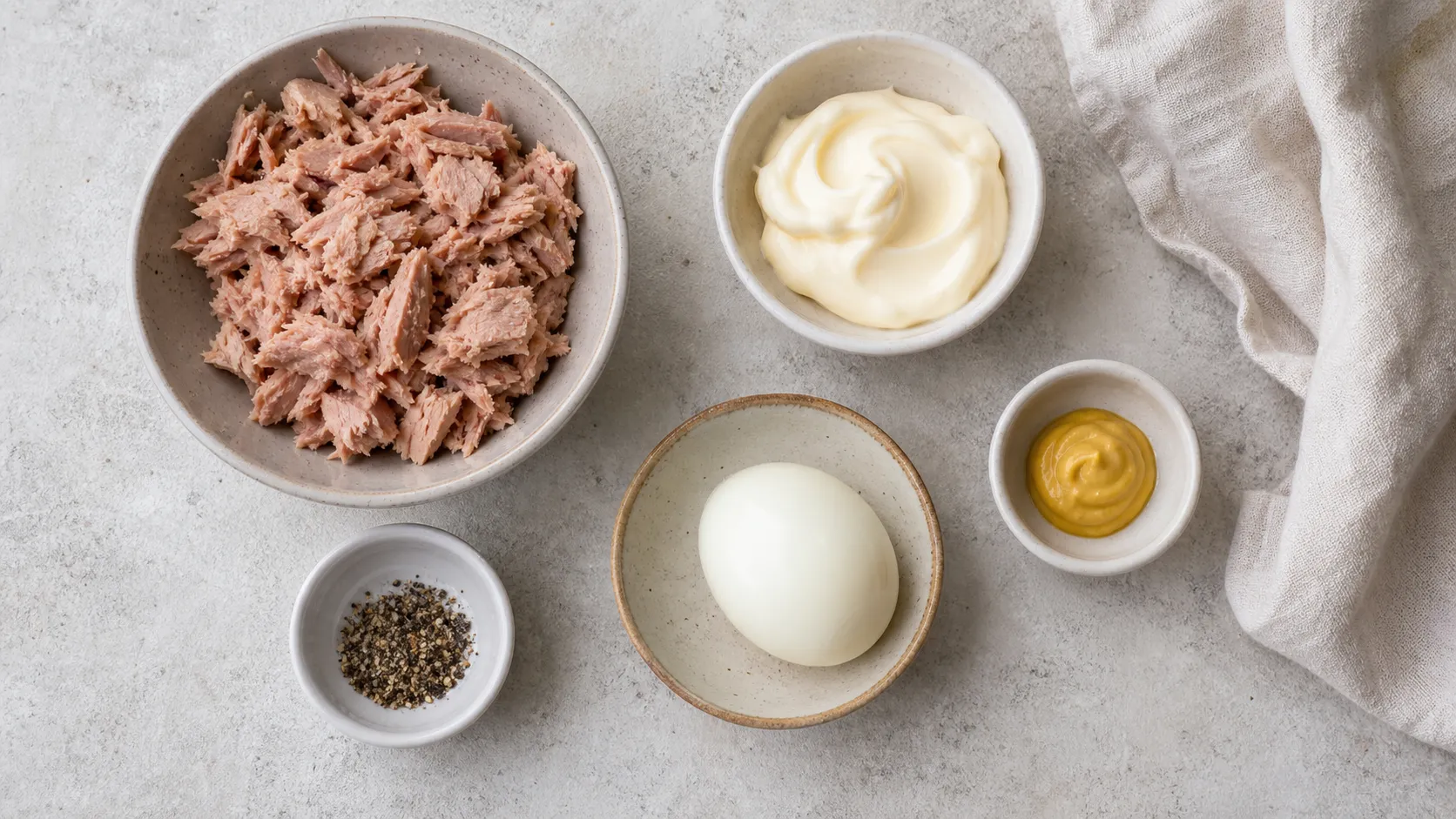
- Ingredients: canned tuna, hard-boiled egg, mayonnaise, mustard, pepper.
- Ideal for anyone who wants a protein-rich, affordable keto breakfast with zero effort.
Ingredients
One serving as a protein-rich keto breakfast; very filling thanks to the high protein.
| Amount | Ingredient | Note | ||
|---|---|---|---|---|
| tuna in its own juice | drained weight, 1 can | |||
| drained weight, 1 can | ||||
| hard-boiled egg | - | |||
| mayonnaise | approx. 15 g | |||
| approx. 15 g | ||||
| mustard | - | |||
| pepper | to taste | |||
| to taste | ||||
Preparation
-
Prepare the tuna
approx. 30 seconds150 g tuna in its own juice drained weight, 1 can Tip the tuna (150 g drained weight) from the can into a sieve, let it drain, and transfer to a bowl.
-
Chop the egg and combine
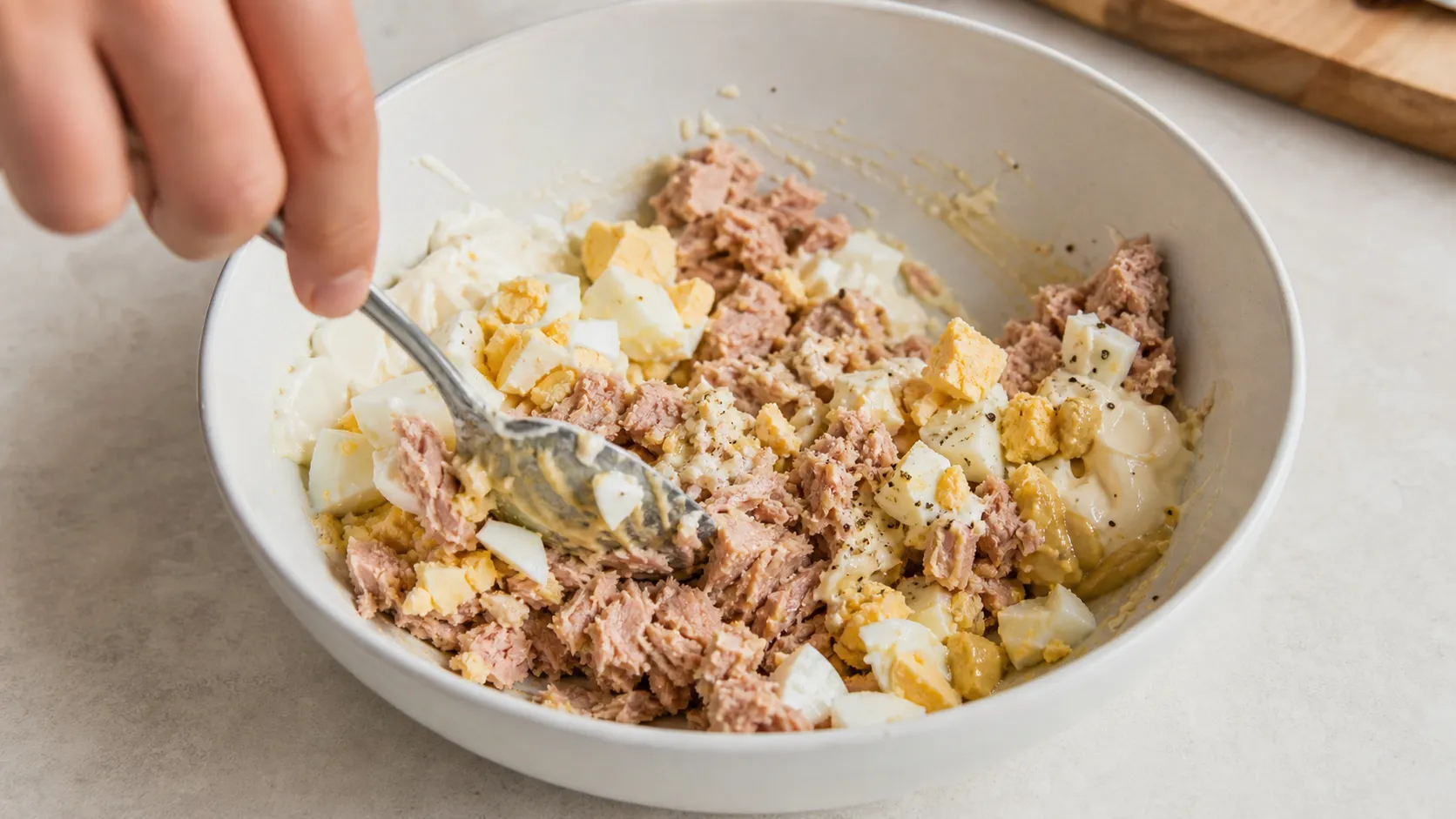
approx. 2 minutes1 piece hard-boiled egg 1 tbsp mayonnaise approx. 15 g 1 tsp mustard 0.3 tsp pepper to taste Peel the hard-boiled egg and chop into rough pieces. Combine with the tuna, mayonnaise (1 tbsp, approx. 15 g) and mustard (1 tsp). Season with pepper.
-
Serve
approx. 30 secondsEat straight from the bowl or arrange on lettuce leaves.
Which tips make the salad even better?
- Drain tuna in its own juice well; use tuna in olive oil for extra fat.
- Choose mayo without sugar or sunflower oil – avocado oil mayo is a good option.
- A squeeze of lemon juice adds freshness and lifts the fish flavor.
- Finely diced pickle or capers add acidity and bite.
- For a spicy twist: stir in a little sriracha or Tabasco.
Why this salad is an ideal keto breakfast
Canned tuna is one of the most protein-dense foods with the lowest carb content: 150 g of drained tuna in its own juice delivers roughly 39 g of protein and practically zero carbs. With one egg and a tablespoon of mayo, you land at a macro profile of around 35 g protein, 22 g fat and only 1 g net carbs per serving. The high protein-to-fat ratio makes this salad especially satiating. Compared with a tuna sandwich, which climbs to 30 to 40 g of carbs thanks to the wheat roll, this version skips almost all the carbs. If you want to push the fat higher, swap tuna in its own juice for tuna in olive oil – that adds roughly 8 to 10 g of extra fat per serving.
Source: FDDB Nutrition Database – Tuna in its own juice
Tuna as a protein source
Tuna is one of the most protein-rich fish and also supplies omega-3 fatty acids, selenium and vitamin D. Per 100 g it contains around 26 g of protein – noticeably more than most meats. For a ketogenic diet that's a plus, because adequate protein supports muscle maintenance without raising carb intake.
Mayonnaise as a keto fat source
Mayonnaise is roughly 75 to 80 % fat and has practically no carbs. For keto it's a no-fuss fat source. Check the ingredient list: quality mayo contains egg, oil, mustard and vinegar – with no added sugar or starch.
How do I serve and vary the salad?
Eat the salad straight from the bowl, on lettuce leaves as wraps, or spoon it into a halved avocado. From experience I recommend draining the tuna thoroughly – too much liquid waters down the salad and the mayo won't bind properly.
Meal prep and taking it to go
Mix the salad in 3 minutes in the morning and take it to work in a sealed container. It keeps well chilled until lunch. Boil eggs over the weekend; canned tuna keeps unrefrigerated for months. That way you always have every ingredient on hand.
If you'd rather skip tuna
Canned salmon works just as well and has a better omega-3 profile. For a fully fish-free version, swap the tuna for diced chicken (leftovers from the day before) or cottage cheese.
Nutrition values
| Nutrient | Per 100 g | Per serving | Keto context |
|---|---|---|---|
| Calories | approx. 147 kcal | approx. 350 kcal | Satiating meal thanks to high protein; fat can be boosted with more mayo or olive oil. |
| Satiating meal thanks to high protein; fat can be boosted with more mayo or olive oil. | |||
| Fat | approx. 9 g | approx. 22 g | From mayo and egg yolk; for more fat use tuna in oil or add extra olive oil. |
| From mayo and egg yolk; for more fat use tuna in oil or add extra olive oil. | |||
| Net carbs | approx. 0.4 g | approx. 1 g | Extremely low – one of the lowest-carb breakfasts you can make. |
| Extremely low – one of the lowest-carb breakfasts you can make. | |||
| Sugar | approx. 0.2 g | approx. 0.5 g | Practically none; neither tuna nor egg contains meaningful sugar. |
| Practically none; neither tuna nor egg contains meaningful sugar. | |||
| Protein | approx. 15 g | approx. 35 g | Very high protein; ideal for muscle maintenance on keto. |
| Very high protein; ideal for muscle maintenance on keto. | |||
| Salt | approx. 0.6 g | approx. 1.4 g | Moderate; canned tuna contributes some salt. |
| Moderate; canned tuna contributes some salt. | |||
Note: Nutrition values are estimated averages per 100 g and per serving and may vary depending on ingredients, brands, portion size, and preparation. They do not replace individual nutrition or medical advice.
FAQ
Is canned tuna suitable for keto?
Yes, canned tuna has practically zero carbs and is one of the most protein-rich keto ingredients. Choose tuna in its own juice for fewer calories or tuna in olive oil for more fat.
How often can I eat tuna per week?
Health authorities recommend limiting larger predatory fish such as tuna to 2 to 3 servings per week because of mercury content. Rotate with other fish or eggs.
Does this salad fit a keto weight-loss plan?
Yes. With 35 g of protein and only 350 kcal, it's especially satiating. The high protein helps preserve muscle mass while you're in a calorie deficit.
Can I prepare the salad the night before?
Yes, in a sealed container it keeps in the fridge for 1 day. Without avocado or fresh herbs, even up to 2 days.