Keto Cottage Cheese Pancakes with Bacon
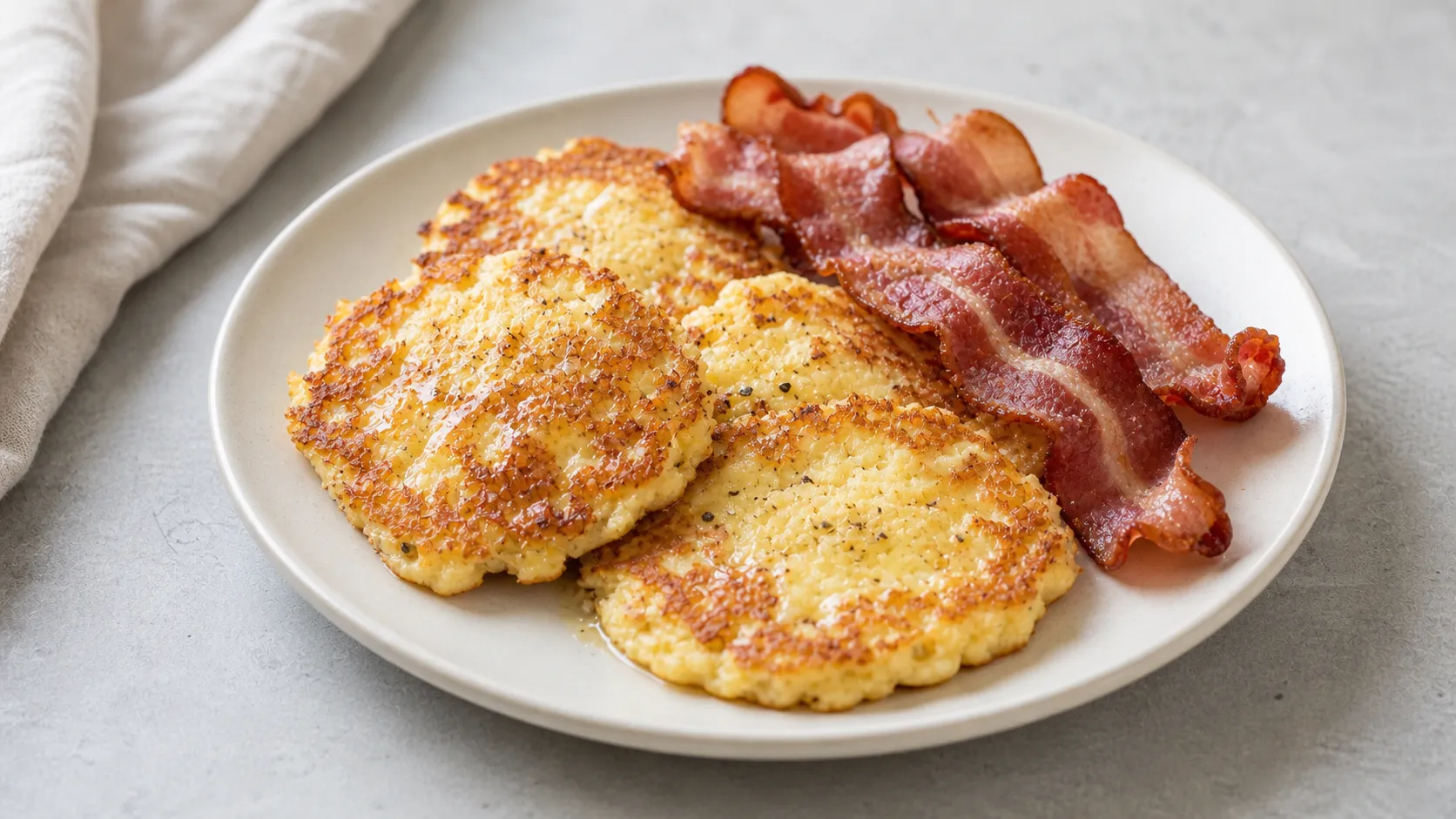
These keto cottage cheese pancakes replace wheat flour with almond flour and get their structure from cottage cheese and eggs. The result is compact, protein-rich pancakes with 56 g protein and only 5 g net carbs per serving – ready in 15 minutes and noticeably more filling than classic pancakes.
Key facts at a glance
- Preparation time: approx. 15 minutes – 5 minutes prep, 10 minutes pan-frying. A quick everyday breakfast.
- Approx. 5 g net carbs and 52 g fat per serving (6 small pancakes).
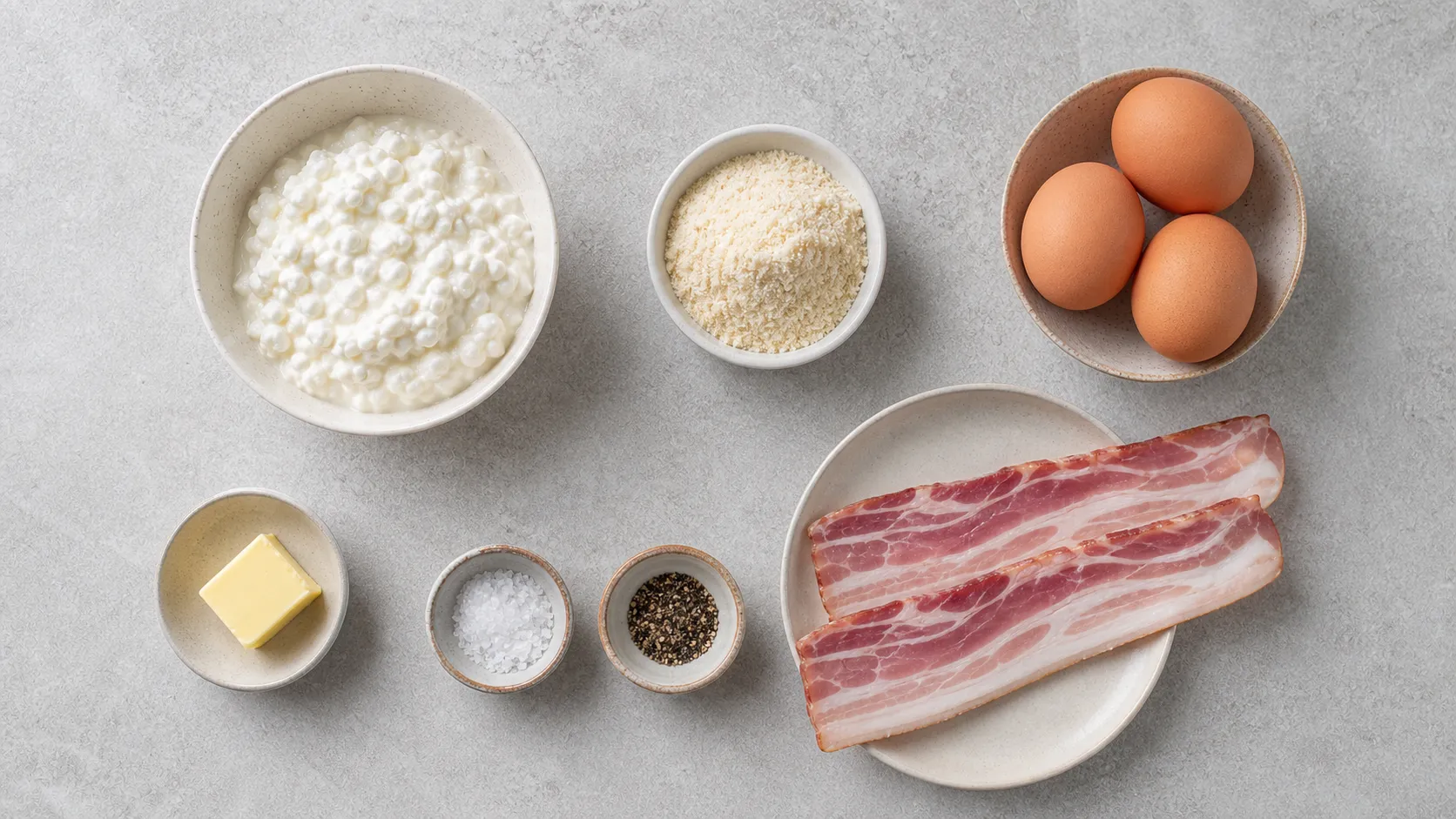
- Ingredients: cottage cheese, eggs, almond flour, breakfast bacon, butter, salt.
- Suitable as a high-protein keto breakfast for meal prep – batter can be prepared a day ahead.
Ingredients
One serving equals 6 small pancakes with bacon – intended as a complete keto breakfast for one adult.
| Amount | Ingredient | Note | ||
|---|---|---|---|---|
| Cottage cheese (4 % fat) | - | |||
| Eggs (M) | - | |||
| Almond flour | - | |||
| Breakfast bacon | approx. 2 slices | |||
| approx. 2 slices | ||||
| Butter | - | |||
| Salt | pinch | |||
| pinch | ||||
| Pepper | to taste | |||
| to taste | ||||
Preparation
-
Mix the batter
approx. 3 minutes200 g Cottage cheese (4 % fat) 3 piece Eggs (M) 40 g Almond flour 1 pinch Salt pinch 0.3 tsp Pepper to taste Whisk cottage cheese (200 g), eggs (3) and almond flour (40 g) in a medium bowl with a fork or whisk until smooth. The batter is thicker than classic pancake batter. Season with a pinch of salt and some pepper.
-
Fry the pancakes
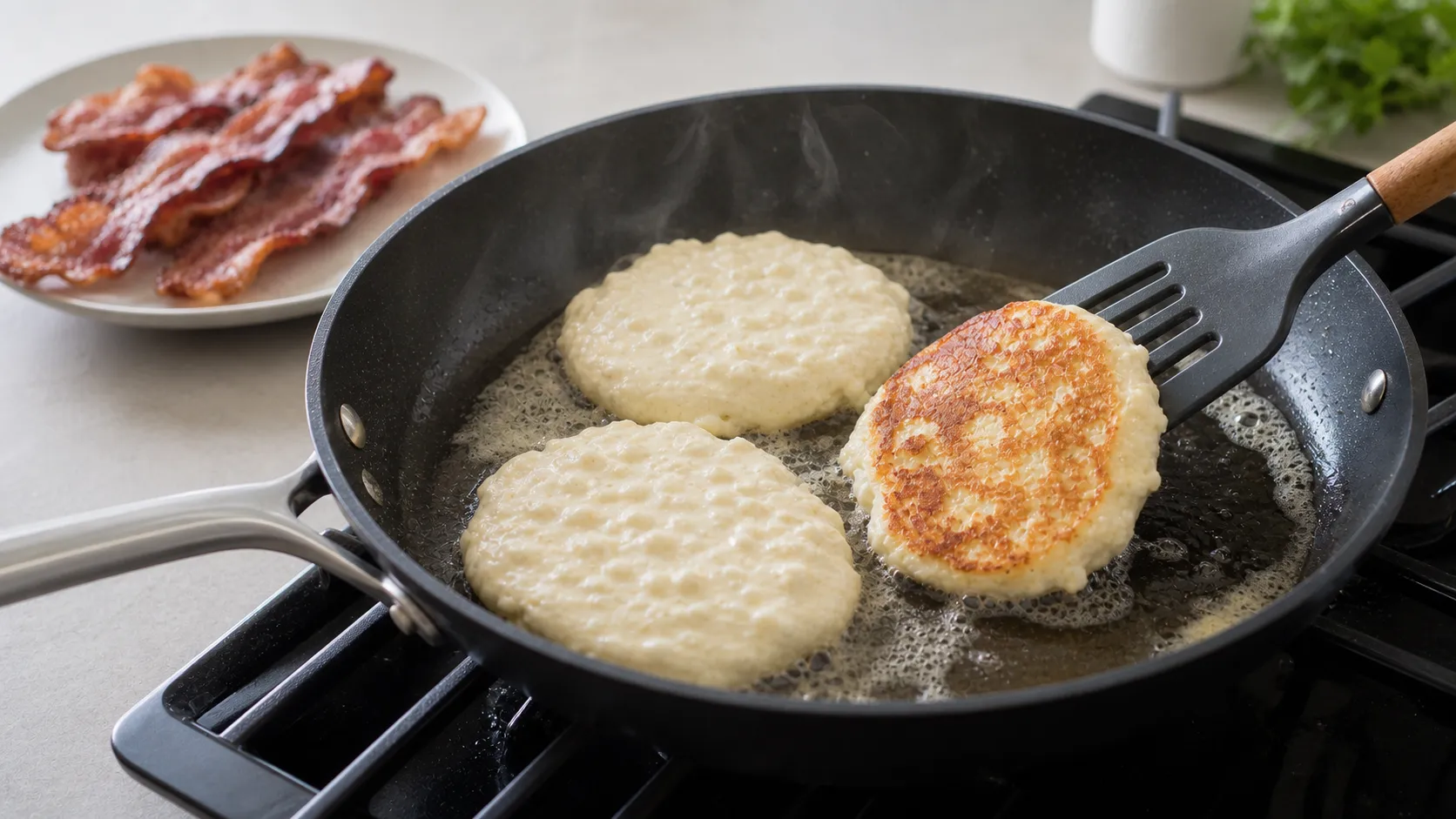
approx. 8 minutes10 g Butter Melt butter (10 g) in a non-stick pan (20–24 cm) over medium heat until it foams lightly. Add about 2 tbsp of batter per pancake to the pan – that gives small pancakes of about 7–8 cm diameter. Press flat slightly. Fry for about 3 minutes until the surface is fully set. Only then flip and fry for another 2–3 minutes until golden brown. Cook in 2 batches.
-
Fry the bacon and serve
approx. 4 minutes40 g Breakfast bacon approx. 2 slices Fry breakfast bacon (40 g) in the same pan over medium to high heat until crispy (approx. 2 minutes per side). Arrange the pancakes on a plate and place the bacon on top. Serve immediately.
Which tips help with keto cottage cheese pancakes?
- Form small pancakes (approx. 2 tbsp batter per piece) – they're easier to flip.
- Preheat the pan over medium heat before the first pancake goes in – heat that's too high burns the outside before the center cooks through.
- Only flip once the surface is completely matte and no liquid spots are visible – approx. 3 minutes.
- Drain the cottage cheese well if there's a lot of liquid on top – too much whey makes the batter too soft.
- For extra flavor: stir 1 tsp dried herbs (thyme, rosemary) or 1 tsp grated Parmesan into the batter.
Why these pancakes work well for keto
A classic wheat-flour pancake (100 g batter) delivers around 20–25 g carbs per piece – two pancakes already exceed the keto daily limit of 20–50 g net carbs. This version replaces wheat flour with almond flour (approx. 4 g net carbs per 100 g) and uses cottage cheese as the protein base. Cottage cheese with 4 % fat provides around 22 g protein per 200 g at only 4 g carbs (mostly lactose). Three eggs add 19.5 g protein and 15 g fat plus virtually no carbs. Almond flour (40 g) contributes a further 8 g protein, 18 g fat and only 3 g net carbs. The breakfast bacon adds around 6 g protein plus fat that seasons the pancakes. In total, one serving comes out to approx. 56 g protein, 52 g fat and 5 g net carbs at approx. 740 kcal – well above the ketogenic protein requirement with minimal carb intake.
Source: USDA FoodData Central – Cottage Cheese, 4% fat , FDDB nutrient database
Cottage cheese as a batter base: why it works
Cottage cheese has a high water content (approx. 80 %) and contains casein and whey protein, which coagulate when heated and give the batter structure. Combined with eggs and almond flour, this creates a batter that can be shaped and flipped in the pan – though it requires a bit more patience than wheat-flour batter. Important: only flip the pancakes once the surface looks completely matte and set (approx. 3 minutes over medium heat), otherwise they will fall apart.
Almond flour instead of wheat flour: carbs and texture
Wheat flour contains around 70 g carbs per 100 g. Almond flour, depending on the product, contains around 4–6 g net carbs per 100 g with a fat content of around 50 g and a protein content of around 20 g. The texture differs: almond-flour pancakes are denser and slightly grainier than wheat-flour pancakes, but hold together well as long as the batter isn't too thin.
How do I serve and vary the cottage cheese pancakes?
Top the pancakes with the crispy bacon right after frying and serve immediately. A dollop of sour cream or crème fraîche pairs well. From my own experience I recommend making the pancakes smaller than you think (approx. 7–8 cm diameter) – they're then much easier to flip without breaking.
Meal prep: preparation and reheating
The batter can be made the evening before and stored covered in the fridge. Finished pancakes keep for 2–3 days in the fridge. To reheat: briefly in the pan over low heat or 30 seconds in the microwave – they lose a bit of crispness but are still enjoyable.
Variation without bacon
Without bacon the protein content drops to approx. 50 g and fat to approx. 42 g. Good substitutes are smoked salmon strips (similar protein level, different flavor profile), pan-fried chicken breast or simply a dollop of cream cheese. For a sweet variation (higher carbs): almond butter and berries instead of bacon.
Nutrition values
| Nutrient | Per 100 g | Per serving | Keto context |
|---|---|---|---|
| Calories | approx. 215 kcal | approx. 740 kcal | A full breakfast; energy comes almost exclusively from protein (cottage cheese, eggs) and fat (almond flour, butter, bacon). |
| A full breakfast; energy comes almost exclusively from protein (cottage cheese, eggs) and fat (almond flour, butter, bacon). | |||
| Fat | approx. 15 g | approx. 52 g | Mostly unsaturated fatty acids from almond flour; saturated fatty acids from butter and bacon round out the fat profile. |
| Mostly unsaturated fatty acids from almond flour; saturated fatty acids from butter and bacon round out the fat profile. | |||
| Net carbs | approx. 1.4 g | approx. 5 g | Very low; comes from almond flour and cottage cheese lactose – well below the ketogenic daily limit of 20–50 g. |
| Very low; comes from almond flour and cottage cheese lactose – well below the ketogenic daily limit of 20–50 g. | |||
| Sugar | approx. 0.8 g | approx. 2.5 g | Natural sugar (lactose) from the cottage cheese; no added sugar. |
| Natural sugar (lactose) from the cottage cheese; no added sugar. | |||
| Protein | approx. 16 g | approx. 56 g | Very high; cottage cheese, eggs and bacon together cover around 37 % of the daily protein requirement for a 75-kg person. |
| Very high; cottage cheese, eggs and bacon together cover around 37 % of the daily protein requirement for a 75-kg person. | |||
| Salt | approx. 0.5 g | approx. 1.7 g | Moderate; bacon contributes the largest share of salt – don't add extra salt before frying. |
| Moderate; bacon contributes the largest share of salt – don't add extra salt before frying. | |||
Note: Nutrition values are estimated averages per 100 g and per serving and may vary depending on ingredients, brands, portion size, and preparation. They do not replace individual nutrition or medical advice.
FAQ
Are cottage cheese pancakes keto-friendly?
Yes. This version without wheat flour has only 5 g net carbs per serving. Classic wheat-flour pancakes deliver 20–25 g carbs per piece – two pancakes would already exceed the keto limit. Cottage cheese is an affordable protein source with few carbs.
Can I replace the cottage cheese?
Ricotta works as a direct substitute with a similar protein level. Cream cheese (200 g) makes the pancakes creamier and richer, but protein drops to around 40 g per serving. Quark (lean) is the highest-protein alternative but makes the batter drier – in that case add 1 tbsp extra olive oil to the batter.
Are these pancakes suitable for weight loss with keto?
Yes – the high protein content (56 g) keeps you full for a long time and reduces cravings. To cut calories: skip the bacon and halve the butter to 5 g – protein stays around 50 g and calories drop to approx. 580 kcal.
Why do my keto pancakes break when I flip them?
Two common causes: either they were too large (over 9 cm diameter), or they were flipped too soon. Only flip once the surface is completely set. A well-greased, preheated pan also helps – dry pans make the batter stick.