Warm Keto Pumpkin Salad with Halloumi, Arugula and Pumpkin Seed Oil
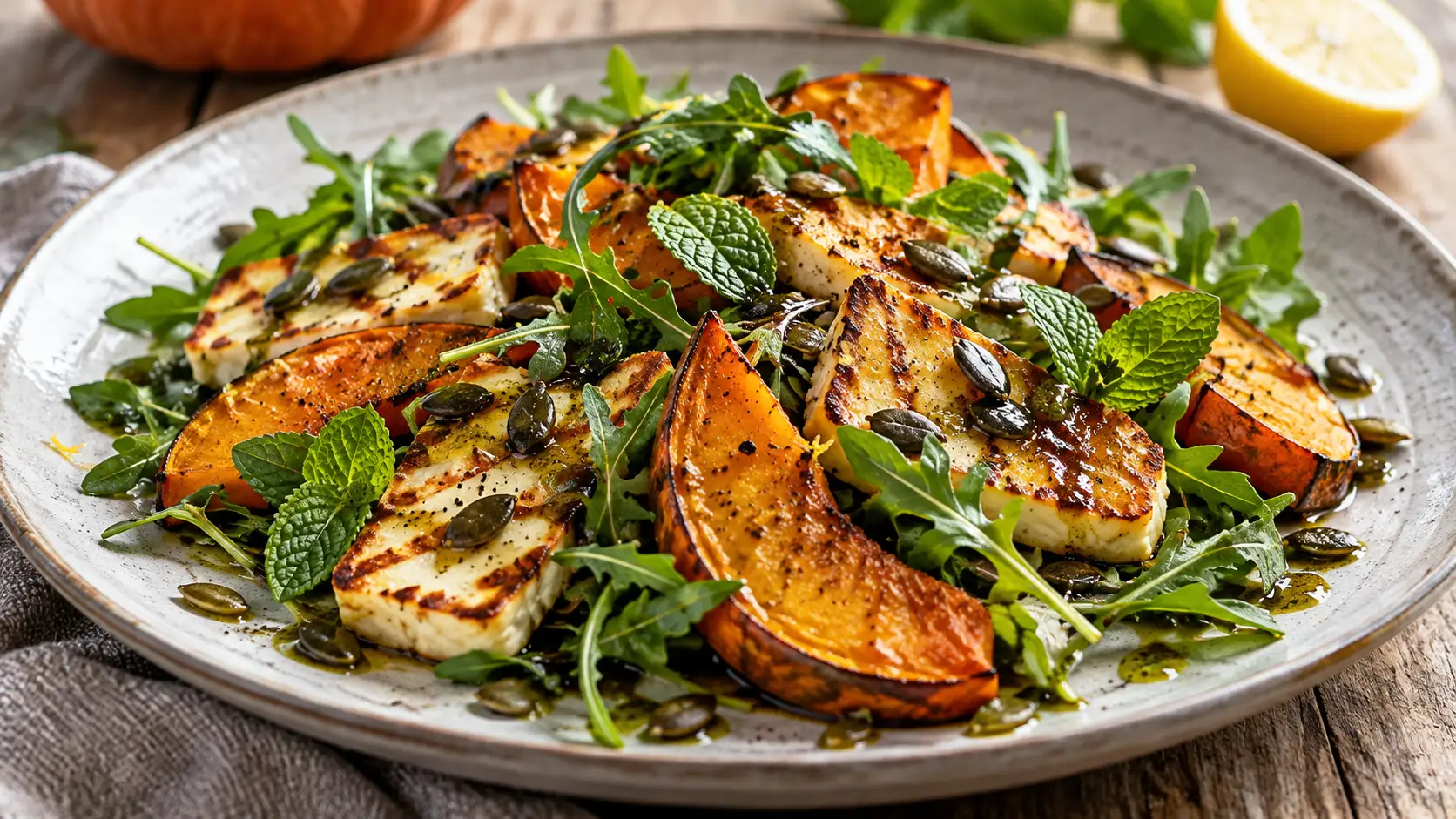
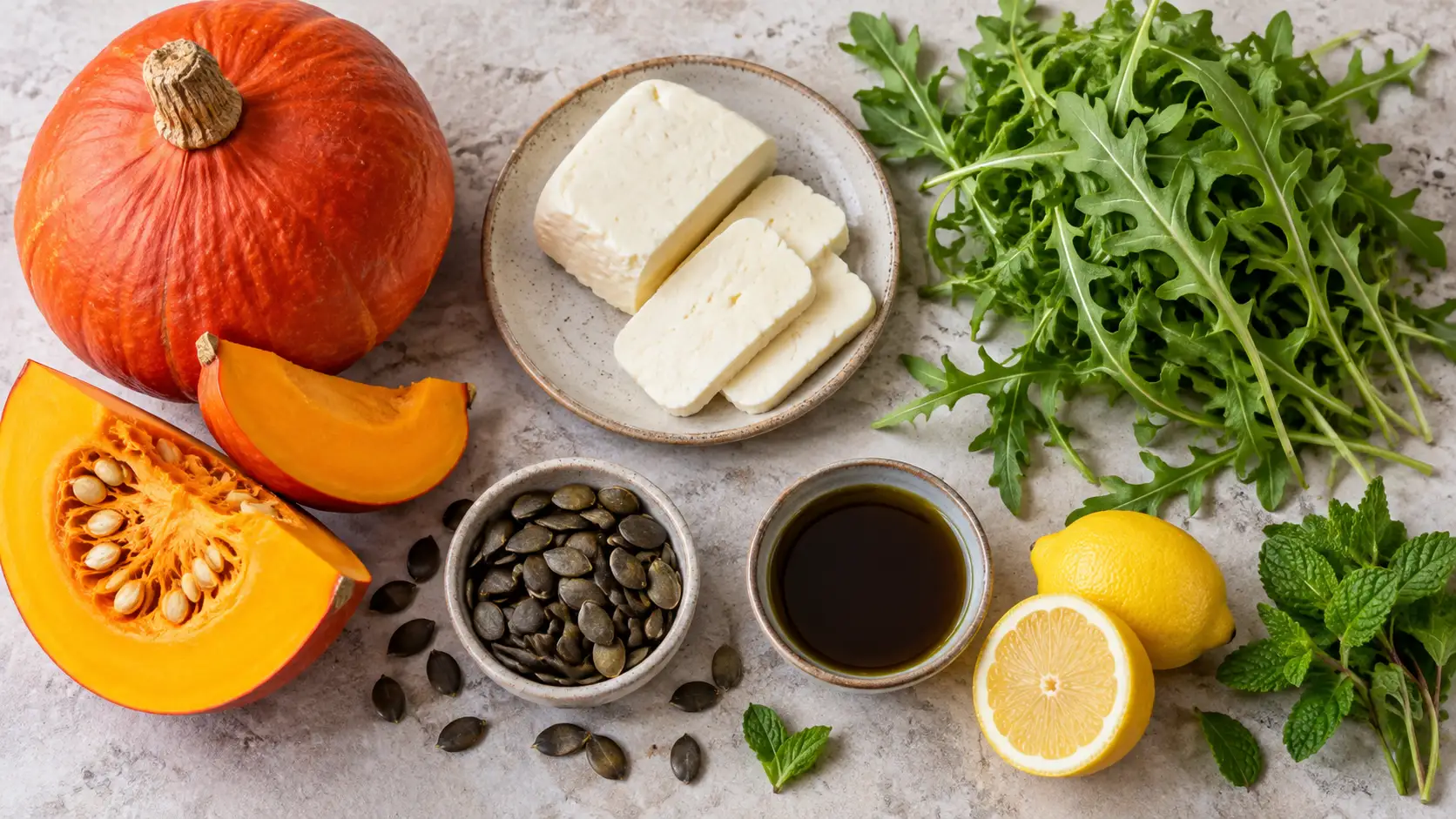
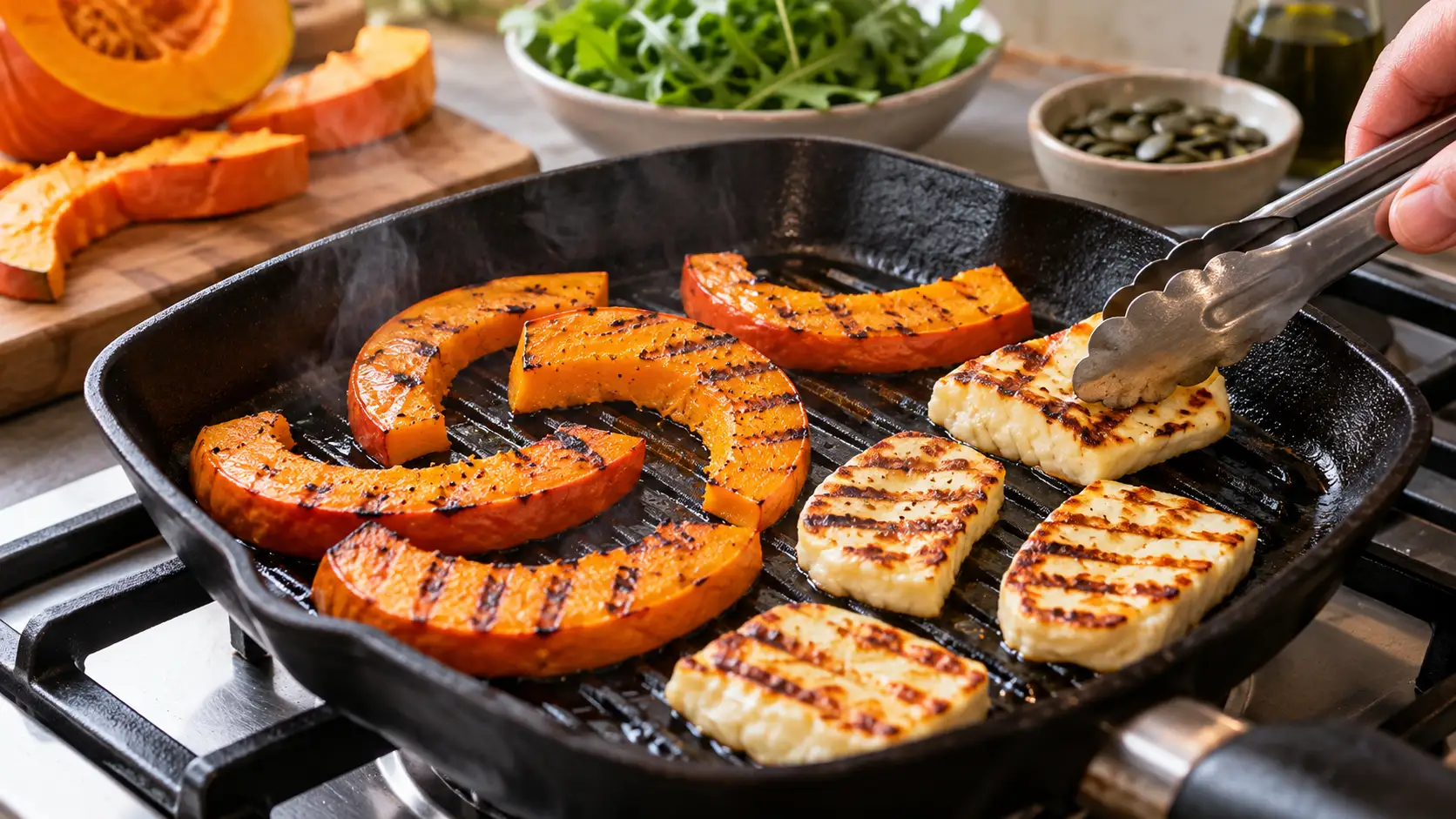
A warm keto pumpkin salad is the lunch for those weeks when it is too chilly for cold salads and still too early for stews. Roasted Hokkaido wedges and golden-brown pan-fried halloumi go warm onto arugula, toasted pumpkin seeds add crunch, and a dressing of pumpkin seed oil and lemon ties it all together. Per serving that comes to around 7.5 g net carbs and 49 g fat - a salad that genuinely fills you up. In October, Hokkaido pumpkin from local farms is fresh and firm, just right for roasting.
Key facts at a glance
- Preparation time: approx. 30 minutes - a filling lunch where the oven does most of the work.
- Approx. 7.5 g net carbs and 49 g fat per serving.
- Ingredients: Hokkaido pumpkin, halloumi, arugula, pumpkin seeds, pumpkin seed oil, lemon, fresh mint.
- Suited as a vegetarian keto lunch that can be prepped ahead and packed to go.
Ingredients
One serving is a large plate with 100 g pumpkin, 100 g halloumi and a big handful of arugula - as a complete lunch.
| Amount | Ingredient | Note | ||
|---|---|---|---|---|
| Hokkaido pumpkin | approx. 1/4 small pumpkin, unpeeled, in 1.5 cm thick wedges | |||
| approx. 1/4 small pumpkin, unpeeled, in 1.5 cm thick wedges | ||||
| olive oil | approx. 1 tbsp, for roasting | |||
| approx. 1 tbsp, for roasting | ||||
| halloumi | 1 block, in 1 cm thick slices | |||
| 1 block, in 1 cm thick slices | ||||
| arugula | washed and spun dry | |||
| washed and spun dry | ||||
| pumpkin seeds | dry-toasted | |||
| dry-toasted | ||||
| pumpkin seed oil | approx. 1.5 tbsp, Styrian, do not heat | |||
| approx. 1.5 tbsp, Styrian, do not heat | ||||
| lemon juice | juice of 1/2 lemon | |||
| juice of 1/2 lemon | ||||
| fresh mint | leaves roughly torn | |||
| leaves roughly torn | ||||
| pepper | freshly ground | |||
| freshly ground | ||||
| chili flakes | - | |||
| salt | for the pumpkin only, the halloumi is salty enough | |||
| for the pumpkin only, the halloumi is salty enough | ||||
Preparation
-
Prepare and roast the pumpkin
approx. 20 minutesDone Amount Icon Ingredient 200 g Hokkaido pumpkin approx. 1/4 small pumpkin, unpeeled, in 1.5 cm thick wedges 15 ml olive oil approx. 1 tbsp, for roasting 20 g pumpkin seeds dry-toasted 1 pinch chili flakes 1 pinch salt for the pumpkin only, the halloumi is salty enough Preheat the oven to 220 °C (conventional). Wash the Hokkaido (200 g), remove the seeds and cut it unpeeled into 1.5 cm thick wedges. Toss with olive oil (15 ml), salt (1 pinch) and chili flakes (1 pinch), spread on a baking sheet with space between the wedges and roast, turning once after 12 minutes.
-
Toast the pumpkin seeds
approx. 3 minutesDone Amount Icon Ingredient 20 ml pumpkin seed oil approx. 1.5 tbsp, Styrian, do not heat Meanwhile, toast the pumpkin seeds (20 g) in a dry pan over medium heat until they pop and puff up slightly. Remove and set aside.
-
Fry the halloumi
approx. 6 minutesDone Amount Icon Ingredient 200 g halloumi 1 block, in 1 cm thick slices Heat the pan until very hot and fry the halloumi slices (200 g) with no oil or just a wafer-thin film for 2 to 3 minutes per side until golden brown. Turn only once the underside has taken on color.
-
Mix the dressing
approx. 1 minuteDone Amount Icon Ingredient 15 ml lemon juice juice of 1/2 lemon 0.3 tsp pepper freshly ground Whisk the pumpkin seed oil (20 ml), lemon juice (15 ml) and pepper (1/4 tsp) together in a small bowl. No extra salt, the halloumi brings enough.
-
Plate
approx. 2 minutesDone Amount Icon Ingredient 80 g arugula washed and spun dry 5 g fresh mint leaves roughly torn Divide the arugula (80 g) between two plates. Arrange the warm pumpkin wedges and halloumi slices on top, sprinkle with the toasted pumpkin seeds and the torn fresh mint (5 g) and drizzle with the dressing. Serve immediately.
Which tips help with the warm pumpkin salad?
- Cut the unpeeled Hokkaido into thin wedges so it is cooked through and browned at the edges in 20 minutes.
- Fry the halloumi in a very hot, barely oiled pan and turn it only once the underside is golden brown.
- Dry-toast the pumpkin seeds until they pop - no longer, or they turn bitter.
- Put the pumpkin and halloumi onto the cold arugula while warm; the contrast makes the salad.
- Drizzle the pumpkin seed oil last and sparingly, it is very intense.
- Go easy on the salt - halloumi brings plenty of its own.
Why is this pumpkin salad keto-friendly?
A restaurant pumpkin salad often arrives with honey in the dressing, pomegranate seeds and baguette, adding up to 40 g carbs or more. This version drops all of that and caps the pumpkin at 100 g per serving: Hokkaido provides around 6.5 g carbs per 100 g, of which about 2 g is fiber, leaving roughly 4.5 g usable. Halloumi at 1.5 g per 100 g contributes another 1.5 g, arugula 0.85 g, pumpkin seeds 0.5 g and lemon juice 0.2 g. That puts one serving at about 7.5 g net carbs. For a lunch that is on the higher side and calls for a frugal breakfast, but it fits into a daily plan of 20 to 50 g. The fat side works out without any help: halloumi at around 26 g fat per 100 g, pumpkin seed oil, olive oil and pumpkin seeds deliver 49 g per serving, roughly 75 % of the calories. With 28 g protein from the halloumi, the salad is a complete meal rather than a side salad. The values for the individual ingredients can be looked up in the German Nutrient Database (BLS).
Source: Max Rubner Institute - German Nutrient Database (BLS) , FDDB Nutrition Database
Pumpkin seed oil and pumpkin seeds as a fat source
Styrian pumpkin seed oil is about 80 % unsaturated fatty acids, mostly linoleic and oleic acid, and contains practically no carbs. Its nutty, toasty flavor makes honey or balsamic in the dressing unnecessary - which is exactly what saves the carbs here. Pumpkin seeds add around 47 g fat, 30 g protein and plenty of magnesium per 100 g. The NIH Office of Dietary Supplements describes the role magnesium plays in metabolism and why the need for it rises on a low-carb diet.
Keeping net carbs predictable
The pumpkin accounts for a good half of the carbs. If you count more strictly, roast 60 g Hokkaido per person and add 100 g fennel or zucchini wedges to the tray - the serving then lands at about 6 g. Halloumi varies by brand between 1 and 3 g carbs per 100 g, so a look at the package is worthwhile. Skip pomegranate seeds, figs or honey in the dressing; each of these ingredients costs 3 to 6 g per serving.
How do I serve and vary the pumpkin salad?
Plate the salad so that the pumpkin and halloumi are still warm when they land on the cold arugula - that temperature contrast is the whole appeal, and after 10 minutes it is gone. The pumpkin seed oil goes on last and only as a drizzle; it is intense. In my experience it pays to fry the halloumi in a dry or barely oiled pan over high heat and to turn it only once the underside is golden brown; turn too early and you get rubbery slices with no crust. The Hokkaido wedges stay unpeeled, the skin softens in the oven and holds the shape. In October it is worth a trip to the farmers market: small Hokkaido pumpkins with a dry stem are at their most flavorful now and cost less than the stored ones in winter.
Meal prep and packing to go
The salad travels well as long as the components stay separate: roasted pumpkin wedges and fried halloumi in one container, arugula and pumpkin seeds in a second, the dressing in a screw-top jar. That way everything keeps for 3 days in the refrigerator. Pumpkin and halloumi can be warmed in the microwave for 1 minute or eaten cold - cold, the halloumi is firmer but still tastes good. Once dressed, the salad should be eaten within an hour because the arugula wilts. I do not recommend freezing.
Without halloumi and with meat
Instead of halloumi, 200 g goat cheese rounds briefly baked in the oven work well, as does 150 g feta cheese crumbled over cold. With 200 g pan-fried chicken breast strips or 150 g crispy bacon, the salad becomes a meat version with similar carbs. For a vegan option, 200 g smoked tofu sliced and fried until crisp fits in; then raise the pumpkin seeds to 30 g to keep the fat up. Instead of arugula, lamb's lettuce is also a good choice in October, milder and a natural match for pumpkin seed oil.
Nutrition values
| Nutrient | Per 100 g | Per serving | Keto context |
|---|---|---|---|
| Calories | approx. 210 kcal | approx. 580 kcal | A complete meal, not a side salad; the halloumi and the oils provide the energy. |
| A complete meal, not a side salad; the halloumi and the oils provide the energy. | |||
| Fat | approx. 17.5 g | approx. 49 g | Very good for keto. Around 75 % of the calories come from fat, which is why the salad keeps you full for a long time. |
| Very good for keto. Around 75 % of the calories come from fat, which is why the salad keeps you full for a long time. | |||
| Net carbs | approx. 2.8 g | approx. 7.5 g | On the higher side for a lunch - the pumpkin is the main source. Fits into a day with a frugal breakfast. |
| On the higher side for a lunch - the pumpkin is the main source. Fits into a day with a frugal breakfast. | |||
| Sugar | approx. 1.8 g | approx. 5 g | Natural sugar from pumpkin and arugula. The recipe contains no added sugar or honey. |
| Natural sugar from pumpkin and arugula. The recipe contains no added sugar or honey. | |||
| Protein | approx. 10 g | approx. 28 g | High for a salad; the halloumi turns it into a complete meal. |
| High for a salad; the halloumi turns it into a complete meal. | |||
| Salt | approx. 1.1 g | approx. 3 g | High because of the halloumi. That is why no extra salt is added; a higher salt need is normal on keto. |
| High because of the halloumi. That is why no extra salt is added; a higher salt need is normal on keto. | |||
Note: Nutrition values are estimated averages per 100 g and per serving and may vary depending on ingredients, brands, portion size, and preparation. They do not replace individual nutrition or medical advice.
FAQ
Is pumpkin salad allowed on a ketogenic diet?
In this form, yes. The pumpkin is capped at 100 g per serving and costs around 4.5 g net carbs; with halloumi, arugula and pumpkin seeds the serving comes to about 7.5 g. That fits into a daily plan of 20 to 50 g carbs. What is not keto-friendly are the typical restaurant additions of honey, pomegranate, figs or croutons - each costs an extra 3 to 6 g and is deliberately left out here.
Can I roast the pumpkin in a pan instead of the oven?
Yes. Cut the wedges thinner, about 1 cm, and fry them in olive oil over medium-high heat for 10 to 12 minutes, turning only twice. In the oven the edges brown more evenly and your hands are free for the halloumi; in the pan it is quicker and you do not need to heat the oven. The nutrition values do not change.
Is the pumpkin salad suitable for losing weight on keto?
At around 580 kcal per serving it is a complete main meal that keeps you full for a long time thanks to 49 g fat and 28 g protein. If you want to save calories, use 150 g instead of 200 g halloumi and 10 ml less pumpkin seed oil - the serving then lands at about 450 kcal. In a weight-loss phase, keep a closer eye on the 7.5 g carbs: for a lunch, they take a decent share of the daily budget.
Which pumpkin seed oil should I use?
Styrian pumpkin seed oil with protected geographical indication is the safest choice: dark green, viscous, intensely nutty. Cheap pumpkin seed oil is often blended with sunflower oil and tastes flat. Never heat the oil, it loses its aroma - it belongs in the dressing only. Stored cool and dark, an opened bottle keeps for about 3 months, after which it turns rancid.
Can I prepare the salad the day before?
Partly. Roast the pumpkin and fry the halloumi the day before and store both together in a container in the refrigerator; the dressing goes into a screw-top jar. Arugula and pumpkin seeds stay dry and separate. At mealtime, warm the pumpkin and halloumi for 1 minute in the microwave or eat them cold, then assemble. Once dressed, the salad only keeps for an hour before the arugula wilts.