
Keto Ketchup Without Sugar
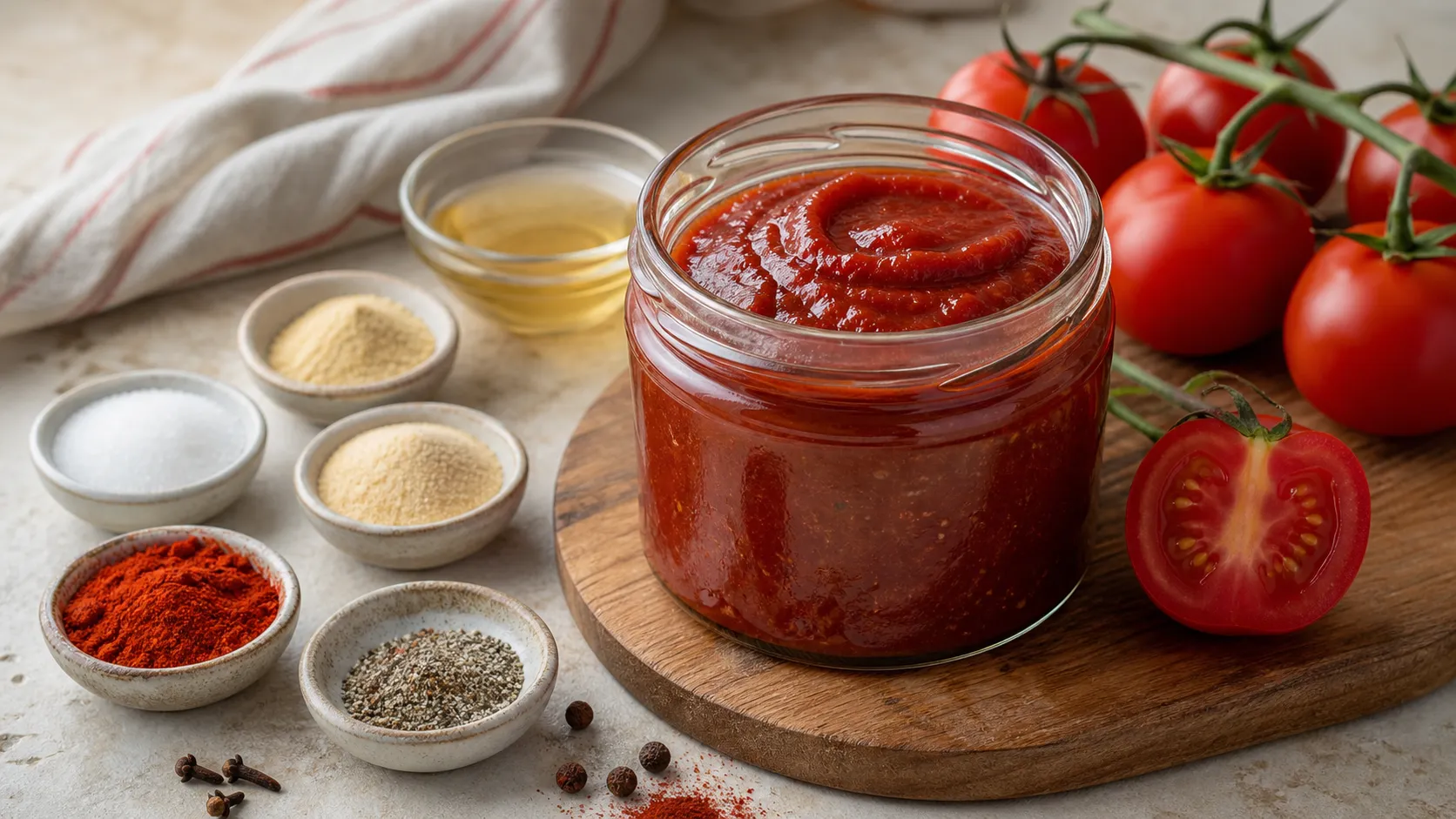
This keto ketchup without sugar replaces the bought bottle, in which sugar is usually the second most important ingredient. Strained tomatoes are reduced uncovered with cider vinegar, erythritol and seasonings until the sauce is thick enough to cling to a spoon.
The key facts at a glance
- Time required: approx. 30 minutes, only approx. 8 of them active work.
- Only approx. 3.5 g net carbs and 0.3 g fat per serving.
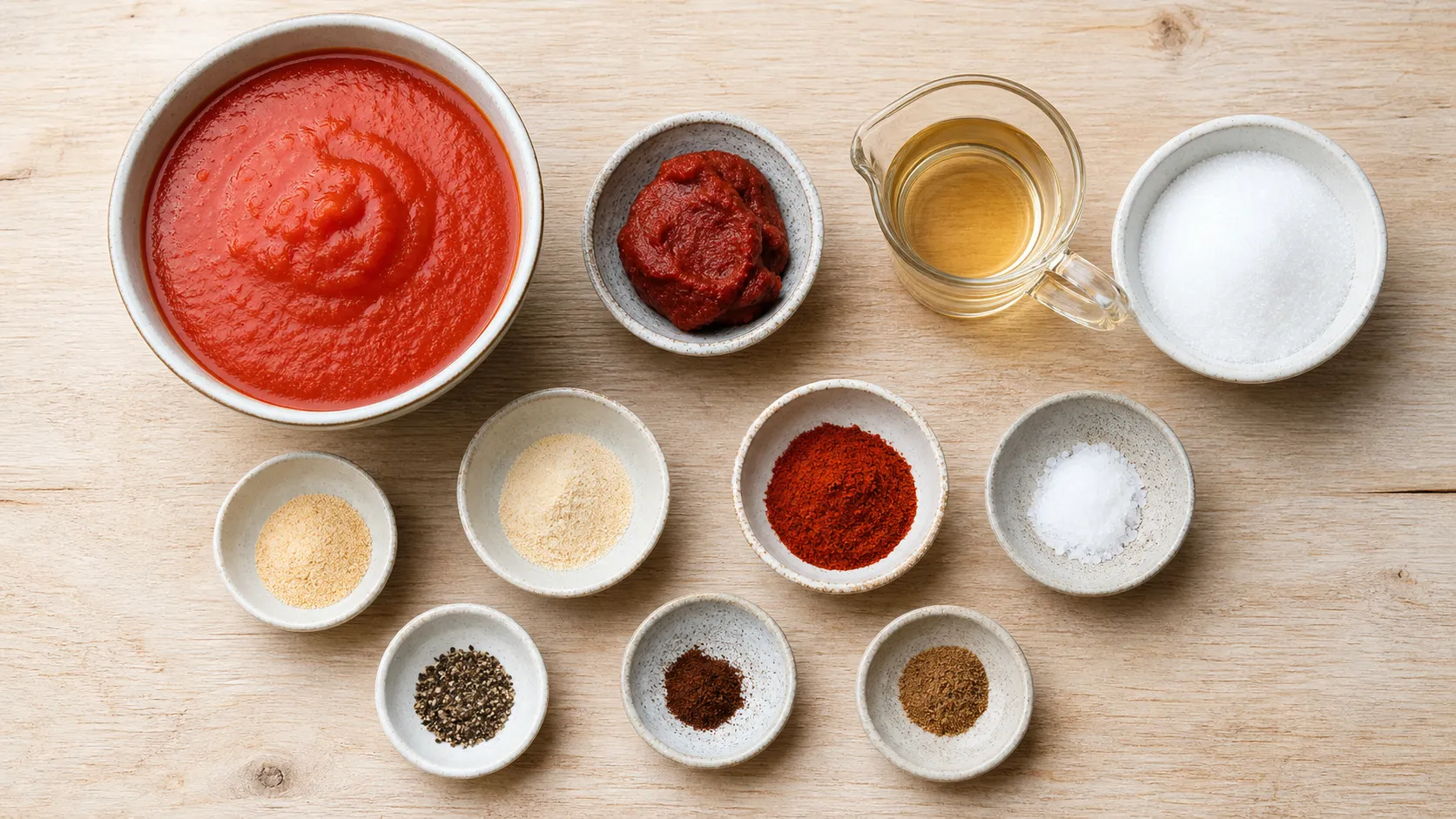
- Ingredients: strained tomatoes, tomato paste, cider vinegar, erythritol, onion powder, paprika powder, cloves.
- Suits anyone who wants to cook a sugar-free barbecue and burger sauce to keep in store.
Ingredients
Makes approx. 330 g of ketchup, that is six servings of approx. 55 g - double the quantity for a barbecue spread.
| Amount | Ingredient | Note | ||
|---|---|---|---|---|
| strained tomatoes | unsweetened, without additives | |||
| unsweetened, without additives | ||||
| tomato paste | triple concentrated | |||
| triple concentrated | ||||
| cider vinegar | approx. 3 tbsp | |||
| approx. 3 tbsp | ||||
| erythritol | ground dissolves faster | |||
| ground dissolves faster | ||||
| onion powder | - | |||
| garlic powder | - | |||
| paprika powder | sweet | |||
| sweet | ||||
| salt | - | |||
| pepper | - | |||
| cloves | ground | |||
| ground | ||||
| allspice | ground | |||
| ground | ||||
How it is made
-
Stir the base
approx. 3 minutes400 g strained tomatoes unsweetened, without additives 30 g tomato paste triple concentrated 40 ml cider vinegar approx. 3 tbsp 25 g erythritol ground dissolves faster Stir the strained tomatoes (400 g), tomato paste (30 g), cider vinegar (3 tbsp) and erythritol (25 g) smooth in a pot.
-
Add the seasonings
approx. 2 minutes1 tsp onion powder 0.5 tsp garlic powder 1 tsp paprika powder sweet 0.5 tsp salt 0.3 tsp pepper 1 pinch cloves ground 1 pinch allspice ground Stir in the onion powder (1 tsp), garlic powder (0.5 tsp), paprika powder (1 tsp), salt (0.5 tsp), pepper, cloves and allspice.
-
Reduce uncovered
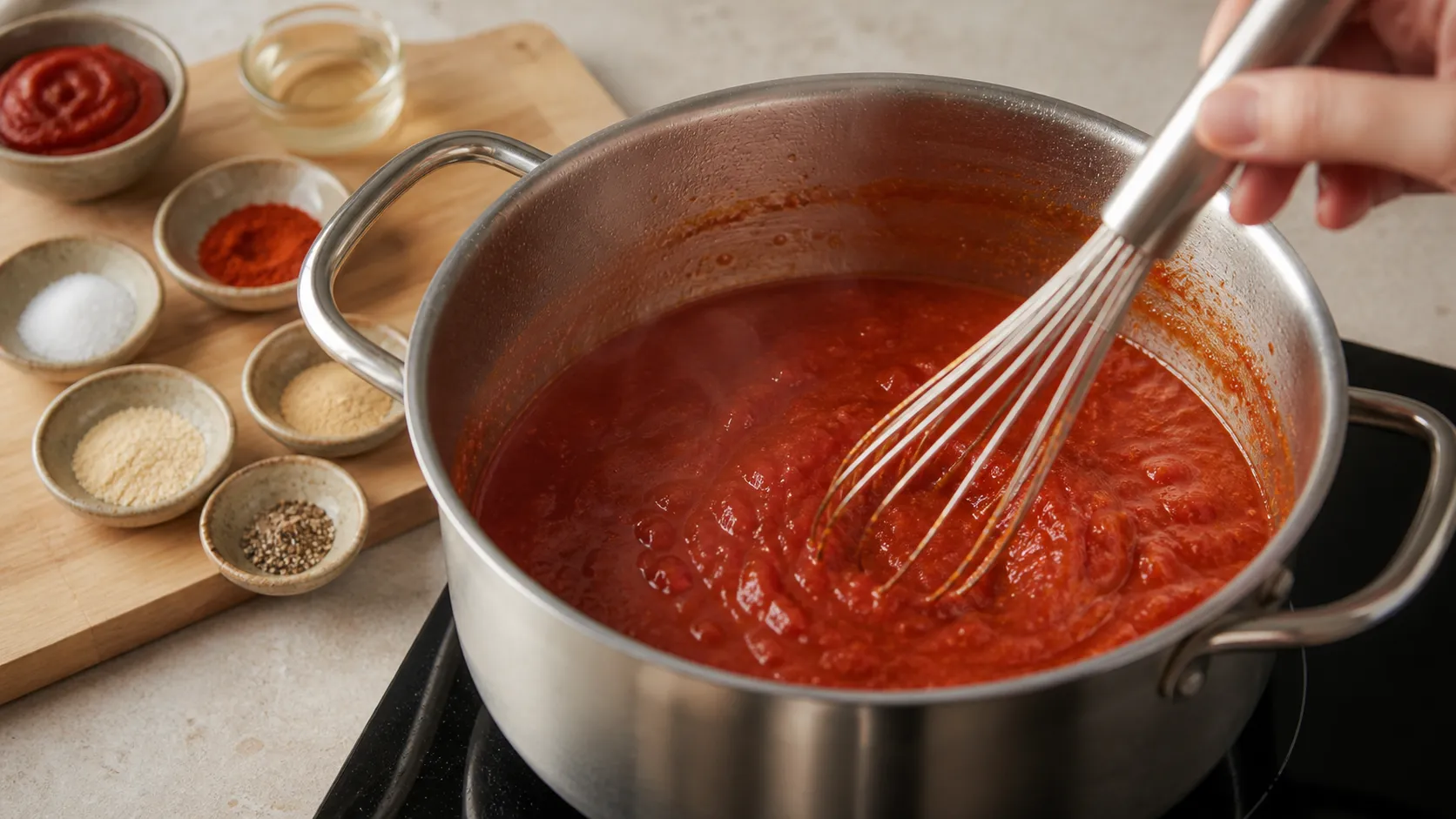
approx. 20 minutesReduce over medium heat without a lid for about 20 minutes until the sauce clings to a spoon. Stir occasionally so nothing catches.
-
Blend and season
approx. 3 minutesBlend the sauce smooth with a stick blender and adjust finally with salt and erythritol.
-
Fill the jar
approx. 2 minutesFill the ketchup hot into a sterilized screw-top jar, seal it and leave it to cool.
Which tips help with sugar-free ketchup?
- Reduce it uncovered so water evaporates and the sauce thickens without any thickener.
- Add the erythritol before reducing so it dissolves fully and does not stay gritty.
- Taste the ketchup again after blending - cold it tastes more acidic than hot.
- Cook it a day ahead so the vinegar and seasonings round off.
- Only take it out with a clean spoon, or the sauce will not last three weeks.
Why this ketchup suits keto well
Commercial tomato ketchup contains around 22 to 24 g sugar per 100 g - with two tablespoons on the plate that quickly becomes 6 to 7 g carbs that appear nowhere in the daily plan, because hardly anyone counts a condiment. This ketchup comes to about 3.5 g net carbs per serving of approx. 55 g, because the sugar is replaced entirely by erythritol and the remaining carbs come exclusively from the tomato itself. Erythritol supplies practically no digestible carbs and, on current evidence, does not measurably raise blood sugar. Fat deliberately plays no role here: ketchup is a condiment, not a fat source. In a ketogenic meal the fat comes with the dish it is served alongside - a burger patty, a bratwurst or fried bacon. Nutrition values for the individual ingredients can be looked up in the FDDB nutrition database.
Source: FDDB nutrition database
Erythritol instead of sugar in ketchup
Erythritol is a sugar alcohol that is largely excreted unchanged via the kidneys and therefore supplies barely any energy. For ketchup that is doubly useful: the sweetness balances the acidity of the vinegar without contributing carbs. Unlike sugar, however, erythritol does not caramelize, which is why the sauce stays paler and more acidic than bought ketchup. If you prefer it milder, reduce it for five minutes longer.
Keeping net carbs predictable
The remaining carbs come almost 100 percent from the strained tomatoes and the tomato paste. If you stay strictly under 20 g carbs a day, count one serving at 3.5 g and dose it with a spoon rather than from the bottle. For an even lower version the tomato paste can be halved - the sauce then turns out thinner and has to reduce for longer.
How do I serve and vary the ketchup?
The ketchup suits everything you would otherwise open the bottle for: bratwurst, meatballs, burger patties, egg muffins or vegetable sticks. In practice it tastes considerably more acidic on the first day than on the second - overnight in the fridge the vinegar and seasonings round off noticeably, which is why I always cook it a day ahead.
Meal prep, prepping ahead and storing
Filled hot into a sterilized screw-top jar and sealed immediately, the ketchup keeps for about 3 weeks in the fridge. What matters is always using a clean spoon - crumbs and finger contact shorten its life drastically. A double batch can be frozen in portions in ice cube trays and thaws in about 20 minutes at room temperature.
Variation without erythritol
If you do not tolerate sugar alcohols, replace the erythritol with 6 to 8 drops of liquid stevia or leave the sweetness out entirely. With no sweetness at all the ketchup becomes a robust tomato condiment closer to an Italian sugo reduction - excellent with meat, unfamiliar on a burger.
Nutrition values
| Nutrient | Per 100 g | Per serving | Keto context |
|---|---|---|---|
| Calories | approx. 38 kcal | approx. 22 kcal | Very low; as a condiment the ketchup barely registers in a daily budget. |
| Very low; as a condiment the ketchup barely registers in a daily budget. | |||
| Fat | approx. 0.5 g | approx. 0.3 g | Deliberately low - in the meal the fat comes with the main dish. |
| Deliberately low - in the meal the fat comes with the main dish. | |||
| Net carbs | approx. 6.1 g | approx. 3.5 g | The only relevant entry; it comes entirely from the tomato and tomato paste. |
| The only relevant entry; it comes entirely from the tomato and tomato paste. | |||
| Sugar | approx. 5.2 g | approx. 3 g | Exclusively fruit sugar from the tomato, with no sugar added. |
| Exclusively fruit sugar from the tomato, with no sugar added. | |||
| Protein | approx. 1.7 g | approx. 1 g | Low as expected for a sauce and nutritionally beside the point. |
| Low as expected for a sauce and nutritionally beside the point. | |||
| Salt | approx. 0.7 g | approx. 0.4 g | Moderate; on keto a somewhat higher salt requirement is normal anyway. |
| Moderate; on keto a somewhat higher salt requirement is normal anyway. | |||
Note: Nutrition values are estimated averages per 100 g and per serving and may vary depending on ingredients, brands, portion size, and preparation. They do not replace individual nutrition or medical advice.
FAQ
Is ketchup allowed on keto?
Bought ketchup at 22 to 24 g sugar per 100 g fits poorly into a ketogenic daily plan. Homemade keto ketchup without sugar manages at approx. 3.5 g net carbs per serving and is easy to count in.
Can I use fresh tomatoes instead of strained ones?
Yes, you need about 800 g of ripe tomatoes for that, peeled, seeded and reduced considerably longer - reckon on 50 to 60 minutes. The carb content stays practically the same, and the flavor turns fresher and less concentrated.
How do I thicken the ketchup if it stays too thin?
Ideally not at all - reducing it uncovered for longer is the cleanest solution. If it has to be quick, a knife tip of xanthan gum, stirred in well and left for five minutes, is enough. Any more makes the sauce slimy.
Does sugar-free ketchup help with weight loss on keto?
Indirectly yes: it replaces one of the most common hidden sources of sugar in everyday eating. Per two tablespoons you save around 6 g carbs compared with commercial ketchup, without giving up the sauce you are used to.