Keto Pork Belly Asian Salad with Shrimp
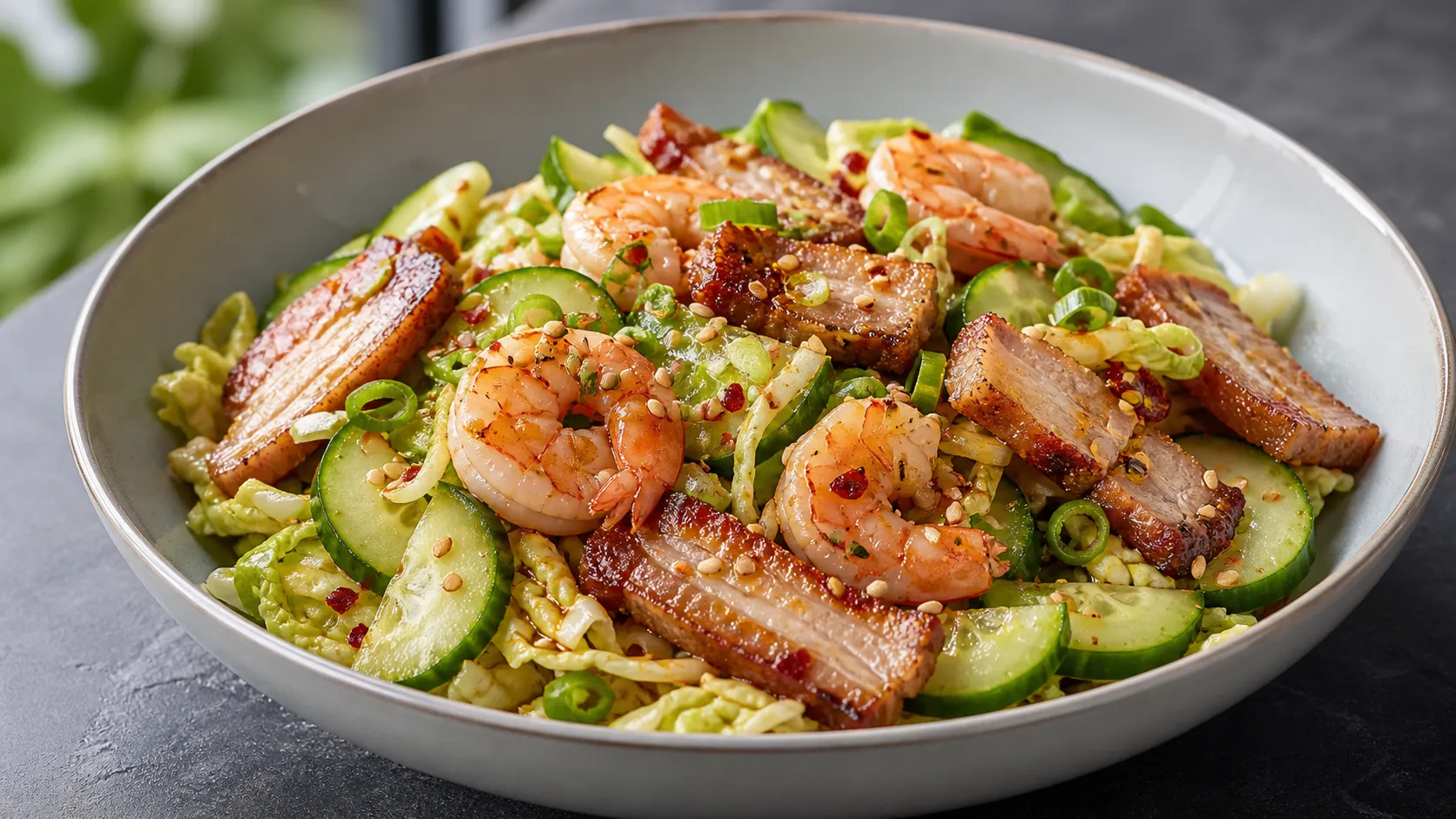
Crispy pork belly and juicy shrimp on a napa cabbage salad with a sesame oil and soy dressing - no sugar, no starch. Pork belly does not need extra oil in the pan: its own 40 to 50 percent fat content crisps it up on its own. Shrimp adds the lean protein. Together: 50 g protein at just 5 g net carbs.
Key facts at a glance
- Total time: approx. 30 minutes - 10 minutes prep, 20 minutes cooking.
- Approx. 5 g net carbs and 44 g fat per serving.
- Ingredients: pork belly, shrimp, napa cabbage, cucumber, spring onions, soy sauce, sesame oil, ginger, lime.
- Pork belly cooks in its own fat - no extra oil needed.
Ingredients
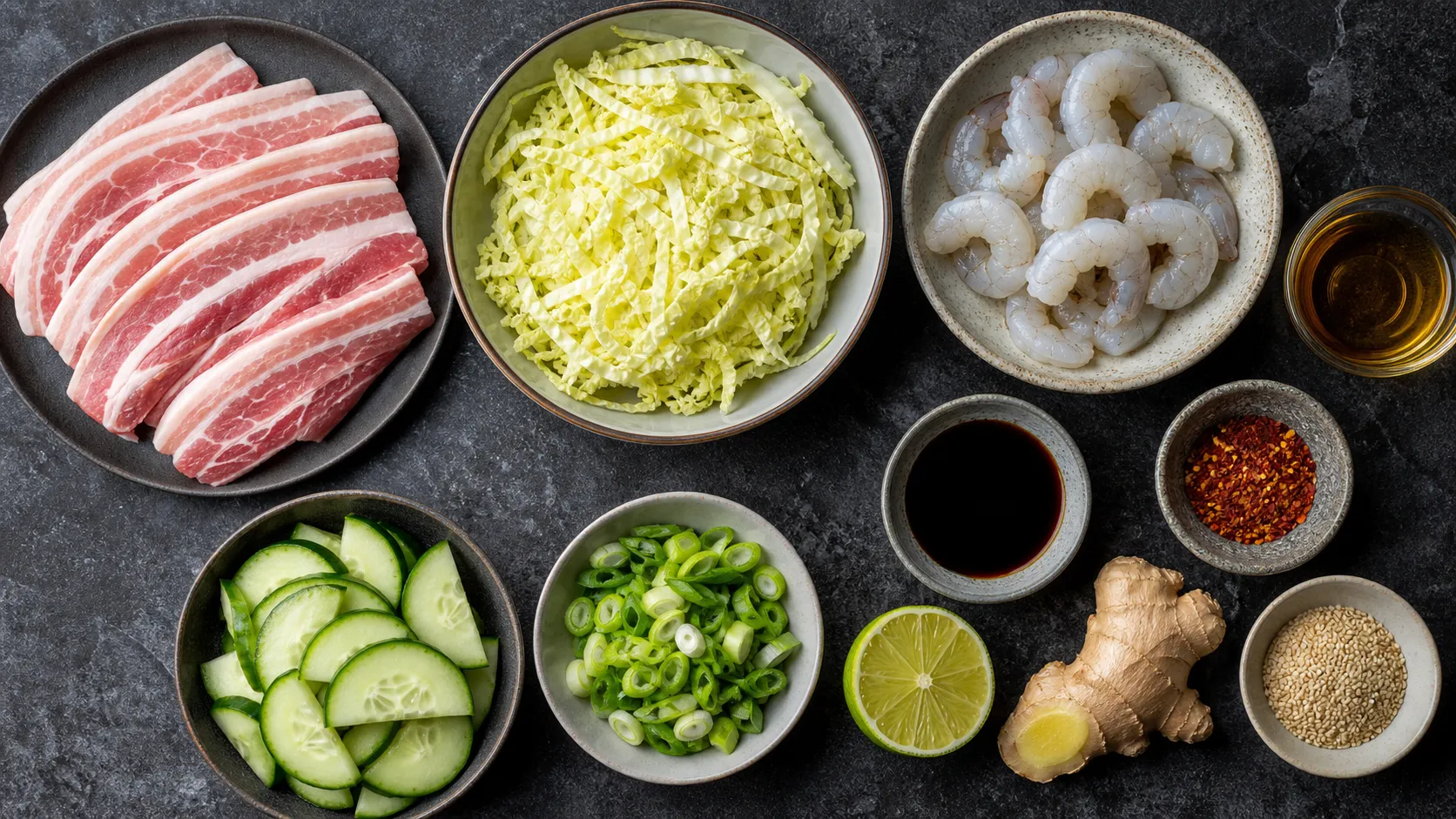
One serving equals a large salad bowl with pork belly, shrimp and dressing - as a complete keto lunch.
| Amount | Ingredient | Note | ||
|---|---|---|---|---|
| Pork belly (5 mm thick slices) | - | |||
| Shrimp (raw, peeled, deveined) | - | |||
| Napa cabbage (finely sliced) | - | |||
| Cucumber (in half-slices) | - | |||
| Spring onion | 2 spring onions, in rings | |||
| 2 spring onions, in rings | ||||
| Soy sauce (or tamari) | approx. 2 tbsp | |||
| approx. 2 tbsp | ||||
| Sesame oil | approx. 1½ tsp | |||
| approx. 1½ tsp | ||||
| Lime juice (freshly squeezed) | approx. 1 tbsp | |||
| approx. 1 tbsp | ||||
| Fresh ginger (grated) | - | |||
| Sesame seeds (toasted) | - | |||
| Chili flakes | to taste | |||
| to taste | ||||
Preparation
-
Whisk the dressing and sear the pork belly crispy
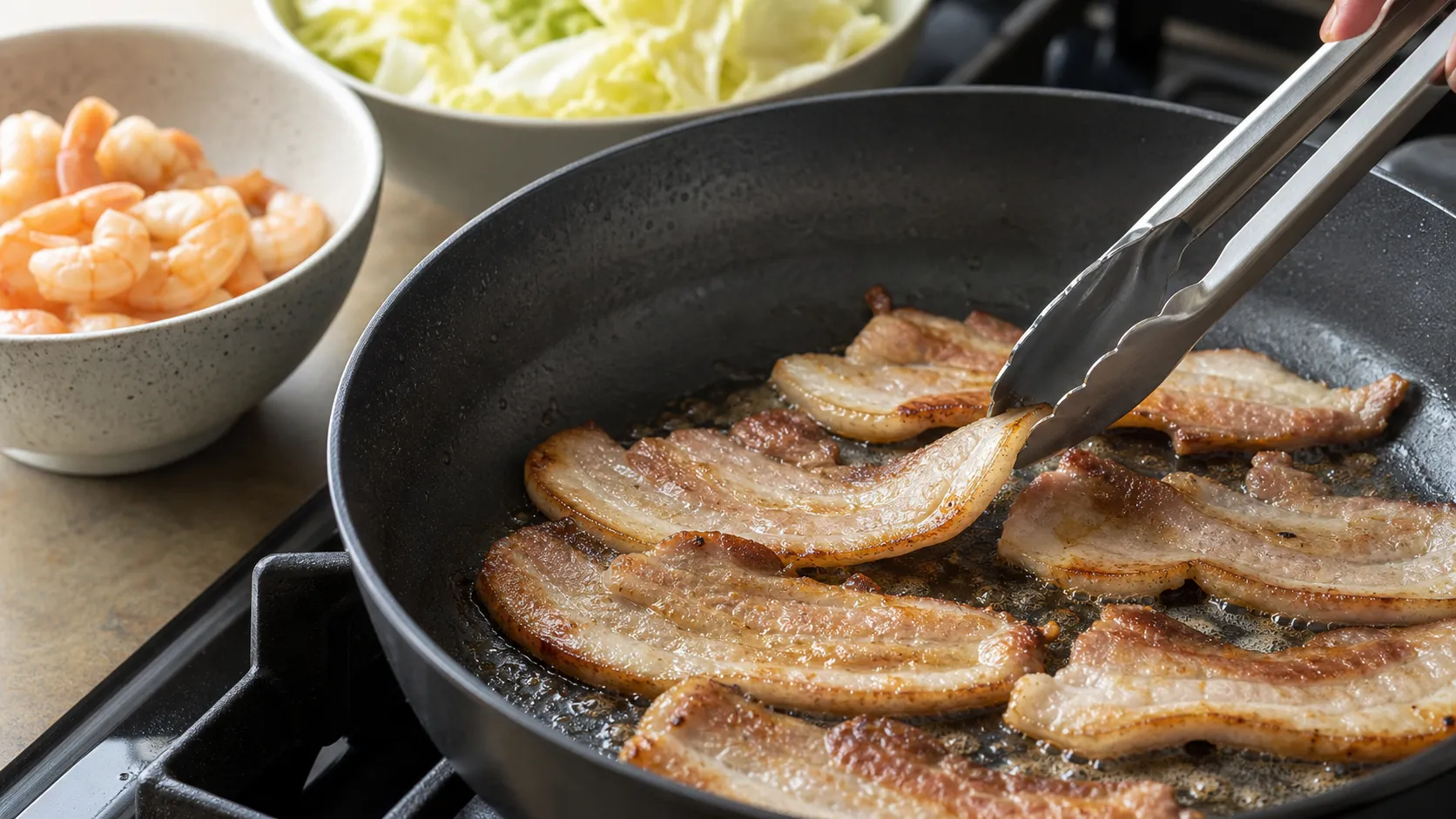
approx. 12 minutes150 g Pork belly (5 mm thick slices) 100 g Cucumber (in half-slices) 30 ml Soy sauce (or tamari) approx. 2 tbsp 7.5 ml Sesame oil approx. 1½ tsp 15 ml Lime juice (freshly squeezed) approx. 1 tbsp 1 tsp Fresh ginger (grated) 1 tsp Sesame seeds (toasted) 0.5 tsp Chili flakes to taste Whisk the dressing: combine soy sauce (2 tbsp), sesame oil (1.5 tsp), lime juice (1 tbsp), ginger (1 tsp) and chili flakes. Pat the pork belly (150 g, 5 mm thick slices) dry, place it into a dry, very hot pan (no oil) and sear for 4 to 5 minutes per side until golden brown. Remove.
-
Sear the shrimp and build the salad
approx. 8 minutes150 g Shrimp (raw, peeled, deveined) 150 g Napa cabbage (finely sliced) 60 g Spring onion 2 spring onions, in rings Pour off excess fat from the pan, keeping 1 tsp. Sear the shrimp (150 g) over high heat for 1 to 2 minutes per side, until pink and curled into a C shape. Arrange napa cabbage (150 g) and cucumber (100 g) in a bowl. Add the pork belly and shrimp on top. Pour the dressing over and sprinkle with spring onions and toasted sesame seeds.
Which tips help with the keto pork belly Asian salad?
- Pat the pork belly dry before it goes into the pan - moisture prevents a crispy crust.
- Place the pork belly into a dry, very hot pan without oil - it cooks in its own fat.
- Do not overcook the shrimp - 1 to 2 minutes per side is enough, until they are C-shaped and pink.
- Slice the napa cabbage just before serving and do not wash and let it sit in advance - it loses water otherwise.
- Toast the sesame seeds in a dry pan for 1 minute - toasted sesame tastes more intense than raw.
Why pork belly Asian salad fits keto well
Pork belly (150 g, cooked) delivers approx. 19 g protein and approx. 40 g fat - it is the fattiest cut of pork, which makes it ideal for keto. Shrimp (150 g, cooked) brings approx. 30 g protein and only approx. 2 g fat - a lean counterweight to the pork belly. Napa cabbage (150 g) has only approx. 2 g net carbs and provides vitamin K and folate. Cucumber (100 g) has approx. 1.5 g net carbs. Sesame oil (1.5 tsp) adds approx. 7 g polyunsaturated fatty acids at 0 g carbs. Soy sauce has less than 1 g carbs per tbsp. In total: approx. 50 g protein, 44 g fat, 5 g net carbs, approx. 620 kcal.
Source: USDA FoodData Central - Pork belly, cooked , USDA FoodData Central - Shrimp, cooked
Pork belly as a keto protein: fat included
Raw, uncured pork belly contains approx. 11 to 13 g protein and 43 to 47 g fat per 100 g. After searing in a dry pan, some of the fat renders out and stays in the pan. The remaining meat is crispy on the outside and juicy on the inside. In a keto context, this high fat ratio is exactly what you want.
Sesame oil and soy dressing: a keto-friendly Asian dressing
Classic Asian dressings often contain sugar or rice vinegar with added sugar (up to 8 g carbs per tbsp). This dressing made from sesame oil (0 g carbs), soy sauce (less than 1 g carbs per tbsp), fresh ginger and lime juice has fewer than 2 g carbs in total - full Asian flavor without sugar.
How do I serve and vary the Asian salad?
Arrange the napa cabbage as a base in a deep bowl. Place the pork belly slices and shrimp on top. Pour the dressing over only just before serving so the cabbage stays crisp. From experience: freshly grated ginger instead of ground ginger makes the dressing noticeably more aromatic.
Meal prep: sear the pork belly ahead of time
Seared pork belly can be prepared a day in advance and stored in the fridge. Before serving, re-crisp it in a dry pan for 2 minutes. Sear the shrimp fresh (2 minutes). Combine the salad and dressing only just before eating.
Variation with duck or beef
Duck breast (150 g, seared) is a fattier alternative with an Asian character. Thinly sliced beef tenderloin (150 g, seared rare) gives the salad a more elegant note - similar to Vietnamese bo tai. Both variations work with the same sesame dressing.
Nutrition values
| Nutrient | Per 100 g | Per serving | Keto context |
|---|---|---|---|
| Calories | approx. 124 kcal | approx. 620 kcal | A full lunch; energy comes from fat (pork belly) and protein (shrimp, pork). |
| A full lunch; energy comes from fat (pork belly) and protein (shrimp, pork). | |||
| Fat | approx. 8.8 g | approx. 44 g | Mostly saturated fatty acids from pork belly; monounsaturated from sesame oil. |
| Mostly saturated fatty acids from pork belly; monounsaturated from sesame oil. | |||
| Net carbs | approx. 1 g | approx. 5 g | Low; comes from napa cabbage, cucumber and the ginger-lime dressing. |
| Low; comes from napa cabbage, cucumber and the ginger-lime dressing. | |||
| Sugar | approx. 0.5 g | approx. 2.5 g | Natural sugar from vegetables; no added sugar in the dressing. |
| Natural sugar from vegetables; no added sugar in the dressing. | |||
| Protein | approx. 10 g | approx. 50 g | High; pork belly and shrimp combine into a complete protein profile. |
| High; pork belly and shrimp combine into a complete protein profile. | |||
| Salt | approx. 0.5 g | approx. 2.5 g | Moderate; mostly from the soy sauce. |
| Moderate; mostly from the soy sauce. | |||
Note: Nutrition values are estimated averages per 100 g and per serving and may vary depending on ingredients, brands, portion size, and preparation. They do not replace individual nutrition or medical advice.
FAQ
Is napa cabbage a good keto salad base?
Yes, napa cabbage has approx. 2 g net carbs per 100 g, making it even slightly lower in carbs than iceberg lettuce. It stays crisp under dressing for a while and works well with soy sauce dressings, which lightly marinate it. It also provides vitamin K and vitamin C.
Why is pork belly seared without oil?
Pork belly contains approx. 43 to 47 g fat per 100 g. When seared in a hot, dry pan, the fat renders out of the meat and serves as its own cooking fat. Adding extra oil would make the dish greasier and reduce the characteristic crunch. The rendered fat can be used in the dressing.
Can I use frozen shrimp instead of fresh ones?
Yes, frozen pre-cooked shrimp (thawed) only need 1 minute per side in the pan to heat through. Raw frozen shrimp (thawed) need 2 minutes per side. Both options are keto-friendly - just watch out for added sugar in the seasoning marinade on cured shrimp.
Does soy sauce contain carbs?
Regular soy sauce contains approx. 0.8 g carbs per tablespoon (15 ml) - that is very little. This dressing uses 2 tbsp (approx. 1.6 g carbs). Tamari (gluten-free soy sauce) has a similar profile. Sweet soy sauce (kecap manis), on the other hand, contains up to 7 g carbs per tbsp and is not suitable for keto.