Keto Miso Wakame Soup with Tofu
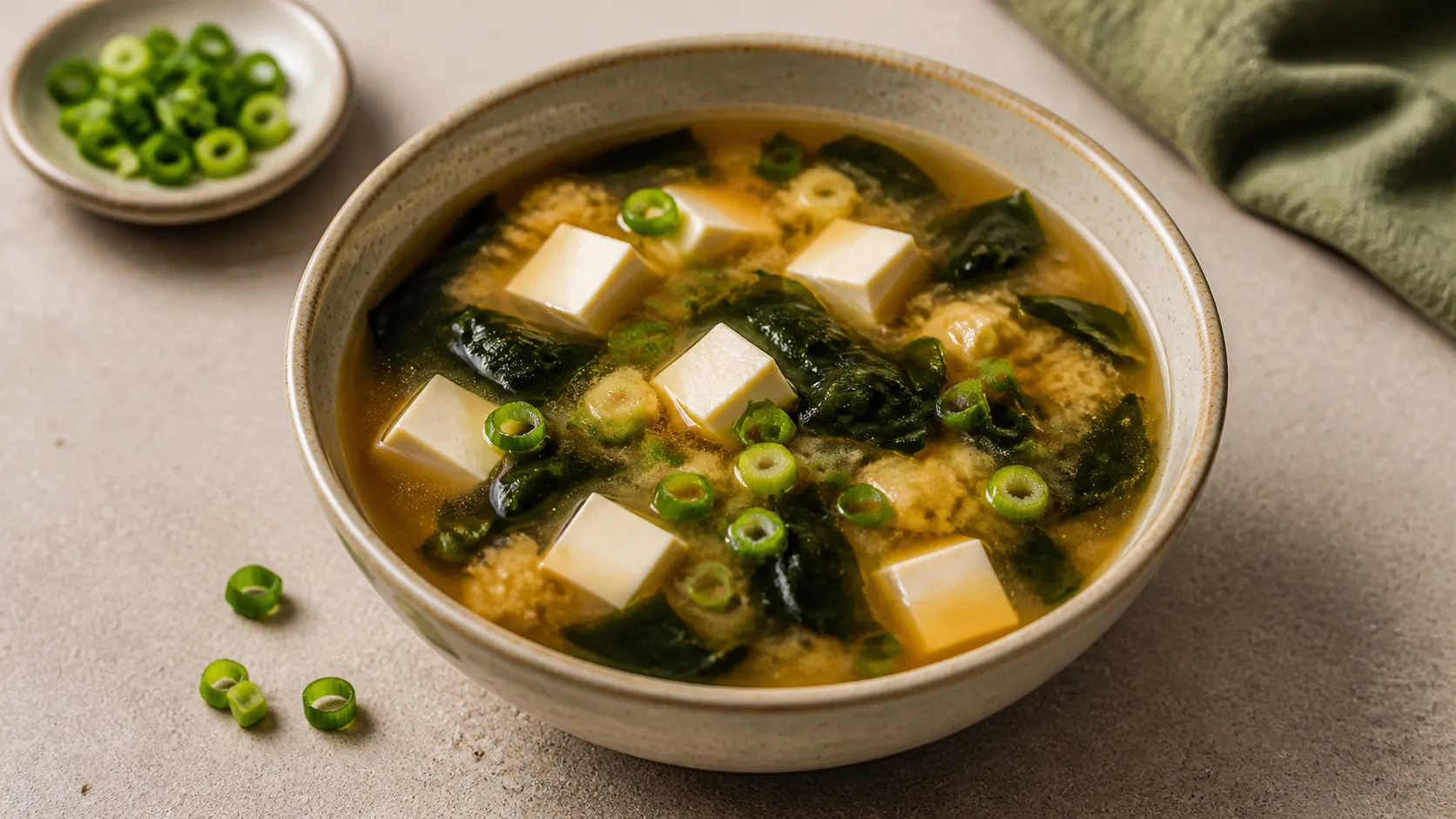
A classic Japanese miso soup is one of the oldest electrolyte sources we have, long before sports drinks existed. Miso paste delivers sodium, wakame seaweed provides iodine and magnesium, and silken tofu adds calcium and protein. The result is approx. 4 g net carbs per bowl and covers a meaningful share of the daily electrolyte needs on a ketogenic diet.
Key takeaways at a glance
- Ready in approx. 15 minutes, a quick electrolyte meal for everyday keto.
- Approx. 4 g net carbs and 6 g fat per serving.
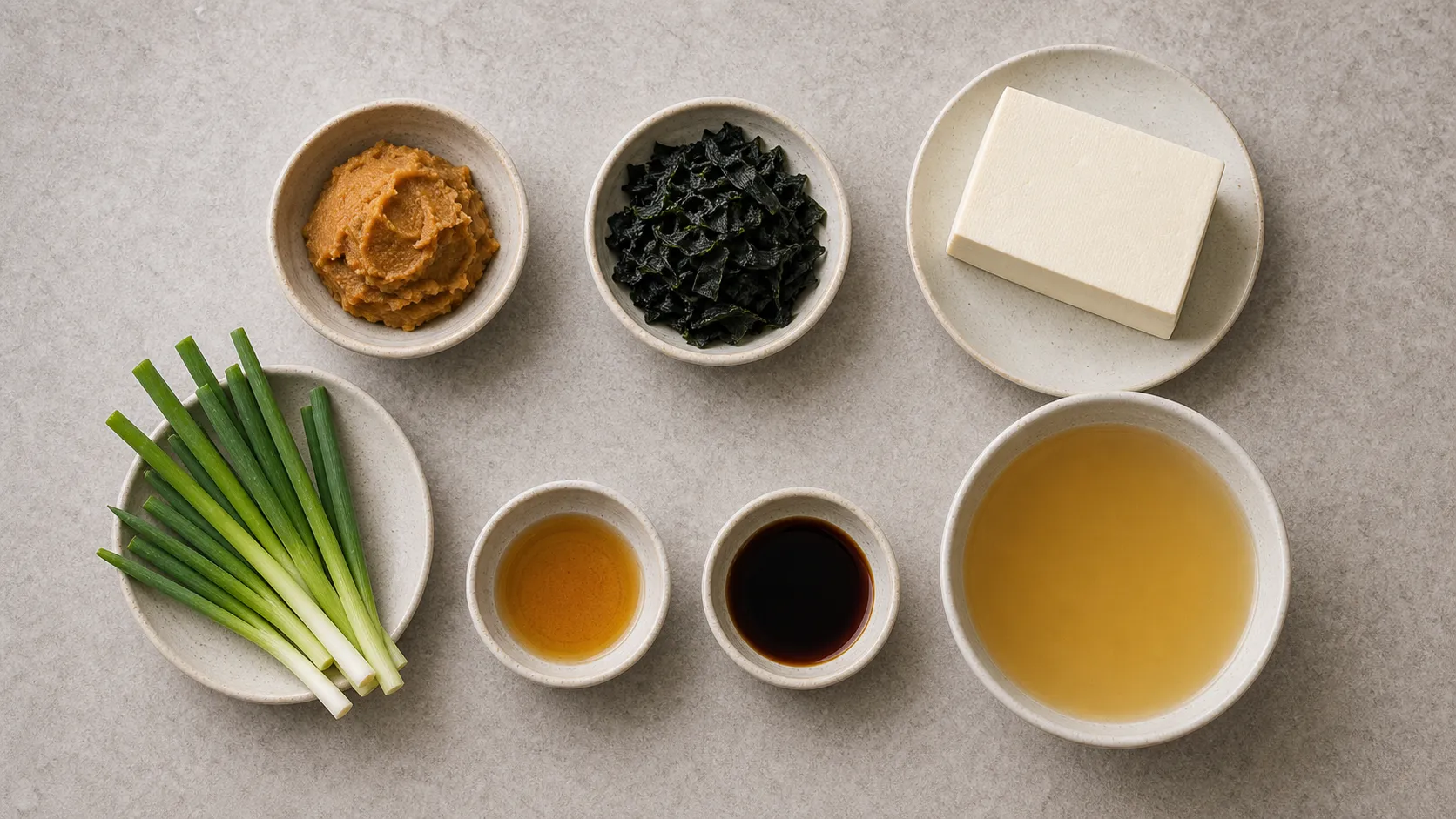
- Ingredients: miso paste, wakame seaweed, silken tofu, spring onions, dashi or vegetable broth.
- Ideal for anyone on keto who wants to top up sodium, iodine, and magnesium on purpose.
Ingredients
1 bowl (approx. 350 ml) per person as an electrolyte meal or light lunch.
| Amount | Ingredient | Note | ||
|---|---|---|---|---|
| dashi or vegetable broth | - | |||
| miso paste | white or red, no added sugar | |||
| white or red, no added sugar | ||||
| silken tofu | cut into 1 cm cubes | |||
| cut into 1 cm cubes | ||||
| dried wakame | yields approx. 20 g once soaked | |||
| yields approx. 20 g once soaked | ||||
| spring onion | 2 spring onions, thinly sliced into rings | |||
| 2 spring onions, thinly sliced into rings | ||||
| sesame oil | approx. 1 tsp; toasted | |||
| approx. 1 tsp; toasted | ||||
| soy sauce | approx. 1 tsp; optional, to taste | |||
| approx. 1 tsp; optional, to taste | ||||
Preparation
-
Soak the wakame
approx. 5 minutes4 g dried wakame yields approx. 20 g once soaked Soak the dried wakame (4 g) in a bowl of cold water for approx. 5 minutes. It will swell to about 20 g. Drain and let it briefly dry off.
-
Warm the broth and cook the tofu
approx. 5 minutes600 ml dashi or vegetable broth 150 g silken tofu cut into 1 cm cubes Heat the dashi or vegetable broth (600 ml) in a pot to approx. 70 °C, do not let it boil. Cut the silken tofu (150 g) into 1 cm cubes and gently slide them into the broth.
-
Stir in the miso and serve
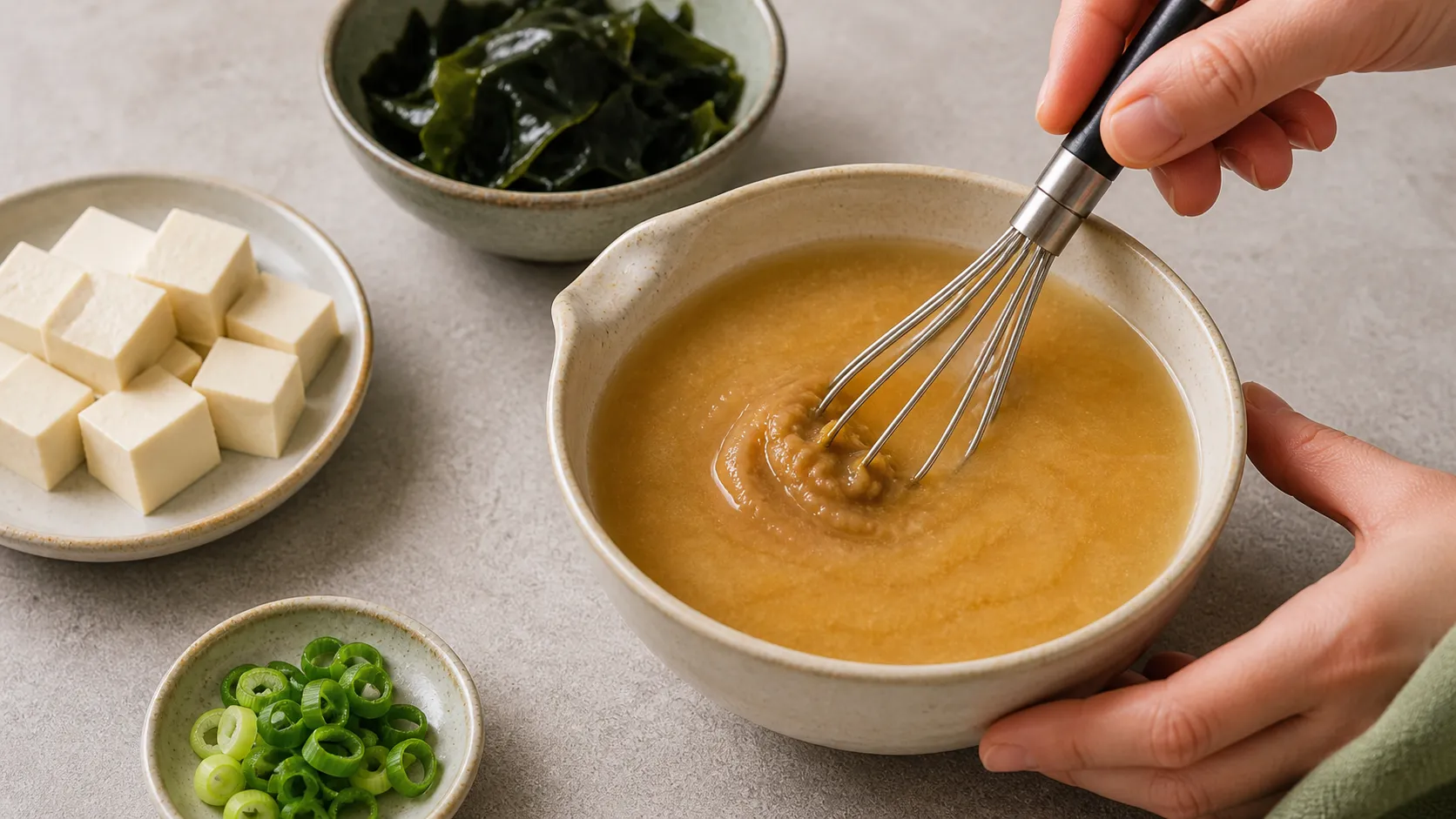
approx. 3 minutes3 tbsp miso paste white or red, no added sugar 60 g spring onion 2 spring onions, thinly sliced into rings 5 ml sesame oil approx. 1 tsp; toasted In a small bowl, whisk the miso paste (3 tbsp) smooth with 3 to 4 tbsp of warm broth. Stir into the soup, do not bring it back to a boil. Add the wakame, drizzle with sesame oil (1 tsp), and scatter the spring onion rings over the top.
Which tips make the keto miso soup even better?
- Never boil miso paste. Always stir it into the finished soup below 70 °C.
- White shiro miso has less salt and a milder flavor; red hatcho miso is bolder and saltier.
- Measure the wakame before soaking. It swells to about five times its original volume.
- A pinch of toasted sesame salt (gomasio) over the finished soup adds magnesium and roasted aromas.
- Add fresh spring onions only at the very end. Heat destroys their flavor and reduces the sulforaphanes.
Why is miso soup a smart choice on keto?
Miso paste contains around 12 g of carbs per 100 g, but it is only used in small amounts (approx. 15 to 20 g per serving), which works out to about 2 g net carbs. Wakame seaweed adds another 0.5 g or so. The full bowl lands at approx. 4 g net carbs. What really matters is the electrolyte load: a bowl of miso soup carries roughly 900 to 1,200 mg of sodium, covering a large share of the daily keto sodium target. On a ketogenic diet the kidneys excrete more sodium than on a high-carb diet, which is why deliberate intake is especially important.
Source: NIH Office of Dietary Supplements – Sodium
Wakame: a sea vegetable rich in iodine and magnesium
Wakame (Undaria pinnatifida) contains around 40 to 90 µg of iodine per 1 g of dried seaweed and about 100 mg of magnesium per 100 g. The keto soup uses approx. 3 to 4 g of dry wakame, which provides a meaningful iodine contribution. Magnesium is often the first mineral to run low on keto, since legumes and grains are off the menu.
Miso: fermented and probiotic
Miso is a fermented product (koji fermentation) and contains live bacterial cultures, provided it is not heated above 70 °C. That is why the paste should always be stirred into the finished, slightly cooled broth and never boiled along with it. Unpasteurized miso (such as hatcho miso or white shiro miso) has the highest probiotic concentration.
How do I serve and vary the keto miso soup?
From personal experience, miso soup in the morning, before or after breakfast, is a very effective way to take in sodium and magnesium without feeling full. It works just as well as a post-workout electrolyte reset as it does as a light dinner.
Meal prep: get the broth and toppings ready
Dashi broth can be cooked in advance and kept in the fridge for 3 to 4 days. Soak the wakame separately and add it only at serving so the texture stays intact. Do not stir the miso paste into the prepped broth, mix it in fresh each day.
Variation: no tofu, with egg or shrimp
If tofu is not your thing, a poached egg dropped straight into the hot soup adds protein and a creamy texture. Alternatively, simmer 80 to 100 g of shrimp briefly in the broth. It brings more protein and still stays keto friendly at under 5 g net carbs.
Nutrition values
| Nutrient | Per 100 g | Per serving | Keto context |
|---|---|---|---|
| Calories | approx. 34 kcal | approx. 120 kcal | Low. A light meal, great as an electrolyte reset. |
| Low. A light meal, great as an electrolyte reset. | |||
| Fat | approx. 1.7 g | approx. 6 g | Moderate. Mainly from silken tofu and sesame oil. |
| Moderate. Mainly from silken tofu and sesame oil. | |||
| Net carbs | approx. 1.1 g | approx. 4 g | Very good for keto. Miso is the main carb source. |
| Very good for keto. Miso is the main carb source. | |||
| Sugar | approx. 0.4 g | approx. 1.4 g | Very low. No added sugar needed. |
| Very low. No added sugar needed. | |||
| Protein | approx. 2.6 g | approx. 9 g | Moderate. Tofu provides complete plant protein. |
| Moderate. Tofu provides complete plant protein. | |||
| Salt | approx. 0.5 g | approx. 1.8 g | High. Intentional, miso is the sodium source on keto. |
| High. Intentional, miso is the sodium source on keto. | |||
Note: Nutrition values are estimated averages per 100 g and per serving and may vary depending on ingredients, brands, portion size, and preparation. They do not replace individual nutrition or medical advice.
FAQ
Is miso soup keto friendly?
Yes. In its classic form with wakame and tofu, one serving has approx. 4 g net carbs. The high sodium content makes it especially valuable on a ketogenic diet, where the kidneys excrete more sodium than usual.
Which miso is best for keto?
All miso varieties work on keto since you only use small amounts. White shiro miso (mild, less salty) is a good starting point. Red or dark miso (hatcho, mugi) has more umami and a stronger flavor, ideal when you want a deeper taste.
Can I swap dashi for regular vegetable broth?
Yes. Dashi (made from kombu seaweed and bonito flakes) delivers the signature Japanese umami flavor, but it is not essential. A good homemade vegetable or chicken broth works just as well. Kombu seaweed alone gives a vegan version with even more iodine.
How much sodium does the soup actually provide?
Approx. 700 to 1,000 mg of sodium per serving, depending on the miso variety and amount used. That covers roughly 30 to 40 percent of the daily keto sodium target of 2,000 to 3,000 mg. Exact values vary by miso brand.
Can I boost the soup with more protein?
Yes. Shrimp (approx. 15 g of protein per 100 g, almost zero carbs) or a poached egg are perfect additions. Firmer tofu (instead of silken tofu) also raises the protein content and gives more bite.