Handkase Cheese Soup with Vegetable Broth and Cream
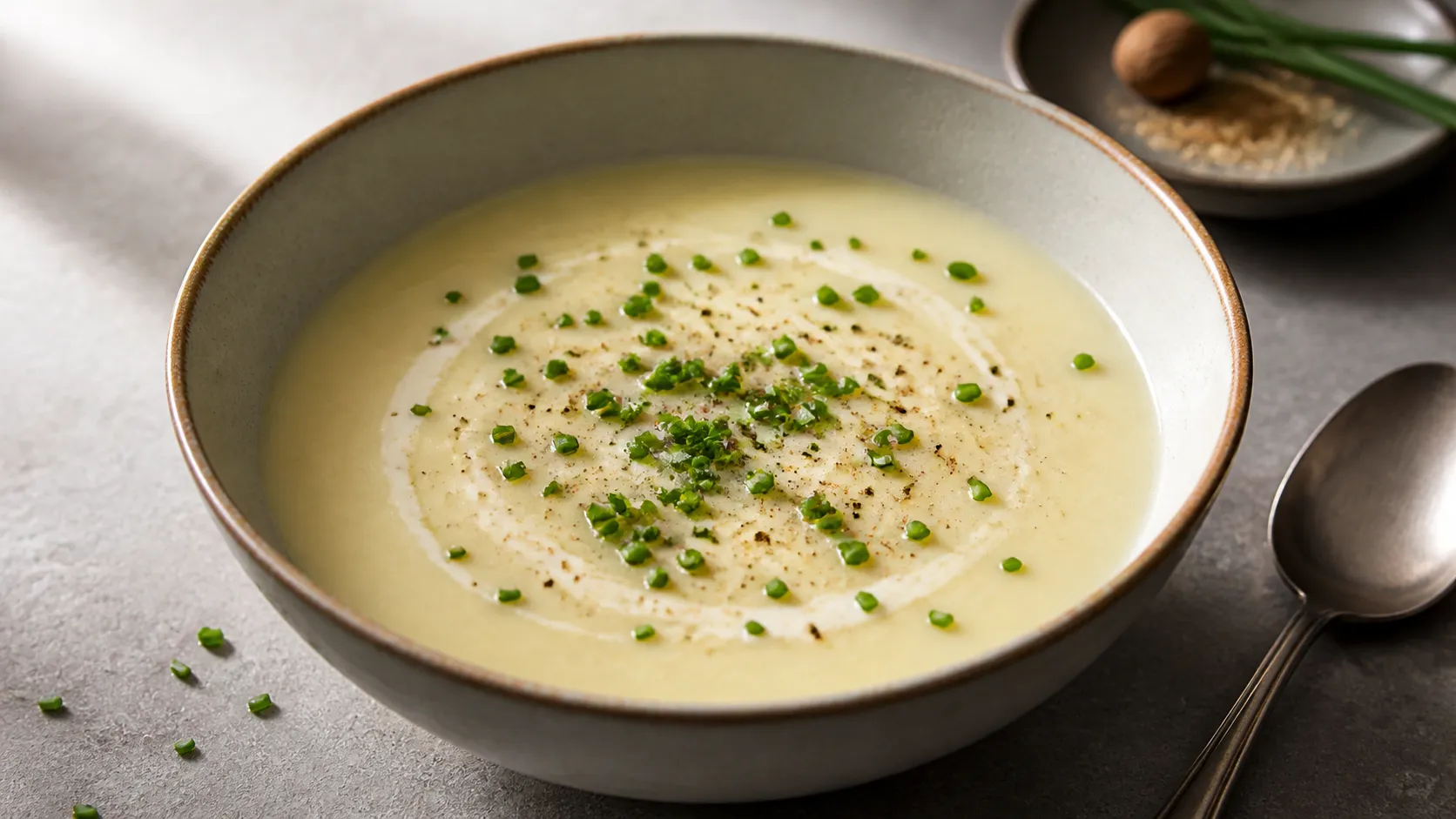
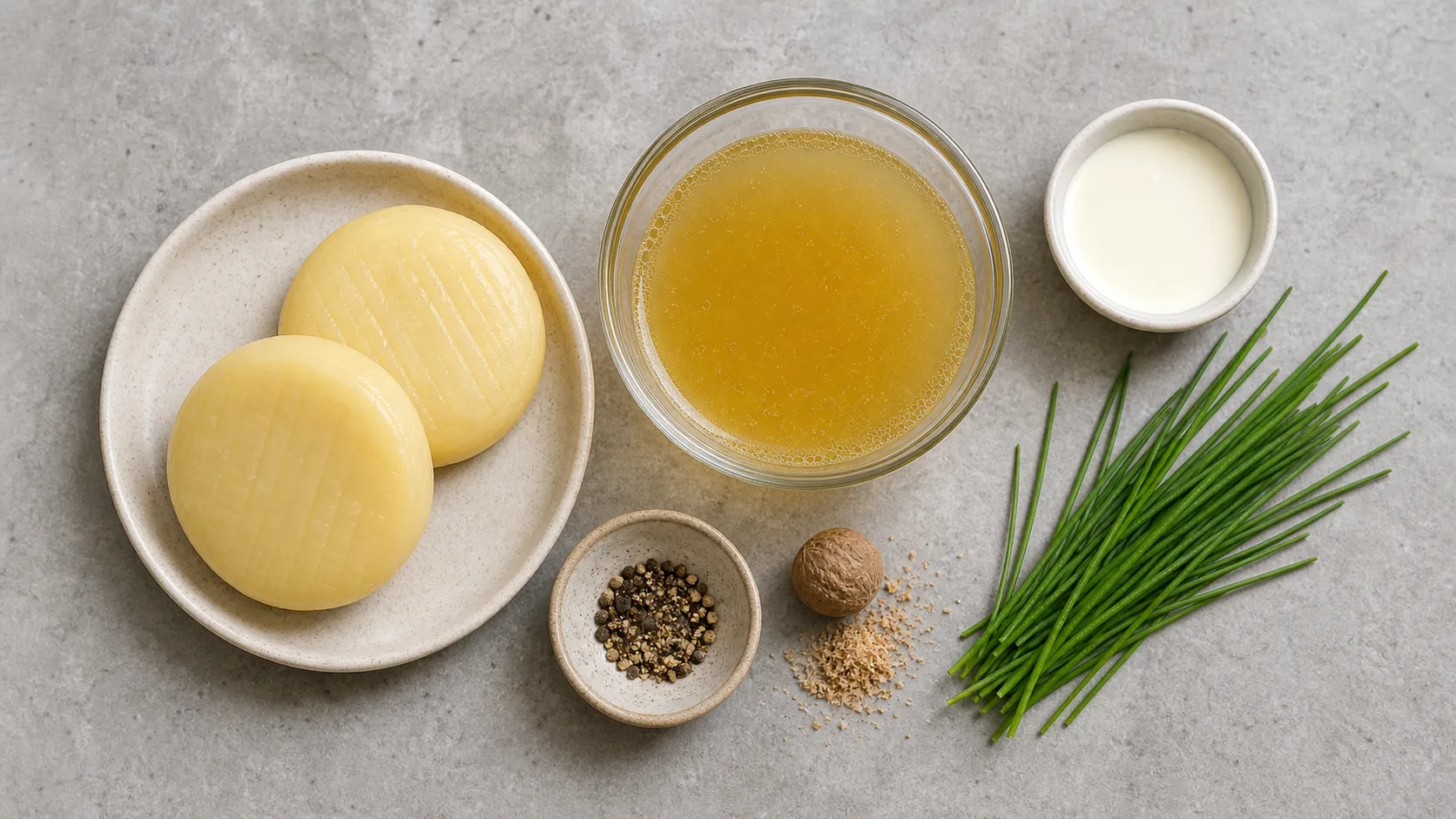
Handkase dissolves surprisingly well in hot vegetable broth. The sour-milk cheese loses its firmness at around 60 to 70 degrees C and turns creamy. Combined with a splash of cream, a pinch of nutmeg, and fresh chives, it becomes a complete keto soup without a roux, with approx. 2 g net carbs and 14 g fat per serving. The soup is ready in 15 minutes.
Key takeaways
- Ready in approx. 15 minutes: heat the broth, stir in the handkase, season.
- Approx. 2 g net carbs and 14 g fat per serving.
- No roux needed: the handkase thickens the soup on its own.
- Ingredients: handkase, vegetable broth, cream, chives, nutmeg, pepper.
Ingredients
Approx. 300 ml of soup per person as a light lunch or dinner.
| Amount | Ingredient | Note | ||
|---|---|---|---|---|
| Handkase | approx. 60 g each, diced | |||
| approx. 60 g each, diced | ||||
| Vegetable broth | preferably unsalted or lightly salted | |||
| preferably unsalted or lightly salted | ||||
| Cream | approx. 4 tbsp | |||
| approx. 4 tbsp | ||||
| Chives | 2 tbsp, finely chopped | |||
| 2 tbsp, finely chopped | ||||
| Nutmeg | freshly grated | |||
| freshly grated | ||||
| Pepper | - | |||
How to make it
-
Heat the broth
approx. 5 minutes2 piece Handkase approx. 60 g each, diced 600 ml Vegetable broth preferably unsalted or lightly salted Heat 600 ml of vegetable broth in a saucepan to approx. 75 degrees C, do not boil. Cut the handkase into approx. 1 cm cubes.
-
Melt the handkase
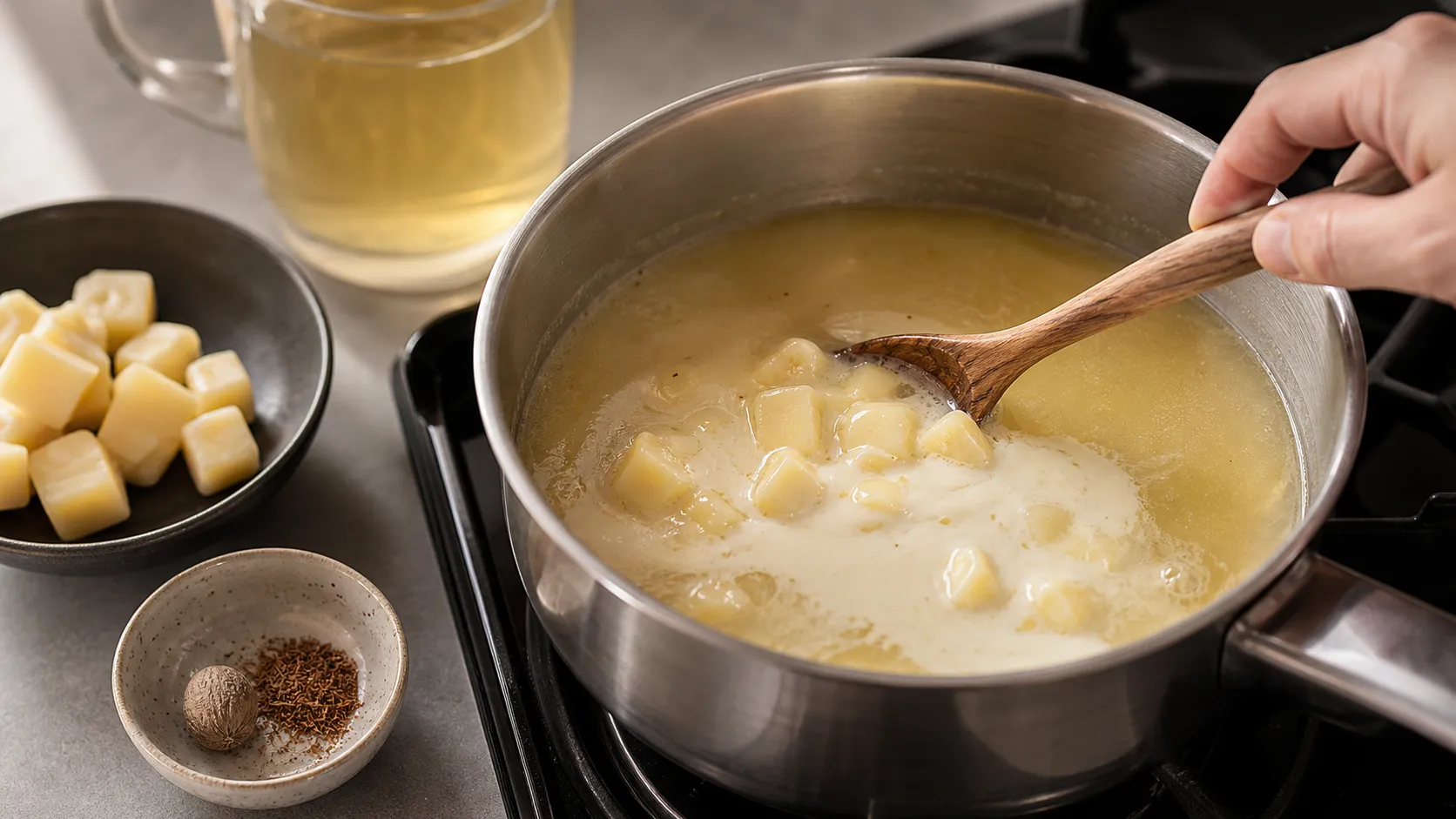
approx. 4 minutes40 ml Cream approx. 4 tbsp 1 pinch Nutmeg freshly grated Add the handkase cubes to the hot broth and let them melt while stirring constantly. Reduce the heat to low. Stir in 40 ml of cream and 1 pinch of freshly grated nutmeg.
-
Season and serve
approx. 2 minutes10 g Chives 2 tbsp, finely chopped 1 pinch Pepper Keep the soup at a gentle low heat and stir for 1 to 2 more minutes until creamy. Season with pepper, ladle into warmed bowls, and garnish with chives (2 tbsp). Serve immediately.
Tips for a creamy handkase soup
- Do not boil the broth: at 70 to 80 degrees C the handkase melts creamy instead of rubbery.
- Cut the handkase into small cubes so it melts faster and more evenly.
- Stir constantly while it melts to create a smooth emulsion without lumps.
- Add the cream only after the cheese has melted so it does not curdle.
- Season with freshly grated nutmeg, it lifts the cheese flavor beautifully.
- Serve immediately: the soup can separate when cooled and reheated.
Why is handkase soup keto-friendly?
Classic cheese soup is thickened with a roux, which makes it high in carbs. Handkase, thanks to its high protein content and sour-milk structure, thickens the soup on its own without any flour. Cream (approx. 3.3 g carbs per 100 ml) keeps the soup smooth and adds keto-friendly fat.
Source: FDDB Nutrient Database, nutrition data for handkase and cream
Thickening without a roux
Handkase contains approx. 15 g of protein per 100 g. When stirred into hot broth (70 to 80 degrees C), the casein denatures and gives the soup a creamy, lightly thickened texture, without any starch or flour. For a thicker soup, use more handkase (3 instead of 2 pieces) or stir in some cream cheese.
Melting handkase: temperature and technique
Handkase should be worked into the broth at around 70 to 80 degrees C. Too much heat (boiling) turns it rubbery. Take the broth off the heat just before adding the cheese, then stir constantly while it melts.
How do I serve and vary handkase soup?
The soup makes a great light lunch or dinner. Served with chives, caraway, and a squeeze of lemon juice, it echoes the traditional Hessian handkase flavors in liquid form.
Variation: with caraway, Hessian style
In Frankfurt cooking, caraway belongs with handkase like music with dancing. Toast 1 tsp of whole caraway seeds briefly in a dry pan and stir them into the finished soup for a more authentic aroma.
Variation: with bacon croutons on top
Crispy bacon bits as a garnish turn this soup into a full keto meal with significantly more fat and protein. Fry the bacon, drain it, and scatter on top of the soup just before serving.
Nutrition values
| Nutrient | Per 100 g | Per serving | Keto rating |
|---|---|---|---|
| Calories | approx. 95 kcal | approx. 285 kcal | Moderate. A lighter keto soup thanks to its low fat content. |
| Moderate. A lighter keto soup thanks to its low fat content. | |||
| Fat | approx. 4.7 g | approx. 14 g | Good for keto. Cream provides most of the fat. |
| Good for keto. Cream provides most of the fat. | |||
| Net carbs | approx. 0.7 g | approx. 2 g | Very low. Trace amounts from chives and cream. |
| Very low. Trace amounts from chives and cream. | |||
| Sugar | approx. 0.5 g | approx. 1.5 g | Very low. No added sugar. |
| Very low. No added sugar. | |||
| Protein | approx. 5.2 g | approx. 16 g | Excellent. Handkase makes this soup richer in protein than classic cheese soup. |
| Excellent. Handkase makes this soup richer in protein than classic cheese soup. | |||
| Salt | approx. 0.9 g | approx. 2.7 g | Moderate. Both the broth and the handkase contribute salt, so use an unsalted broth if you can. |
| Moderate. Both the broth and the handkase contribute salt, so use an unsalted broth if you can. | |||
Note: Nutrition values are estimated averages per 100 g and per serving and may vary depending on ingredients, brands, portion size, and preparation. They do not replace individual nutrition or medical advice.
FAQ
Can I make handkase soup ahead and reheat it?
Sort of. The soup keeps for 1 to 2 days in the fridge, but it should be reheated gently over low heat with constant stirring. Too much heat causes the protein to curdle. It tastes best right after cooking.
How many calories are in handkase soup?
Approx. 285 kcal per serving (300 ml). That is less than classic roux-thickened cheese soups, which often reach 400 to 600 kcal. If you need more calories for keto, increase the cream to 100 ml.
Can I make this soup with other cheeses?
Yes, but handkase has the most favorable keto macros (very low fat with very high protein) and melts well. For a richer version, use a 50/50 mix of handkase and cream cheese, which adds more fat and a creamier consistency.
Is vegetable broth keto-friendly?
Yes, in moderate amounts. Store-bought vegetable broth contains approx. 1 to 3 g of carbs per 100 ml, so 300 ml per serving adds approx. 3 to 9 g of carbs. For a strict keto version, use unsalted chicken broth or homemade vegetable broth without carrots or parsnips.