
Handkase with Kimchi and Sesame Oil
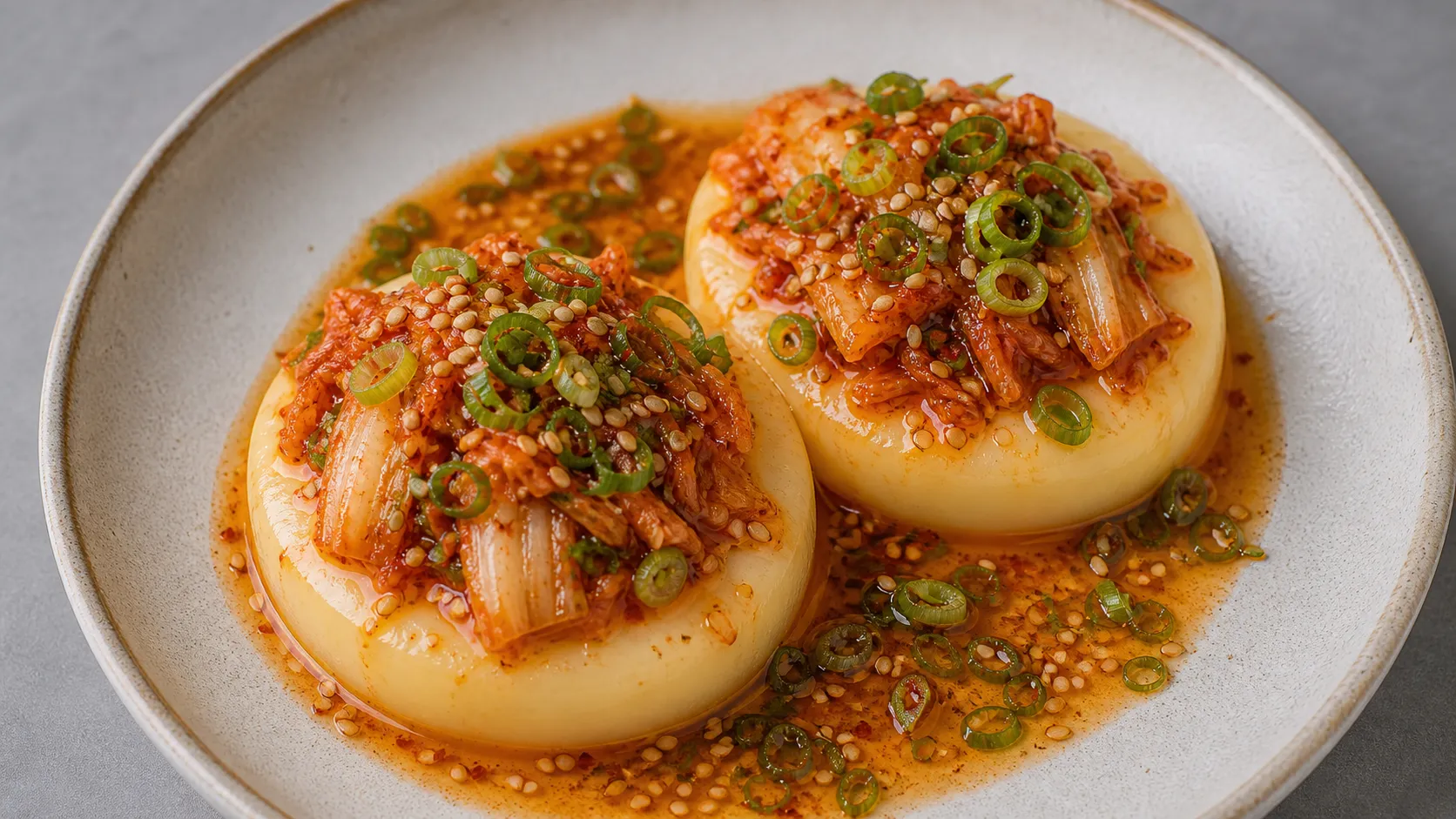
Handkase and kimchi are both products of lactic acid fermentation – one through sour milk bacteria, the other through wild fermentation of cabbage and spices. When two fermented products meet, the aromas multiply rather than simply add up. The result has a depth that is hard to describe but instantly recognizable.
Key facts at a glance
- Prep time approx. 8 minutes – quick, fermented, no cooking.
- Approx. 3 g net carbs and 13 g fat per serving.
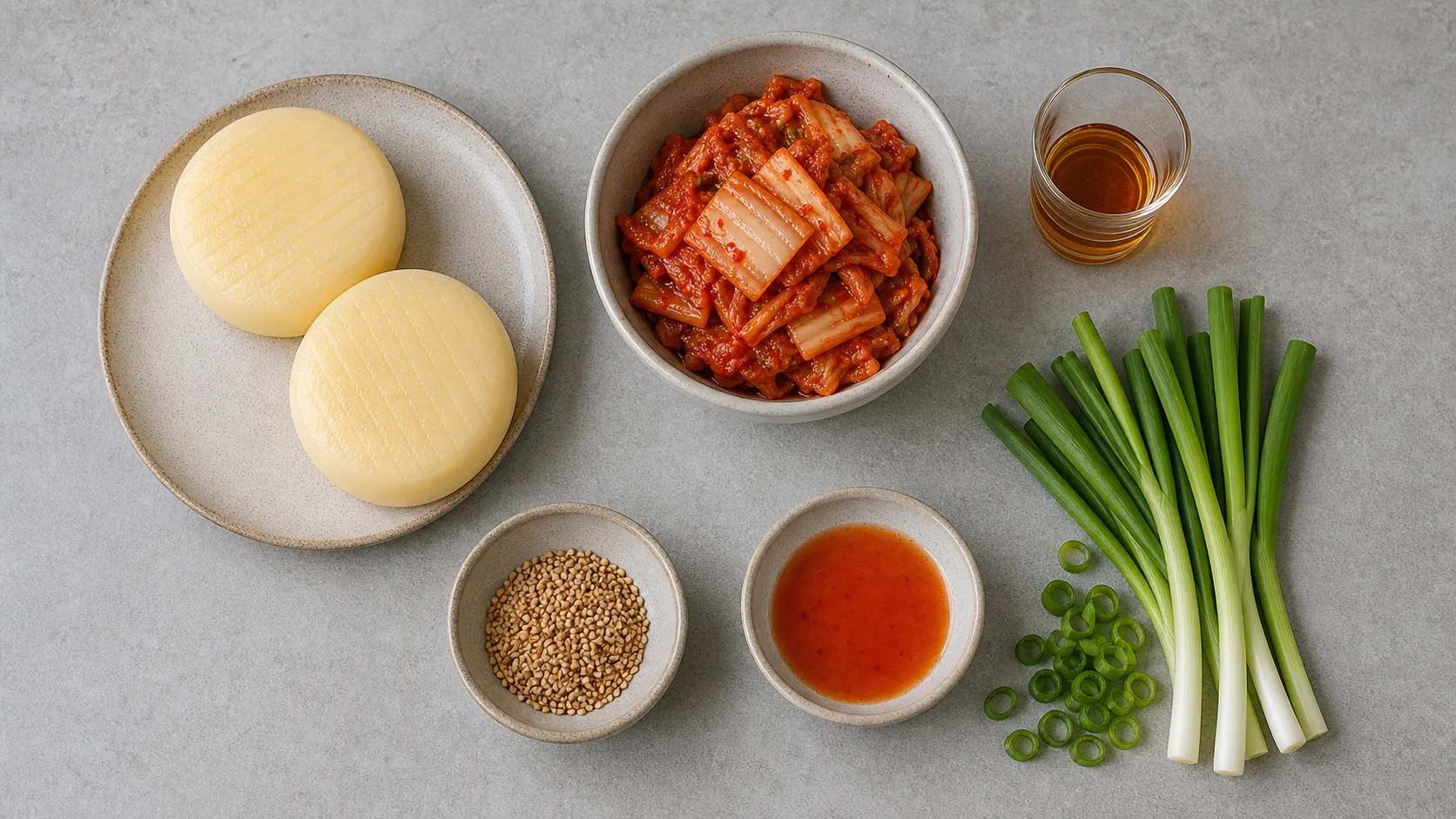
- Ingredients: handkase, kimchi, sesame oil, toasted sesame seeds, spring onions.
- Great for anyone who loves fermented foods and wants to rediscover handkase in a bold new way.
Ingredients
1 handkase per person as a probiotic keto snack.
| Amount | Ingredient | Note | ||
|---|---|---|---|---|
| handkase | approx. 60 g each | |||
| approx. 60 g each | ||||
| kimchi | without rice flour or added sugar | |||
| without rice flour or added sugar | ||||
| toasted sesame oil | approx. 1 tsp | |||
| approx. 1 tsp | ||||
| sesame seeds | toasted | |||
| toasted | ||||
| spring onion | cut into thin rings | |||
| cut into thin rings | ||||
Preparation
-
Prepare the kimchi
approx. 3 minutes100 g kimchi without rice flour or added sugar Drain the kimchi (100 g), reserving the liquid. Chop coarsely if the pieces are too large.
-
Assemble
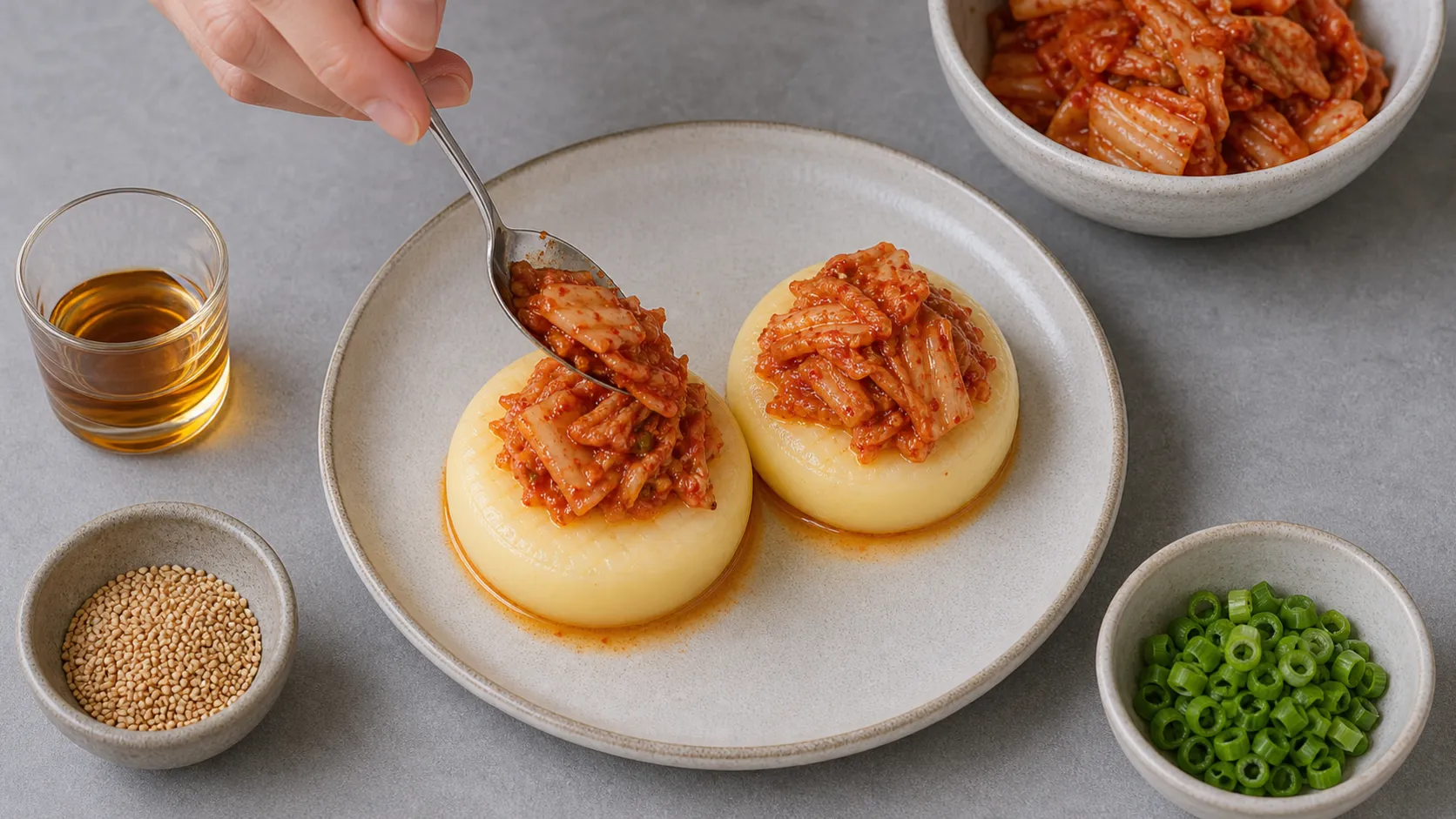
approx. 3 minutes2 piece handkase approx. 60 g each Arrange the handkase (60 g each) on plates. Spread 50 g of kimchi on each cheese and pour a little of the reserved kimchi liquid on top.
-
Garnish
approx. 2 minutes5 ml toasted sesame oil approx. 1 tsp 2 tsp sesame seeds toasted 40 g spring onion cut into thin rings Drizzle with toasted sesame oil (1 tsp total), sprinkle with toasted sesame seeds (2 tsp) and spring onion rings (40 g).
Which tips improve kimchi handkase?
- Bring the kimchi to room temperature before serving – cold kimchi has a flatter aroma.
- Drain the kimchi, but pour the kimchi liquid over the cheese as an extra marinade – it is intense and keto-friendly.
- Use only a few drops of sesame oil – it is very intense, 1 tsp is enough for two servings.
- Briefly dry-toast the sesame seeds for more aroma.
- Sprinkle a touch of gochugaru (Korean chili powder) over the finished plate – milder than kimchi chili and adds color.
- Slice the spring onions into very thin rings – the green color contrasts nicely with the red kimchi.
Why is kimchi keto-friendly?
Kimchi contains approx. 2–4 g net carbs per 100 g, depending on the recipe – some varieties include sugar or rice water in the brine. At the portion used here of about 50 g per serving (approx. 1–2 g carbs), kimchi fits well into a keto diet. Toasted sesame oil is carb-free. One serving comes to approx. 3 g total net carbs.
Source: FDDB Nutritional Database – Kimchi nutrition values
Double fermented: a probiotic bonus
Both handkase and fresh (unpasteurized) kimchi contain live lactic acid bacteria. Fermented foods have been linked to positive effects on gut health. For keto beginners going through a dietary transition, gut flora support can be an added benefit.
Which kimchi is keto-friendly?
Traditional baechu kimchi (napa cabbage) without rice porridge (sal) is more keto-friendly. Industrially produced kimchi often contains rice flour or sugar as the base of the fermentation paste – check the ingredient list. Kimchi from health food stores or Asian specialty shops often contains less added sugar.
How do I serve and vary kimchi handkase?
From personal experience, this combination is the boldest of the entire series – and one of the most interesting. The key lies in the temperature: the handkase should be at room temperature and the kimchi as well – served too cold, the aromas freeze up.
Meal prep: kimchi keeps for weeks
Kimchi is a long-term ferment – an opened jar keeps in the fridge for weeks to months and only gets more intense. Ideal as a keto pantry staple because it is always within reach.
Milder version: rinse the kimchi briefly
If you find kimchi too spicy, rinse it briefly with cold water – this reduces the chili heat but preserves the fermented aroma. The carb count barely changes.
Nutrition values
| Nutrient | Per 100 g | Per serving | Keto rating |
|---|---|---|---|
| Calories | approx. 110 kcal | approx. 182 kcal | Moderate. Good as a snack; calories driven by sesame oil and sesame seeds. |
| Moderate. Good as a snack; calories driven by sesame oil and sesame seeds. | |||
| Fat | approx. 7.9 g | approx. 13 g | Good for keto. Sesame oil and sesame seeds supply the fat. |
| Good for keto. Sesame oil and sesame seeds supply the fat. | |||
| Net carbs | approx. 1.8 g | approx. 3 g | Good for keto. Kimchi amount is easy to control. |
| Good for keto. Kimchi amount is easy to control. | |||
| Sugar | approx. 0.8 g | approx. 1.3 g | Low. Depends somewhat on the kimchi variety. |
| Low. Depends somewhat on the kimchi variety. | |||
| Protein | approx. 7.1 g | approx. 11.7 g | Good. Handkase plus sesame seeds give a solid protein profile. |
| Good. Handkase plus sesame seeds give a solid protein profile. | |||
| Salt | approx. 1.1 g | approx. 1.8 g | Watch out. Kimchi is salty – no extra salt needed. |
| Watch out. Kimchi is salty – no extra salt needed. | |||
Note: Nutrition values are estimated averages per 100 g and per serving and may vary depending on ingredients, brands, portion size, and preparation. They do not replace individual nutrition or medical advice.
FAQ
What is kimchi?
Kimchi is fermented Korean vegetables – most often napa cabbage – pickled and fermented with chili, garlic, ginger, spring onions and often fish sauce. It is a staple food in Korea and one of the best known probiotic foods worldwide.
Where do I buy keto-friendly kimchi?
At Asian markets (usually inexpensive and traditional), health food stores or organic shops (often without sugar, more expensive). In the supermarket refrigerated section (international or Asian shelf). Check the ingredient list: no rice flour, no sugar, no honey.
Is handkase really probiotic?
Fresh handkase contains live lactic acid bacteria cultures that develop through sour milk fermentation. As with other fresh fermented cheeses, these cultures are active under normal consumption. Pasteurized handkase no longer contains live cultures.
Can I use vegan kimchi?
Yes. Vegan kimchi (without fish sauce, often with soy sauce or doenjang as an umami substitute) works just as well. The flavor is slightly milder on the umami side, but the fermentation character remains.