Flambeed Handkase with Cognac, Thyme and Cream Sauce
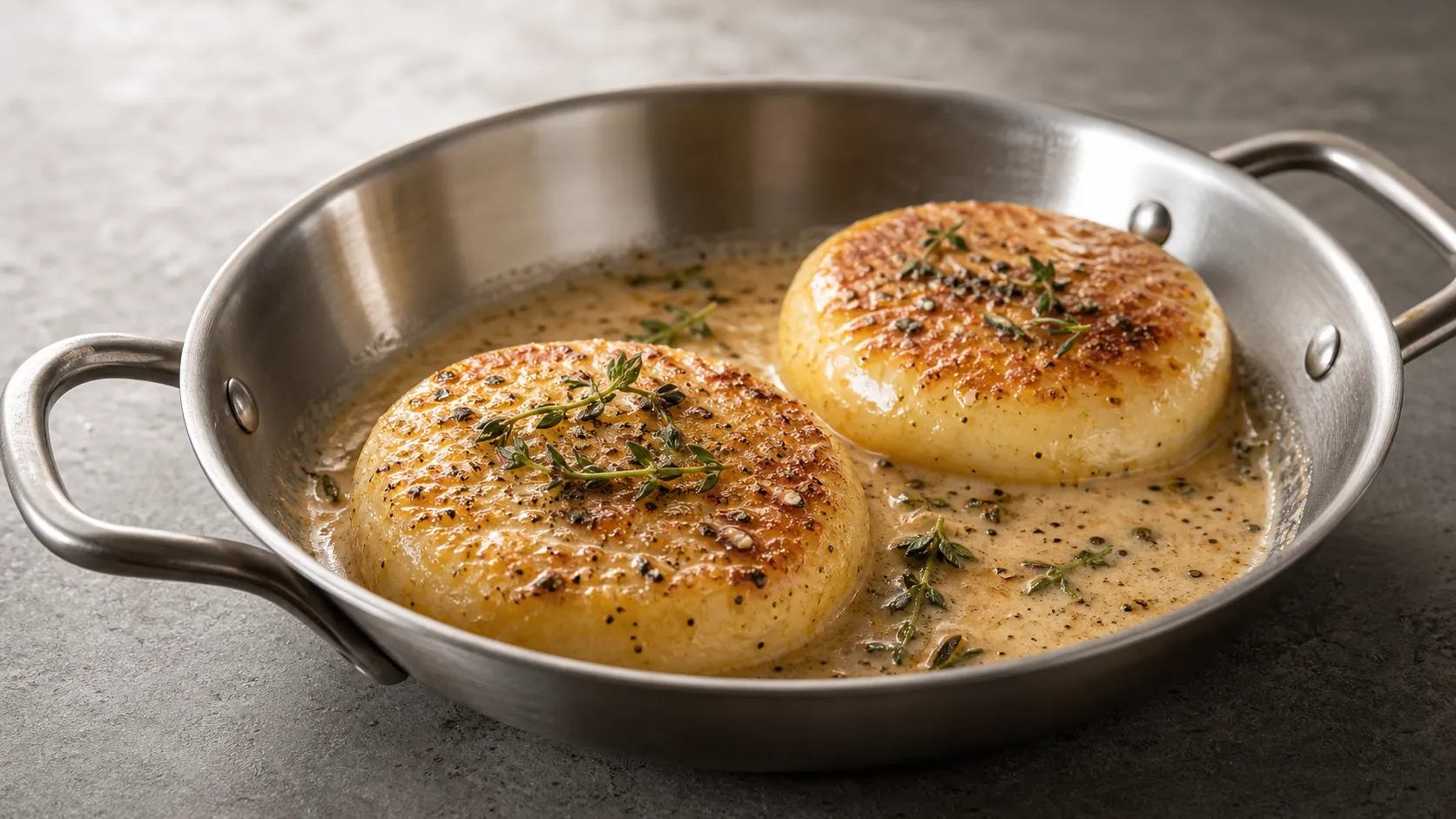
Flambeed handkase is the most spectacular keto cheese dish: the handkase is pan-seared in butter, then doused with cognac and carefully ignited. The flame burns for approx. 15 to 20 seconds, reduces the alcohol and leaves a caramel-savory aroma. Served with a simple thyme cream sauce, the result is a dish that feels like a restaurant main course, with approx. 2 g net carbs and 19 g fat per serving.
Key facts at a glance
- Ready in approx. 15 minutes: sear, flambé, finish with sauce.
- Approx. 2 g net carbs and 19 g fat per serving.
- Flambeing burns off the alcohol and leaves a caramel-nutty cognac aroma.
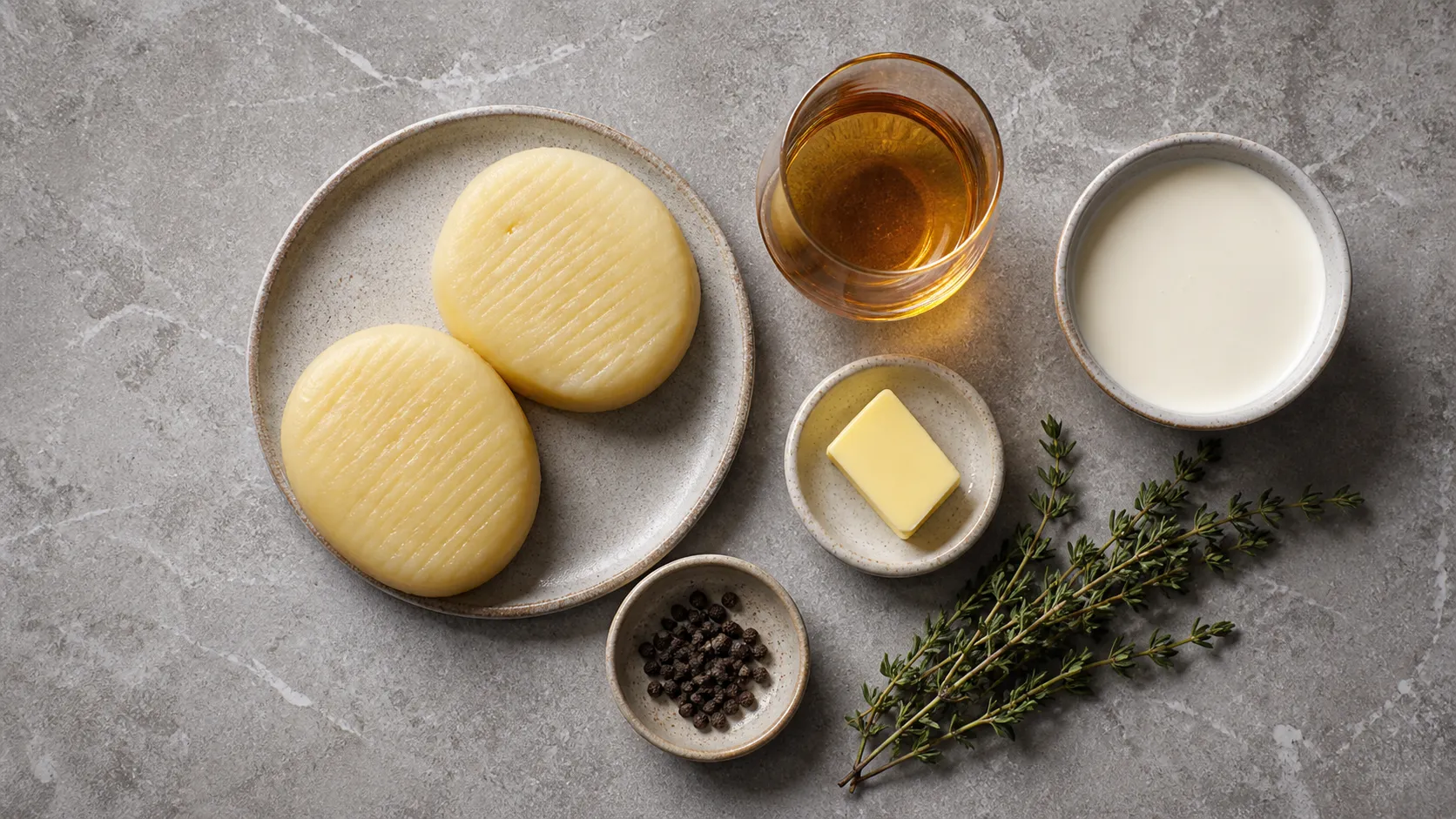
- Ingredients: handkase, cognac, cream, butter, thyme, pepper.
Ingredients
As a starter for 2 people or a main course for 1 person.
| Amount | Ingredient | Note | ||
|---|---|---|---|---|
| Handkase | approx. 60 g each | |||
| approx. 60 g each | ||||
| Cognac | approx. 2 tbsp; or Calvados, no added sugar | |||
| approx. 2 tbsp; or Calvados, no added sugar | ||||
| Cream | approx. 4 tbsp | |||
| approx. 4 tbsp | ||||
| Butter | approx. 1 tbsp | |||
| approx. 1 tbsp | ||||
| Thyme | 2 sprigs | |||
| 2 sprigs | ||||
| Pepper | - | |||
Preparation
-
Searing
approx. 7 minutes2 piece Handkase approx. 60 g each 15 g Butter approx. 1 tbsp 10 g Thyme 2 sprigs Switch off the range hood! Melt 1 tbsp butter in a stainless-steel pan over medium heat. Briefly sweat 2 sprigs of thyme (30 seconds). Add the handkase and sear for 3 minutes per side.
-
Flambeing
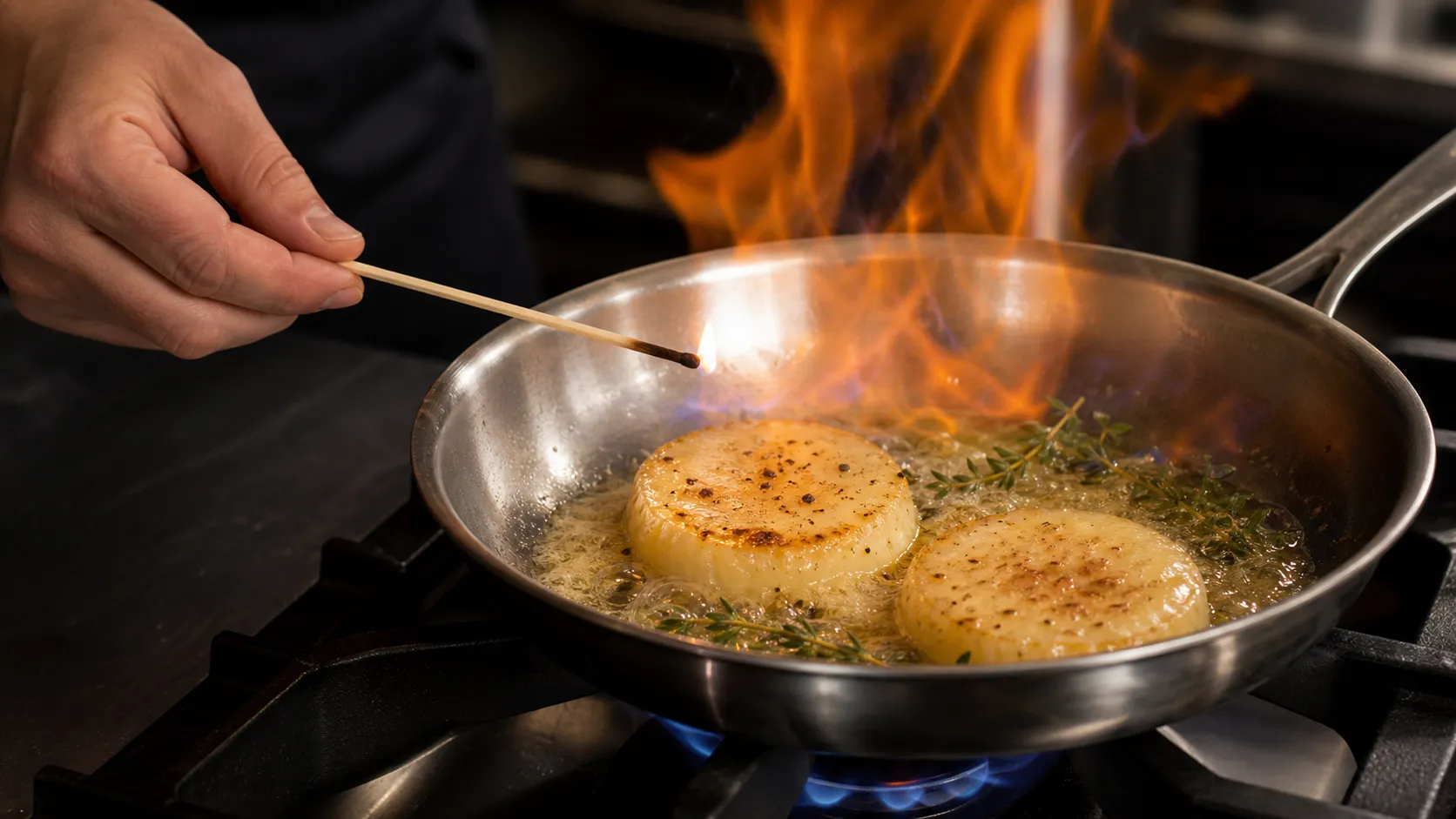
approx. 2 minutes30 ml Cognac approx. 2 tbsp; or Calvados, no added sugar Briefly take the pan off the heat. Pour in 2 tbsp cognac. Return the pan to the stove (high heat) and tilt slightly. Ignite the alcohol vapor with a long match. Let the flame burn out (15 to 20 seconds).
-
Sauce and serving
approx. 3 minutes40 ml Cream approx. 4 tbsp 1 pinch Pepper Add 40 ml cream to the pan and lower the heat. Reduce for 2 minutes until the sauce thickens slightly. Season with pepper. Plate the handkase with the sauce and serve immediately.
Tips for flambeed handkase
- Switch off the range hood, grease deposits in the filter can catch fire.
- No plastic pans or handles, use stainless steel or cast iron only.
- Bring the cognac to room temperature, cold alcohol ignites poorly.
- Use only 2 to 3 tbsp cognac per serving, more alcohol means a longer, less controlled flame.
- Use a long match or a long-stem lighter, never an ordinary match.
- Add the cream right after flambeing to prevent the cheese from drying out.
Why is flambeed handkase keto-friendly?
Cognac (or Calvados) contains approx. 0 g carbohydrates: pure distilled spirit with no added sugar. During flambeing, the alcohol burns off (ethanol has 7 kcal/g but no carbs). Cream (approx. 3.3 g carbs per 100 ml) stays keto-compliant in moderate amounts. The finished dish has barely measurable carbs from the cognac.
Source: FDDB nutrition database – cognac and cream nutrition values
Cognac on keto: what is left after flambeing?
Flambeing burns off approx. 50 to 70 percent of the alcohol in about 20 seconds. The rest evaporates while the cream sauce reduces. Only minimal traces of ethanol remain in the finished sauce, with no measurable carbs. Cognac without caramel coloring (VS or VSOP, not Armagnac with sugar coloring) has zero carbs.
Searing in butter: why not olive oil?
Butter (approx. 82 percent fat, 0 g carbs) develops a nutty, caramel aroma when seared (brown butter / beurre noisette) that pairs with the cognac character. Olive oil would be less compatible in flavor. If higher heat is needed, clarified butter (ghee) works well.
Safety notes for flambeing
Flambeing is safe when you follow a few rules: switch off the range hood, use long matches or a long-stem lighter and never shake the pan. The flame goes out on its own once the alcohol is consumed.
Variation without flambeing
If you would rather not flambé: pour the cognac straight into the hot pan and reduce for 1 to 2 minutes. The alcohol evaporates without a flame and most of the aroma is preserved, just without the visual spectacle.
Nutrition values
| Nutrient | Per 100 g | Per serving | Keto rating |
|---|---|---|---|
| Calories | approx. 180 kcal | approx. 330 kcal | Moderate. Butter and cream provide most of the calories. |
| Moderate. Butter and cream provide most of the calories. | |||
| Fat | approx. 10.4 g | approx. 19 g | Good for keto. Butter and cream are excellent keto fat sources. |
| Good for keto. Butter and cream are excellent keto fat sources. | |||
| Net carbs | approx. 1.1 g | approx. 2 g | Very low. Cognac has zero carbs, cream only minimal. |
| Very low. Cognac has zero carbs, cream only minimal. | |||
| Sugar | approx. 0.8 g | approx. 1.5 g | Low. From the cream. |
| Low. From the cream. | |||
| Protein | approx. 8.1 g | approx. 15 g | Good. Handkase supplies all the protein. |
| Good. Handkase supplies all the protein. | |||
| Salt | approx. 0.8 g | approx. 1.5 g | Low to moderate. Handkase brings the salt, no extra salting needed. |
| Low to moderate. Handkase brings the salt, no extra salting needed. | |||
Note: Nutrition values are estimated averages per 100 g and per serving and may vary depending on ingredients, brands, portion size, and preparation. They do not replace individual nutrition or medical advice.
FAQ
Can I use Calvados or whisky instead of cognac?
Yes. Calvados (apple brandy) gives a more fruity aroma and pairs well with the tangy character of handkase. Whisky delivers a smokier finish. Armagnac is richer than cognac. All have practically zero carbs, but make sure to avoid flavored spirits with added sugar.
What exactly happens chemically during flambeing?
Ethanol burns at approx. 78 degrees Celsius. During flambeing, the alcohol vapor above the liquid ignites and burns until there is no more oxygen or the alcohol is used up. Maillard reaction products form from the alcohol and the residual sugars in the cognac, producing a caramel-nutty aroma.
How much alcohol is left after flambeing?
After 20 seconds of flambeing and a further 3 to 4 minutes of reducing with cream, approx. 5 to 10 percent of the original alcohol remains. With 2 tbsp of cognac (40 percent ABV) that equals about 0.3 to 0.5 ml of pure alcohol per serving, negligible.
How many people does this recipe serve for dinner?
As a starter for 2 people, as a main course for 1 person. As a main, add a side such as steamed spinach or pan-fried mushrooms. The dish is impressive enough for guests, with very little effort.