
Keto Grill Rub Without Sugar: The Spice Mix for Everything Off the Grate
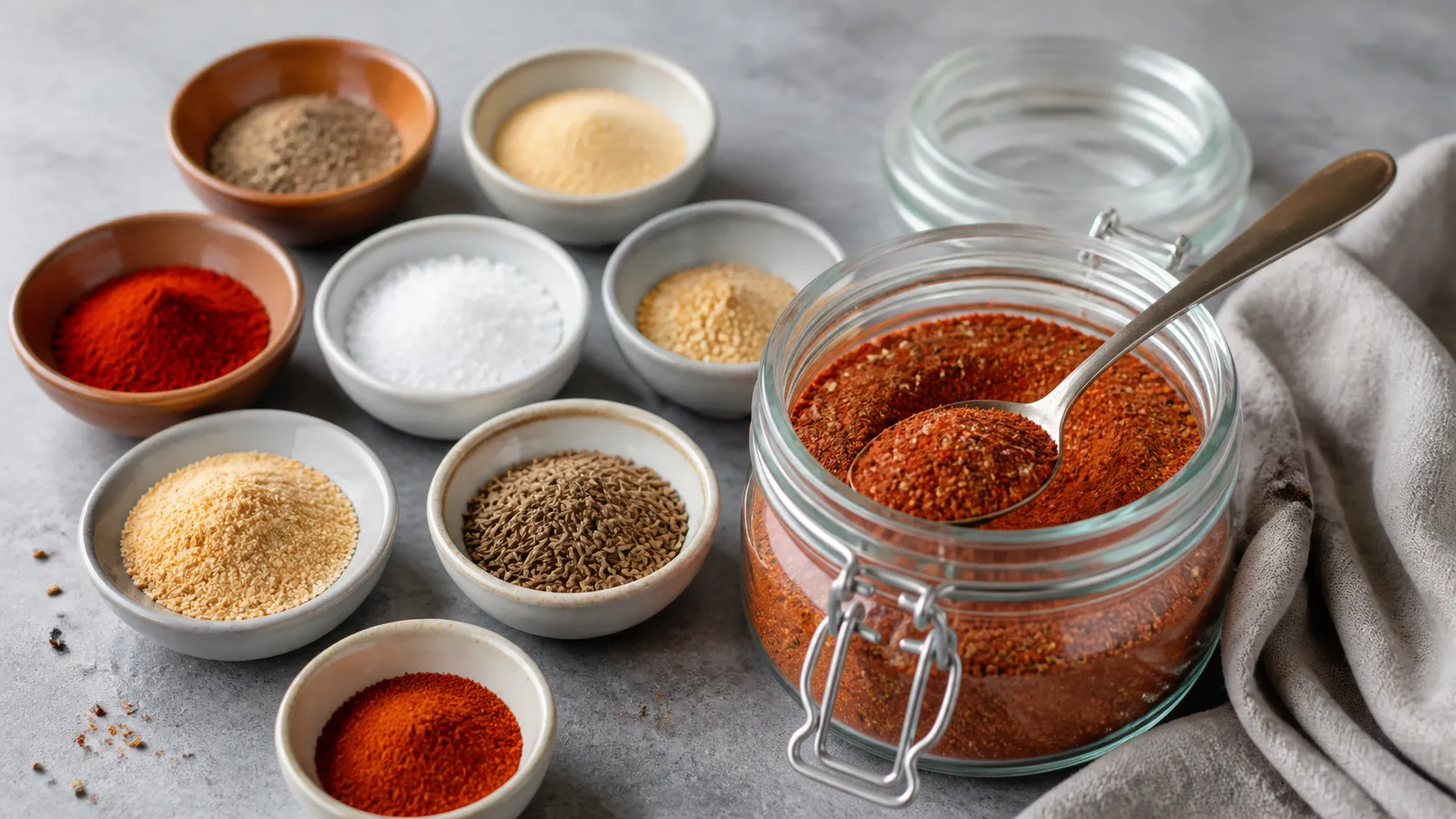
Almost every bought barbecue rub lists brown sugar first or second in its ingredients - it is meant to produce the dark crust. This keto grill rub replaces it with erythritol and smoked paprika powder and lands at approx. 0.7 g net carbs per serving. It suits pork, beef, poultry and grilled vegetables and keeps for six months in a jar.
The key facts at a glance
- Time required: approx. 10 minutes of active work, ready to use straight away afterwards.
- Only approx. 0.7 g net carbs and 0.3 g fat per serving.
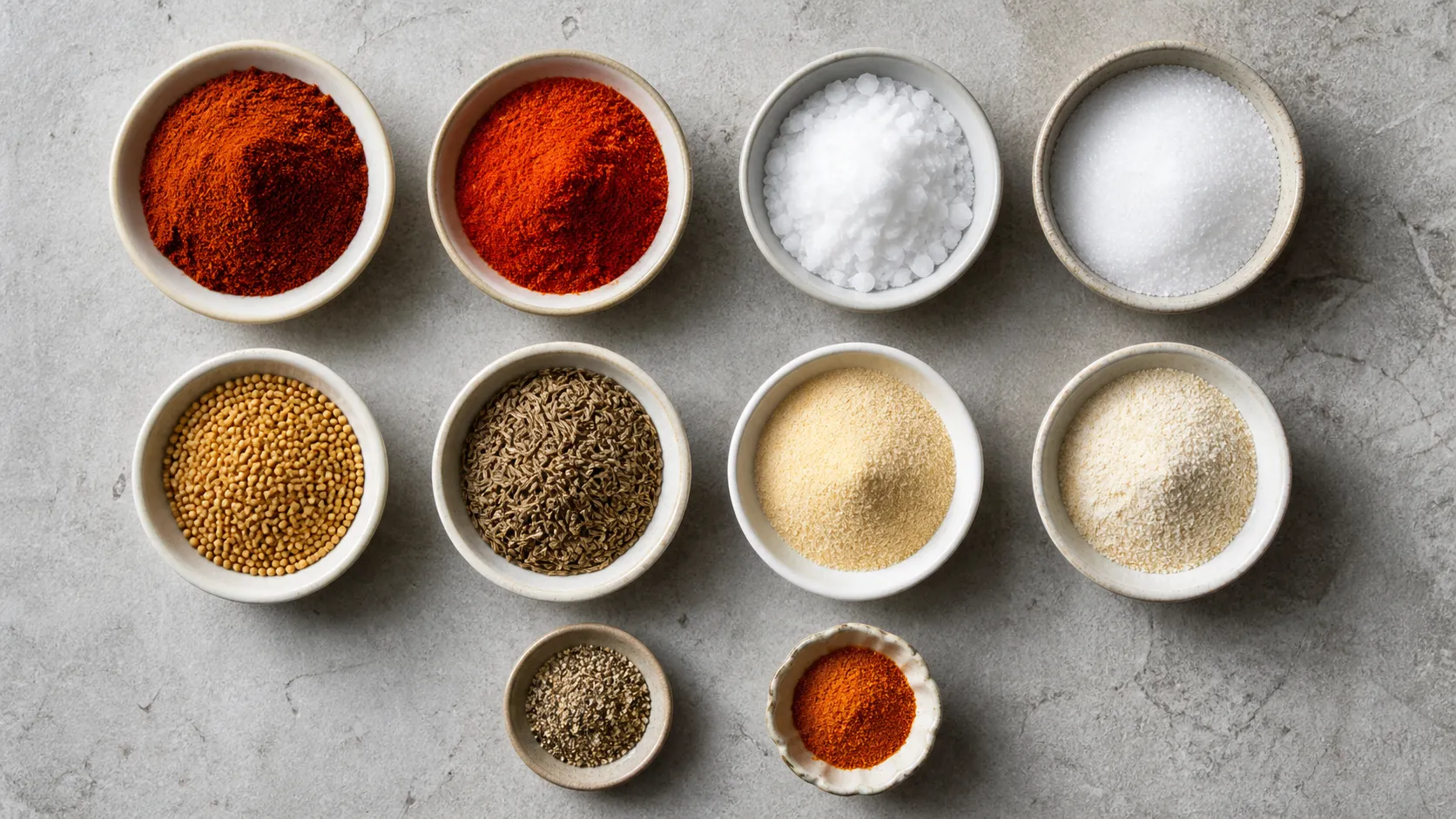
- Ingredients: smoked and sweet paprika powder, cumin, mustard seed, garlic and onion powder, erythritol, sea salt.
- Suits pork neck steaks, ribs, chicken thighs, grilled vegetables and keeps as a store-cupboard staple.
Ingredients
Makes approx. 95 g of rub, that is twelve servings of approx. 8 g - enough for approx. 2.4 kg of meat.
| Amount | Ingredient | Note | ||
|---|---|---|---|---|
| smoked paprika powder | Pimenton de la Vera or comparable | |||
| Pimenton de la Vera or comparable | ||||
| sweet paprika powder | - | |||
| erythritol | finely ground | |||
| finely ground | ||||
| mustard seed | freshly ground | |||
| freshly ground | ||||
| cumin | freshly ground | |||
| freshly ground | ||||
| garlic powder | - | |||
| onion powder | - | |||
| sea salt | fine | |||
| fine | ||||
| pepper | coarsely ground | |||
| coarsely ground | ||||
| cayenne pepper | to taste | |||
| to taste | ||||
How it is made
-
Grind the spices
approx. 4 minutes8 g mustard seed freshly ground 8 g cumin freshly ground Grind the mustard seed (8 g) and cumin (8 g) fresh in a mortar or spice grinder. Grinding fresh is not a refinement here but the difference between aromatic and flat.
-
Grind the erythritol
approx. 2 minutes20 g smoked paprika powder Pimenton de la Vera or comparable 15 g sweet paprika powder 10 g erythritol finely ground 8 g garlic powder 6 g onion powder Grind the erythritol (10 g) to a powder in the same mortar or in a blender cup. Coarse crystals do not dissolve on the meat and stay behind as gritty specks on the crust.
-
Mix
approx. 3 minutes20 g sea salt fine 1 tsp pepper coarsely ground 0.5 tsp cayenne pepper to taste Mix the smoked (20 g) and sweet paprika powder (15 g), garlic powder (8 g), onion powder (6 g), sea salt (20 g), pepper (1 tsp) and cayenne pepper (0.5 tsp) thoroughly with the ground spices and the erythritol.
-
Fill and use
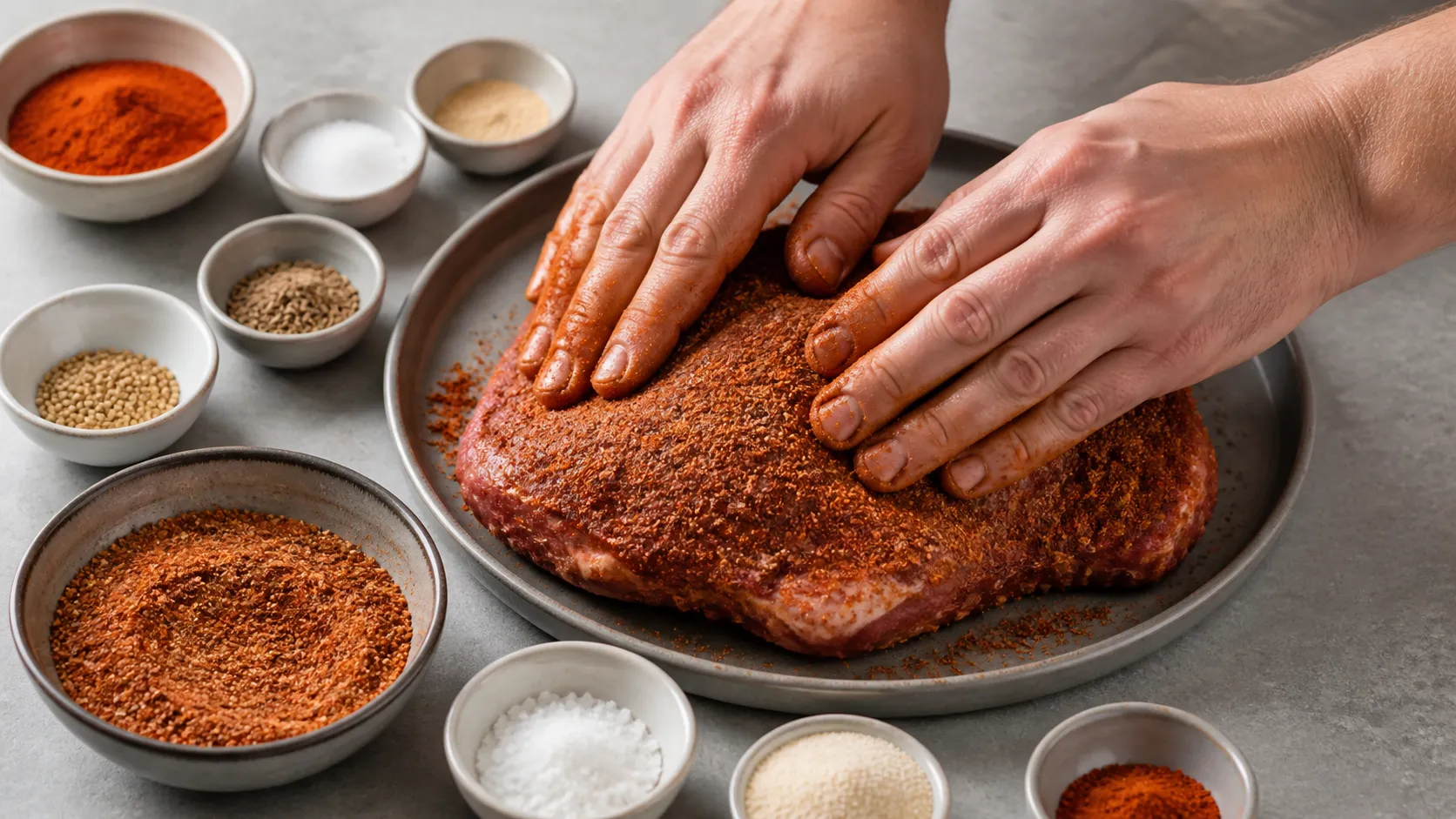
approx. 1 minuteFill into a dry screw-top jar and store in the dark. To grill, pat the meat dry, brush it thinly with mustard, rub in approx. 8 g of rub per 200 g with pressure and leave it for at least 1 hour.
Which tips help with a homemade grill rub?
- Grind the mustard seed and cumin fresh - pre-ground, they lose their aroma within weeks.
- Grind the erythritol finely, or coarse crystals sit on the crust.
- Pat the meat dry and brush it thinly with mustard so the rub clings.
- Work it in with pressure rather than sprinkling - approx. 8 g per 200 g of meat.
- Let it rest for at least 1 hour; overnight the salt also acts as a dry brine.
- Always use a dry spoon, or the mix clumps in the jar.
Why a rub without sugar works on keto
A commercial barbecue rub is 30 to 50 percent brown sugar depending on the recipe - on an 8 g portion that is 3 to 4 g carbs, and anyone rubbing generously quickly reaches double. This mix replaces it entirely: what remains is approx. 0.7 g net carbs per serving, and those come from the spices themselves, above all the paprika powder at approx. 35 g carbs per 100 g. That sounds like a lot, but the quantity puts it in perspective immediately - a single serving takes barely two grams of paprika powder. The more interesting point is that the sugar in a rub does its most important job badly on the grill anyway: it is supposed to caramelize and form the dark crust, but it burns above 160 degrees Celsius and then tastes bitter. That is precisely why food rubbed with sugar has to be cooked low. Nutrition values for individual spices can be looked up in the FDDB nutrition database.
Source: FDDB nutrition database
Where the color comes from when no sugar caramelizes
The dark crust of a well-seasoned piece of grilled meat comes from two sources, and only one of them is sugar. The other is the Maillard reaction between the meat's protein and the amino acids at the surface - it runs from 140 degrees Celsius and needs no additive. On the color side, smoked paprika powder takes over here: it is deep red in itself and darkens further as it heats. Erythritol stays in the rub because it rounds off the sharpness of mustard seed and pepper, not for the browning - caramelize it cannot.
Source: German Federal Food Code (BLS)
Rub it in, do not sprinkle it on
A rub clings via the moisture at the meat surface, not via fat. So the meat is patted dry, dampened very slightly or brushed thinly with mustard, and the rub is then worked in with pressure. On dry meat it will not stay put and falls into the coals at the first turn at the latest. An hour of resting time is enough; overnight, the salt acts like a dry brine and makes the meat juicier as well.
How do I use and vary the rub?
Reckon on about 8 g of rub per 200 g of meat - a good heaped teaspoon. From experience the most common misuse is dosing it like salt: a rub is seasoning and crust at once and is allowed to form a visible layer. If you are unsure, rub one side generously and taste the result.
Meal prep, storing and prepping ahead
In a screw-top jar kept in the dark, the rub holds for 6 months without noticeably losing aroma - the limiting factor is the essential oils of the freshly ground cumin, not spoilage. Double or triple batches are therefore worth making. A dry spoon matters: moisture makes the erythritol and onion powder clump. Rubbed meat can be stored for 2 days in the fridge or frozen straight away.
Three variations from the same base
For ribs and pork belly, double the smoked paprika powder and add 1 tsp ground coffee - it reinforces the roasted note without turning bitter. For poultry, replace the cumin with 1 tsp each of dried thyme and lemon zest and cut the salt by a quarter, because chicken skin takes up salt more readily. For grilled vegetables, leave out the onion and garlic powder and add 2 tsp sesame seeds - on zucchini and aubergine the rub clings better when they are tossed in oil first than it does dry.
Nutrition values
| Nutrient | Per 100 g | Per serving | Keto context |
|---|---|---|---|
| Calories | approx. 190 kcal | approx. 15 kcal | Practically irrelevant; one serving is 8 g of spice. |
| Practically irrelevant; one serving is 8 g of spice. | |||
| Fat | approx. 4 g | approx. 0.3 g | Negligible; the fat comes from whatever you are grilling. |
| Negligible; the fat comes from whatever you are grilling. | |||
| Net carbs | approx. 9 g | approx. 0.7 g | Very low per serving; bought rubs are 30 to 50 percent sugar. |
| Very low per serving; bought rubs are 30 to 50 percent sugar. | |||
| Sugar | approx. 4 g | approx. 0.3 g | Only natural sugar from paprika and onion powder; erythritol does not count. |
| Only natural sugar from paprika and onion powder; erythritol does not count. | |||
| Protein | approx. 8 g | approx. 0.6 g | Negligible; it comes from the mustard seed and cumin. |
| Negligible; it comes from the mustard seed and cumin. | |||
| Salt | approx. 25 g | approx. 2 g | High - the rub seasons the meat completely, so no further salting is needed. |
| High - the rub seasons the meat completely, so no further salting is needed. | |||
Note: Nutrition values are estimated averages per 100 g and per serving and may vary depending on ingredients, brands, portion size, and preparation. They do not replace individual nutrition or medical advice.
FAQ
Why do bought barbecue rubs contain so much sugar?
Because brown sugar caramelizes as it grills and creates the dark, sticky crust American barbecue is known for. The price is a carb content of 30 to 50 percent and the need to cook low - above 160 degrees Celsius the sugar burns and tastes bitter. Without sugar, the Maillard reaction of the meat protein takes over the browning, and you can work at full heat.
How much rub do I need per portion of meat?
About 8 g per 200 g of meat, that is a good heaped teaspoon. The rub should form a visible layer - it is seasoning and crust at once, not just a salt substitute. On ribs and pork belly with a lot of surface it can be one and a half times that, on fish rather half.
Can I make the rub without erythritol?
Yes, nothing is missing technically - erythritol does not caramelize anyway and only contributes flavor, by rounding off the sharpness of mustard seed and pepper. Without a sweetener the rub tastes sharper and more direct, which suits beef well and pork less. If you want to try it, mix half the batch without and taste it on the finished meat.
Does the rub suit weight loss on keto?
Yes, without reservation. 15 kcal and 0.7 g net carbs per serving do not register in any calculation. The only thing worth noting is the salt content of approx. 2 g per serving - a raised salt requirement is normal on keto, but salting on top of this overshoots quickly.