
Keto Barbecue Marinade: Sugar-Free Base Recipe Plus Three Variations
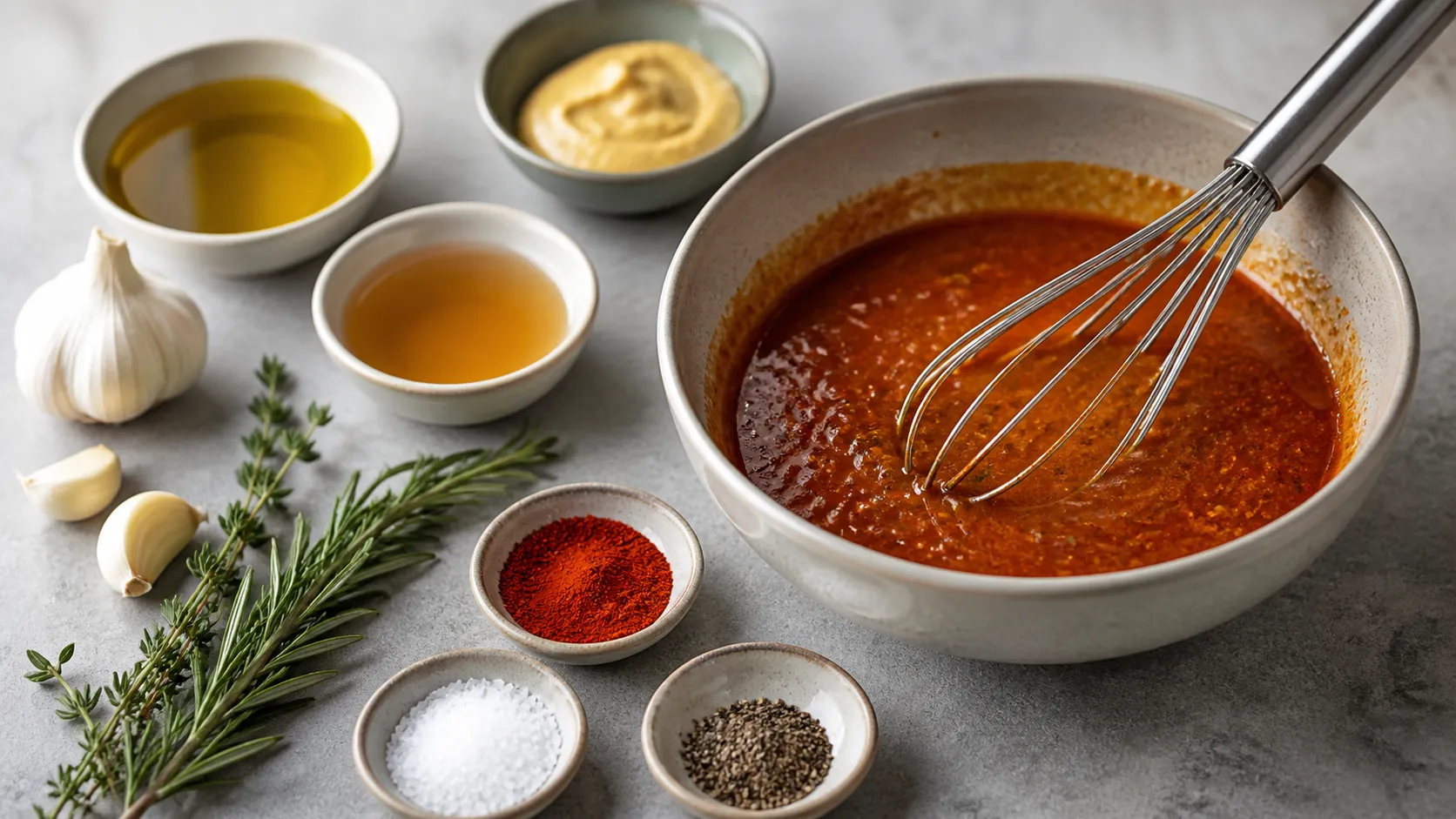

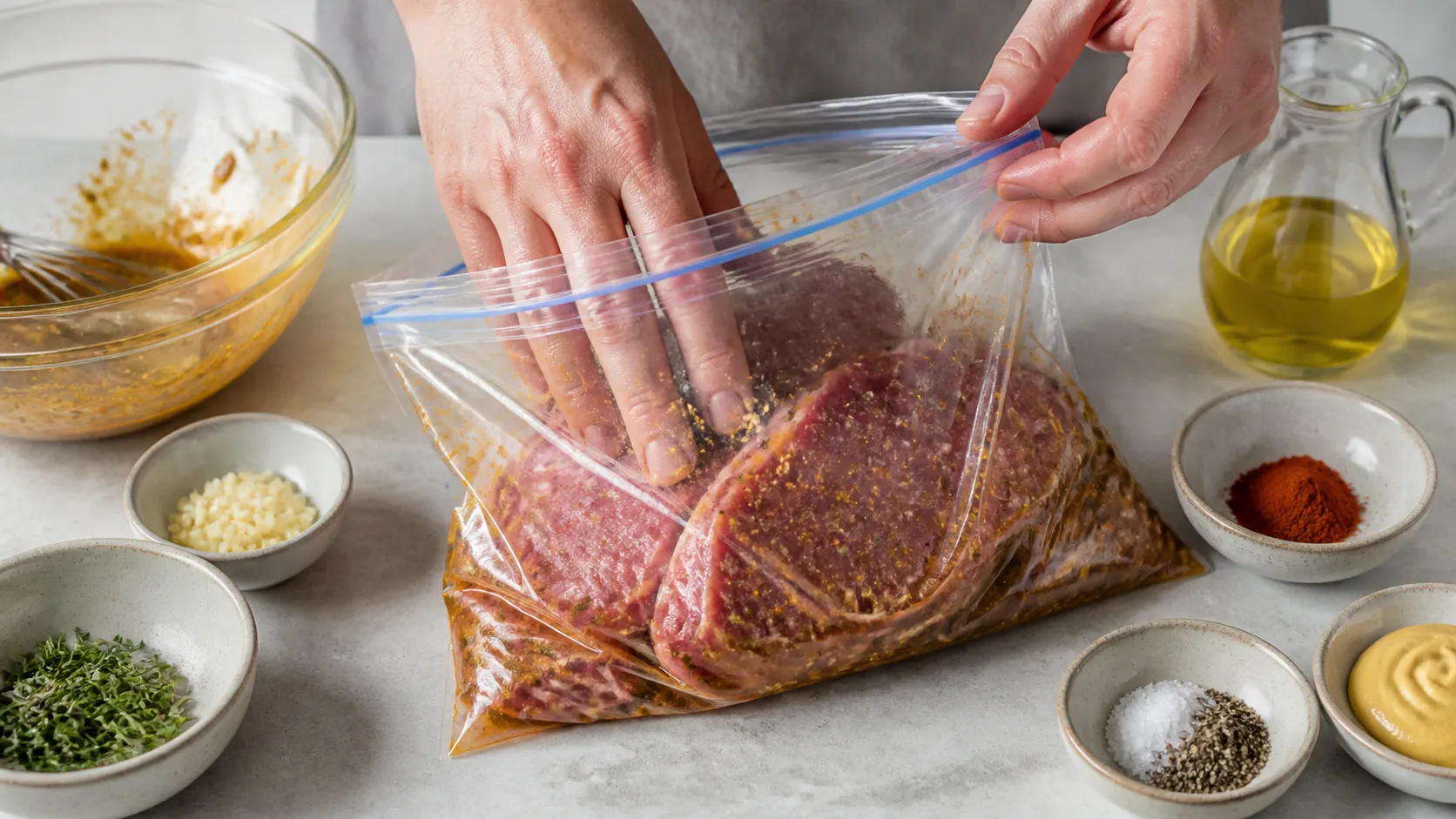
This keto barbecue marinade replaces the bought ready-made marinades, which in the supermarket almost without exception work with sugar, glucose syrup or honey. The base is an emulsion of olive oil and Dijon mustard, seasoned with garlic, rosemary, thyme and paprika powder - approx. 0.9 g net carbs per serving, and nothing scorches on the grate.
The key facts at a glance
- Time required: approx. 10 minutes of active work, after that only marinating time in the fridge.
- Only approx. 0.9 g net carbs and 21 g fat per serving.
- Ingredients: olive oil, Dijon mustard, cider vinegar, garlic, rosemary, thyme, paprika powder.
- Suits pork neck steaks, chicken, salmon and grilled vegetables - the quantity covers approx. 1 kg.
Ingredients
Makes approx. 250 g of marinade, that is eight servings of approx. 30 g - enough for approx. 1 kg of meat or vegetables.
| Amount | Ingredient | Note | ||
|---|---|---|---|---|
| olive oil | extra virgin, mild | |||
| extra virgin, mild | ||||
| Dijon mustard | approx. 1 heaped tbsp, binds the emulsion | |||
| approx. 1 heaped tbsp, binds the emulsion | ||||
| cider vinegar | approx. 2 tbsp | |||
| approx. 2 tbsp | ||||
| garlic cloves | finely chopped or crushed | |||
| finely chopped or crushed | ||||
| rosemary | fresh, needles finely chopped | |||
| fresh, needles finely chopped | ||||
| thyme | fresh, leaves picked | |||
| fresh, leaves picked | ||||
| sweet paprika powder | - | |||
| salt | - | |||
| pepper | freshly ground | |||
| freshly ground | ||||
How it is made
-
Prepare the aromatics
approx. 4 minutes3 cloves garlic cloves finely chopped or crushed 5 g rosemary fresh, needles finely chopped 5 g thyme fresh, leaves picked Finely chop or crush the garlic cloves (3 cloves). Pick the rosemary (5 g) and thyme (5 g) and cut them as finely as possible - whole needles release almost no aroma and burn on the grate later.
-
Mix the base
approx. 2 minutes20 g Dijon mustard approx. 1 heaped tbsp, binds the emulsion 30 ml cider vinegar approx. 2 tbsp 2 tsp sweet paprika powder 1 tsp salt 0.5 tsp pepper freshly ground Whisk the Dijon mustard (20 g), cider vinegar (30 ml), paprika powder (2 tsp), salt (1 tsp) and pepper (0.5 tsp) smooth in a bowl, then mix in the garlic and herbs.
-
Work in the oil
approx. 3 minutes180 ml olive oil extra virgin, mild Add the olive oil (180 ml) in a thin stream while stirring constantly. The mustard binds oil and vinegar into a creamy emulsion - poured in all at once, it splits again immediately.
-
Marinate
approx. 1 minute plus marinatingCoat the food with the marinade, ideally in a freezer bag with the air pressed out. Leave meat in the fridge for at least 2 hours, fish for no more than 30 minutes. Add salt only just before grilling.
Which tips help with a sugar-free barbecue marinade?
- Add the oil slowly while stirring - poured in all at once, the emulsion splits.
- Chop fresh herbs finely rather than just picking them; whole needles release almost no aroma and burn on the grate.
- Marinate in a freezer bag with the air pressed out, and half the quantity is enough.
- Leave meat for at least 2 hours and fish for no more than 30 minutes.
- Salt just before grilling, not already in the marinade.
- Wipe excess marinade off before the food goes on - dripping oil causes flare-ups.
Why this barbecue marinade works on keto
Ready-made marinades from the chilled aisle sit at 8 to 15 g carbs per 100 g depending on the variety, and the lion's share of that is added sugar in the form of glucose syrup, honey or tomato concentrate. A single generously marinated pork neck steak therefore brings 5 to 8 g carbs to the plate before any side dish joins it. This version lands at approx. 0.9 g net carbs per serving, and those come almost entirely from garlic and paprika powder - two ingredients you use for their aroma, not for their bulk. The second advantage is practical: sugar caramelizes from around 160 degrees Celsius and burns above it, which is why steaks marinated with sugar turn black on the outside long before they are cooked through. Without sugar you can work at full heat. Nutrition values for the individual ingredients can be looked up in the FDDB nutrition database.
Source: FDDB nutrition database
Three jobs the sugar does - and who takes them over
Sugar does three things in a classic marinade: it browns, it makes the marinade cling to the meat, and it rounds off the acidity. Only the third job needs sweetness at all, and here the mustard takes it, bringing both sharpness and a light sweetness. The same ingredient handles the clinging - mustard is an emulsifier and turns oil and vinegar into a cream that stays on the meat instead of dripping off. And the browning happens without sugar via the Maillard reaction on the meat's own protein, as soon as the grate is hot enough.
Use acid sparingly
The most common mistake with homemade marinades is too much acid. Vinegar and lemon juice denature the protein at the surface, and what was meant as a tenderizer produces a mealy, gray outer layer after eight hours. The ratio in this recipe is about six parts oil to one part vinegar - enough for freshness, too little for damage. With fish the limit is stricter still: half an hour of marinating is plenty there.
How do I use and vary the marinade?
Reckon on about 60 g of marinade per 500 g of food and work in a freezer bag rather than a bowl - in practice that halves the quantity you need, because the marinade sits against every surface instead of pooling at the bottom. Salt is deliberately added only just before grilling: in the marinade it pulls water out of the meat over several hours, and that water then sits in the marinade instead of in the steak.
Meal prep, prepping ahead and storing
The marinade keeps for 2 weeks in a sealed jar in the fridge - the fresh herbs are the limiting factor, and with dried ones it is 4 weeks. It sets in the cold, because olive oil clouds and solidifies below 7 degrees Celsius; half an hour at room temperature and a quick stir restore the emulsion. If you are planning a barbecue, marinate the meat the day before and freeze portions in bags: as they thaw, the marinade carries on soaking in.
Three variations from the same base
For pork and beef, replace half the sweet paprika powder with the hot kind and add 1 tsp ground caraway - that is the direction that suits pork neck steaks. For poultry and fish, swap the rosemary for dill and parsley, the cider vinegar for 30 ml lemon juice, and leave the paprika powder out entirely. For an Asian note, replace 30 ml of the olive oil with toasted sesame oil and the mustard with 20 ml soy sauce plus 10 g grated ginger; that variation sits at approx. 1.4 g net carbs per serving. For grilled vegetables the base works unchanged, only without the two hours of marinating - vegetables absorb what they can absorb in ten minutes.
Nutrition values
| Nutrient | Per 100 g | Per serving | Keto context |
|---|---|---|---|
| Calories | approx. 620 kcal | approx. 190 kcal | High, because the marinade is almost entirely oil - though part of it stays in the bowl. |
| High, because the marinade is almost entirely oil - though part of it stays in the bowl. | |||
| Fat | approx. 67 g | approx. 21 g | Exactly right: the oil is aroma carrier and fat source in one. |
| Exactly right: the oil is aroma carrier and fat source in one. | |||
| Net carbs | approx. 2.8 g | approx. 0.9 g | Very low; ready-made marinades sit at 8 to 15 g per 100 g. |
| Very low; ready-made marinades sit at 8 to 15 g per 100 g. | |||
| Sugar | approx. 1.0 g | approx. 0.3 g | Exclusively natural sugar from garlic and paprika powder - nothing added. |
| Exclusively natural sugar from garlic and paprika powder - nothing added. | |||
| Protein | approx. 0.9 g | approx. 0.3 g | Negligible; the protein comes from whatever you are grilling. |
| Negligible; the protein comes from whatever you are grilling. | |||
| Salt | approx. 2.6 g | approx. 0.8 g | Pronounced, because the marinade has to season - in exchange the meat itself needs no further salting. |
| Pronounced, because the marinade has to season - in exchange the meat itself needs no further salting. | |||
Note: Nutrition values are estimated averages per 100 g and per serving and may vary depending on ingredients, brands, portion size, and preparation. They do not replace individual nutrition or medical advice.
FAQ
Why is sugar in a barbecue marinade a problem?
For two reasons. First, it means a generously marinated portion of meat brings 5 to 8 g carbs with it, which is noticeable on a daily budget of 20 to 30 g. Second, sugar burns above 160 degrees Celsius: on the grate the meat turns black and bitter on the outside before it is cooked inside. Without sugar you can work at full heat.
Can I sweeten the marinade with erythritol?
Yes, 5 to 10 g erythritol rounds off the hot variation in particular without contributing carbs. It dissolves poorly in a cold marinade, though - stir it into the vinegar first, before the oil goes in. For browning on the grate erythritol does nothing, since it does not caramelize.
How long does the marinade keep?
2 weeks in a sealed jar in the fridge with fresh herbs, 4 weeks with dried ones. It clouds in the cold, because olive oil solidifies below 7 degrees Celsius; half an hour at room temperature and a quick stir are enough. Marinade that has held raw meat is always thrown away.
Does the marinade suit weight loss on keto?
On the carb side yes, on the calorie side it wants watching: 190 kcal per serving is almost pure oil. If you are budgeting tightly, wipe the food down thoroughly before it goes on the grate - the aroma stays on the surface, but only a fraction of the fat does.