Keto Shirataki Bolognese with Ground Beef
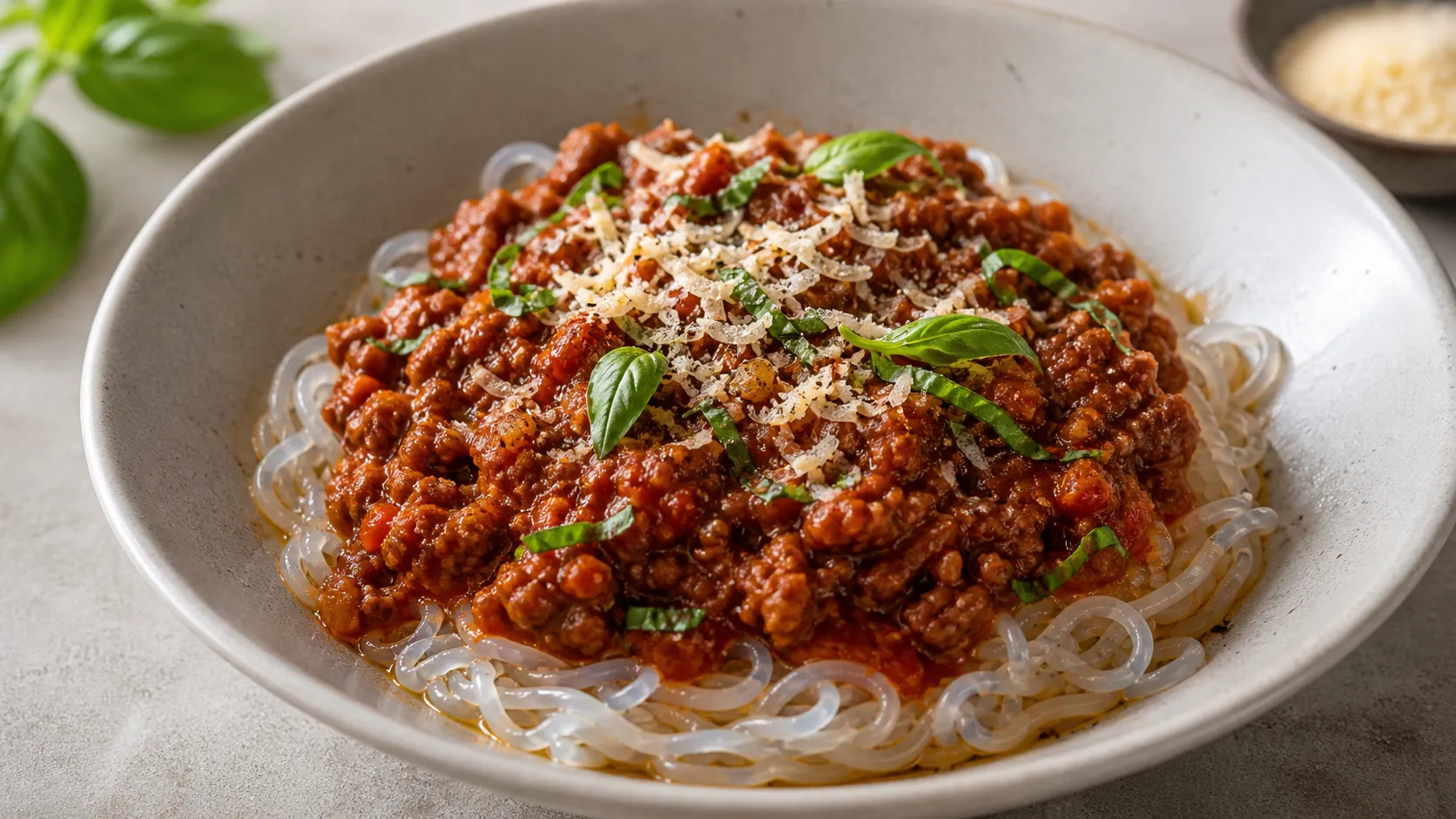
This keto shirataki bolognese pairs a classic ground beef ragu with konjac noodles instead of spaghetti. The result is virtually zero carbs from the noodles with the full pasta experience. Each serving has just 6 g net carbs alongside 35 g protein and 32 g fat, and it comes together in under 30 minutes.
Key points at a glance
- Prep time: approx. 25 minutes, a quick keto dinner with real pasta character.
- Approx. 6 g net carbs and 32 g fat per serving.
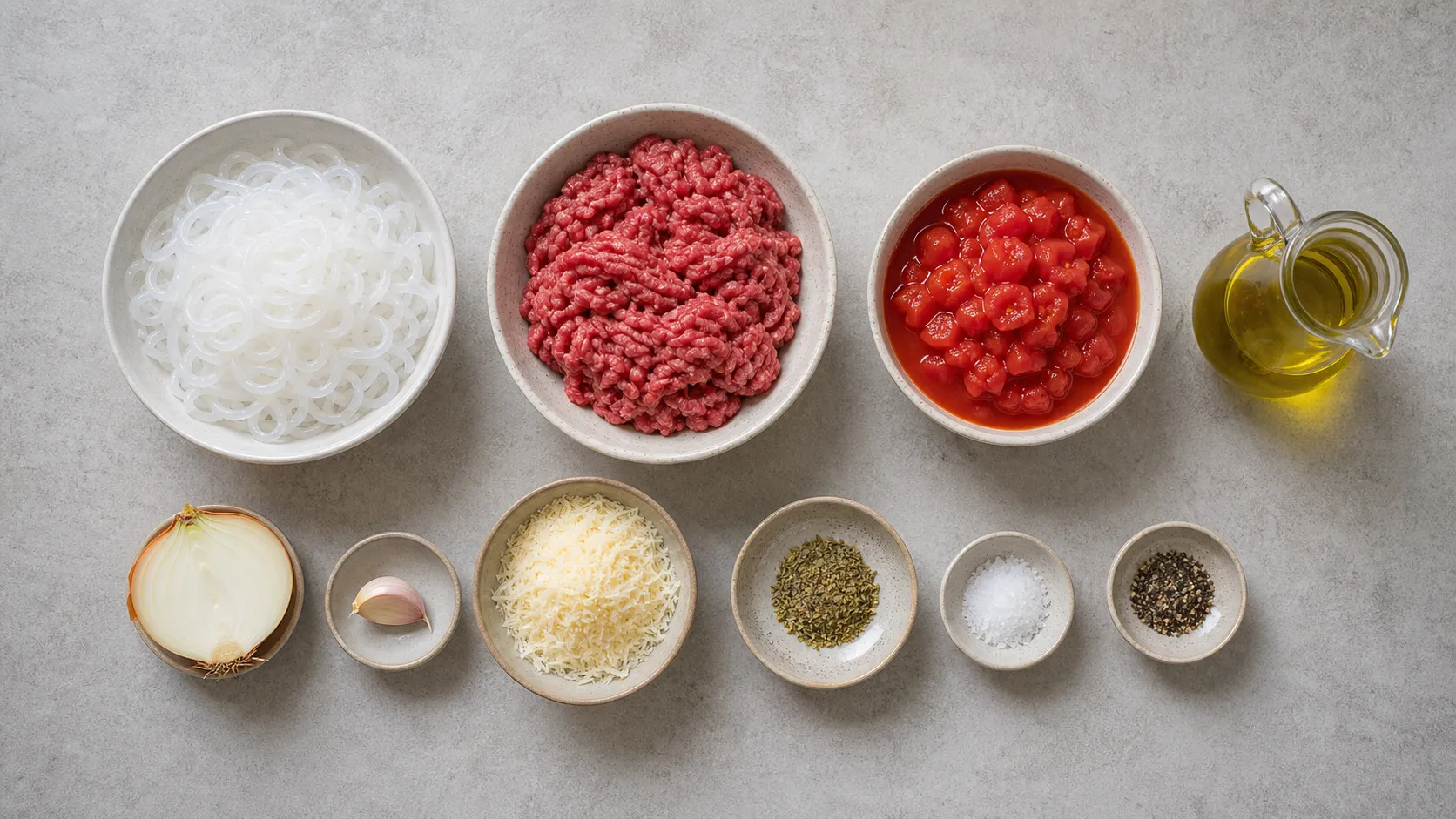
- Ingredients: shirataki noodles, ground beef, chopped tomatoes, onion, garlic, olive oil, parmesan.
- Great for keto beginners and anyone who misses classic pasta dishes.
Ingredients
One serving is designed as a complete keto dinner and replaces a classic spaghetti bolognese.
| Amount | Ingredient | Note | ||
|---|---|---|---|---|
| Shirataki noodles | Konjac noodles, well rinsed | |||
| Konjac noodles, well rinsed | ||||
| Ground beef | - | |||
| Chopped tomatoes | Canned, no added sugar | |||
| Canned, no added sugar | ||||
| Onion | ½ medium | |||
| ½ medium | ||||
| Garlic clove | - | |||
| Olive oil | approx. 10 g; 1 tbsp | |||
| approx. 10 g; 1 tbsp | ||||
| Parmesan | Grated | |||
| Grated | ||||
| Salt | to taste | |||
| to taste | ||||
| Pepper | to taste | |||
| to taste | ||||
| Oregano | to taste | |||
| to taste | ||||
Preparation
-
Prepare the shirataki noodles
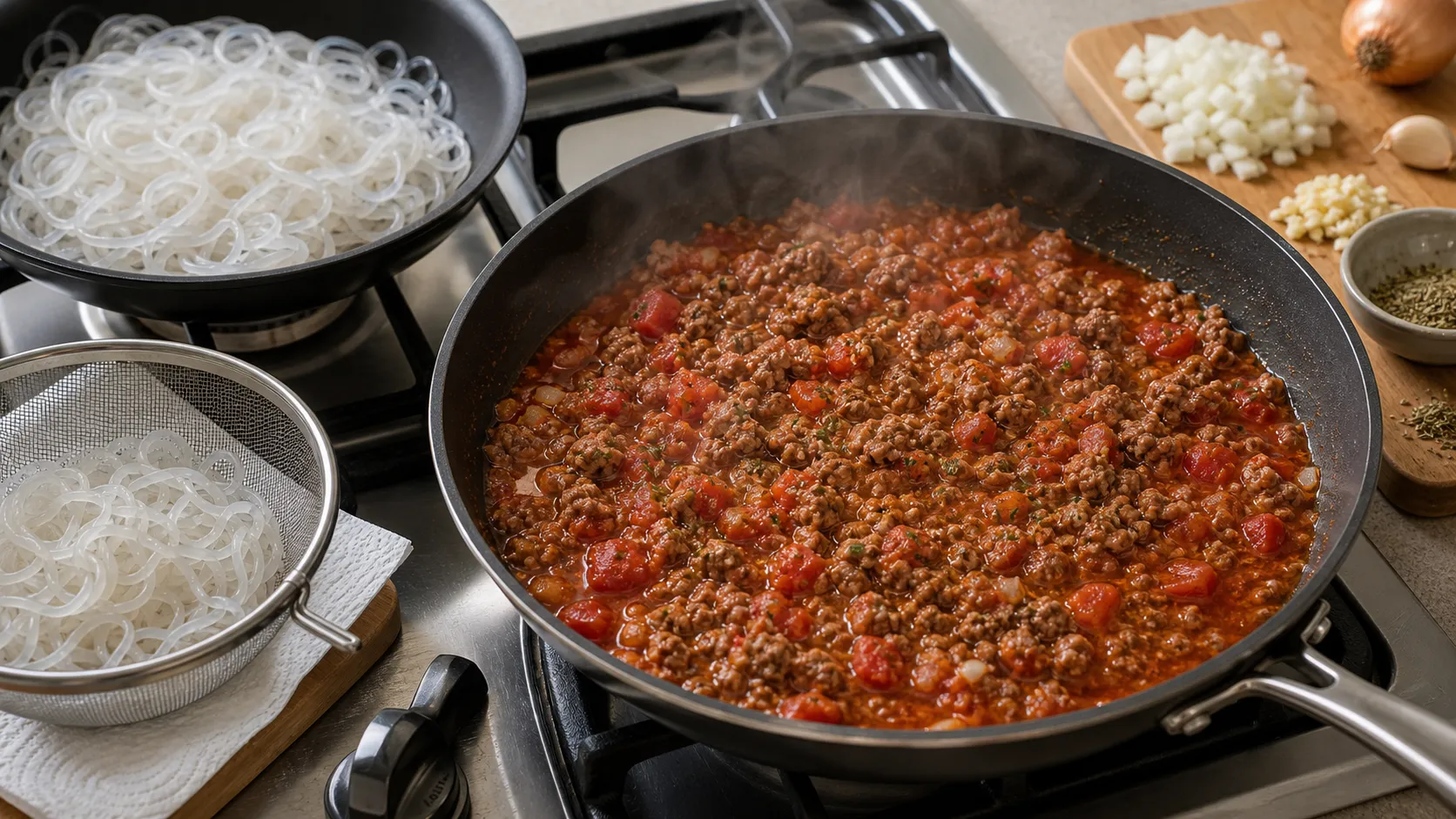
approx. 5 minutes200 g Shirataki noodles Konjac noodles, well rinsed Take the shirataki noodles (200 g) out of the package, rinse them under cold running water for 1 to 2 minutes, and let them drain on paper towels. Heat a dry pan over high heat and toast the noodles for 2 to 3 minutes without oil. This drives off both the odor and the moisture.
-
Cook the ground beef ragu
approx. 20 minutes200 g Ground beef 100 g Chopped tomatoes Canned, no added sugar 40 g Onion ½ medium 1 clove Garlic clove 11 ml Olive oil approx. 10 g; 1 tbsp 0.5 tsp Salt to taste 0.3 tsp Pepper to taste 2 g Oregano to taste Heat the olive oil (10 g) in the pan. Finely chop the onion (40 g) and 1 garlic clove, then sweat over medium heat for 2 minutes. Add the ground beef (200 g) and brown for 5 minutes, breaking it up as you stir. Add the chopped tomatoes (100 g), oregano, salt and pepper. Reduce the heat to low and simmer for 12 to 15 minutes.
-
Combine and serve
approx. 2 minutes30 g Parmesan Grated Add the shirataki noodles to the ragu, warm through for 1 to 2 minutes, and toss to coat. Plate in a deep dish and finish with freshly grated parmesan (30 g).
What tips help with shirataki noodles?
- After opening the package, rinse the shirataki noodles under running water for 1 to 2 minutes. This reduces the typical odor from the konjac starch.
- Spread the noodles on paper towels and pat them dry, then dry-toast them in a hot pan without fat for 2 to 3 minutes. This gives them more bite.
- Taste the ground beef ragu before serving. Keto dishes often need a bit more salt and pepper than you might expect.
- Grate the parmesan over the plate rather than into the hot sauce. The texture stays creamy instead of clumping.
- If you want more volume, stir 50 g of wilted spinach into the finished dish for only 0.5 g extra net carbs.
Why shirataki bolognese is ideal for keto
A classic spaghetti bolognese contains roughly 65 g net carbs per serving, almost entirely from the noodles. Shirataki noodles are 97% water and glucomannan fiber, so they deliver virtually 0 g digestible carbs. The bolognese sauce itself contributes about 4 to 5 g net carbs per serving from chopped tomatoes, with another 1 to 2 g from onion and garlic. Together the meal stays at 6 g net carbs, well below the daily keto budget. Ground beef also brings 25 to 30 g protein and over 20 g fat per 200 g, an excellent macro profile for a ketogenic diet.
Source: FDDB – Nutrition data for shirataki noodles , USDA FoodData – Ground Beef 80% lean
Shirataki vs. spaghetti: a carb comparison
100 g of cooked spaghetti contains around 31 g net carbs and 2.5 g protein. 100 g of shirataki noodles, by contrast, has 0.1 g net carbs and virtually no fat. Swapping 200 g of spaghetti for 200 g of shirataki saves about 60 g of carbs, enough to stay in ketosis for weeks.
Keeping the tomato sauce keto-friendly
Tomatoes contain about 3.5 g net carbs per 100 g, which is fine as long as the portion size is controlled. Using 100 g of canned chopped tomatoes per serving keeps the sauce within the keto budget. Skip sugar and starchy thickeners like flour. Fresh herbs such as basil and oregano add flavor without any carbs.
How do I serve and vary shirataki bolognese?
Serve immediately after finishing. Shirataki noodles absorb the sauce better while still warm. From experience, it pays to dry-toast the noodles briefly in the pan before folding them in. This removes the mild natural odor and noticeably improves the texture. Finish with freshly grated parmesan and basil.
Meal prep and storage
The ground beef ragu keeps for up to 4 days in the fridge and works well for batch cooking. Only add the shirataki noodles to the ragu just before serving, otherwise they turn soft and lose their bite. The ragu can also be frozen for up to 3 months.
Variation without beef
The recipe works just as well with mixed ground meat (beef and pork) or ground turkey. Turkey is leaner, so add 1 to 2 extra tbsp of olive oil to keep the keto fat ratio. For a vegetarian version, soak 200 g of textured soy protein and brown it like ground meat.
Nutrition values
| Nutrient | Per 100 g | Per serving | Keto context |
|---|---|---|---|
| Calories | approx. 118 kcal | approx. 500 kcal | A complete main meal; the energy comes mainly from ground beef and olive oil. |
| A complete main meal; the energy comes mainly from ground beef and olive oil. | |||
| Fat | approx. 7.5 g | approx. 32 g | Main fat sources: ground beef and olive oil; a healthy mix of saturated and unsaturated fats. |
| Main fat sources: ground beef and olive oil; a healthy mix of saturated and unsaturated fats. | |||
| Net carbs | approx. 1.4 g | approx. 6 g | Very low for a pasta dish; carbs come almost entirely from tomatoes and onion. |
| Very low for a pasta dish; carbs come almost entirely from tomatoes and onion. | |||
| Sugar | approx. 0.8 g | approx. 3.4 g | Natural sugar from tomatoes; no added sugar. |
| Natural sugar from tomatoes; no added sugar. | |||
| Protein | approx. 8.3 g | approx. 35 g | High protein from ground beef and parmesan; ideal for preserving muscle on keto. |
| High protein from ground beef and parmesan; ideal for preserving muscle on keto. | |||
| Salt | approx. 0.3 g | approx. 1.2 g | Moderate; parmesan already adds salt, so go easy when seasoning. |
| Moderate; parmesan already adds salt, so go easy when seasoning. | |||
Note: Nutrition values are estimated averages per 100 g and per serving and may vary depending on ingredients, brands, portion size, and preparation. They do not replace individual nutrition or medical advice.
FAQ
Are shirataki noodles really keto-friendly?
Yes. Shirataki noodles consist mainly of glucomannan fiber and water. They contain only about 0.1 g of digestible carbs per 100 g and have almost no calories from macronutrients. They are one of the best pasta substitutes for a ketogenic diet.
Why do shirataki noodles have an odd smell?
The fishy odor comes from the konjac plant and is completely normal. It disappears entirely after a thorough rinse under water and a brief dry-toast in a pan without oil. Once cooked, no off-flavor remains.
Can I eat shirataki bolognese while losing weight?
Yes. With 500 kcal, 35 g protein and 6 g net carbs per serving, this dish fits very well into a keto-based weight-loss plan. The high protein keeps you full, and the low carbs keep insulin steady. To cut calories further, reduce the ground beef to 150 g.
Which tomatoes should I use?
Canned chopped tomatoes without added sugar are best, so check the label. Fresh tomatoes have a similar carb count and work just as well. Pre-made pasta sauces often contain added sugar and are not keto-friendly.
Where can I buy shirataki noodles?
Shirataki noodles are available at Asian grocery stores, health food stores and increasingly in larger supermarkets (refrigerated section or international aisle). Online they come in many shapes (spaghetti, fettuccine, rice). Check the ingredient list: only water and konjac flour, no additives.