
Keto Dan Dan Noodles with Konjac
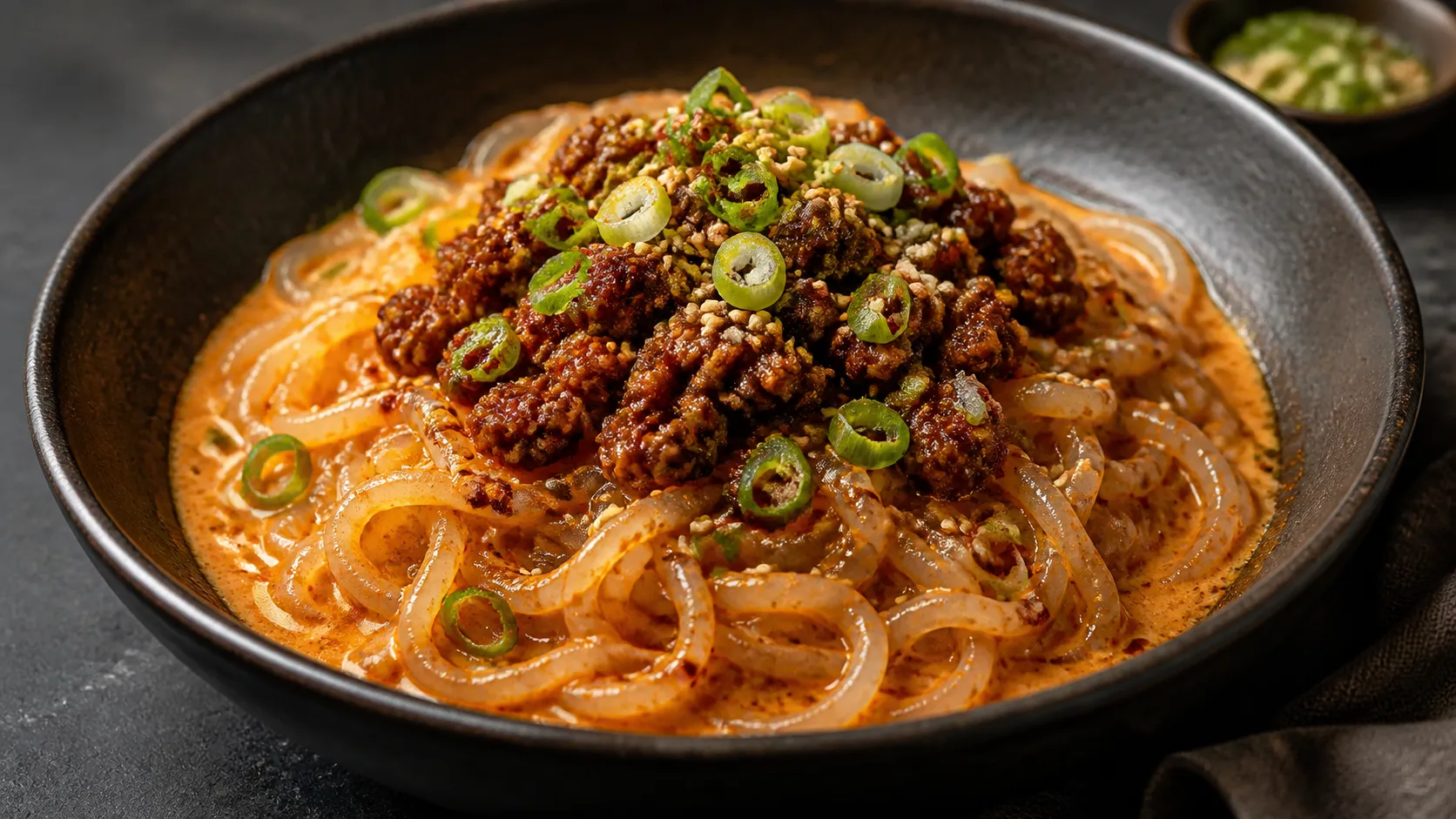
Dan Dan noodles are a Sichuan classic - a spicy, nutty sesame sauce over noodles with seasoned ground meat. The keto version swaps wheat noodles for konjac noodles (shirataki) and replaces sugary soy sauce with coconut aminos. Just 5 g net carbs per serving with 34 g fat and 28 g protein. Ready in 25 minutes.
Key Facts at a Glance
- Prep time: approx. 25 minutes - whisk the sauce, brown the meat, rinse the noodles.
- Only about 5 g net carbs and 34 g fat per serving.
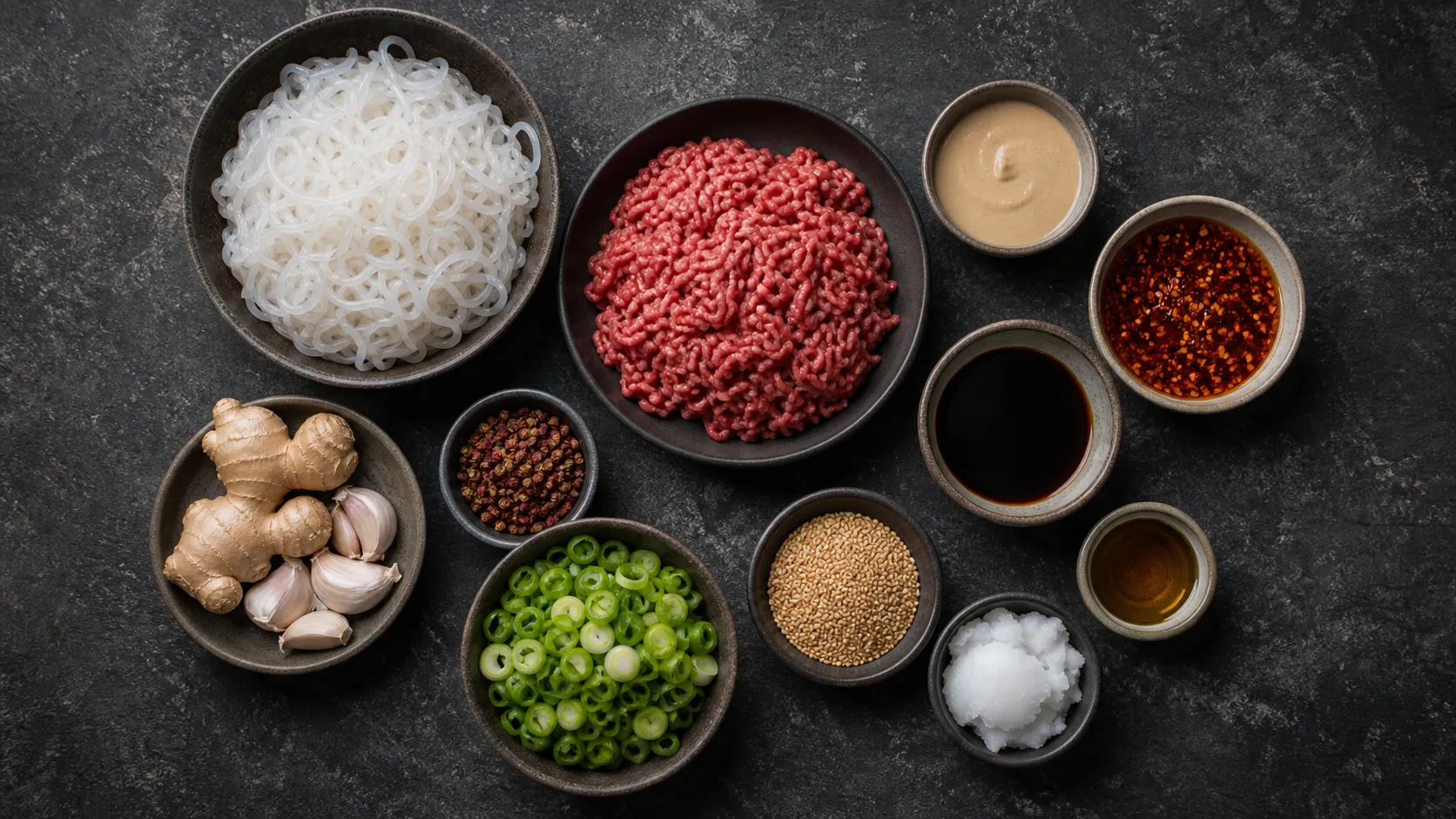
- Ingredients: konjac noodles, ground beef, tahini, chili oil, coconut aminos, sesame oil, ginger.
- Great for anyone who loves Asian noodles but wants to skip the carbs.
Ingredients
One serving contains approx. 200 g of konjac noodles and approx. 150 g of seasoned ground beef. For more fat, add a little extra chili oil and sesame oil.
| Amount | Ingredient | Note | ||
|---|---|---|---|---|
| Konjac noodles (shirataki) | drained and rinsed | |||
| drained and rinsed | ||||
| Ground beef | - | |||
| Tahini | - | |||
| Chili oil | approx. 1 tbsp; adjust amount to taste | |||
| approx. 1 tbsp; adjust amount to taste | ||||
| Coconut aminos | approx. 1 tbsp | |||
| approx. 1 tbsp | ||||
| Sesame oil | approx. 1 tsp; toasted | |||
| approx. 1 tsp; toasted | ||||
| Fresh ginger | grated | |||
| grated | ||||
| Garlic cloves | pressed | |||
| pressed | ||||
| Warm water | approx. 2 tbsp; to thin the sauce | |||
| approx. 2 tbsp; to thin the sauce | ||||
| Sichuan peppercorn | optional, ground | |||
| optional, ground | ||||
| Spring onion | 2 spring onions, sliced into rings | |||
| 2 spring onions, sliced into rings | ||||
| Toasted sesame seeds | - | |||
| Coconut oil | approx. 1 tbsp; for searing | |||
| approx. 1 tbsp; for searing | ||||
Preparation
-
Prepare the konjac noodles
approx. 3 minutes400 g Konjac noodles (shirataki) drained and rinsed 30 ml Warm water approx. 2 tbsp; to thin the sauce Rinse the konjac noodles (400 g) cold in a sieve. Blanch briefly in boiling water (1 minute), then drain well.
-
Whisk the sesame chili sauce
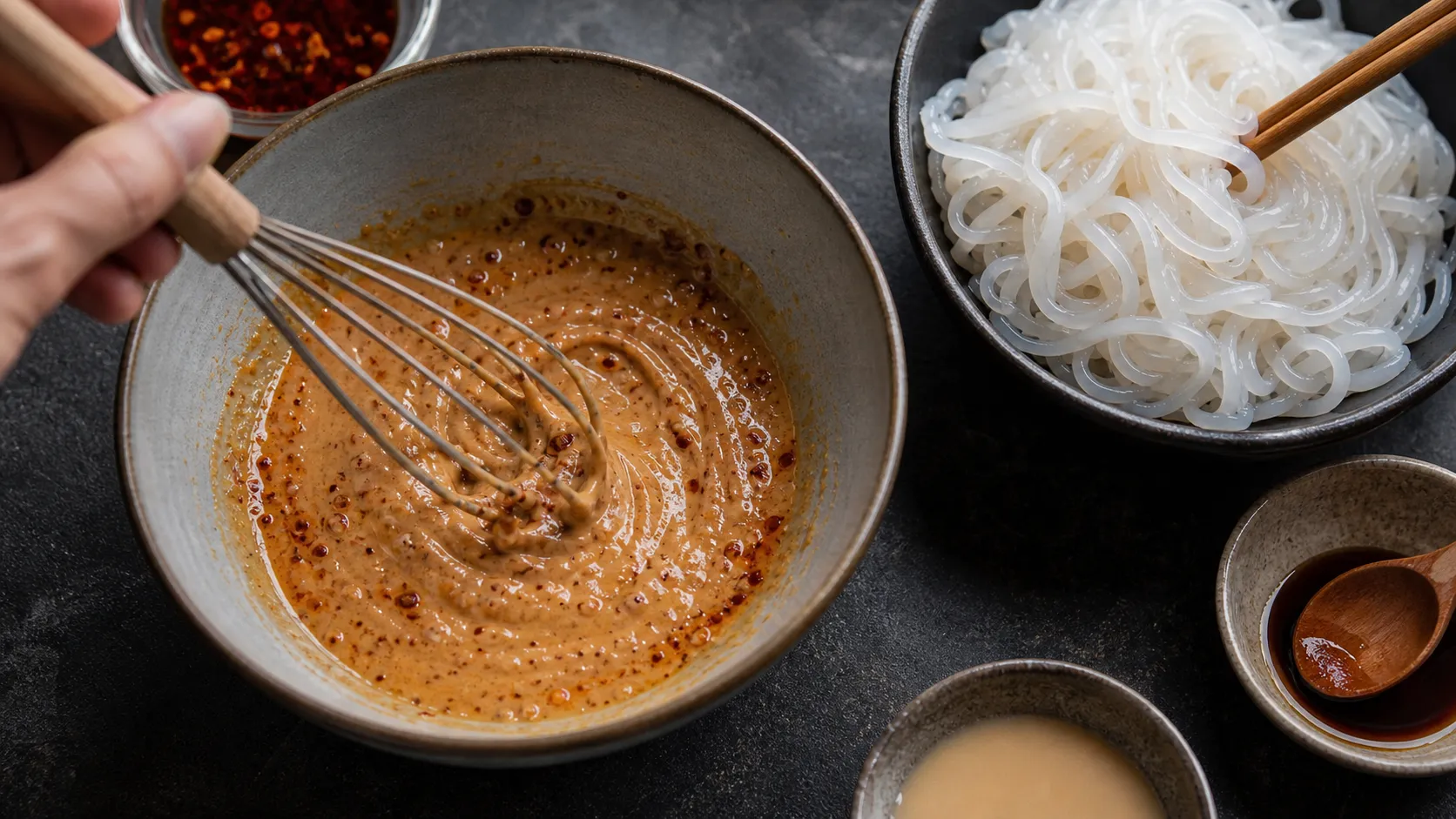
approx. 2 minutes2 tbsp Tahini 15 ml Chili oil approx. 1 tbsp; adjust amount to taste 15 ml Coconut aminos approx. 1 tbsp 5 ml Sesame oil approx. 1 tsp; toasted 0.5 tsp Sichuan peppercorn optional, ground 1 tbsp Toasted sesame seeds 15 ml Coconut oil approx. 1 tbsp; for searing Whisk tahini (2 tbsp), chili oil (1 tbsp), coconut aminos (1 tbsp), sesame oil (1 tsp), warm water (2 tbsp) and optional Sichuan peppercorn (1/2 tsp) into a smooth sauce.
-
Dry-fry the noodles
approx. 3 minutesDry-fry the konjac noodles in a hot pan over high heat for 2-3 minutes until they look slightly dry. Set aside.
-
Sear the ground beef
approx. 7 minutes250 g Ground beef 1 tsp Fresh ginger grated 2 clove Garlic cloves pressed Heat coconut oil (1 tbsp) in the pan. Sauté ginger (1 tsp) and 2 garlic cloves for 30 seconds. Add ground beef (250 g) and sear hard for 5-6 minutes.
-
Combine and serve
approx. 2 minutes60 g Spring onion 2 spring onions, sliced into rings Return the konjac noodles to the pan. Pour the sesame chili sauce over the top, toss briefly. Plate in bowls and garnish with spring onions (2) and sesame seeds (1 tbsp).
Which Tips Help with Keto Dan Dan Noodles?
- Always rinse konjac noodles and dry-fry them - this removes the natural odor.
- Stir tahini well beforehand, since the oil and sesame paste separate.
- Thin the sauce with warm (not boiling) water so the tahini stays smooth.
- Really sear and caramelize the ground beef, not just heat it through.
- Add the chili oil only when serving - that way the heat stays customizable.
Why Konjac Noodles Work for Dan Dan
Classic Dan Dan noodles use wheat noodles with around 25 g net carbs per 100 g of dry noodles. Konjac noodles (shirataki) are over 95 percent water and glucomannan, an insoluble fiber - net carbs come in at roughly 0.5 g per 100 g. The flavor is neutral; all the aroma comes from the sauce. Tahini (sesame paste) provides the creaminess and high fat content in this version: 100 g of tahini contains about 54 g of fat and only 4 g net carbs. Per serving you end up with 34 g fat, 28 g protein and 5 g net carbs.
Source: FDDB Nutrition Database - Shirataki Noodles
Preparing Konjac Noodles Properly
Konjac noodles have a distinctive smell in the bag (calcium hydroxide). To get rid of it: rinse the noodles cold in a sieve, blanch briefly in boiling water, then dry-fry in a hot pan without oil for 2-3 minutes. This eliminates the odor completely.
Chili Oil: Controlling the Heat
Most of the heat comes from the chili oil. Store-bought chili oils vary widely in spiciness; start with 1 tsp and taste as you go. For an authentic Sichuan character, doubanjiang (Sichuan broad bean paste) works well - just check the sugar content on the label.
How Do I Serve and Vary the Dan Dan Noodles?
From my own experience, I recommend mixing the sauce separately and pouring it over the noodles and meat only when serving - that way everyone can adjust the amount. If you want the sauce evenly distributed, toss everything briefly in the pan.
Meal Prep Friendliness
The seasoned ground beef keeps in the fridge for 3-4 days. Store the konjac noodles separately, though, and do not mix them with the sauce - they soak up the liquid and turn soft. To reheat, warm the meat in the pan, dry-fry the noodles, then combine.
Vegetarian Variation
Firm tofu, cut into small cubes and crisped up in the pan, replaces the ground meat nicely. For a vegan version: coconut aminos instead of fish sauce, tahini stays the same. The sauce is identical in both versions.
Nutrition values
| Nutrient | Per 100 g | Per Serving | Keto Assessment |
|---|---|---|---|
| Calories | approx. 165 kcal | approx. 420 kcal | Complete main meal; energy comes mainly from tahini and ground beef. |
| Complete main meal; energy comes mainly from tahini and ground beef. | |||
| Fat | approx. 13.3 g | approx. 34 g | Very good for keto; tahini is an excellent plant-based fat source. |
| Very good for keto; tahini is an excellent plant-based fat source. | |||
| Net Carbs | approx. 2 g | approx. 5 g | Low; konjac noodles barely contribute - the main sources are tahini and coconut aminos. |
| Low; konjac noodles barely contribute - the main sources are tahini and coconut aminos. | |||
| Sugar | approx. 0.6 g | approx. 1.5 g | Very low; no added sugars in the recipe. |
| Very low; no added sugars in the recipe. | |||
| Protein | approx. 11 g | approx. 28 g | Good; the combination of ground beef and tahini delivers a complete amino acid profile. |
| Good; the combination of ground beef and tahini delivers a complete amino acid profile. | |||
| Salt | approx. 0.8 g | approx. 2 g | Moderate, from the coconut aminos - no extra salt needed in the meat. |
| Moderate, from the coconut aminos - no extra salt needed in the meat. | |||
Note: Nutrition values are estimated averages per 100 g and per serving and may vary depending on ingredients, brands, portion size, and preparation. They do not replace individual nutrition or medical advice.
FAQ
Where do I get konjac noodles (shirataki)?
Well-stocked supermarkets (Asian aisle), Asian grocers or online. Konjac noodles are found in the refrigerated or dry section. Brands vary in texture - shirataki angel hair (the thin variety) suits Dan Dan noodles better than thick konjac spaghetti.
Can I swap tahini for peanut butter?
Yes, with a slightly different flavor. Peanut butter has more carbs than tahini (about 8-10 g net carbs vs. 4 g for tahini per 100 g) and tastes less nutty-bitter. For stricter keto, tahini is the better choice.
Do konjac noodles taste like fish?
Fresh from the package, yes - but after rinsing and dry-frying in the pan, the smell and taste are almost entirely gone. The key: really rinse them cold and then dry them in a hot pan for 2-3 minutes.
How do I make the dish milder?
Leave out the chili oil completely or reduce it to 1/2 tsp. The sesame sauce is flavorful even without chili oil. For a little heat, use just pepper instead of chili oil.