Keto Salmon Skillet with Bok Choy and Ginger
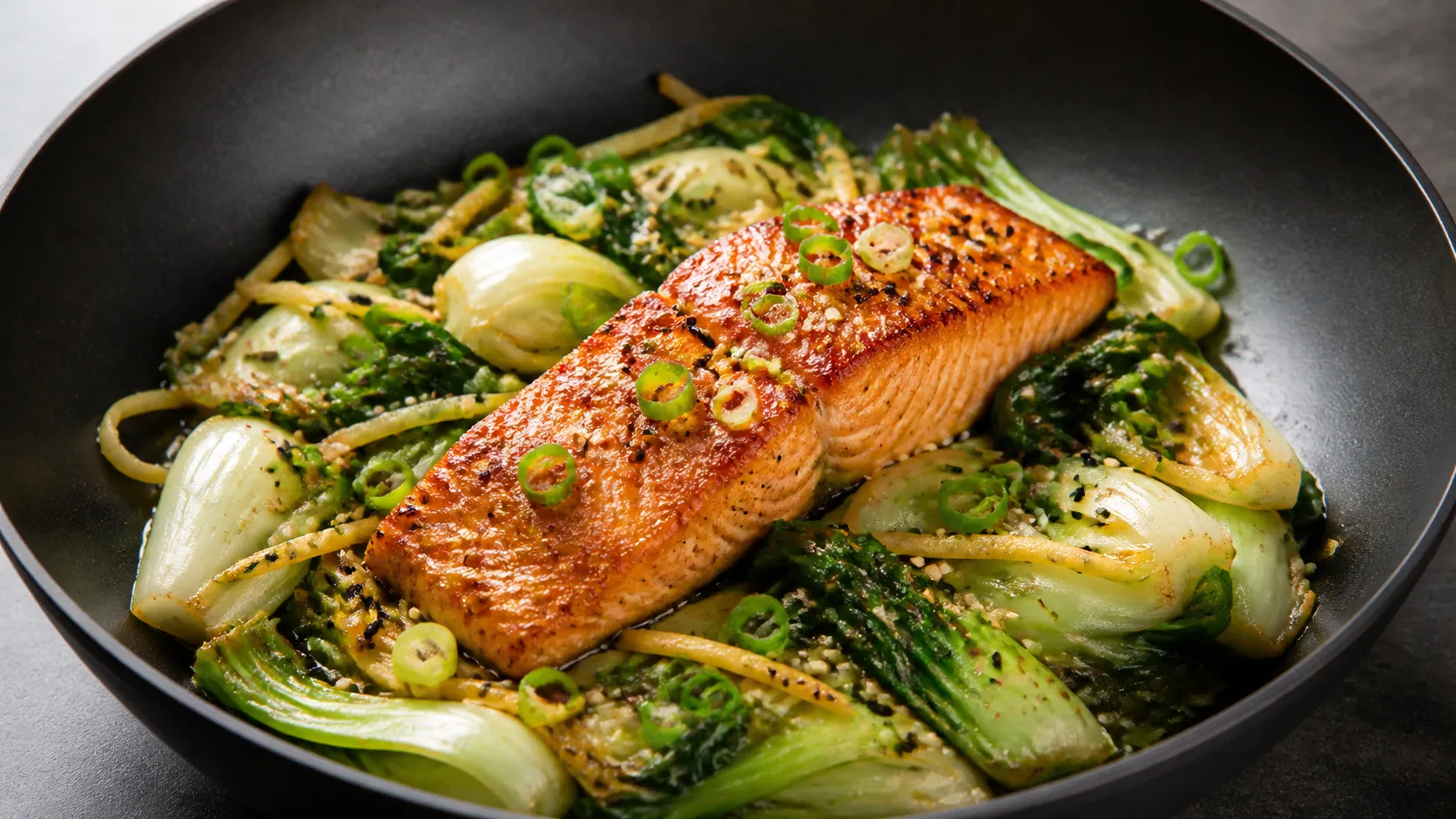
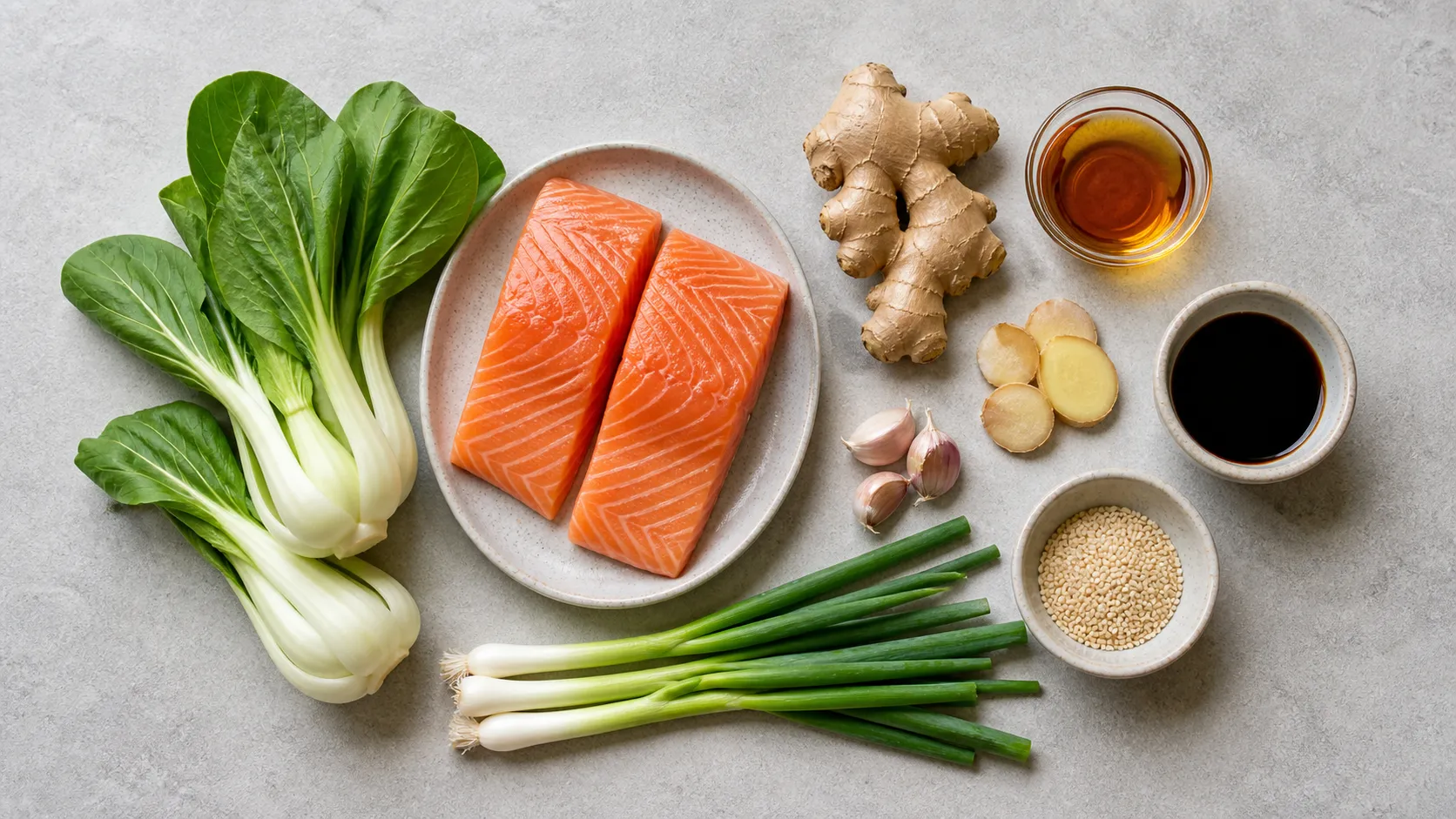
This Asian-inspired salmon skillet uses frozen salmon fillet that you thaw briefly before pan-frying, though fresh salmon works just as well. With bok choy, fresh ginger, sesame oil and tamari, you get an aromatic keto meal with just 4 g net carbs on the table in 20 minutes.
Key facts at a glance
- Prep time: approx. 20 minutes (plus thawing time for frozen salmon).
- Approx. 4 g net carbs and 36 g fat per serving.
- Ingredients: salmon fillet, bok choy, fresh ginger, sesame oil, tamari, sesame seeds.
- Frozen salmon works directly, fresh salmon is equally suitable.
- Asian flavors without sugary soy sauce, tamari is keto-friendly.
Ingredients
1 salmon fillet (200 g) on bok choy
| Amount | Ingredient | Note | ||
|---|---|---|---|---|
| Frozen salmon fillet (or fresh salmon) | thawed | |||
| thawed | ||||
| Bok choy | quartered | |||
| quartered | ||||
| Ginger | fresh, finely diced | |||
| fresh, finely diced | ||||
| Garlic cloves | - | |||
| Sesame oil | approx. 2 tbsp | |||
| approx. 2 tbsp | ||||
| Tamari | approx. 1 tbsp; sugar-free | |||
| approx. 1 tbsp; sugar-free | ||||
| Sesame seeds | - | |||
| Spring onion | 1 spring onion, finely sliced into rings | |||
| 1 spring onion, finely sliced into rings | ||||
Frozen or fresh salmon?
For pan-fried salmon it is best to thaw the frozen fillet beforehand. Place the fillet in a bowl in the fridge the night before, after 12 hours it will be perfectly thawed. Pat it thoroughly dry before frying, otherwise it will splatter in the hot pan and the salmon will steam rather than sear crisp. Fresh salmon is just as suitable, pat dry the same way and fry. Cooking time is identical. When buying frozen salmon, look for MSC or ASC certification and choose fillets without a glaze. Never thaw in warm water or at room temperature.
Source: Bundesinstitut für Risikobewertung: Fisch und Fischerzeugnisse
Preparation
-
Pan-fry the salmon
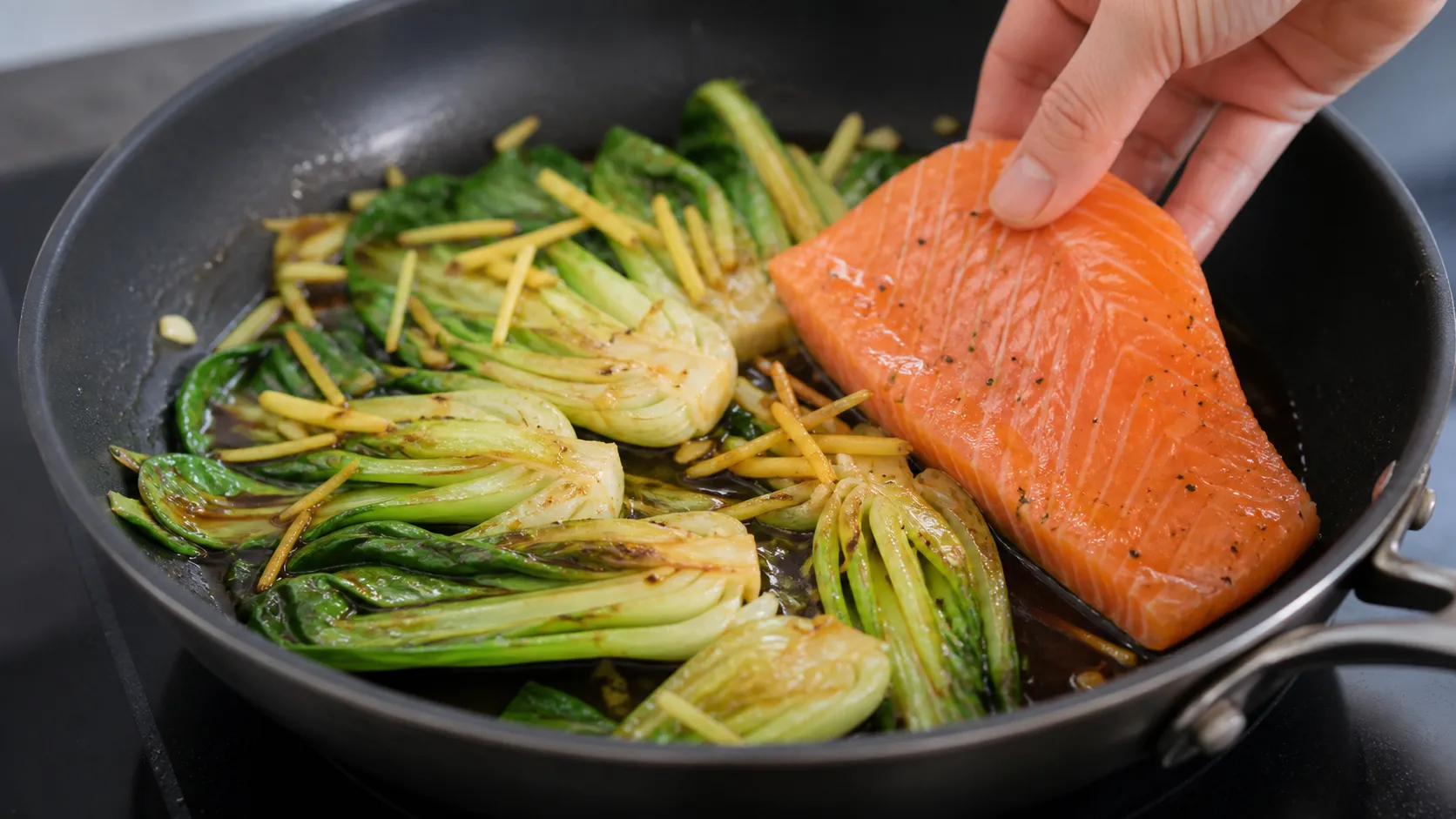
approx. 8 minutes200 g Frozen salmon fillet (or fresh salmon) thawed 30 ml Sesame oil approx. 2 tbsp 10 g Sesame seeds Pat the thawed salmon (200 g) thoroughly dry with paper towels, season with salt and pepper. Heat 1 tbsp sesame oil in a skillet over medium heat. Add the salmon and fry on each side for 3 to 4 minutes until golden brown. Remove and keep warm.
-
Bok choy and aromatics
approx. 4 minutes200 g Bok choy quartered 15 g Ginger fresh, finely diced 2 clove Garlic cloves Heat the remaining sesame oil (1 tbsp) in the same skillet. Sweat the finely diced ginger (15 g) and 2 chopped garlic cloves for 1 minute. Add the bok choy (200 g, quartered) stem ends first, saute for 2 minutes. Then fold in the leaves and let them wilt briefly.
-
Plating
approx. 3 minutes15 ml Tamari approx. 1 tbsp; sugar-free 30 g Spring onion 1 spring onion, finely sliced into rings Deglaze with tamari (1 tbsp) and let it briefly reduce. Arrange the bok choy on a plate and place the salmon on top. Sprinkle with sesame seeds (10 g) and spring onion rings, serve immediately.
Which tips help with the Asian salmon skillet?
- Wash the bok choy before frying and dry it well, wet vegetables steam rather than sear.
- Process stems and leaves separately: stems first, leaves only in the last minute.
- Do not overheat sesame oil, it burns faster than olive oil.
- Add tamari only at the end, otherwise the aroma evaporates.
- Toast the sesame seeds briefly in a dry pan, it intensifies the flavor.
Why the salmon and bok choy skillet fits keto
Bok choy has just 1 g net carbs per 100 g, making it one of the lowest-carb leafy greens, and it is rich in potassium and vitamin K. Sugar-free tamari has approx. 2 g carbs per tbsp, significantly less than sweet teriyaki sauces with 12 to 15 g carbs per tbsp. Sesame oil (1 tbsp) delivers 14 g fat with a nutty flavor. Combined with 200 g of salmon, the meal stays well below the keto carb limit.
Source: USDA FoodData Central – Bok choy
Tamari instead of soy sauce
Tamari is a gluten-free soy sauce with a richer flavor and slightly less salt than classic soy sauce. Both have similar carb counts (approx. 1 to 2 g per tbsp). Important: avoid sweet teriyaki or hoisin sauces, they contain a lot of sugar.
How to serve and vary the salmon skillet
Plate the salmon on a bed of bok choy and garnish with toasted sesame seeds and finely sliced spring onion. From experience, cauliflower rice makes an excellent filling side, ideally sauteed briefly in sesame oil as well.
Vegetable variation
Instead of bok choy you can use Chinese spinach or Swiss chard. For more heat, add 1 tsp chili flakes or half a red chili.
Nutrition values
| Nutrient | Per 100 g | Per serving | Keto context |
|---|---|---|---|
| Calories | approx. 130 kcal | approx. 510 kcal | Filling main meal with Asian flavors. |
| Filling main meal with Asian flavors. | |||
| Fat | approx. 9 g | approx. 36 g | About 65% of calories from fat, sesame oil plus salmon. |
| About 65% of calories from fat, sesame oil plus salmon. | |||
| Net carbs | approx. 1.0 g | approx. 4 g | From bok choy, tamari and ginger, within the keto limit. |
| From bok choy, tamari and ginger, within the keto limit. | |||
| Sugar | approx. 0.5 g | approx. 2 g | Naturally occurring from vegetables. |
| Naturally occurring from vegetables. | |||
| Protein | approx. 11 g | approx. 42 g | High-quality protein from salmon. |
| High-quality protein from salmon. | |||
| Salt | approx. 0.7 g | approx. 2.2 g | Tamari is salty, go easy on added salt. |
| Tamari is salty, go easy on added salt. | |||
Note: Nutrition values are estimated averages per 100 g and per serving and may vary depending on ingredients, brands, portion size, and preparation. They do not replace individual nutrition or medical advice.
FAQ
Can I use fresh salmon instead?
Yes. Fresh salmon works just as well. Pat dry and pan-fry as in the recipe, cooking time is identical.
Can I use soy sauce instead of tamari?
Yes. Classic soy sauce has similar carb values (approx. 1 g per tbsp). Tamari is gluten-free and slightly milder. Important: avoid sweet sauces like teriyaki, hoisin or kecap manis.
Is bok choy keto-friendly?
Yes. With approx. 1 g net carbs per 100 g, bok choy is one of the lowest-carb vegetables and delivers valuable potassium for keto electrolyte balance.
How much ginger is too much?
Fresh ginger has approx. 16 g carbs per 100 g, but at typical amounts of 10 to 15 g per serving the carb contribution is only about 1.5 g, easily within keto range.