Keto Pumpkin Cauliflower Rice Risotto with Bacon and Parmesan
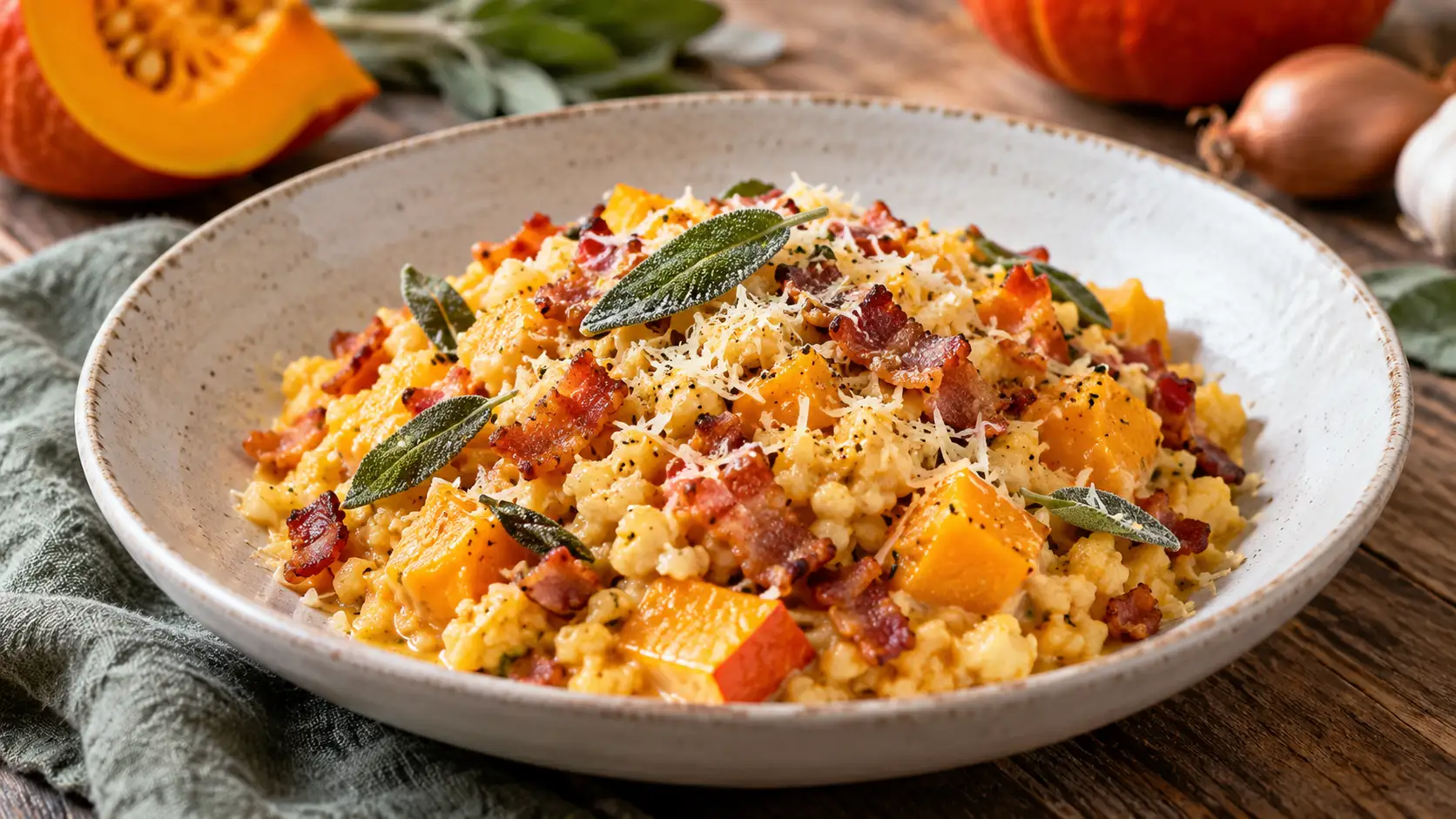
A keto pumpkin risotto swaps the risotto rice for finely grated cauliflower, and the result comes closer to the original than many expect: butter, Parmesan and heavy cream deliver the same creaminess, small Hokkaido pumpkin cubes add sweetness and color, and crispy bacon provides the salty contrast. Each serving stays at around 7.5 g net carbs instead of the 60 g in a classic pumpkin risotto. The dish is on the table in 35 minutes and works well as a lunch. In October, Hokkaido pumpkin from local farms is firm, sweet and inexpensive - just right for a risotto.
Key facts at a glance
- Preparation time: approx. 35 minutes - a quick skillet dish for lunch or an uncomplicated dinner.
- Approx. 7.5 g net carbs and 35 g fat per serving.
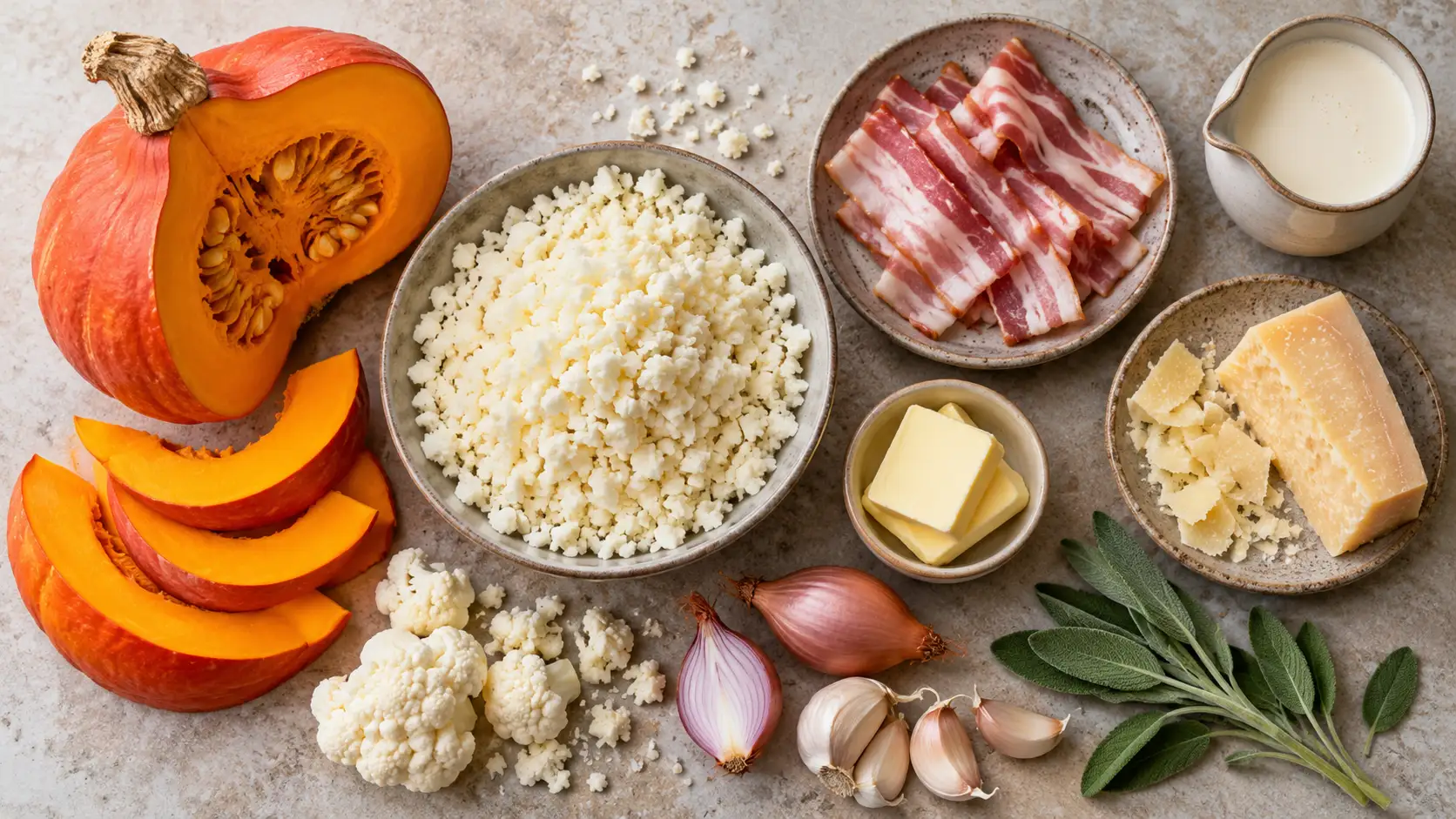
- Ingredients: cauliflower, Hokkaido pumpkin, bacon, Parmesan, butter, heavy cream, shallot, sage.
- Suitable for anyone who wants that creamy risotto feeling without rice - also as meal prep for two days.
Ingredients
One serving is a shallow plate with around 290 g of risotto plus bacon, sage and Parmesan as topping.
| Amount | Ingredient | Note | ||
|---|---|---|---|---|
| cauliflower | approx. 1 small head, florets coarsely grated | |||
| approx. 1 small head, florets coarsely grated | ||||
| Hokkaido pumpkin | unpeeled, cut into small 1 cm cubes | |||
| unpeeled, cut into small 1 cm cubes | ||||
| bacon | streaky, cut into small cubes | |||
| streaky, cut into small cubes | ||||
| butter | approx. 3 tbsp, 10 g of it for the sage | |||
| approx. 3 tbsp, 10 g of it for the sage | ||||
| shallot | 1 shallot, finely diced | |||
| 1 shallot, finely diced | ||||
| garlic clove | finely chopped | |||
| finely chopped | ||||
| vegetable broth | low sodium | |||
| low sodium | ||||
| heavy cream | whipping cream, 30% fat | |||
| whipping cream, 30% fat | ||||
| Parmesan | freshly grated, 20 g of it shaved for serving | |||
| freshly grated, 20 g of it shaved for serving | ||||
| sage | approx. 12 leaves | |||
| approx. 12 leaves | ||||
| lemon juice | approx. 2 tsp, replaces the white wine | |||
| approx. 2 tsp, replaces the white wine | ||||
| salt | season only at the end, bacon and Parmesan are salty | |||
| season only at the end, bacon and Parmesan are salty | ||||
| pepper | freshly ground | |||
| freshly ground | ||||
| nutmeg | freshly grated | |||
| freshly grated | ||||
How it is made
-
Prepare the vegetables
approx. 10 minutesDone Amount Icon Ingredient 500 g cauliflower approx. 1 small head, florets coarsely grated 250 g Hokkaido pumpkin unpeeled, cut into small 1 cm cubes Break the cauliflower (500 g) into florets and grate it to rice-grain size on the coarse side of a box grater or briefly in the food processor. Wash the Hokkaido (250 g), remove the seeds and cut it unpeeled into small 1 cm cubes.
-
Render the bacon
approx. 5 minutesDone Amount Icon Ingredient 120 g bacon streaky, cut into small cubes Render the diced bacon (120 g) in a large pan over medium heat until crispy. Remove and set aside; the fat stays in the pan.
-
Sauté the aromatics
approx. 3 minutesDone Amount Icon Ingredient 40 g butter approx. 3 tbsp, 10 g of it for the sage 40 g shallot 1 shallot, finely diced 1 clove garlic clove finely chopped Add the butter (20 g) to the bacon fat and sauté the diced shallot (40 g) and the chopped garlic clove (1 clove) in it until translucent, without letting them brown.
-
Cook the cauliflower and pumpkin
approx. 10 minutesDone Amount Icon Ingredient 150 ml vegetable broth low sodium Add the cauliflower rice and pumpkin cubes and sauté for 2 minutes. Pour in the vegetable broth (150 ml) and cook covered over medium heat until the pumpkin cubes are tender and the liquid is almost absorbed. The cauliflower should still have a slight bite.
-
Stir until creamy and season
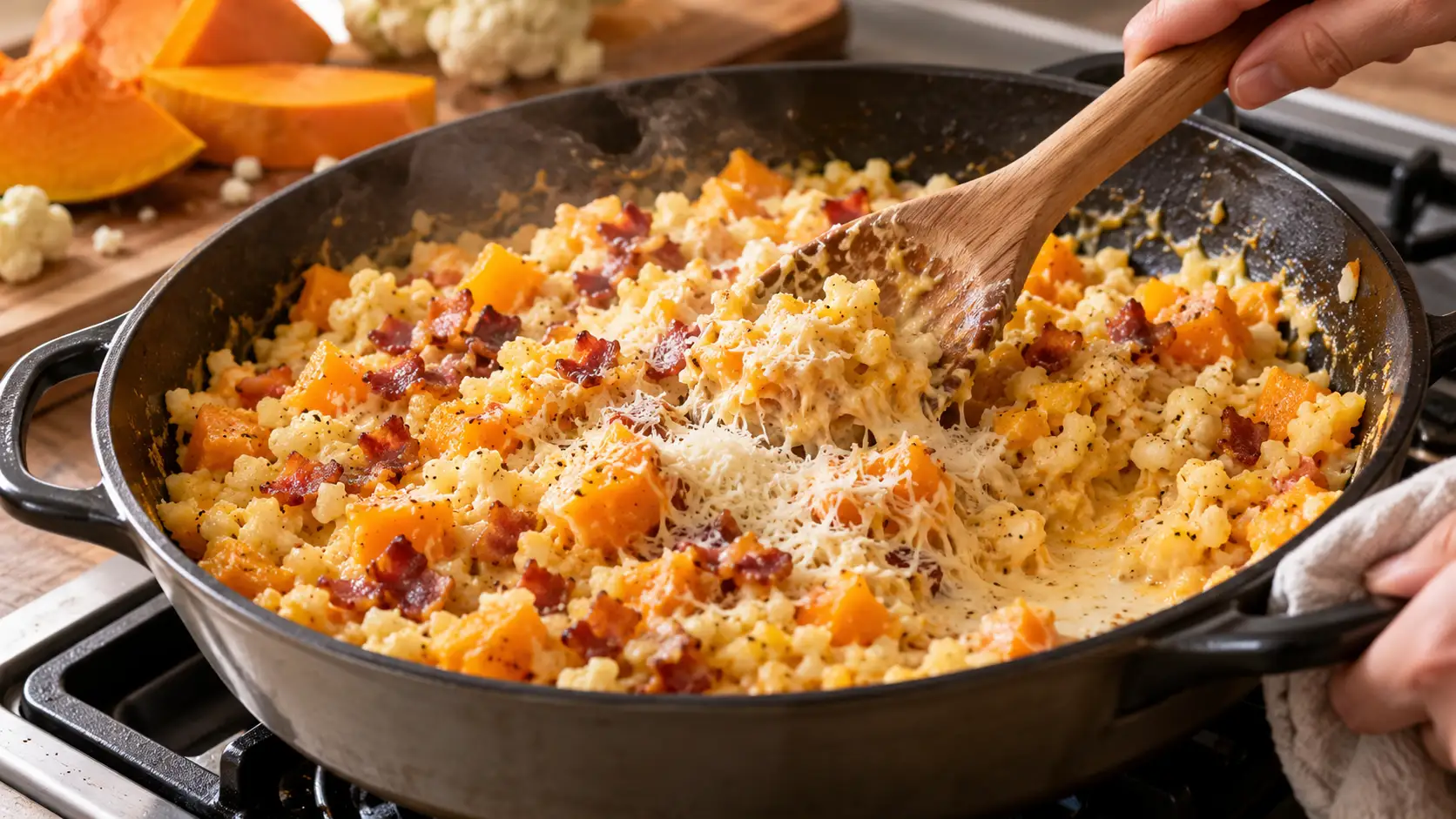
approx. 3 minutesDone Amount Icon Ingredient 100 ml heavy cream whipping cream, 30% fat 80 g Parmesan freshly grated, 20 g of it shaved for serving 10 ml lemon juice approx. 2 tsp, replaces the white wine 0.3 tsp salt season only at the end, bacon and Parmesan are salty 0.5 tsp pepper freshly ground 1 pinch nutmeg freshly grated Reduce the heat and stir in the heavy cream (100 ml), butter (10 g) and grated Parmesan (60 g) until the risotto binds into a creamy mass. Season with lemon juice (10 ml), salt (1/4 tsp), pepper (1/2 tsp) and nutmeg (1 pinch), and do not let it boil again.
-
Fry the sage and plate
approx. 4 minutesDone Amount Icon Ingredient 5 g sage approx. 12 leaves Fry the sage leaves (5 g) in the remaining butter (10 g) in a small pan until crispy. Divide the risotto among warmed plates and serve with the diced bacon, the sage leaves and shaved Parmesan (20 g).
Which tips help with keto pumpkin risotto?
- Grate the cauliflower to rice-grain size on the coarse side of a box grater or briefly in the food processor - not too fine.
- Render the bacon first over medium heat and use its fat as the base.
- Cut the Hokkaido cubes small (1 cm) so they soften in 10 minutes.
- Add only enough broth to cover the bottom of the pan - cauliflower releases water of its own.
- Stir in the butter, heavy cream and Parmesan only after cooking and do not let the risotto boil again.
- Add the bacon and sage only on the plate so they stay crispy.
Why does pumpkin risotto work on keto?
A classic pumpkin risotto reaches 55 to 65 g of carbs per serving mainly because of the rice; the pumpkin plays almost no part in that. Here grated cauliflower takes over the role of the rice and, at around 2.4 g of usable carbs per 100 g and 125 g per serving, contributes about 3 g. Hokkaido pumpkin sits at around 4.5 g per 100 g; the 250 g in the recipe are spread across four servings, so a good 60 g and about 2.8 g per person. Heavy cream, shallot, broth and Parmesan add another 1.7 g, which puts a serving at about 7.5 g net carbs. That is at the upper end for a keto lunch, but less than an eighth of the classic version. The creaminess comes not from starch but from fat: butter, heavy cream, Parmesan and bacon deliver 35 g per serving, around 75% of the calories. The recipe skips white wine because it brings carbs and alcohol; a splash of lemon juice at the end takes over the acidity. The values for the individual ingredients can be looked up in the German Nutrient Database (BLS).
Source: Max Rubner Institute – German Nutrient Database (BLS) , FDDB Nutrition Database
Cauliflower instead of risotto rice
Risotto rice brings around 75 g of carbs per 100 g dry weight, cauliflower about 2.4 g of usable carbs per 100 g fresh. Finely grated and cooked in a small amount of liquid, cauliflower absorbs butter and Parmesan much like rice and takes on a slightly firm bite - a risotto al dente. The important thing is not to overcook it: after 8 to 10 minutes in the broth it is done, after that it turns mushy. The Harvard Nutrition Source explains how much the choice of carbohydrate source affects the blood sugar curve.
Source: Harvard T.H. Chan – The Nutrition Source: Carbohydrates
Keeping net carbs predictable
Cauliflower and pumpkin together supply a good three quarters of the carbs. If you count more strictly, use 150 g instead of 250 g Hokkaido and add 50 g mushrooms - the serving then lands at around 6 g, and the color stays thanks to the remaining pumpkin cubes. Conversely, the pumpkin share can go up to 350 g if your daily plan allows it; the serving then sits at about 9 g. The heavy cream can be replaced with 50 g more butter, which saves around 0.8 g per serving.
How do I serve and vary the pumpkin risotto?
Serve the risotto right away on warmed plates, adding the crispy bacon, sage leaves and freshly shaved Parmesan only on top - in the pan the bacon would go soft. In practice, the grating size of the cauliflower makes the difference: the coarse side of a box grater or a few short pulses in the food processor give you rice-grain-sized pieces; grated too finely, it turns into mush. The Hokkaido cubes should be small enough at 1 cm to soften in 10 minutes, and they stay unpeeled. In October, a small, heavy Hokkaido with a dry stem is worth seeking out; it is firmer and sweeter than the large storage pumpkins that reach stores from December.
Meal prep and reheating
Without the bacon and sage, the risotto keeps in an airtight container in the refrigerator for 2 days; any longer and the cauliflower gets too soft. To reheat, put it in a pan with a spoonful of heavy cream or broth and warm it for 5 minutes over medium heat, stirring - in the microwave it dries out. Fry the bacon and sage fresh, which takes less than 5 minutes. I do not recommend freezing: cauliflower rice turns watery after thawing and loses its bite. What works well is grating the cauliflower and dicing the pumpkin the day before and storing them in the refrigerator.
Without bacon and vegetarian
For a vegetarian version, use 30 g more butter and 60 g toasted pumpkin seeds as the crunchy topping; they replace the salty contrast of the bacon nicely. Instead of Parmesan, aged Alpine cheese or Pecorino works well. If you like it creamier, stir in 50 g mascarpone at the end. With 200 g sautéed shrimp instead of bacon it becomes a risotto for guests; in that case swap the sage for lemon zest. A vegan version works with olive oil instead of butter, coconut milk instead of heavy cream and nutritional yeast instead of Parmesan, and the carbs stay almost the same.
Nutrition values
| Nutrient | Per 100 g | Per serving | Keto context |
|---|---|---|---|
| Calories | approx. 145 kcal | approx. 420 kcal | Sized appropriately for a lunch; butter, bacon and Parmesan supply the energy. |
| Sized appropriately for a lunch; butter, bacon and Parmesan supply the energy. | |||
| Fat | approx. 12 g | approx. 35 g | Very good for keto. Around 75% of the calories come from fat, which is how the risotto fills you up without rice. |
| Very good for keto. Around 75% of the calories come from fat, which is how the risotto fills you up without rice. | |||
| Net carbs | approx. 2.7 g | approx. 7.5 g | On the high side for a lunch - cauliflower and pumpkin are the sources. Less than an eighth of a classic risotto. |
| On the high side for a lunch - cauliflower and pumpkin are the sources. Less than an eighth of a classic risotto. | |||
| Sugar | approx. 1.8 g | approx. 5 g | Natural sugar from pumpkin, cauliflower, heavy cream and shallot. The recipe contains no added sugar. |
| Natural sugar from pumpkin, cauliflower, heavy cream and shallot. The recipe contains no added sugar. | |||
| Protein | approx. 5.5 g | approx. 16 g | Moderate; Parmesan and bacon supply most of it. For more protein, shrimp or chicken go well with it. |
| Moderate; Parmesan and bacon supply most of it. For more protein, shrimp or chicken go well with it. | |||
| Salt | approx. 1 g | approx. 2.9 g | High because of bacon, Parmesan and broth. Add extra salt only sparingly, preferably at the end. |
| High because of bacon, Parmesan and broth. Add extra salt only sparingly, preferably at the end. | |||
Note: Nutrition values are estimated averages per 100 g and per serving and may vary depending on ingredients, brands, portion size, and preparation. They do not replace individual nutrition or medical advice.
FAQ
Is pumpkin risotto allowed on a ketogenic diet?
In this version, yes. The rice is replaced entirely by cauliflower, and the pumpkin is limited to a good 60 g per serving. Together that comes to about 7.5 g net carbs per serving. That fits into a daily plan of 20 to 50 g carbs as long as the rest of the day stays frugal. A classic pumpkin risotto with rice, by contrast, sits at 55 to 65 g and is not compatible with keto.
Can I use frozen cauliflower rice?
Yes, it saves you the grating. Frozen cauliflower rice does release more water as it thaws, though; so add it frozen straight to the hot pan, leave out the broth and cook it 2 minutes longer until the liquid has evaporated. The nutrition values are practically identical to fresh cauliflower. Avoid pre-seasoned varieties, as they sometimes contain starch or sugar.
Is the pumpkin risotto suitable for losing weight on keto?
At around 420 kcal per serving and with plenty of volume from the cauliflower, it is quite filling. If you want to save calories, halve the heavy cream to 50 ml and use 80 g instead of 120 g bacon - the serving then lands at about 340 kcal. During a weight-loss phase, pay more attention to the 7.5 g of carbs: for a lunch they are a sizeable share of the daily budget if dinner contains pumpkin as well.
Why no white wine?
White wine brings around 2.5 g of carbs per 100 ml, plus alcohol, which the body metabolizes first and which can briefly slow ketosis. At 100 ml across four servings that would be manageable, but it is not necessary: the acidity the wine provides in a risotto is taken over by a splash of lemon juice at the end. If you still want wine, use a dry white and let it cook off completely.
Which pumpkin is best for the risotto?
Hokkaido, because at around 4.5 g net carbs per 100 g it is the lowest-carb common eating pumpkin, stays firm and can be eaten with the skin. Butternut gets softer and tends to break down into purée in a risotto, which some people like; but it sits at around 6 g per 100 g and has to be peeled. Musque de Provence pumpkin is too watery and too high in carbs for this recipe.