
Baked Handkase with Herb Butter
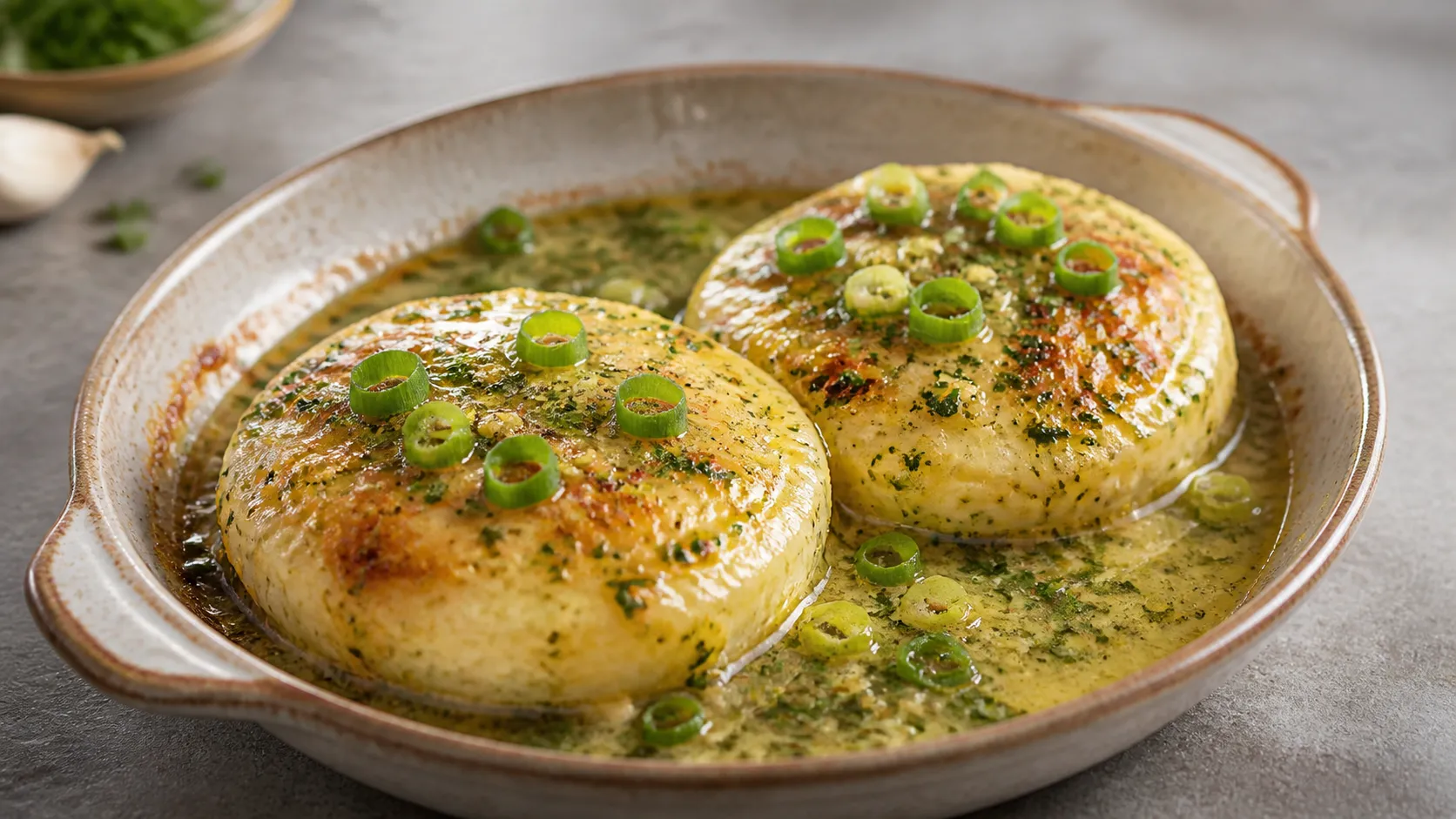
Handkase (a traditional German sour milk cheese) takes beautifully to the broiler: it turns creamy and soft on the inside while developing a lightly browned crust on top. With herb butter and scallions, you get a warm keto meal in 15 minutes with only approx. 2 g net carbs – the lowest carb count of all ten variations.
Key facts at a glance
- Preparation approx. 15 minutes – oven broiler, simple technique.
- Approx. 2 g net carbs and 16 g fat per serving.
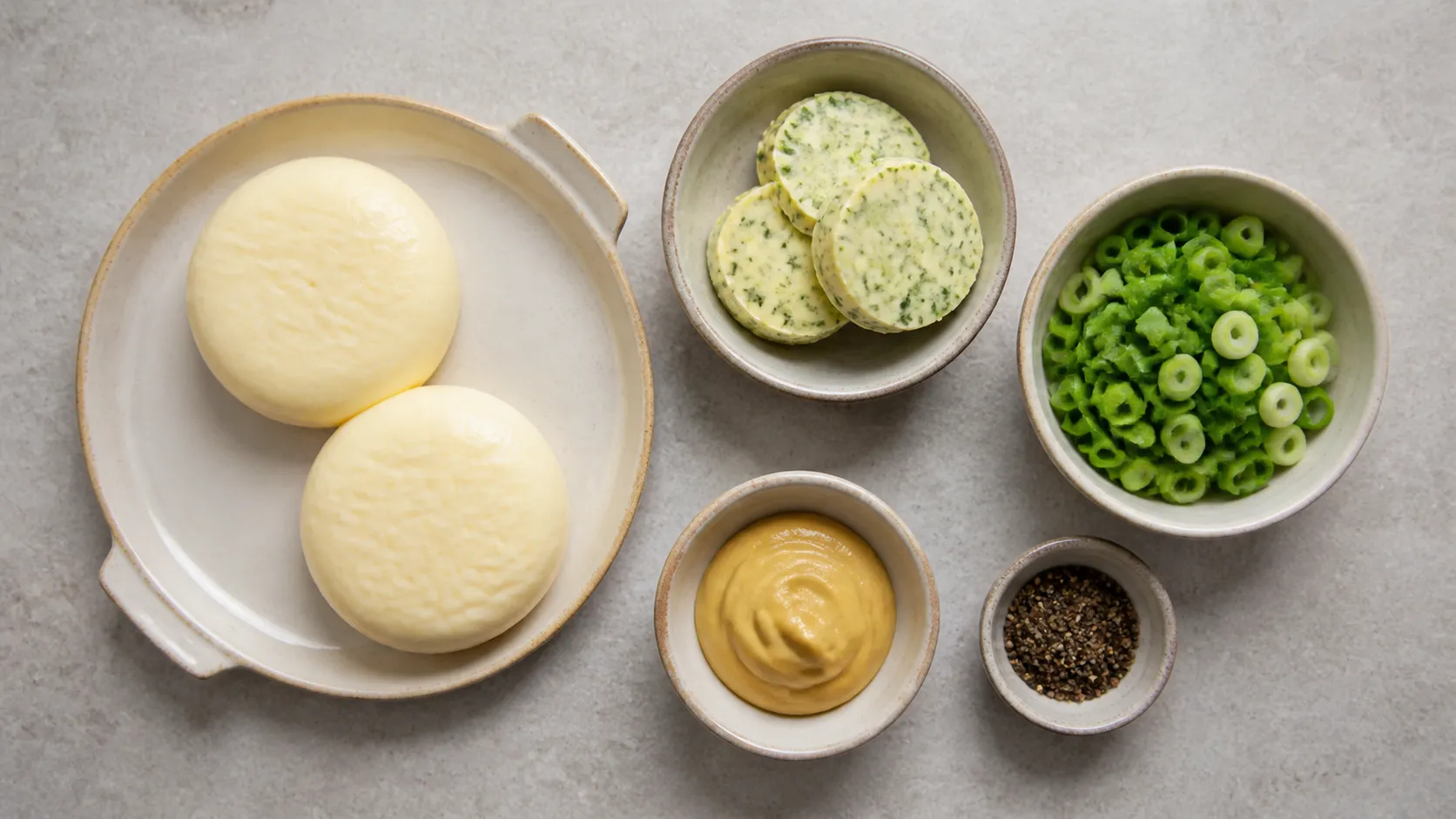
- Ingredients: handkase, herb butter, scallions, Dijon mustard, pepper.
- Great for anyone who wants to enjoy handkase warm without the classic onion marinade.
Ingredients
1 handkase per person – serve immediately, enjoy warm.
| Amount | Ingredient | Note | ||
|---|---|---|---|---|
| Handkase | approx. 60 g each | |||
| approx. 60 g each | ||||
| Herb butter | made from butter, chives, parsley, garlic | |||
| made from butter, chives, parsley, garlic | ||||
| Scallion | approx. 2 pieces, sliced into rings | |||
| approx. 2 pieces, sliced into rings | ||||
| Dijon mustard | - | |||
| Pepper | freshly ground | |||
| freshly ground | ||||
Preparation
-
Preheat broiler and prep
approx. 5 minutesPreheat the oven broiler to its highest setting (usually 250 °C grill function) for 5 minutes. Slice scallions (30 g) into rings.
-
Top the handkase
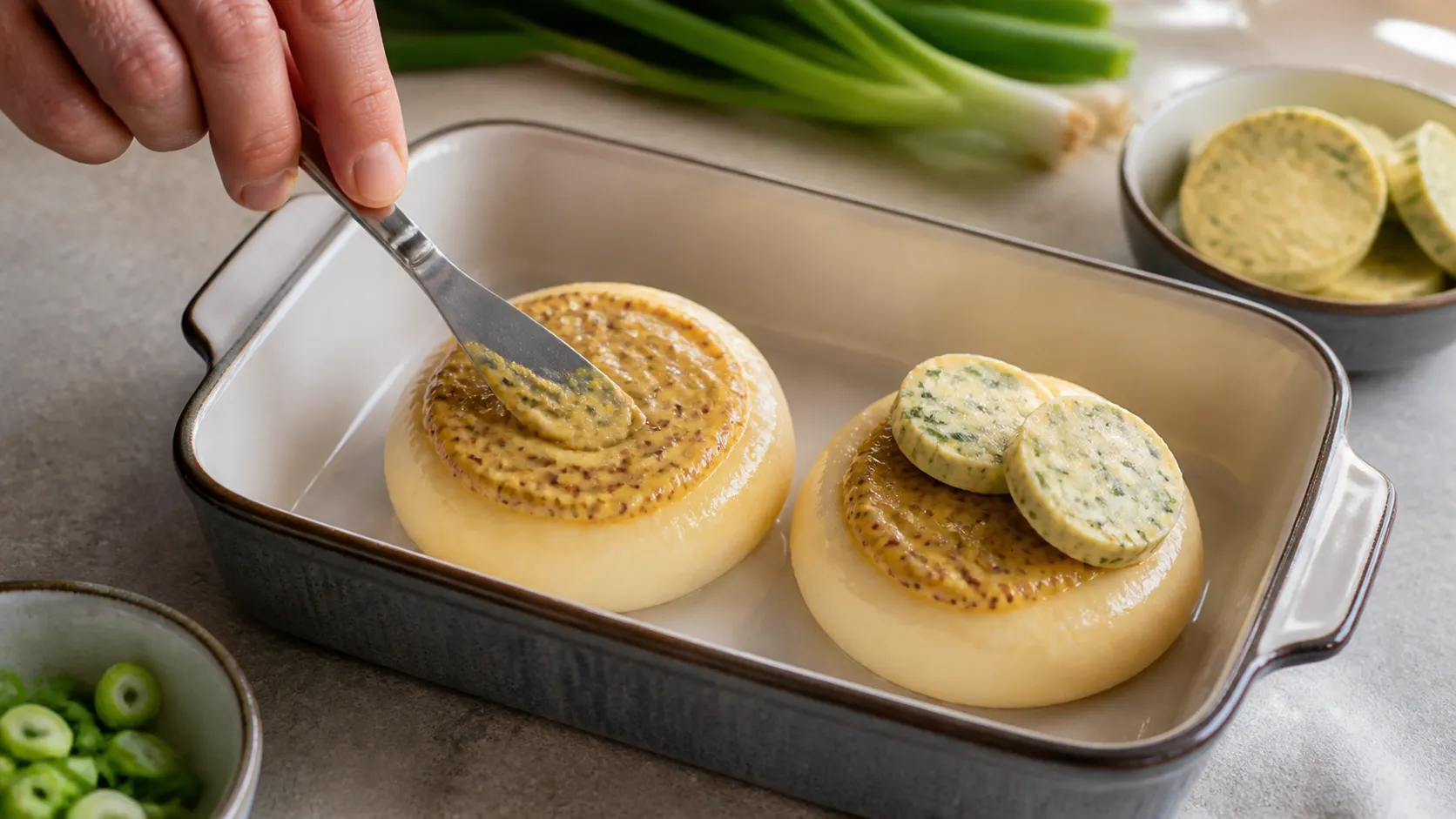
approx. 2 minutes2 piece Handkase approx. 60 g each 30 g Herb butter made from butter, chives, parsley, garlic 1 tsp Dijon mustard Place handkase rounds (60 g each) on a small ovenproof plate or in a baking dish. Brush with Dijon mustard (1 tsp total) and lay slices of herb butter (30 g total) on top.
-
Broil and serve
approx. 7 minutes30 g Scallion approx. 2 pieces, sliced into rings 1 pinch Pepper freshly ground Broil on the top rack for 5–7 minutes until the cheese is soft and lightly browned. Serve immediately with scallion rings and pepper.
What tips help for perfect baked handkase?
- Preheat the oven broiler for 5 minutes – the cheese needs direct, strong top heat.
- Bake the cheese on an ovenproof plate or in a small baking dish – it becomes very soft and may spread.
- Place the mustard under the herb butter (not on top) so it does not burn.
- Serve baked handkase immediately – it firms up again as it cools.
- Warm the plates so the cheese does not cool down too quickly.
- Add scallions only after baking – that way they stay fresh and crisp.
Why is baked handkase keto-friendly?
By skipping the onion marinade and using herb butter instead of oil, net carbs drop to only approx. 2 g per serving – the lowest of all handkase variations. Herb butter delivers about 15 g of fat per serving, which fits keto well. Scallions have slightly more carbs than chives, but at approx. 3 g per 100 g they remain keto-friendly.
Source: FDDB Nutrition Database – Butter and handkase nutritional values
What happens to handkase when it is heated?
Handkase (a sour milk cheese) behaves differently from hard cheeses when heated: at approx. 60–70 °C it becomes very soft and creamy, but does not run as freely as processed cheese. Its protein structure changes, and the flavor becomes milder and less tangy. The result is reminiscent of a soft, creamy fondue cheese.
Herb butter as a keto fat source
Butter contains about 83 % fat and virtually zero carbs – making it an ideal fat source for keto. Herb butter made from butter, garlic, herbs and a pinch of salt adds flavor without any extra carbs.
How do I serve and vary baked handkase?
From experience, baked handkase has to be served immediately – it firms up again as it cools and loses its creamy texture. Warming the plates beforehand helps a lot.
Meal prep: herb butter on hand
Homemade herb butter keeps frozen as a roll for up to 3 months and can be sliced off as needed – always ready to use. Prepare the handkase itself only just before baking.
Variation without herb butter
If you don’t have herb butter, you can also bake the handkase with plain butter and fresh herbs. The flavor is a bit more neutral, but it stays keto-friendly.
Nutrition values
| Nutrient | Per 100 g | Per serving | Keto rating |
|---|---|---|---|
| Calories | approx. 145 kcal | approx. 215 kcal | Moderate. Slightly richer in calories than the raw variations due to the herb butter. |
| Moderate. Slightly richer in calories than the raw variations due to the herb butter. | |||
| Fat | approx. 10.8 g | approx. 16 g | Excellent for keto. Butter is a pure fat source with no carbs. |
| Excellent for keto. Butter is a pure fat source with no carbs. | |||
| Net carbs | approx. 1.3 g | approx. 2 g | Outstanding for keto. The lowest carb count of all ten variations. |
| Outstanding for keto. The lowest carb count of all ten variations. | |||
| Sugar | approx. 0.5 g | approx. 0.8 g | Very low. Almost no sugar without onions and vinegar. |
| Very low. Almost no sugar without onions and vinegar. | |||
| Protein | approx. 6.4 g | approx. 9.5 g | Moderate. The protein comes from the handkase. |
| Moderate. The protein comes from the handkase. | |||
| Salt | approx. 1.1 g | approx. 1.6 g | Watch out. Herb butter often contains salt – keep the total amount in mind. |
| Watch out. Herb butter often contains salt – keep the total amount in mind. | |||
Note: Nutrition values are estimated averages per 100 g and per serving and may vary depending on ingredients, brands, portion size, and preparation. They do not replace individual nutrition or medical advice.
FAQ
Does handkase lose its nutritional value when heated?
Not significantly. Protein and fat are preserved during brief gratinating. Heat-sensitive vitamins (such as vitamin C) only appear in trace amounts in handkase, so any loss is negligible.
Can I also bake handkase in an air fryer?
Yes, using the grill function (180–200 °C, approx. 5 minutes). Without a grill function it will turn soft but barely brown. Place it on a small piece of parchment paper so it does not stick.
Which herbs work well in herb butter?
Classic: chives, parsley and a bit of garlic. Mediterranean: thyme, rosemary and lemon zest. For handkase, the classic version with chives and parsley works best because it does not overpower the cheese flavor.
Why does handkase get so creamy when heated?
Handkase is a sour milk cheese that is not pressed like hard cheese. Its protein network is less densely cross-linked than in aged hard cheeses. When heated to around 60–70 °C, this network denatures and the cheese flows creamily – similar to baked Brie or Camembert.