Salt: Your Lifesaver in Ketosis
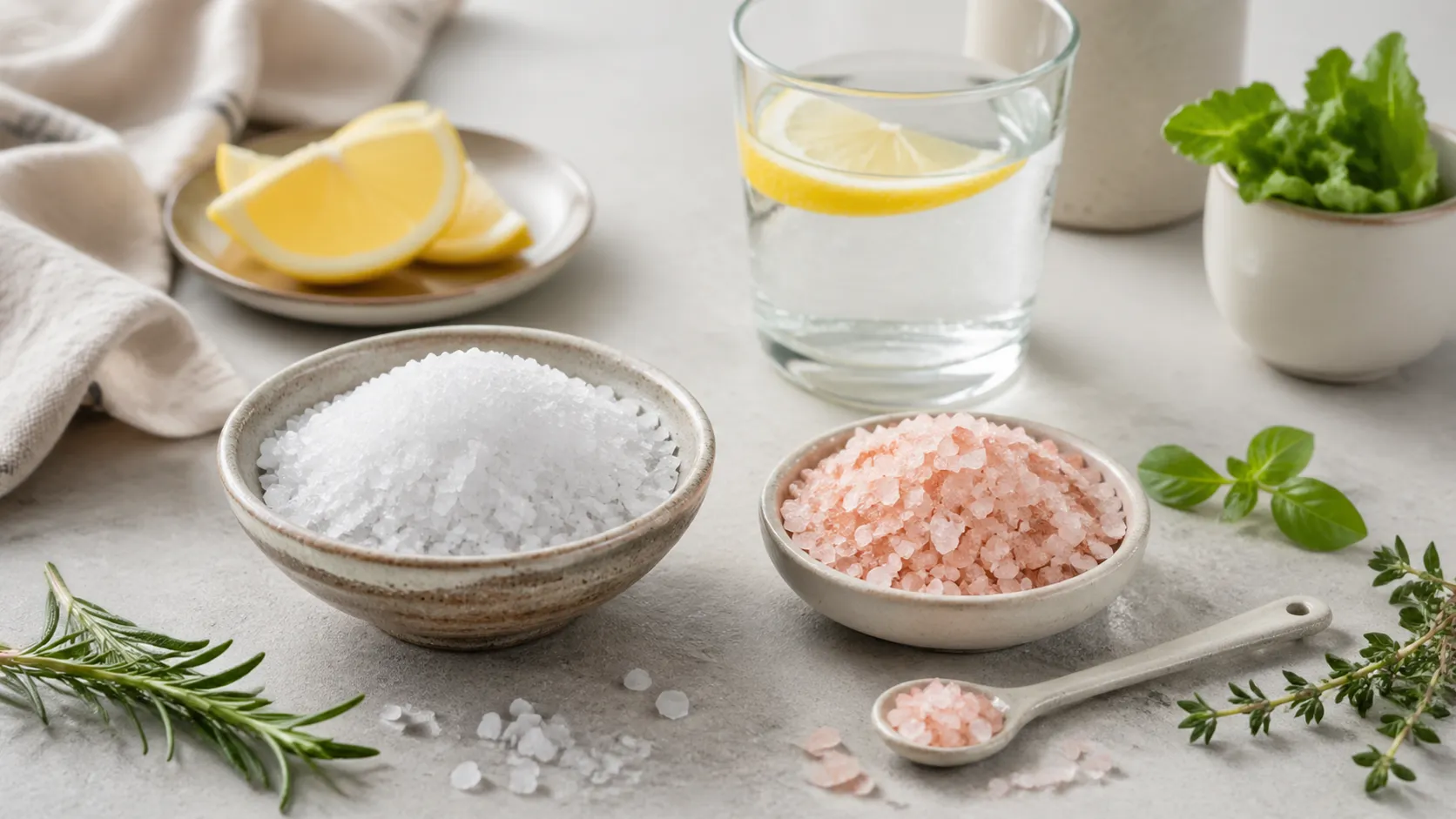
Salt isn't an enemy on keto, it's an essential source of electrolytes. When you start keto, the breakdown of glycogen stores causes your body to excrete a lot of water and sodium. While the CDC recommends an upper limit of 2,300 mg of sodium per day for the general population (CDC), keto followers in the adaptation phase often need 3,000 to 5,000 mg of sodium daily to avoid the so-called 'keto flu' (NIH ODS). That's roughly 7.5 to 12.5 g of salt per day. Symptoms like headaches, fatigue, and muscle cramps can often be traced directly to sodium deficiency, not to too much salt.
Is it recommended for keto?
Sufficient salt is essential on keto. While the CDC recommends less than 2,300 mg of sodium per day for the general population (CDC), keto followers in the adaptation phase often need 3,000 to 5,000 mg of sodium daily. The reason: falling insulin levels cause the kidneys to excrete more sodium, which can trigger symptoms like headaches, dizziness, and muscle cramps (NIH ODS). 5 g of salt provides about 2,000 mg of sodium, so you need roughly 7.5 to 12.5 g of salt per day during the first 4 to 8 weeks. Keto electrolyte drink: 250 ml of water with 1/4 teaspoon of high-quality sea salt (about 600 mg of sodium) and a splash of lemon in the morning works wonders for your energy levels. For athletes or in hot climates, the need can climb to as much as 6,000 mg of sodium daily.
What pairs well with it?
Salt enhances practically every keto dish and is at the same time your most important source of electrolytes. It pairs especially well with avocado, whose potassium content of 485 mg per 100 g complements sodium nicely (USDA FoodData Central). On boiled eggs, a pinch of sea salt adds trace minerals as well. A cup of bone broth with half a teaspoon of salt and a splash of apple cider vinegar is the classic remedy for the keto flu, delivering around 1,000 to 1,200 mg of sodium per serving. Fresh steak, salted before searing and finished with Fleur de Sel afterwards, remains the favorite example of salt as a flavor enhancer. With fava beans or green asparagus, salt brings out the natural sweetness of vegetables. If you season, do it deliberately, once before cooking and once after, rather than dumping large amounts at the end. That way the salt actually develops in the food.
Pros & cons of organic
There is no classic organic seal for salt, since it is an inorganic mineral and doesn't come from agricultural production. Still, quality varies considerably: Advantages of unrefined salt (sea salt, rock salt, Himalayan pink salt): It contains valuable trace elements such as magnesium, potassium, and calcium (often 1 to 3 percent of the dry mass), comes without anti-caking agents or flow agents (E 535, E 536), and is usually less processed than industrial table salt. High-quality varieties like Fleur de Sel from Brittany or Maldon Sea Salt are still harvested by hand today. Disadvantages: Natural salt often contains no iodine, which can lead to iodine deficiency if used exclusively. Anyone who avoids iodized foods or fish should supplement iodine deliberately or occasionally mix in iodized table salt. The microplastic content of sea salt is also an increasingly debated issue, and high-quality rock salts (Himalayan pink salt, halite from Poland) are often a better choice.
Intolerances & allergens
Salt contains no classic allergens like gluten, lactose, or nuts, making it suitable for practically every diet. Pure sodium chloride is also harmless on strict diets like low FODMAP, low histamine, or paleo. Caution is only warranted at very high doses: more than 10 to 15 g of salt at once can lead to stomach irritation or, in extremely rare cases, hyponatremia-like symptoms if a lot of water is consumed at the same time. With diagnosed high blood pressure, you should consult a doctor before aggressive salt supplementation. That said, a ketogenic diet often lowers blood pressure on its own, so many hypertensive people actually tolerate more salt on keto. With kidney disease, medical supervision is essential. Iodine-free salt may make sense for Hashimoto patients, where individual guidance is important.
Where to buy online or locally?
You can find high-quality salt in almost every supermarket, health food store, or online. Classic recommendations: Unrefined sea salt from Portugal (Flor de Sal de Tavira) or France (Fleur de Sel de Guerande) starts at around 5 euros per 250 g. Himalayan pink salt (often from Pakistan, Khewra mine) costs 2 to 4 euros per 500 g and contains traces of iron and potassium. Celtic sea salt (grey, mineral-rich) from Brittany is excellent for keto electrolyte drinks. Maldon Sea Salt Flakes from England are particularly well suited as a finishing salt over steak or salads. Avoid heavily processed table salt with anti-caking agents, which is often refined down to 99.99 percent pure sodium chloride. At organic markets you'll also find Celtic sea salt from brands like Le Saunier de Camargue or Sel Marin de Guerande. Online retailers ship a curated selection of salts internationally.
Best keto recipes with it
- All hearty keto dishes (General) - View recipe
Nutrition values
| Nutrient | Per 100 g |
|---|---|
| Net carbs | 0 g |
| Fat | 0 g |
| Protein | 0 g |
| Calories | 0 kcal |
FAQ
How much salt do I need on keto per day?
During the adaptation phase (4 to 8 weeks), most keto followers need 3,000 to 5,000 mg of sodium daily, which corresponds to about 7.5 to 12.5 g of salt (<a href="https://ods.od.nih.gov/factsheets/Sodium-HealthProfessional/" target="_blank" rel="noopener">NIH ODS</a>). After adaptation, 2,500 to 3,500 mg of sodium is often enough. With exercise, hot weather, or sauna sessions, the need can climb further. Listen to symptoms like headaches or muscle cramps.
Is Himalayan pink salt better than regular table salt?
Often milder and more flavorful, but nutritionally only marginally different. Himalayan rock salt contains around 84 trace elements in tiny amounts that have barely measurable nutritional impact. The real advantage lies in the unrefined processing without anti-caking agents and in the precise flavor profile. For most keto applications, high-quality sea salt or rock salt is comparably suitable.
Can you consume too much salt on keto?
That's much rarer than a deficiency. The kidneys regulate excess sodium effectively through urine. Problems usually only arise above 6,000 mg of sodium daily combined with low water intake, or with pre-existing kidney conditions. With persistent high blood pressure despite a keto diet, salt intake should be discussed individually with a doctor rather than reduced across the board.