Chewing Gum on Keto: It All Comes Down to the Sweetener
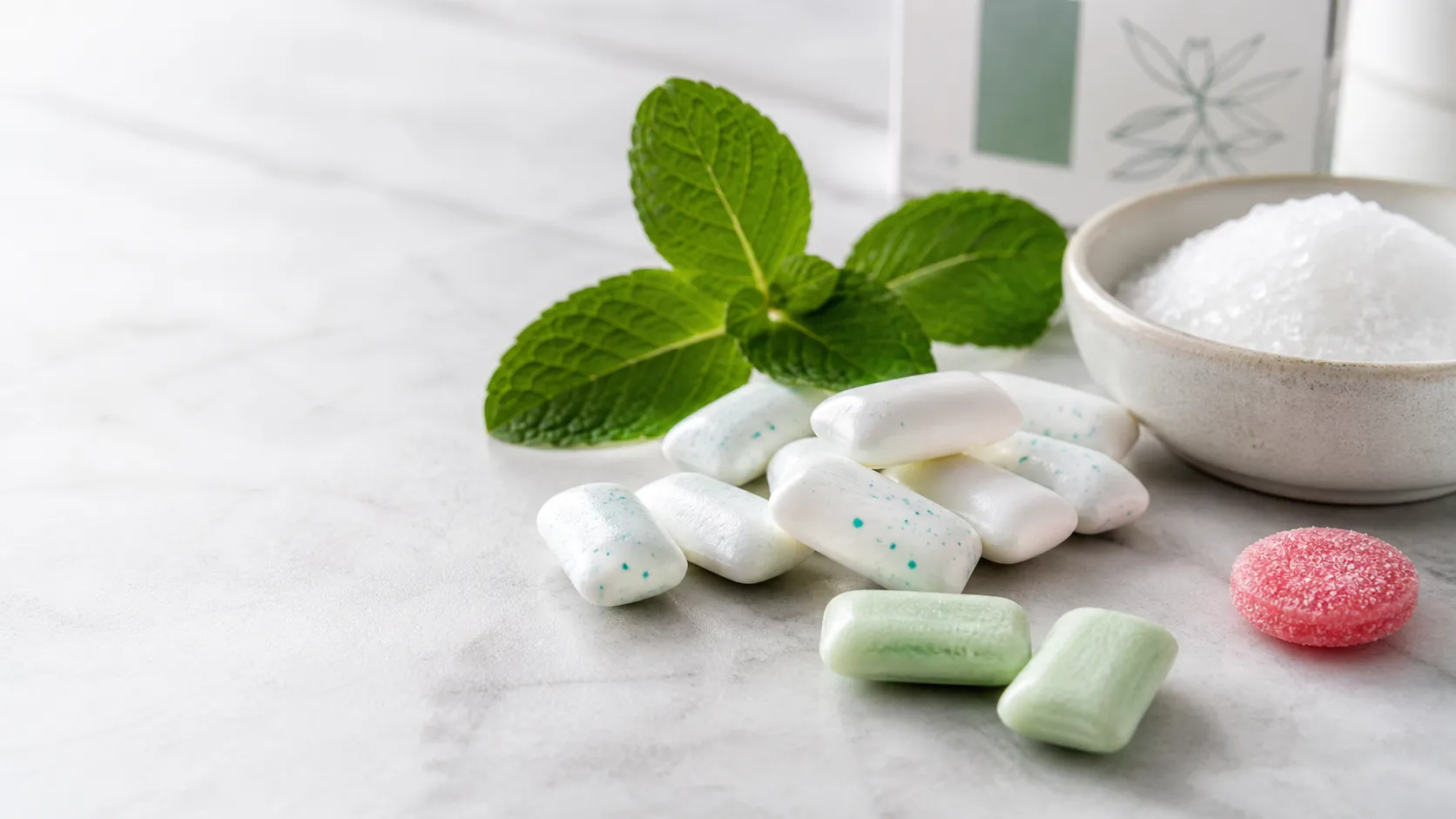
A piece of chewing gum after a meal sounds harmless, yet many commercial brands contain 2 to 5 g of sugar per piece. Even seemingly 'sugar-free' varieties made with maltitol can noticeably raise blood sugar, since maltitol syrup has a glycemic index of 52 (PMC9261844, 2022). Xylitol, by contrast, has a GI of just 13, and erythritol comes in at GI 0, making both keto-safe. If you want to stay in ketosis, you need to look closely: the sweetener in the gum decides, not the label on the pack. A 40-month RCT with 1,277 children also showed that 100 percent xylitol gum reduced cavities by 73 percent (PubMed 8600188).
Can I chew gum on keto?
Yes, you can chew gum on keto, but not just any gum. The short answer: only gum sweetened exclusively with xylitol, erythritol, stevia, or aspartame is suitable for a ketogenic diet. Regular chewing gum contains an average of 2 g of sugar per piece (USDA FoodData Central, 2025), and a single piece of Hubba Bubba even packs 5 g, enough to noticeably trigger insulin secretion and threaten ketosis. The 'sugar-free' problem: the label on the pack doesn't tell the whole story. Many sugar-free gums contain maltitol, a sugar alcohol with a glycemic index of 35 (powder) to 52 (syrup) that still measurably raises blood sugar and insulin. Only by reading the ingredient list can you be sure you're buying a truly keto-compliant gum. With a typical serving size of 2 to 4 pieces per day, choosing the wrong gum can already break ketosis.
Which sweeteners in chewing gum are keto-friendly?
According to a systematic review in PMC, xylitol has a glycemic index of 13 compared with 65 for sucrose, and shows 'negligible effect on postprandial glycemia and insulinemia' (PMC9261844, 2022). Erythritol is even lower at GI 0. Both sweeteners are unproblematic for ketosis because they do not activate the insulin secretion pathways. Aspartame also performs well in a large systematic review: more than 100 experiments show 'little to no effects of aspartame consumption on glucose metabolism' (PMC12205327, 2025). [UNIQUE INSIGHT] Sucralose has a mixed evidence base: in some people it may affect insulin sensitivity, in others it does not. For most keto followers, sucralose gum in small amounts is fine, but xylitol remains the more reliable choice. Keto-safe sweeteners: xylitol (GI 13), erythritol (GI 0), stevia (GI 0), aspartame (GI 0). To avoid: maltitol (GI 35-52), sucrose (GI 65). Sorbitol (GI 9) is tolerable in small amounts.
Keto-safe sweeteners in chewing gum
- Xylitol: GI 13 - preferred. Also supports dental health.
- Erythritol: GI 0 - optimal. Barely any digestive issues at normal amounts.
- Stevia: GI 0 - keto-safe, but often combined with other sweeteners.
- Aspartame: GI 0 - keto-friendly, no measurable effects on glucose metabolism.
Sweeteners to avoid on keto
- Maltitol: GI 35-52 - significant blood sugar effect despite the "sugar-free" label. Common in cheap no-name gums.
- Sorbitol: GI 9 - conditionally acceptable in small amounts, but larger portions can cause digestive issues.
- Sucrose / sugar: GI 65 - a clear keto deal-breaker.
Does sugar-free gum still trigger an insulin response?
A legitimate concern: can the act of chewing itself - smell, taste, and chewing motion - trigger insulin secretion, the so-called Cephalic Phase Insulin Response (CPIR)? A comprehensive review in Physiological Reviews shows: sweetened chewing gum alone did not cause a significant rise in serum insulin in humans. A measurable CPIR only appeared when the smell or sight of food was present at the same time (PMC9942918, 2023). [PERSONAL EXPERIENCE] For the vast majority of keto followers, 1 to 2 pieces of xylitol gum without an accompanying meal is no problem. Anyone who is extremely insulin sensitive or is working with very low carbohydrates (under 20 g per day) can play it safe by limiting gum to times right after meals. As part of a normal ketogenic diet with 30 to 50 g of carbs per day, xylitol gum carries virtually no risk to ketosis. Xylitol gum can also be consumed in moderate amounts during intermittent fasting, since it has no significant effect on either insulin or blood sugar.
Xylitol gum: keto-safe and good for your teeth
Choosing xylitol gum gives you a double benefit: keto safety plus dental health. A randomized clinical trial over 40 months with 1,277 children showed: 100 percent xylitol gum reduced cavity incidence by 73 percent (relative risk 0.27 versus control group) (PubMed 8600188, Scheinin et al.). A 2022 microbiome study confirms the mechanism: just 6.2 g of xylitol per day over 2 weeks reduced plaque weight by 19 percent and significantly lowered pathogenic bacteria such as Streptococcus mutans (PMC9131035, 2022). [UNIQUE INSIGHT] This is especially relevant for keto followers: a high-protein, high-fat diet can shift the oral microbiome because fewer fermentable carbohydrates are available for cavity-causing bacteria. Xylitol gum actively counters the remaining plaque shift. Cavity bacteria cannot metabolize xylitol; instead of gaining energy, they die off. At 4 to 6 pieces of xylitol gum a day, you hit the effective dose of 6 to 10 g of xylitol for maximum tooth protection.
Which chewing gums are recommended for keto?
When choosing the right gum, a simple rule applies: the ingredient list must contain only xylitol, erythritol, stevia, or aspartame as a sweetener. Sorbitol is tolerable in small amounts; avoid maltitol consistently. Many sugar-free varieties available in supermarkets (e.g. Orbit, Airwaves) use sorbitol as their main sweetener - 1 to 2 pieces won't ruin anything, but it's not an optimal choice. Pure xylitol gum is much harder to find in store, but readily available online. Recommended brands: PUR Gum (100 percent xylitol, Canadian, vegan), Miradent Xylitol Chewing Gum (German dental brand, available in many pharmacies), Spry Xylitol (American brand, non-GMO, aspartame-free), Xucker Dental Care Gum (xylitol plus erythritol, TiO2-free). Buying checklist: only xylitol, erythritol, stevia, or aspartame as sweetener; 'maltitol' must not appear in the ingredient list; no listing of 'sugar', 'sucrose', or 'glucose-fructose syrup'; 0 g of sugar per piece on the nutrition label. Prices: 4 to 8 euros per 100 pieces of xylitol gum.
Our keto-compatible chewing gum picks
What to look for when buying keto chewing gum
- Check the ingredient list: xylitol, erythritol, stevia, or aspartame as the sweetener - no exceptions.
- Exclude maltitol: if "maltitol" or "maltitol syrup" appears, the gum is not keto-friendly.
- Verify the nutrition facts: sugar content per piece should be 0 g.
- Judge sorbitol carefully: tolerable as the sole sweetener in small amounts (1-2 pieces), but not for regular use.
- Mind your portion size: even with xylitol gum, more than 6-10 g of xylitol per day can cause digestive issues (diarrhea) - for most gums, that equals around 4-8 pieces.
Nutrition values
| Nutrient | Regular gum (per piece, 3 g) | Xylitol gum (per piece, 3 g) |
|---|---|---|
| Calories | ~10 kcal | ~5 kcal |
| ~5 kcal | ||
| Net carbs | ~2 g | ~0 g* |
| ~0 g* | ||
| Sugar | ~2 g | 0 g |
| 0 g | ||
| Sugar alcohols | 0 g | ~1.5 g xylitol |
| ~1.5 g xylitol | ||
| Fat | 0 g | 0 g |
| 0 g | ||
| Protein | 0 g | 0 g |
| 0 g | ||
FAQ
Can I eat chewing gum on keto at all?
Yes - but only varieties with keto-safe sweeteners. Xylitol gum, with a glycemic index of 13, is the best choice. Avoid maltitol gum despite the "sugar-free" label: maltitol syrup has a GI of 52 and can noticeably raise blood sugar and insulin.
Which chewing gum brands are keto-friendly?
PUR Gum, Miradent Xylitol, and Spry Xylitol are based on 100% xylitol as the sweetener, making them ideal for keto. Xucker gum combines xylitol and erythritol - also keto-safe. Mainstream varieties like Orbit or Airwaves usually contain sorbitol, are acceptable in small amounts, but are not ideal.
Can chewing gum break ketosis?
Regular gum with sugar can - 1 piece of Hubba Bubba contains 5 g of sugar. Xylitol gum, by contrast, triggers no relevant insulin or blood sugar response according to a systematic review (PMC9261844, 2022). A Cephalic Phase Insulin Response from chewing gum alone has not been demonstrated in humans based on current research (PMC9942918, 2023).
How many pieces of xylitol gum per day are okay on keto?
In dental health research, 6-10 g of xylitol per day is considered the effective dose. For most xylitol gums (about 0.7-1.5 g xylitol per piece), that equals 4-8 pieces. More than 10-15 g of xylitol per day can cause osmotically driven digestive issues - so keep consumption within reason.
Is xylitol gum also good for the teeth?
Yes - this is a clinically well-supported bonus. A 40-month RCT with 1,277 children showed 73% fewer cavities with 100% xylitol gum (relative risk 0.27 vs. control group, PubMed 8600188). Xylitol inhibits Streptococcus mutans and reduces plaque weight by 19% after just 2 weeks (PMC9131035, 2022).
How many pieces of xylitol gum per day are safe on keto?
In dental health research, 6 to 10 g of xylitol per day is considered the effective dose. For most xylitol gums (around 0.7 to 1.5 g xylitol per piece), that equals 4 to 8 pieces. More than 10 to 15 g of xylitol per day can cause osmotically driven digestive issues (diarrhea), so keep consumption within reason. Caution with dogs: xylitol is toxic to dogs.