Peppermint Tea: Caffeine-Free Keto Helper for Digestion
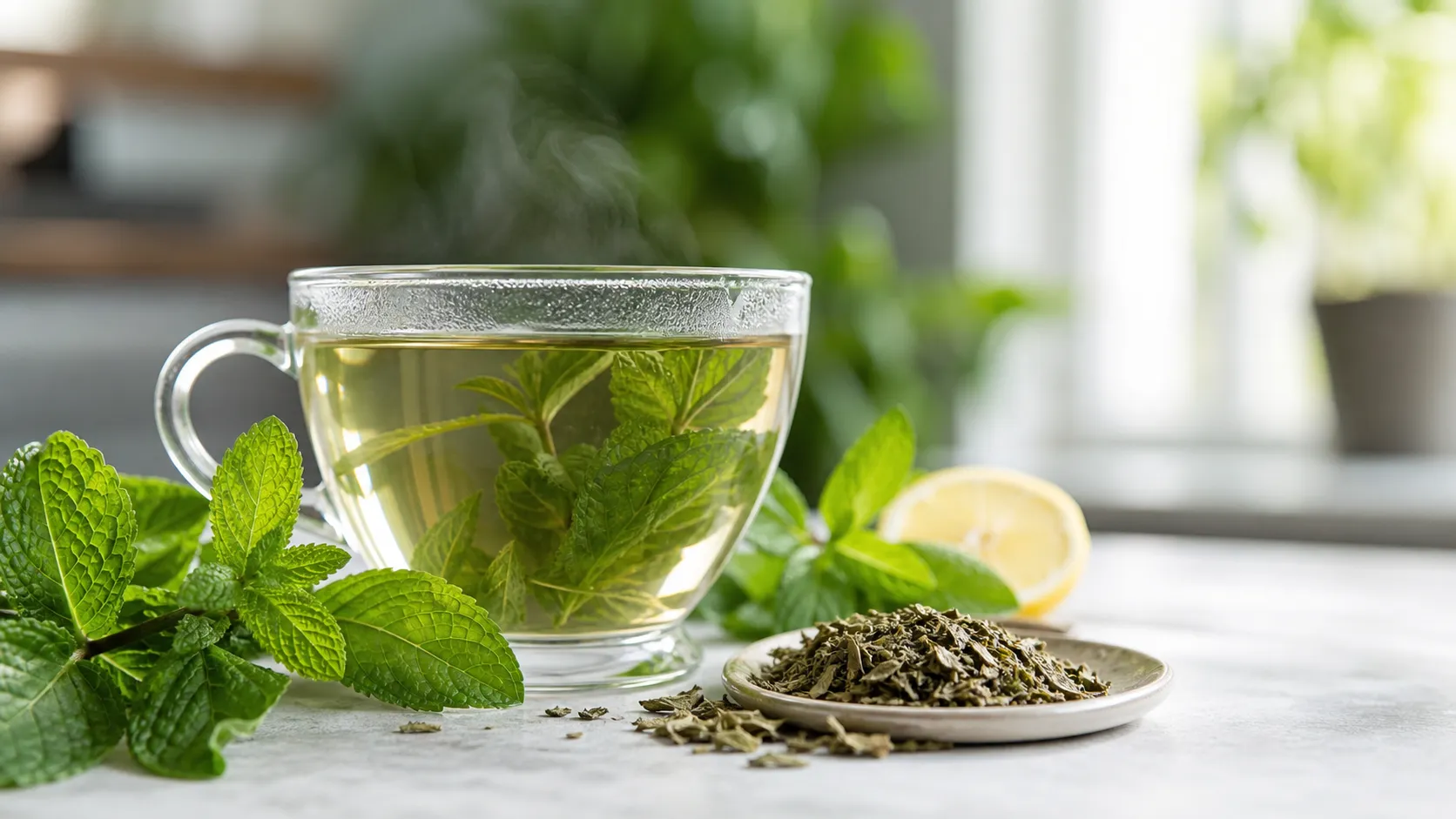
Peppermint tea is one of the most popular herbal teas for the ketogenic diet. It is completely caffeine-free, contains 0 g net carbs per cup according to the USDA, and delivers menthol along with other essential oils such as menthone and limonene that can effectively relieve digestive discomfort. Especially during the keto adaptation phase, when bloating, cramps and a feeling of fullness occur due to the unfamiliar fat intake, peppermint tea acts as a natural digestive aid. A placebo-controlled study showed that peppermint oil reduces appetite scores and accelerates gastric emptying (Papathanasopoulos et al., Neurogastroenterol Motil 2013). Its refreshing flavor also makes it an ideal caffeine-free summer drink.
Is it recommended for keto?
Peppermint tea is unconditionally recommended on keto, especially during the transition phase. Per 100 ml of brewed tea, it contains 0 g net carbs and only 1 kcal according to the USDA. It is completely caffeine-free and can therefore be enjoyed without concern even in the evening. The menthol it contains (typically 35 to 55 percent of the essential oils) along with the other active compounds menthone, cineole and limonene relax the smooth muscle of the digestive tract, ease cramps and reduce bloating. In a placebo-controlled study, peppermint oil significantly reduced appetite scores and improved gastrointestinal motility (Papathanasopoulos et al. 2013). Particularly valuable for keto beginners: the unusually high fat intake often causes nausea, fullness or bloating, which peppermint effectively relieves. Peppermint oil is also considered an evidence-based therapeutic option for irritable bowel syndrome (IBS). Brand recommendation: Fresh peppermint leaves from the garden or farmers' market deliver the most intense aroma. For tea bags: Traditional Medicinals Organic Peppermint, Yogi Tea Peppermint, Pukka Three Mint, Bigelow Plantation Mint. For loose leaves: Harney & Sons or pharmacy-grade Sidroga (pharmacopoeia quality).
What pairs well with it?
Peppermint tea works best after meals as a digestive finisher. A cup at the start of the digestive process relaxes the stomach and prevents a feeling of fullness. In summer, brew peppermint at double strength, chill the infusion in the refrigerator, and enjoy it as a cold peppermint iced tea with lemon juice, erythritol and ice cubes — a perfect mojito substitute without alcohol or sugar. Combined with fresh ginger (2 cm peeled and sliced), it creates a doubly digestion-promoting blend, ideal after a high-fat keto meal. Peppermint also works as a base for a green keto smoothie variation: with spinach, avocado, almond milk and erythritol, it makes a refreshing drink. For evening relaxation: peppermint with lavender flowers and a splash of cream. Brewed Moroccan-style with green tea, peppermint yields a classic tea, provided you replace sugar with erythritol.
Pros & Cons of Organic
Advantages of organic peppermint: Organic peppermint is grown without synthetic pesticides, which is particularly sensible for herbal teas, since the whole leaves are steeped and consumed without filtration. Pesticide residues on peppermint leaves can be elevated in conventional cultivation. Organic peppermint often also contains a higher level of essential oils, as organic plants produce more secondary metabolites under more stressful growing conditions. Disadvantages: The price difference between organic and conventional peppermint is very small, often only 1 dollar per 100 g. Since the price premium barely matters and the quality is noticeably better, organic is almost always worth it for peppermint. Look for the USDA Organic seal and brands such as Traditional Medicinals, Numi or Pukka, which are all certified organic.
Intolerances & Allergens
Peppermint can worsen symptoms in reflux disease (GERD), as menthol relaxes the lower esophageal sphincter and allows stomach acid to rise more easily. Use with caution in gallbladder conditions, as peppermint stimulates bile production. During pregnancy, moderate amounts are safe; very high doses should be avoided. In infants and toddlers under 2 years of age, concentrated menthol is problematic. Allergies to peppermint are rare but possible.
Where to buy online or locally?
Peppermint tea is available as bags in every supermarket, health food store, drugstore and pharmacy. For more intense flavor, reach for loose, whole peppermint leaves rather than fine-cut tea bags. Pharmacy-grade quality (Sidroga, Bombastus, Heumann) is standardized according to the pharmacopoeia and especially pure. Fresh peppermint from the garden or farmers' market delivers the most intense aroma, as the essential oils partly dissipate during drying. A plant costs only 3 to 5 dollars and provides fresh leaves for months. Brand recommendations: Traditional Medicinals Organic Peppermint, Yogi Tea Peppermint, Numi, Pukka Three Mint (a blend of peppermint, spearmint and field mint). Store dried peppermint in an airtight tin in a dark, dry place, and the aroma will keep for 12 to 18 months.
Nutrition values
| Nutrient | Per 100 ml (brewed) |
|---|---|
| Net carbs | 0 g |
| Fat | 0 g |
| Protein | 0 g |
| Calories | 1 kcal |
FAQ
Does peppermint tea help against cravings on keto?
Yes, several studies (e.g. Papathanasopoulos 2013) show that peppermint oil and tea can reduce appetite scores. Menthol relaxes the stomach muscles and conveys a feeling of satiety. Drink a cup of peppermint tea when cravings arise or as a digestive finisher after meals. The refreshing flavor also satisfies the desire for sweetness.
When should I avoid peppermint tea?
In reflux disease (GERD), heartburn or hiatal hernia, peppermint can worsen symptoms, as menthol relaxes the lower esophageal sphincter. Also better avoided with gallstones and in late pregnancy. In infants under 2 years of age, concentrated menthol is problematic. In these exceptions, chamomile or fennel are the better alternative.
How do I prepare peppermint tea correctly?
Use 1 to 2 teaspoons of dried peppermint leaves or 5 to 6 fresh leaves per 240 ml of water. Pour boiling water (100 degrees Celsius) over them and let steep for 5 to 7 minutes; with loose leaves, cover the cup to capture the essential oils. For cold peppermint iced tea, brew at double strength, then pour over ice. Maximum 4 to 6 cups per day.