Why We Recommend Cream Without Carrageenan
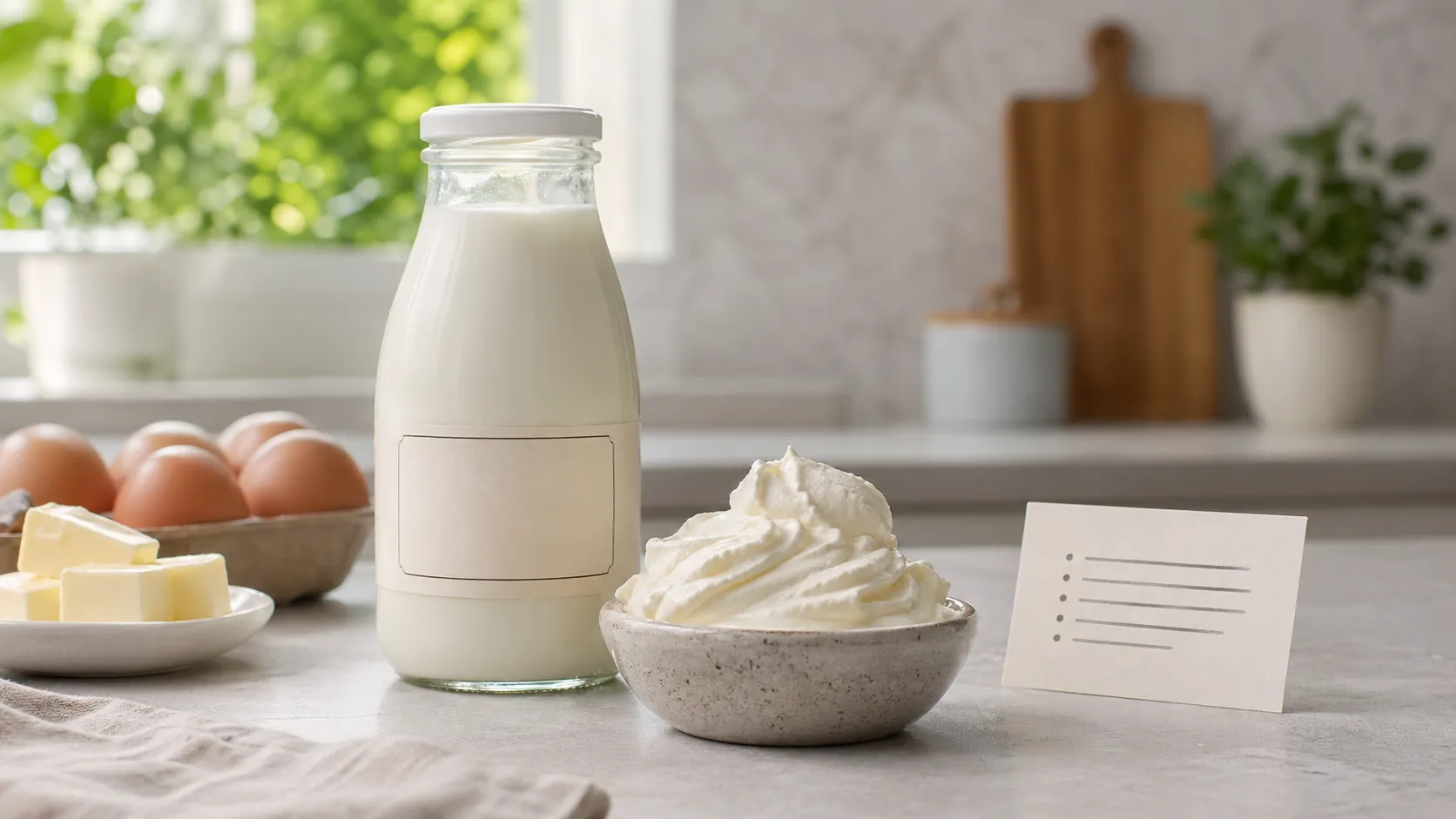
Cream is one of those foods where simplicity is a mark of quality. Even so, many cartons list carrageenan or E 407 alongside cream itself. The additive is approved across the EU and US, but in 2018 the European Food Safety Authority (EFSA) explicitly described the existing ADI value as provisional because of open questions (EFSA Re-evaluation E 407). A small trial in ulcerative colitis patients showed that a carrageenan-free diet delayed relapses (PMC5389019). In cream, carrageenan is mostly convenience chemistry that the kitchen does not need. If you regularly use cream in keto sauces, bulletproof coffee, desserts or casseroles, you can easily get through one to two cartons a week. Carrageenan-free organic cream is a sensible investment: a short ingredient list, no thickeners, and no E 407 irritation risk for the gut lining.
The key points up front
- Carrageenan is an additive extracted from red seaweed that makes cream more stable, more uniform and less prone to separation.
- It is approved as a food additive in the EU and the US, but approval is not a recommendation to eat it unnecessarily often.
- In 2018 EFSA found no blanket cancer or genotoxicity alarm, but called the existing ADI provisional because of open questions.
- Food-grade carrageenan is not the same as poligeenan, yet questions about breakdown products, gut tolerance and sensitive groups remain relevant.
- In cream, carrageenan is mostly convenience chemistry: useful for shelf stability and appearance, but not needed for taste, keto macros or good cooking.
What carrageenan actually does in cream
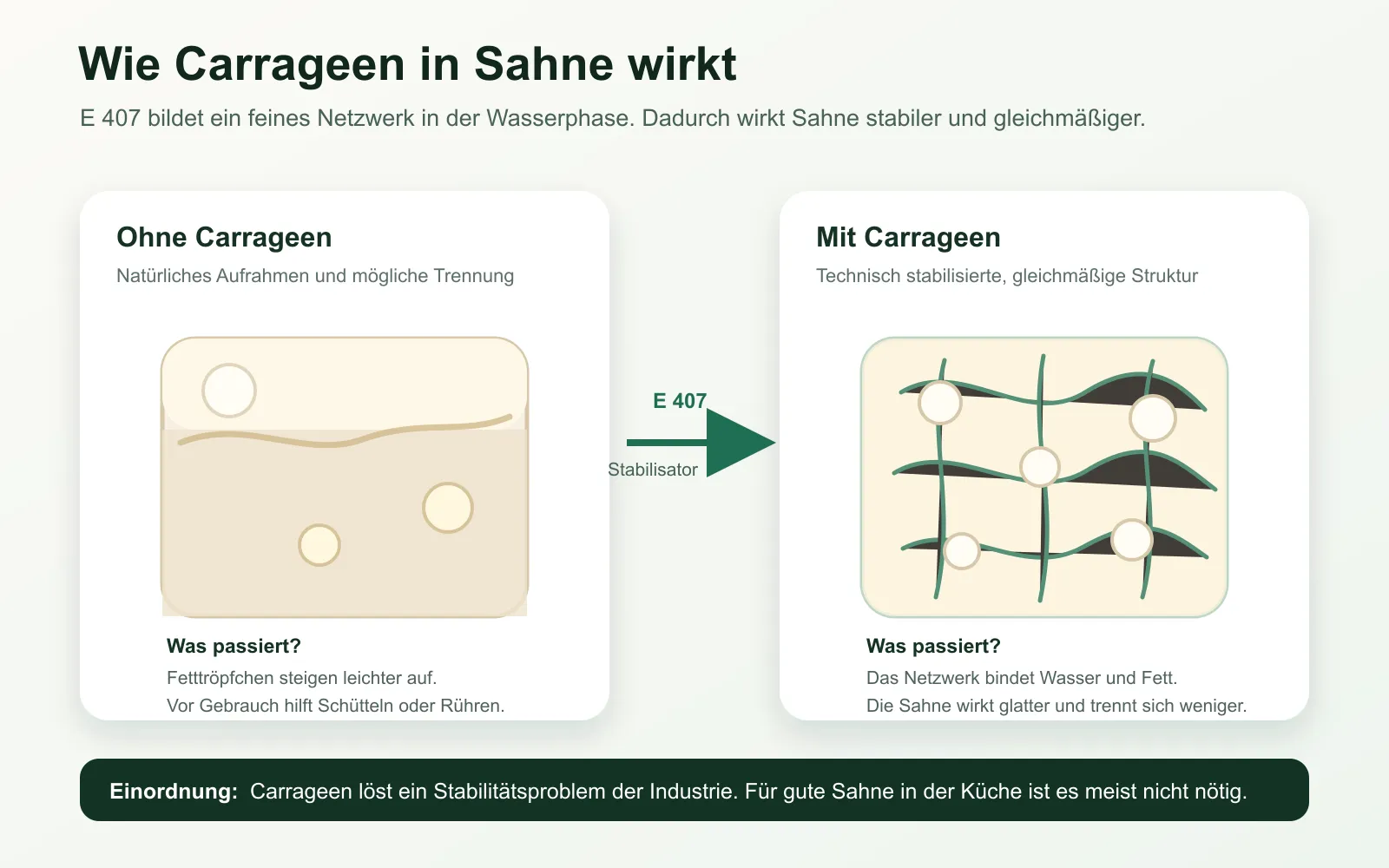
Carrageenan is a collective term for certain gelling and thickening polysaccharides extracted from red seaweed (Chondrus crispus, Eucheuma cottonii, Gigartina mamillosa). It is not added to cream because it makes the cream healthier or more nutritious, but because it improves technical properties: it stabilizes the emulsion, binds water, reduces cream rising and gives the product a more uniform look. This is particularly handy for manufacturers of UHT cream (long-life), spray cream, reduced-fat products or very shelf-stable variants, and it cuts down on retailer complaints. For home cooking, though, it mostly just means the cream feels more controlled, more industrially predictable and less prone to natural separation. Carrageenan is approved as a food additive in the EU (E 407) and the US (FDA 21 CFR 172.620). It shows up in ice cream, puddings, cream cheese, yogurt, drinking cocoa, soy drinks and many other creamy convenience foods. In very fresh cream with a high fat content (30 to 40 percent), it is technically unnecessary.
Source: FDA 21 CFR § 172.620
Approved does not automatically mean sensible
A common mistake in thinking goes like this: if an additive is permitted, it must be fine for everyday use, and therefore it does not matter. It is not that simple. Approval means that a substance is allowed under defined conditions. It does not answer the practical question of whether you actually need it in a specific food. In its 2018 re-evaluation, EFSA explicitly stated that the existing Acceptable Daily Intake (ADI) is provisional because of open chemistry and toxicology questions (EFSA Re-evaluation E 407/E 407a). With cream, the question is especially easy to settle because good products without carrageenan exist. When two cartons serve the same purpose but one comes with a shorter ingredient list, the simpler choice is, in our view, the better one. That is particularly true for people following keto, who should be leaning on simple, unprocessed foods anyway.
Source: EFSA Re-evaluation E 407/E 407a
The gut angle: what we can and cannot say
Carrageenan has been debated scientifically for years because cell and animal studies have described inflammatory effects, and because there are small human studies in sensitive groups. A randomized pilot study in ulcerative colitis showed significantly fewer relapses in the carrageenan-free group over one year (PMC5389019). A broader mechanistic review summarizes the evidence for inflammation-relevant pathways (PMC5566523). It does not follow that normal amounts of cream automatically cause harm in healthy people; that would overstate the evidence. Objectively, though, the gut remains a plausible angle, and the data picture is not so reassuringly closed that the additive should be brushed aside as entirely uninteresting. People with sensitive digestion, chronic inflammatory bowel conditions, leaky-gut symptoms or many highly processed products in their daily diet have good reasons to pay particularly close attention to carrageenan. For keto followers in particular, who consume more dairy and sauces, exposure can add up quickly.
Source: Randomized trial on a carrageenan-free diet in ulcerative colitis
Important: carrageenan is not poligeenan
In many discussions carrageenan gets mixed up with poligeenan. That is not technically accurate. Poligeenan is heavily degraded carrageenan with a much lower molecular weight (around 10,000 to 30,000 Daltons, compared with 200,000 to 800,000 Daltons for food-grade carrageenan), and it is not used as a food additive but for X-ray contrast media and medical research. Food-grade carrageenan is therefore not the same thing. Even so, the distinction is not a free pass, because in 2018 EFSA also flagged open questions about approved carrageenan: chemistry (variability in polymer chain length), exposure (cumulative intake from various foods) and biological and toxicological data. In the digestive tract, some carrageenan can break down under acidic conditions into lower-molecular-weight fragments that, at least in vitro, show inflammatory effects. That is the sober point: it is not about panic, but about avoidable uncertainty in a food that works perfectly well without the additive.
Source: EFSA Re-evaluation E 407/E 407a
Why this matters especially on keto
Cream is convenient in many keto recipes: it provides fat (about 30 g per 100 ml in heavy whipping cream), few carbs (3 g per 100 ml), a creamy texture and good satiety. But keto is not automatically healthy just because the carbs are low. People eating ketogenically often use more milk fat, cheese, cream cheese, sauces and desserts than before. As a result, an additive that looks small in any single product can show up across several foods. Using 200 ml of cream a day in sauces or bulletproof coffee, finding carrageenan in cream cheese anyway, and then eating it again in weekend ice cream all adds up. Our basic rule is therefore simple: keto should be built as much as possible from real, basic ingredients. Cream without carrageenan fits that principle better than a stabilized industrial variant. Look for organic dairy brands whose ingredient list shows only pasteurized cream, with no stabilizers, gums or emulsifiers. Organic and grass-fed brands are typically the most reliable choice, and many store-brand organic lines deliver the same short ingredient list.
Cooking works without a stabilizer too
Cream sauces, soups, casseroles and desserts do not need carrageenan. A sauce thickens through reduction, butter, egg yolk, cream cheese or a little patience. Whipped cream becomes stable enough with sufficient fat content, a cold bowl and clean handling. If a recipe succeeds without an additive, there is little reason to favor a technically stabilized cream.
The macros look the same, the ingredient list does not
Carrageenan barely changes the carbs on the nutrition label. That is why a purely macro-focused view tends to miss it. For good food choices, fat, protein and net carbs are not enough on their own. Ingredient quality, processing and tolerance belong in the picture too.
Taste, mouthfeel and craft
Carrageenan can make cream feel smoother and more uniform. Some people like that, others find it slightly artificial or slimy, especially in spray cream or very shelf-stable products. Without carrageenan, cream sometimes feels more natural: it may cream up a little (forming a thin fat layer on top), show a fat phase when opened, or want to be used sooner. That is not a defect, it is the normal behavior of a simpler dairy product. If you enjoy cooking, you actually gain some control back: consistency comes from the pot, the pan or the whisk, not from a standardization printed on the label. A cream sauce made without carrageenan-stabilized cream needs a little more patience while reducing, but it often tastes purely and cleanly creamy. For whipping, a cold bowl, attention to the cream and a bit of patience are enough. Cream with 35 percent fat holds its shape very well even without a stabilizer.
Where carrageenan shows up most often
In fresh cream with a high fat content you tend to find carrageenan-free products. E 407 shows up more often in: UHT cream (ultra-high-temperature, long shelf life), spray cream (aerosol whipped cream in a can), reduced-fat cream (whipping cream with less than 25 percent fat), vegan cream alternatives (soy, oat or rice cuisine), desserts (puddings, creams), drinking cocoa, ice cream, ready-made sauces, cream cheese preparations, some mixed dairy products, and industrial cream yogurts. That does not mean every one of these products is automatically bad. It just means: if you want to avoid carrageenan, you should read the ingredient list not only for cream but for creamy convenience foods in general. Organic products often skip carrageenan, but not always. Biodynamic standards tend to be stricter on this point than baseline organic regulations.
Our recommendation: skip it entirely
We suggest avoiding carrageenan entirely whenever realistic alternatives exist. Not because every exposure would be dangerous, but because the benefit to you is small, while the open scientific discussion mostly favors the manufacturer side: better stability, longer-lasting visual uniformity, fewer retailer complaints. For you as a shopper, what mostly remains is one more additive on the ingredient list. With cream, skipping it is especially easy: reach for products whose ingredient list reads only cream, pasteurized cream or heavy cream. If carrageenan, E 407, E 407a or 'stabilizer: carrageenan' is added on, leave the carton on the shelf. How to choose a brand: Prioritize organic dairy brands whose ingredient list shows only pasteurized cream, with no stabilizers, gums or emulsifiers. Organic and grass-fed labels, including small regional creameries and many store-brand organic lines (such as the organic ranges at major supermarkets), are typically reliable. The label is what counts, not the marketing on the front of the carton.
Shopping check for cream
- Read the ingredient list first, not just the front of the carton.
- Prefer fresh cream with 30 to 35 percent fat and no stabilizers.
- Watch for the terms carrageenan, E 407, E 407a, stabilizer or thickener.
- Check UHT and spray cream especially carefully, since stabilization is more common there.
- If you plan to whip the cream: store it cold, use a chilled bowl and let the fat content do the work instead of an additive.
- For keto recipes, the ingredient list matters as much as the nutrition table.
| Perspective | Cream with carrageenan | Cream without carrageenan |
|---|---|---|
| Purpose | More stable, more uniform, less separation | Simple base product with more natural behavior |
| Cooking | Convenient for long storage or spray products | Excellent for sauces, whipping, baking and keto recipes |
| Health angle | Approved, but with scientific debate and open questions | Avoids an unnecessary additive entirely |
| Keto perspective | Macros usually similar, ingredient list longer | Better aligned with unprocessed keto basics |
| Our pick | Only if no alternative is available | Clear recommendation for everyday use |
FAQ
Is carrageenan in cream banned?
No. Carrageenan is approved as a food additive. Our recommendation against it is not based on a ban, but on the principle of leaving out avoidable additives in simple base ingredients.
Does cream without carrageenan keep less well?
It can behave more naturally and be less technically stable. In a normal household that is rarely a problem if you keep the cream chilled, use it before the date and give the carton a quick shake when needed.
How do I spot carrageenan on the package?
The ingredient list usually says carrageenan, E 407, sometimes E 407a, or a wording such as stabilizer: carrageenan. If the list shows only cream, pasteurized cream or heavy cream, that is the better choice.
Do I have to throw out every carton with carrageenan right away?
No. If you already have a carton at home, there is no need to treat it as an emergency. For your next shop, though, the pragmatic decision is simple: buy cream without carrageenan.
Does this advice apply to other foods too?
Yes, as a shopping principle. With creamy convenience foods especially, it is worth checking the ingredient list. The simpler a product should fundamentally be, the more critically we view unnecessary thickeners and stabilizers.
Is carrageenan-free cream better for keto?
Yes, in several ways. First, it fits the keto principle of real base ingredients better. Second, it can be easier on sensitive digestion, which often matters on keto (the adaptation phase). Third, heavy whipping cream with a high fat content (at least 30 percent) and no stabilizer often tastes more naturally creamy. For sauces and desserts it is just as suitable.
Keto recipes with Why We Recommend Cream Without Carrageenan
53 recipes on KetoWizard use Why We Recommend Cream Without Carrageenan. These put the ingredient front and centre.

Keto No-Churn Vanilla Ice Cream with an Egg Yolk Base
Keto no-churn vanilla ice cream on an egg yolk base: approx. 2.9 g net carbs and 34.7 g fat per serving - allulose and mascarpone keep it scoopable.

Keto Hot Chocolate with Cream
Creamy keto hot chocolate made with cream, water and unsweetened cocoa: 3 g net carbs, 28 g fat, ready in 6 minutes, no sugar but full chocolate flavor.

Keto Chocolate Espresso Truffles (Fat Bombs)
Keto chocolate espresso truffles as fat bombs: approx. 1 g protein, 1 g net carbs and 9 g fat per piece, creamy sugar-free bites ready in 20 minutes.
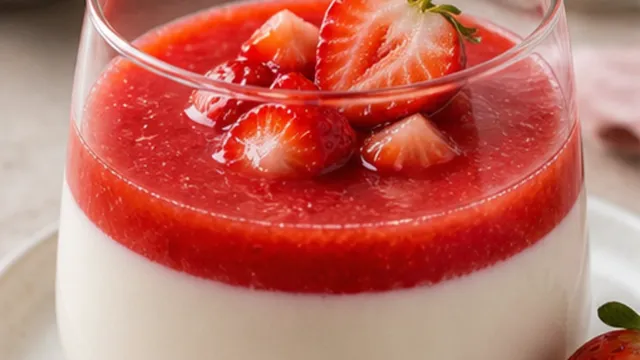
Keto Panna Cotta with Strawberry Sauce
Creamy keto panna cotta with a fresh strawberry sauce instead of sugar: only approx. 4 g net carbs and 37 g fat per serving, prepared in 20 minutes and set in the fridge.

Keto Crème Brûlée with Vanilla and Erythritol
Keto crème brûlée with cream, egg yolks, Bourbon vanilla and caramelized erythritol: just 3 g net carbs and 32 g fat per serving, with no sugar.
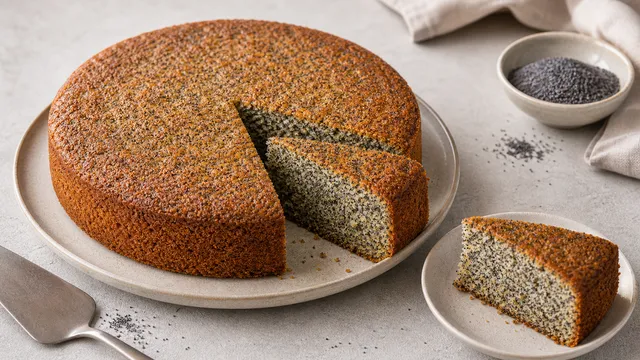
Keto Poppy Seed Cake with Almond Flour
Moist keto poppy seed cake with almond flour and plenty of blue poppy seeds: approx. 7 g protein, 3 g net carbs and 25 g fat per slice, a sugar-free classic ready in 65 minutes.

Warm Keto Eggnog with Vanilla (Alcohol-Free)
Creamy warm keto eggnog with egg yolks, cream, and vanilla: 3 g net carbs, 32 g fat, 9 g protein, alcohol-free, sugar-free, ready in 8 minutes.

Keto Salmon in Mustard Cream Sauce
Salmon in a creamy Dijon mustard cream sauce with chives, approx. 3 g net carbs and 45 g fat. Ready in 20 minutes with frozen or fresh salmon.
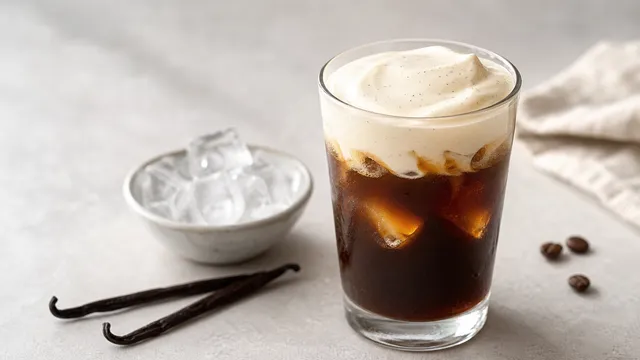
Keto Cold Brew with Vanilla Cream
Cold-brewed coffee topped with vanilla cream: 2 g net carbs, 14 g fat, 150 kcal, smooth, full-bodied and sugar-free. Steeped overnight, ready in 2 minutes.

Keto Guinea Fowl Breast in Tarragon Cream
Keto guinea fowl breast in tarragon cream sauce with shallot and white wine: 4 g net carbs, 34 g fat, 38 g protein per serving. Ready in 30 minutes.

Keto Celeriac Gratin with Cream and Cheese
Creamy gratin made with celeriac, cream and Gruyère. 5 g net carbs and 38 g fat per serving. Tastes like potato gratin, but without the potatoes.

Handkase Gratin with Cream, Garlic and Parmesan
Handkase baked as a gratin with cream, garlic and Parmesan: approx. 2 g net carbs and 28 g fat per serving - rich keto gratin, ready in 28 minutes.
See all 53 recipes with Why We Recommend Cream Without Carrageenan