Keto Raclette Pans with Hokkaido Pumpkin, Goat Cheese and Sage
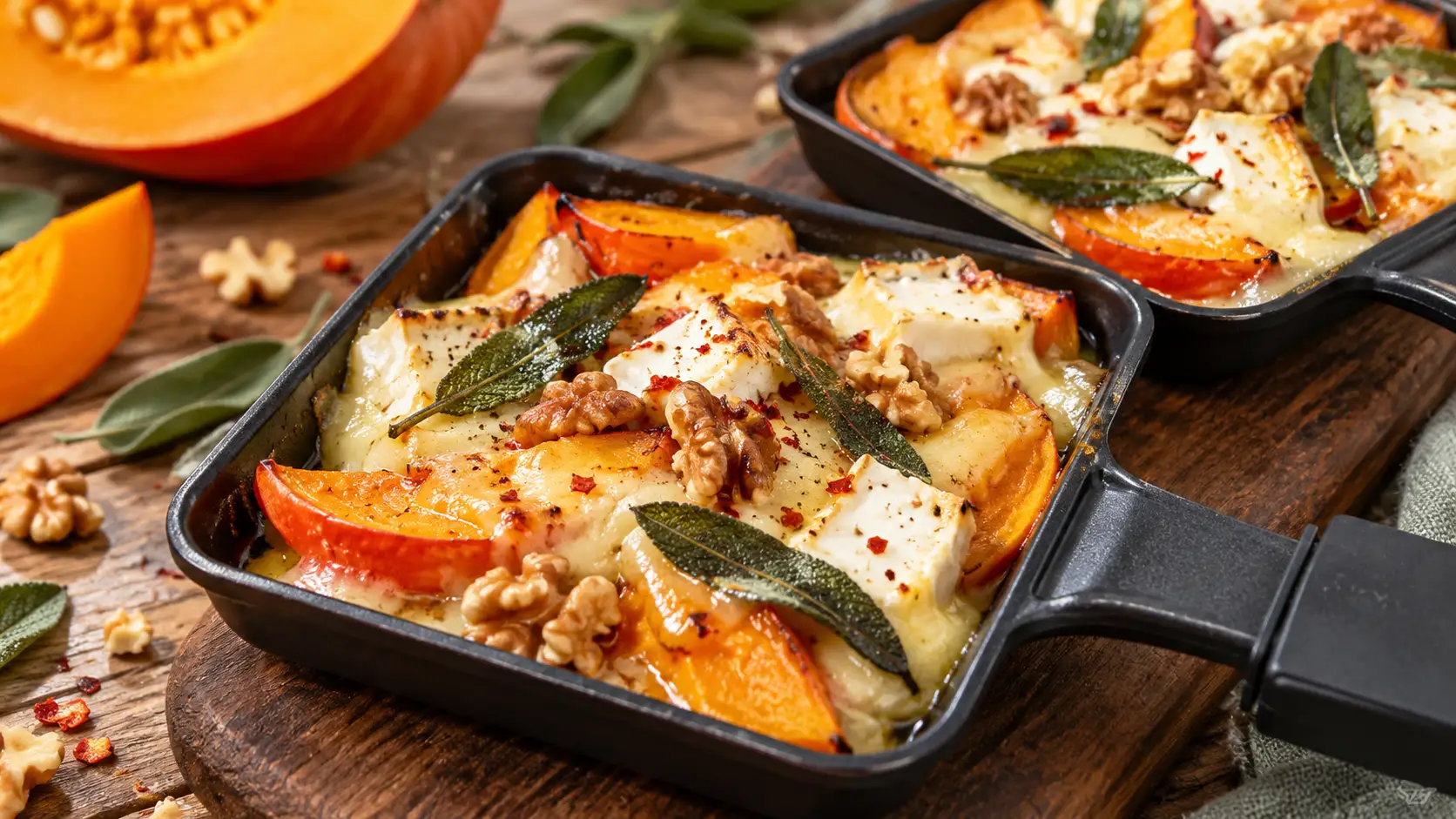
This keto raclette pan brings autumn to the raclette table: a few thin wedges of roasted Hokkaido pumpkin, topped with goat cheese and raclette cheese, finished with crispy sage from browned butter, walnuts and a pinch of chili. Pumpkin is not a keto vegetable, so the amount is deliberately small - it comes to approx. 6.5 g net carbs per person. Hokkaido is at its best in autumn and so full of flavor that a few wedges per pan are enough.
The key facts at a glance
- Time required: approx. 45 minutes, 20 of them hands-on - the pumpkin is precooked in the oven, and at the table each pan takes 6 to 8 minutes.
- Approx. 6.5 g net carbs and 39 g fat per person.
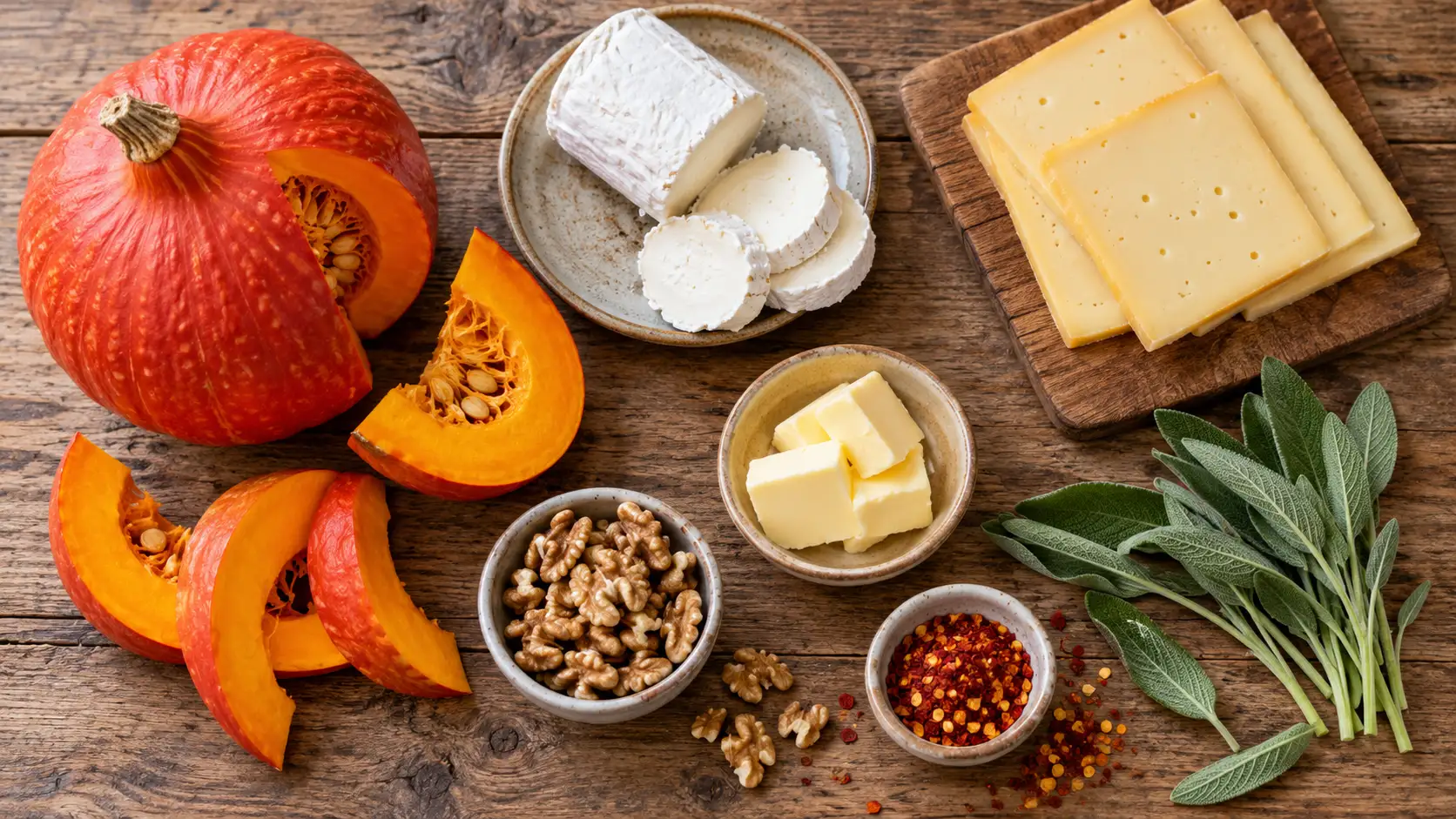
- Ingredients: Hokkaido pumpkin, goat cheese log, raclette cheese, butter, sage, walnuts, chili flakes.
- Suits a vegetarian pan at an autumn keto raclette night, at Christmas or on New Year's Eve - alongside cauliflower, mushrooms and the rest.
Ingredients
The quantities serve 4 people at a raclette night where the pumpkin pan is one of several stations - about two pans per person.
| Amount | Ingredient | Note | ||
|---|---|---|---|---|
| Hokkaido pumpkin | seeded, weighed with the skin; approx. 1/6 of a medium pumpkin | |||
| seeded, weighed with the skin; approx. 1/6 of a medium pumpkin | ||||
| olive oil | approx. 2 tsp, for roasting | |||
| approx. 2 tsp, for roasting | ||||
| goat cheese log | chèvre log, in slices approx. 1 cm thick | |||
| chèvre log, in slices approx. 1 cm thick | ||||
| raclette cheese | sliced; for strictly vegetarian guests, one made with microbial rennet | |||
| sliced; for strictly vegetarian guests, one made with microbial rennet | ||||
| butter | approx. 3 tbsp, for the sage butter | |||
| approx. 3 tbsp, for the sage butter | ||||
| sage | fresh, approx. 20 leaves | |||
| fresh, approx. 20 leaves | ||||
| walnuts | roughly chopped | |||
| roughly chopped | ||||
| chili flakes | - | |||
| salt | for the pumpkin | |||
| for the pumpkin | ||||
| pepper | freshly ground | |||
| freshly ground | ||||
How it is made
-
Cut and roast the pumpkin
approx. 20 minutesDone Amount Icon Ingredient 160 g Hokkaido pumpkin seeded, weighed with the skin; approx. 1/6 of a medium pumpkin 10 ml olive oil approx. 2 tsp, for roasting 0.3 tsp salt for the pumpkin 0.3 tsp pepper freshly ground Preheat the oven to 200 °C (390 °F) conventional heat. Seed the Hokkaido pumpkin (160 g) and cut it with the skin on into wedges no thicker than 5 mm. Toss with the olive oil (10 ml), salt (0.25 tsp) and pepper (0.25 tsp), spread on a baking sheet and roast for about 15 minutes until a fork slides in easily.
-
Toast the walnuts
approx. 4 minutesDone Amount Icon Ingredient 40 g walnuts roughly chopped Toast the walnuts (40 g) in a dry pan over medium heat for 2 to 3 minutes until fragrant. Let them cool and chop roughly.
-
Make the sage butter
approx. 4 minutesDone Amount Icon Ingredient 40 g butter approx. 3 tbsp, for the sage butter 5 g sage fresh, approx. 20 leaves Let the butter (40 g) foam in the same pan until it smells slightly nutty. Add the sage leaves (5 g) and fry for about 1 minute until crisp. Lift the leaves onto paper towels and pour the browned butter into a small bowl.
-
Set up the station at the raclette table
approx. 5 minutesDone Amount Icon Ingredient 150 g goat cheese log chèvre log, in slices approx. 1 cm thick 200 g raclette cheese sliced; for strictly vegetarian guests, one made with microbial rennet 1 pinch chili flakes Cut the goat cheese log (150 g) into slices about 1 cm thick. Put the pumpkin wedges, goat cheese, raclette cheese (200 g), sage butter, walnuts and chili flakes (1 pinch) on the table in small bowls.
-
Grill the pans
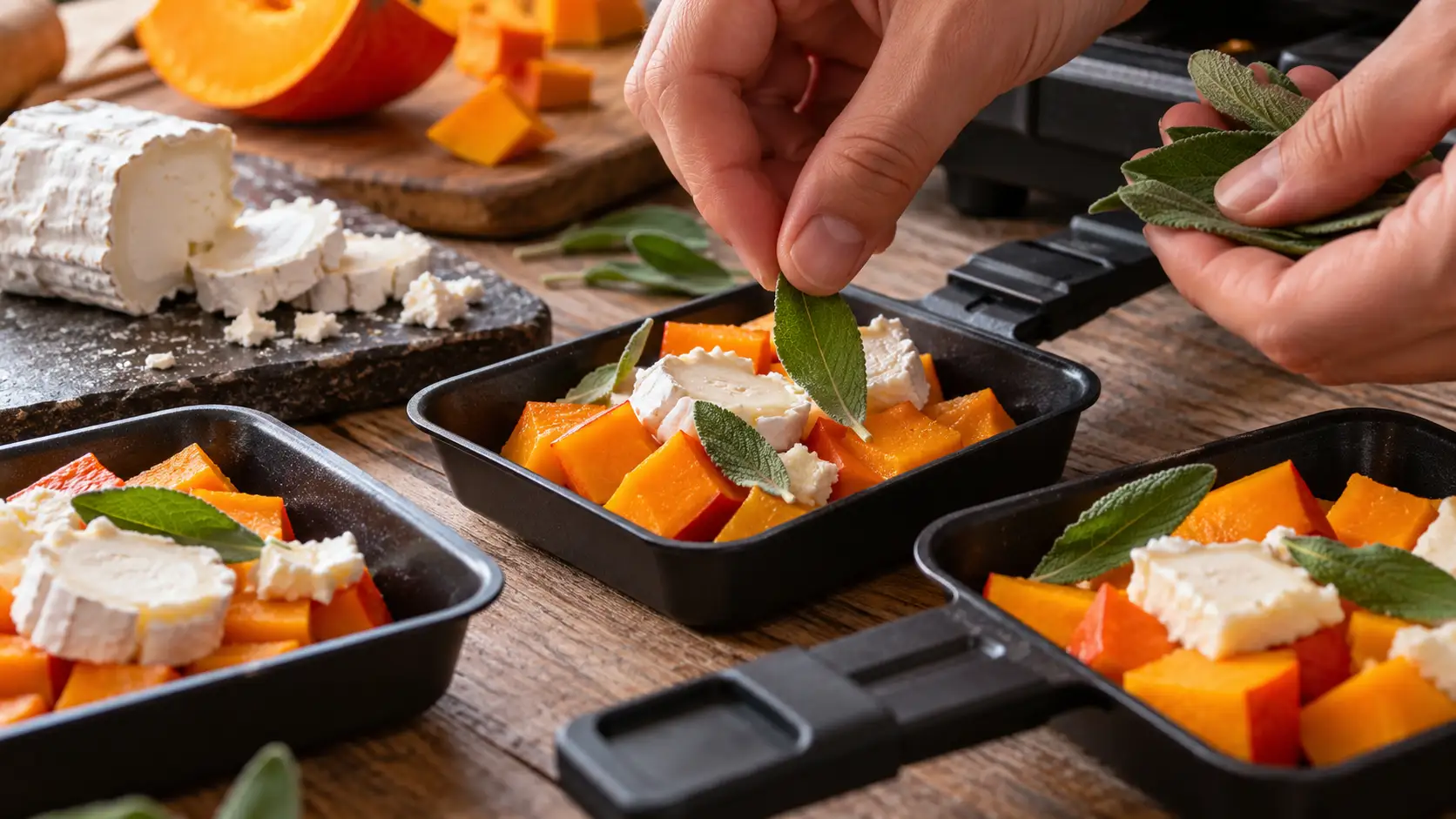
6-8 minutes per panPut two to three pumpkin wedges in each pan, add a slice of goat cheese and cover with a slice of raclette cheese. Slide under the preheated raclette grill for 6 to 8 minutes until the cheese bubbles and browns lightly. Serve with a spoonful of sage butter, two sage leaves, walnuts and a pinch of chili.
Which tips help with the pumpkin pan at the raclette table?
- Use the Hokkaido with the skin on and cut it into wedges no thicker than 5 mm - the skin softens in the oven.
- Precook the pumpkin in the oven; raw, it will not cook through under the raclette grill.
- Put only two to three pumpkin wedges in each pan so the heat and the carbs stay in check.
- Goat cheese goes directly on the pumpkin, raclette cheese as the top layer - that way the raclette cheese browns and the goat cheese turns creamy.
- Add the sage butter and walnuts only after grilling so the sage stays crisp.
- Go easy on the chili flakes; a pinch per pan is enough to offset the sweetness of the pumpkin.
How much pumpkin fits into a keto raclette?
Hokkaido is one of the starchier pumpkins: it has about 12 g digestible carbs per 100 g, a good four times as much as cauliflower. A whole plate of roasted pumpkin would quickly use up half a day's keto budget. In this recipe four people share 160 g of Hokkaido, around 40 g per person - that is just under 5 g net carbs from the pumpkin. Cheese, butter and walnuts add almost nothing, so the pan comes to approx. 6.5 g net carbs, 39 g fat and 21 g protein per person in total. Around three quarters of the energy comes from fat. For comparison: the classic boiled potato in the pan brings about 22 g carbs at 150 g per person. Here the pumpkin carries the flavor rather than filling you up - the cheese and nuts do that.
Source: Max Rubner Institute - German Nutrient Database (BLS) , USDA FoodData Central - Pumpkin, raw
Pumpkin in your daily budget: the honest math
On a daily budget of 20 to 25 g net carbs, 40 g of Hokkaido is easy to justify; 150 g would not be. If you eat several pans at a raclette night, do not go back for more pumpkin - continue with cauliflower, mushrooms or zucchini and treat the pumpkin as the highlight. In return, Hokkaido supplies plenty of beta-carotene, a precursor of vitamin A, which is absorbed well together with the fat from the cheese and butter.
Source: NIH Office of Dietary Supplements - Vitamin A and Carotenoids
Walnuts and goat cheese as fat sources
Walnuts have around 7 g net carbs per 100 g and supply alpha-linolenic acid, a plant-based omega-3 fatty acid that is otherwise almost absent from a cheese-heavy raclette night. The goat cheese log adds acidity and creaminess that balance the sweetish pumpkin - so you do not miss the honey that many recipes use at this point.
Source: NIH Office of Dietary Supplements - Omega-3 Fatty Acids
How do I serve and vary the pumpkin pan?
Set the roasted pumpkin wedges, the goat cheese slices and a small bowl of sage butter, walnuts and chili out as their own station on the raclette table, next to the cauliflower, mushrooms and ham from the base recipe. The pumpkin has to be precooked: raw, it is still hard after 8 minutes under the raclette grill, because the heat only comes from above and the cheese burns before the pumpkin softens. In my experience two, at most three wedges per pan work best - more pumpkin cools the pan down and the cheese runs into the gaps instead of browning on top. The sage butter goes on only after grilling, otherwise the leaves turn soft again. In autumn, when the first raclette nights come around, this pan is the seasonal counterpart to mushrooms and brassicas.
Prepping ahead, storage and leftovers
You can roast the pumpkin the day before, keep it covered in the fridge and put it into the pan cold - it warms through enough under the cheese. Toasted walnuts keep for several days in a screw-top jar. The sage is best fried just before eating, as it loses its crispness overnight; the sage butter itself can be melted briefly in a pan before serving. Leftover pumpkin wedges go into a frittata the next day, or bake them with leftover raclette cheese for 10 minutes at 200 °C (390 °F).
Without pumpkin: the lower-carb variation
If you want to save the pumpkin carbs, replace it with precooked zucchini or eggplant slices or with cauliflower florets from the base recipe. Sage butter, goat cheese and walnuts go just as well with them, and the pan drops to about 2.5 g net carbs per person. For a nut-free round, toasted pumpkin seeds replace the walnuts. Strictly vegetarian guests should check that the raclette cheese is made with microbial rennet - many supermarket brands use animal rennet.
Nutrition values
| Nutrient | Per 100 g | Per serving | Keto context |
|---|---|---|---|
| Calories | approx. 305 kcal | approx. 460 kcal | A rich set of pans per person; together with vegetable pans a complete dinner. |
| A rich set of pans per person; together with vegetable pans a complete dinner. | |||
| Fat | approx. 25.5 g | approx. 39 g | Very keto-friendly - raclette cheese, goat cheese, butter and walnuts carry most of the energy. |
| Very keto-friendly - raclette cheese, goat cheese, butter and walnuts carry most of the energy. | |||
| Net carbs | approx. 4.2 g | approx. 6.5 g | Just under 5 g of that comes from the pumpkin. Easy to plan, as long as nobody goes back for more pumpkin. |
| Just under 5 g of that comes from the pumpkin. Easy to plan, as long as nobody goes back for more pumpkin. | |||
| Sugar | approx. 1.9 g | approx. 3 g | Natural sugar from the pumpkin and cheese - no honey and no added sugar. |
| Natural sugar from the pumpkin and cheese - no honey and no added sugar. | |||
| Protein | approx. 13.9 g | approx. 21 g | Solid for a vegetarian pan; the cheese supplies almost all of the protein. |
| Solid for a vegetarian pan; the cheese supplies almost all of the protein. | |||
| Salt | approx. 1.2 g | approx. 1.8 g | Mainly from the two cheeses - so salt the pumpkin only lightly. |
| Mainly from the two cheeses - so salt the pumpkin only lightly. | |||
Note: Nutrition values are estimated averages per 100 g and per serving and may vary depending on ingredients, brands, portion size, and preparation. They do not replace individual nutrition or medical advice.
FAQ
Is pumpkin allowed on keto?
In small amounts, yes. Hokkaido has about 12 g digestible carbs per 100 g, which makes it considerably starchier than cauliflower or zucchini. With around 40 g of pumpkin per person this pan stays at approx. 6.5 g net carbs - larger portions quickly blow the daily budget.
Does the pumpkin have to be precooked for raclette?
Yes. The raclette grill only heats from above, and the cheese melts in 6 to 8 minutes - too short for raw pumpkin. Thin wedges need about 15 minutes in the oven at 200 °C (390 °F); after that they are soft and only brown a little more in the pan.
Can I replace the goat cheese?
Yes. Feta brings a similar tang, while Camembert or Brie make the pan milder and creamier. If you want to use only raclette cheese, simply use more of it; the carbs barely change.
Does the pumpkin pan suit weight loss on keto?
As part of a planned raclette night, yes. At around 460 kcal per person the set of pans is rich, but the 39 g fat and 21 g protein keep you full for a long time. If you want to save calories, halve the walnuts and the sage butter - that saves about 70 kcal per person.
Which pumpkins work besides Hokkaido?
Butternut squash is slightly lower in carbs but has to be peeled. Spaghetti squash and musk pumpkin are also below Hokkaido and work just as well once precooked. Hokkaido has the advantage that you eat the skin and the wedges do not fall apart in the pan.