Essential Keto Foods for Beginners
If you are new to keto, you do not need a perfect specialty shopping list. It is more useful to recognize the food groups that keep meals filling, low in carbs, and easy to combine. A typical beginner keto plate has three components: a protein source (eggs, fish, meat, or cheese), a generous portion of low-carb vegetables (spinach, zucchini, broccoli, or cauliflower), and a practical fat for flavor and satiety (olive oil, butter, or avocado). USDA FoodData Central and the Harvard T.H. Chan School of Public Health both highlight unsaturated fats as the preferred dietary base, an emphasis worth keeping even on a high-fat plan. This guide gives you a simple first-week shopping list, the five core food groups, common portion traps, and calm practical tips for getting started.
What matters most for your first shop
- Build each meal from protein, low-carb vegetables, and a practical fat source.
- Start with normal foods such as eggs, fish, meat, avocado, salad greens, spinach, butter, and olive oil.
- Nuts, berries, cream, and cheese can fit, but they are easy for beginners to overdo.
- Bread, pasta, rice, potatoes, sugar, juice, and most sweets are not part of the beginner keto base.
The simple rule
Do not start with complicated recipes. Start with building blocks. A keto-friendly plate usually has a protein source, plenty of low-carb vegetables, and fat for flavor and satiety. Examples: eggs with spinach and butter, salmon with arugula and olive oil, or chicken with zucchini and herbed cream cheese.
1. Protein sources: the steady center of the meal
Eggs, fish, meat, poultry, and many cheeses are easy for keto beginners because they contain very few carbs and make meals filling. Start with plain ingredients instead of breaded, sweetened, or heavily marinated products. With deli meat, sausages, and ready-made sauces, check the label for sugar and starch.
2. Low-carb vegetables: volume, color, and everyday ease
Vegetables make keto much easier in real life. Practical choices include spinach, arugula, cucumber, zucchini, broccoli, cauliflower, asparagus, and leafy salads. Be more careful with potatoes, corn, peas, parsnips, and large portions of carrots because they contain more starch or sugar.
3. Fats: important, but not unlimited
Olive oil, butter, avocado, cream, fatty fish, and nuts can work well on keto. That does not mean you need to drink fat or force extra fat into every meal. For beginners, it is usually enough to cook with fat, dress salads well, and round out very lean meals. If weight loss is your goal, large amounts of nut butter, cheese, and cream are often worth watching first.
4. Dairy: useful, but read the label
Cream cheese, hard cheese, unsweetened Greek yogurt, moderate amounts of quark or cottage cheese, and cream can make keto easier. Skip sweetened yogurts, milk drinks, pudding, and light products with added sugar. Dairy products vary a lot in carbs, so the nutrition label matters more than the front of the package.
5. Pantry options for busy days
Beginners often struggle not because they lack knowledge, but because the fridge is empty. Keep a few quick options ready: eggs, tuna or salmon, arugula, avocado, olive oil, butter, cream cheese, cucumber, nuts in small portions, and frozen vegetables without sauce. That gives you a meal even without a recipe.
Foods beginners should watch more closely
A food can technically fit keto and still make your day harder. This is especially true for nuts, berries, dark chocolate, keto bars, low-carb bread, cream, cheese, and alcohol. Do not snack on them automatically. Plan small portions on purpose.
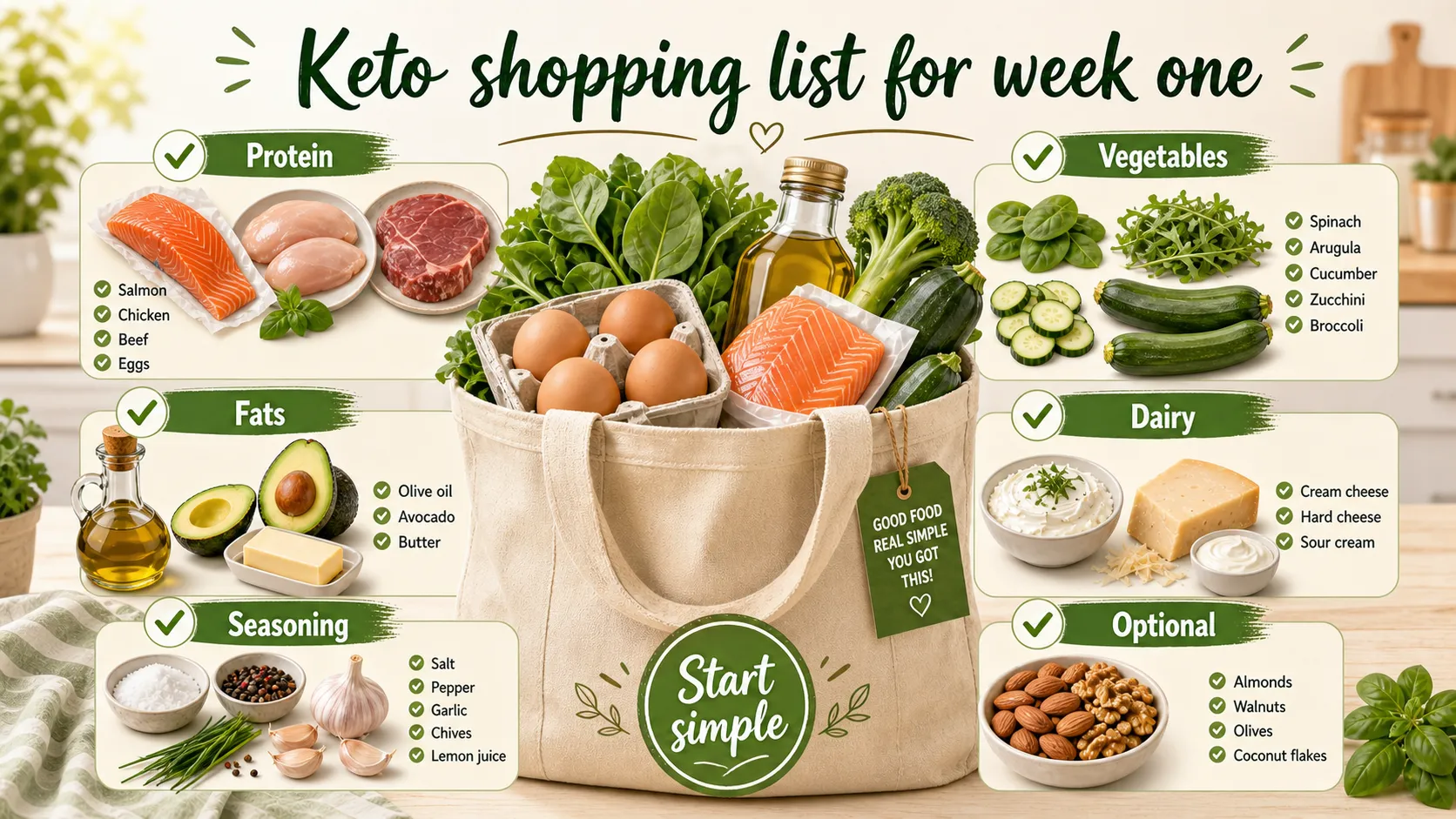
Keto shopping list for the first week
- Eggs
- Salmon, tuna, or another fattier fish fillet
- Chicken, ground beef, or another plain meat
- Avocado
- Spinach, arugula, cucumber, zucchini, and broccoli
- Olive oil and butter
- Cream cheese or hard cheese with no added sugar
- Salt, pepper, garlic, chives, and lemon juice
- Optional: almonds or walnuts in small portions
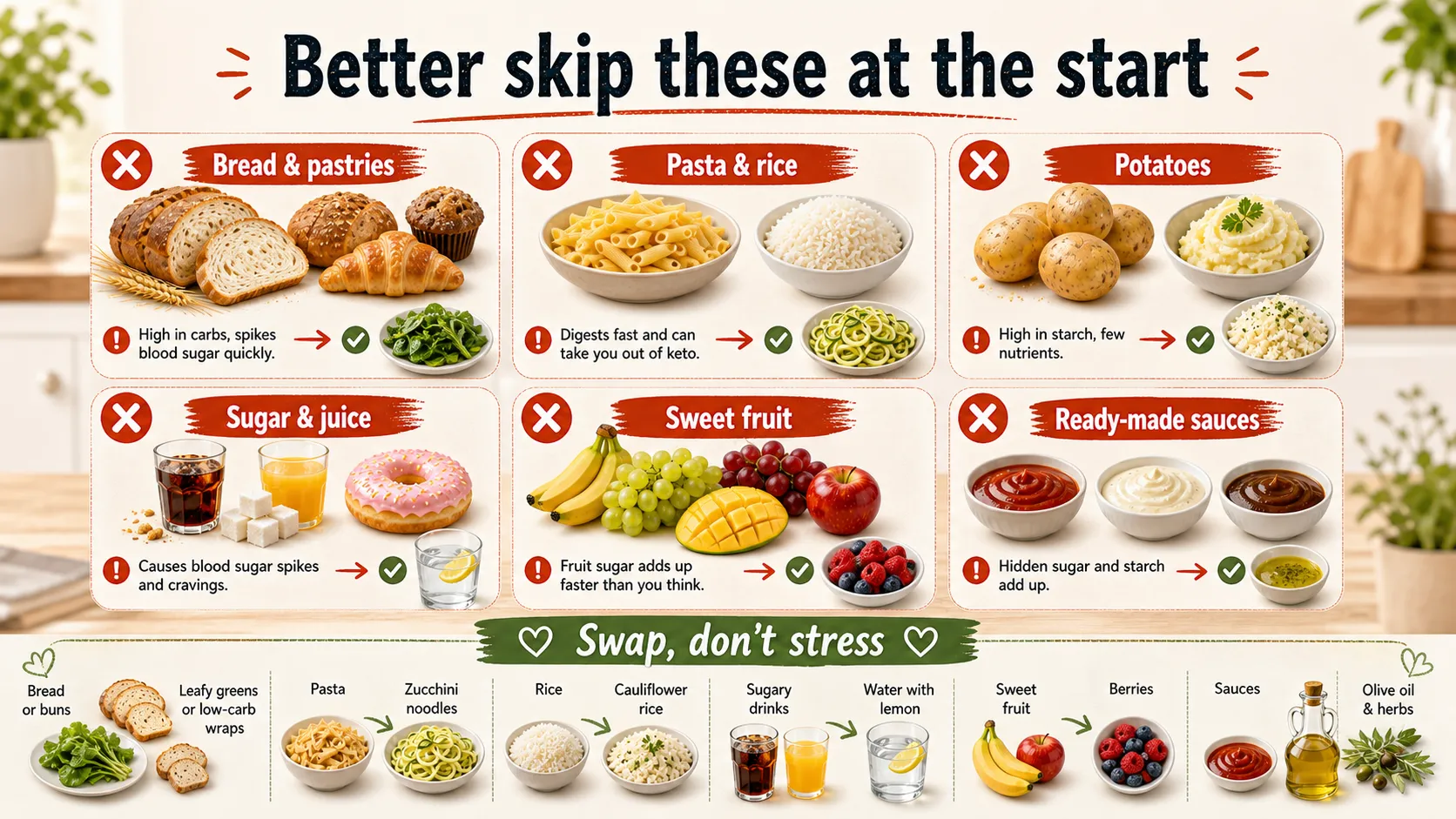
Better skip these at the start
- Bread, buns, toast, pizza, and classic wraps
- Pasta, rice, couscous, and oats
- Potatoes, fries, and potato chips
- Sugar, honey, juice, soft drinks, and sweets
- Bananas, grapes, mango, and large fruit portions
- Ready-made sauces, breaded products, and sweet dressings
| Group | Good beginner choices | What to check |
|---|---|---|
| Protein | Eggs, salmon, chicken, beef, tuna | Plain, unbreaded, unsweetened, not sweet-marinated |
| Vegetables | Spinach, arugula, cucumber, zucchini, broccoli, cauliflower | Use starchy vegetables only very deliberately |
| Fats | Olive oil, butter, avocado, fatty fish | Fat rounds out the meal, but it does not replace food |
| Dairy | Cream cheese, hard cheese, cream, unsweetened yogurt | Check added sugar and carbs per 100 g |
| Snacks | Small portion of nuts, cheese cubes, boiled egg | Do not eat straight from a large bag |
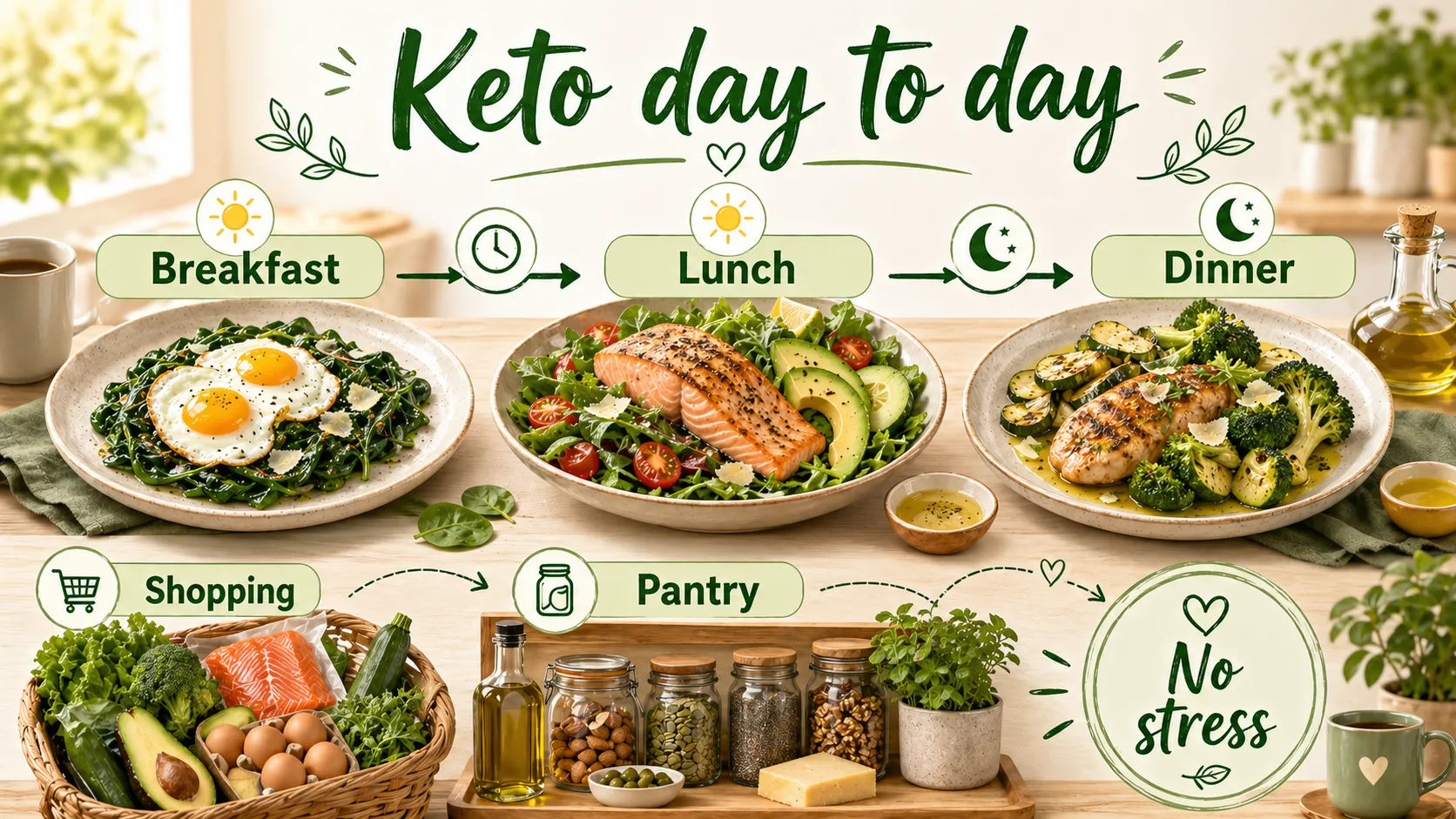
| Meal | Simple keto plate | Why it works |
|---|---|---|
| Breakfast | Scrambled eggs with spinach and butter | Filling, quick, and very low in carbs |
| Lunch | Salmon over arugula with avocado and olive oil | Protein, fat, and vegetables are already combined |
| Dinner | Chicken with zucchini and herbed cream cheese | Warm, everyday-friendly, and made without specialty products |
FAQ
Do I need to weigh every keto food?
At the beginning, it helps to check foods that are carb-heavy or uncertain. Eggs, fish, meat, oil, and many green vegetables are usually easier than nuts, dairy, berries, or low-carb packaged products.
Are fruit and vegetables forbidden on keto?
Vegetables are not forbidden and should be part of your meals. The type and amount matter. Green, water-rich vegetables usually fit better than potatoes, corn, or very sweet fruit.
Do I need keto specialty products?
No. Normal foods are easier for the first week: eggs, fish, meat, vegetables, avocado, butter, olive oil, and a little cheese. Specialty products can be convenient later, but they are not required.