Oolong Tea: The Most Versatile Tea for the Keto Kitchen
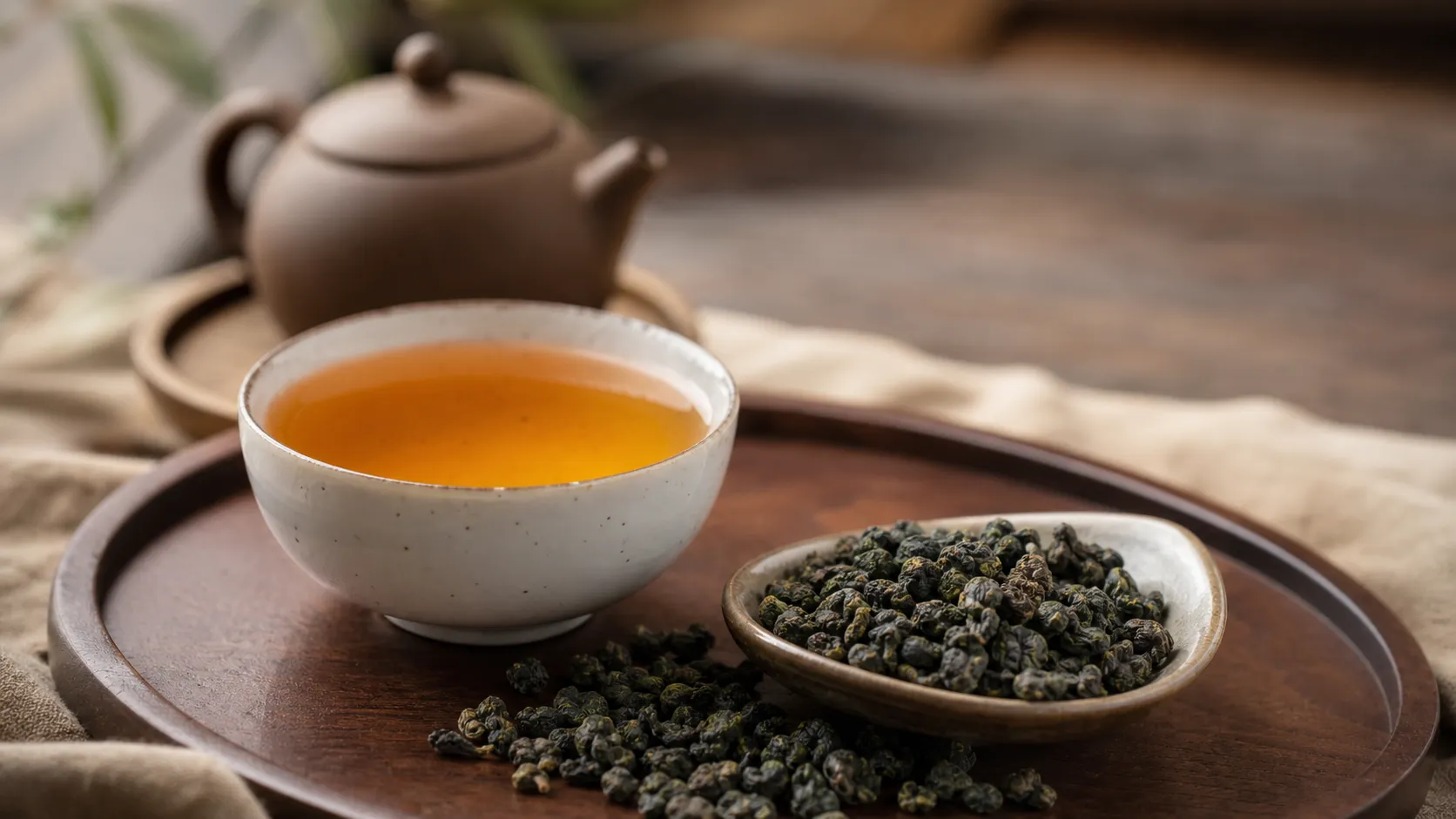
Oolong tea is a semi-oxidized tea that sits between green and black tea in flavor. With 0 g net carbs per cup, it is unrestricted on keto. Caffeine content is moderate, ranging from 30 to 50 mg per cup. Thanks to partial oxidation, oolong contains both catechins like EGCG (typical of green tea) and theaflavins (typical of black tea), making it particularly versatile in its polyphenol profile. The flavor spectrum ranges from floral and light to roasted and malty, offering more variety than any other type of tea. Some studies suggest a positive effect on fat oxidation (Harvard T.H. Chan School of Public Health).
Is It Recommended for Keto?
Oolong tea is unreservedly recommended on keto. Per 100 ml of brewed tea, it contains 0 g net carbs and only 1 kcal according to USDA data. The caffeine content of 30 to 50 mg per cup sits between green tea and coffee, making oolong an ideal choice for the morning or early afternoon. Through partial oxidation, ranging from 10 to 80 percent depending on the variety, oolong combines the benefits of two worlds. You get catechins like EGCG from green tea and at the same time the cardiovascular-active theaflavins from black tea. In a study by the University of Tsukuba, oolong tea consumption was linked to roughly 10 percent higher fat oxidation during sleep. Particularly relevant for ketosis: oolong contains no usable carbs and delivers almost no calories. Brand recommendation: High-quality Taiwanese oolong (Dong Ding, Ali Shan, Tieguanyin) from specialty retailers is the best choice. Brands such as Tea Mountains or P&T Berlin offer transparent origin. In supermarkets, Messmer and Teekanne oolong are solid entry-level products.
What Pairs Well With It?
Oolong is the most versatile tea in the kitchen. Light, floral oolongs like Tieguanyin or Bao Zhong pair wonderfully with fish and seafood, for example oven-baked salmon or grilled shrimp. They highlight delicate aromas without overpowering them. Dark, roasted oolongs like Da Hong Pao, Rou Gui, or roasted Tieguanyin develop malty, almost chocolatey notes and pair ideally with grilled meat, steaks, sharp hard cheeses, or dark roasting juices. Cold-brewed over several hours in the fridge, oolong becomes an elegant, crystal-clear iced tea with a complex aroma that replaces any soda. With a splash of lemon and a little erythritol, it turns into a summery keto refreshment. For a creamy variation, add a dash of coconut cream or a tablespoon of heavy cream to hot oolong; this enhances malty notes especially well.
Pros and Cons of Organic
Benefits of organic oolong: Organic-certified oolong significantly reduces pesticide exposure. This is particularly relevant for Chinese and Taiwanese varieties, some of which are grown using conventional agriculture. With loose leaves you steep multiple times, residues go straight into the cup. Organic farming also protects tea farmers from pesticide exposure and preserves soil quality in growing regions. Drawbacks: High-quality organic oolong is considerably more expensive than standard products. A 50 g pack of organic Tieguanyin can quickly cost 15 to 25 euros, while conventional varieties run 5 to 10 euros. Since oolong can often be steeped multiple times, the price per cup evens out considerably. Look for the EU organic seal or stricter labels like Naturland and Demeter. With Taiwanese oolongs, trust in direct importers is crucial, since organic certification there is not uniformly regulated.
Intolerances and Allergens
Oolong tea contains caffeine and tannins. If you have a sensitive stomach, avoid drinking it on an empty stomach, as the tannins can trigger heartburn or nausea. Iron absorption from plant sources can be inhibited by tannins. Therefore drink oolong at least 30 to 60 minutes apart from iron-rich meals. During pregnancy, limit caffeine intake to a maximum of 200 mg per day. Allergies to Camellia sinensis are extremely rare.
Where to Buy Online or Locally
High-quality oolong is best purchased online from specialized tea merchants such as Tea Mountains, P&T Berlin, Tee Gschwendner, or directly from Taiwan. Taiwanese oolongs like Dong Ding, Ali Shan, or Li Shan are considered premium class, while Chinese varieties such as Tieguanyin from Fujian or Da Hong Pao from the Wuyi Mountains also deliver top quality. Good oolong is rarely found in supermarkets. If you have to buy there, reach for Teekanne or Messmer as a starter. For the best quality: loose leaves rather than bags, ideally a current-year harvest and vacuum-sealed. Store oolong in a dark, airtight place to preserve the essential oils.
Nutrition values
| Nutrient | Per 100 ml (brewed) |
|---|---|
| Net carbs | 0 g |
| Fat | 0 g |
| Protein | 0 g |
| Calories | 1 kcal |
FAQ
How many carbs does oolong tea have per cup?
According to USDA FoodData Central, plain brewed oolong tea contains 0 g net carbs per 100 ml, and therefore 0 g per cup (240 ml) as well. Calories are just 1 kcal per cup. This makes oolong one of the ideal beverages for a ketogenic diet and it can be enjoyed without counting against your carb budget.
Does oolong tea really help with weight loss?
Studies suggest that the combination of catechins, theaflavins, and caffeine in oolong can boost fat oxidation, by roughly 10 percent during sleep in one Japanese study. The effect is real but moderate and does not replace calorie control. On keto, oolong provides a slight additional boost to fat burning on top of metabolic adaptation.
How many times can I re-steep oolong leaves?
High-quality oolong leaves, especially rolled Taiwanese varieties like Tieguanyin or Dong Ding, can easily be steeped 4 to 7 times. Each infusion develops a slightly different aroma profile. Start with a short steeping time of 30 to 60 seconds and increase it with each subsequent infusion. This way you make the most of the leaves.