How the Keto Diet Affects the Immune System: 2026 Research Overview
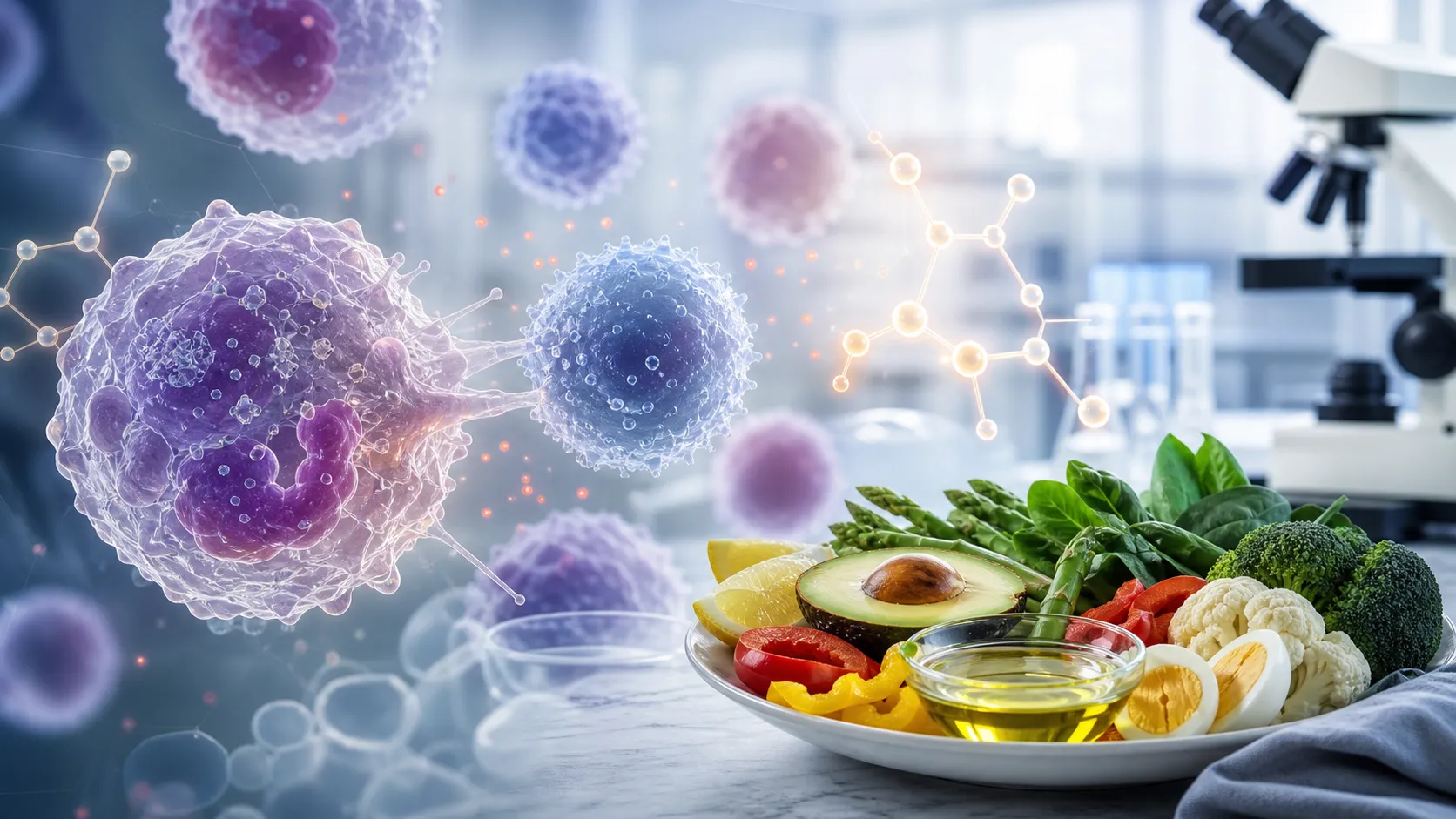
A comprehensive review published in Nature's Signal Transduction and Targeted Therapy in 2025 to 2026 provides the most detailed map yet of how the ketogenic diet reshapes immune function. The review confirms that ketone bodies, particularly beta-hydroxybutyrate, have direct immunomodulatory effects: they inhibit the NLRP3 inflammasome, suppress pro-inflammatory cytokines like IL-1β and IL-18, shift macrophages from an M1 to an M2 phenotype, and promote regulatory T cells over inflammatory Th17 cells. These findings have potential implications for autoimmune conditions like multiple sclerosis and lupus, for cancer immunology, and for infection susceptibility, where the same anti-inflammatory effects may blunt acute pathogen defenses. The dual nature of keto's immune signature is the key practical takeaway from the 2026 evidence base.
How ketones reduce inflammation
Beta-hydroxybutyrate (BHB), the primary ketone body produced during ketosis, has been shown to directly inhibit the NLRP3 inflammasome — a molecular complex responsible for triggering inflammatory cascades. The 2026 Nature review confirms that BHB suppresses pro-inflammatory cytokines including IL-1β and IL-18. This anti-inflammatory action helps explain why the ketogenic diet has been associated with reduced markers of systemic inflammation in clinical trials. The effect appears to be dose-dependent: higher BHB levels correlate with stronger NLRP3 suppression.
Effects on T cells and macrophages
The ketogenic diet alters the composition and behavior of key immune cell populations. In T cells, ketosis promotes the differentiation of regulatory T cells (Tregs) that dampen excessive immune responses, while suppressing inflammatory Th17 cells — a balance disrupted in many autoimmune diseases. In macrophages, the review found that ketones shift these cells from a pro-inflammatory (M1) phenotype toward an anti-inflammatory (M2) phenotype, reducing tissue damage in inflammatory contexts. These changes are largely attributed to BHB's epigenetic effects through histone deacetylase inhibition.
The trade-off: infection susceptibility
While the anti-inflammatory effects of keto are well documented, the same immunomodulatory mechanisms that reduce chronic inflammation may also dampen the acute immune response needed to fight infections. The review noted that ketosis can reduce neutrophil function — the first-responders of the immune system — and may impair the initial inflammatory phase that is necessary for pathogen clearance. This is a theoretical concern for people on long-term ketogenic diets who face acute infectious challenges, though definitive human clinical data on infection rates in keto dieters is still limited.
Implications for autoimmune conditions and cancer
The shift toward Tregs and M2 macrophages on a ketogenic diet is particularly interesting for autoimmune diseases, where overactive immune responses cause self-directed tissue damage. Early clinical work in conditions like multiple sclerosis, rheumatoid arthritis, and lupus has explored ketogenic dietary interventions, with mixed but generally promising results. In oncology, the 2026 review also highlighted that ketones may alter the tumor microenvironment by reducing cancer cell glucose availability and modulating immune cell infiltration — an area of active clinical trial investigation.
The gut microbiome connection
The ketogenic diet substantially alters the gut microbiome composition, and this in turn influences immune function. The 2026 review noted that keto reduces the abundance of carbohydrate-fermenting bacteria and increases bacteria associated with ketone metabolism. Some of these microbial changes may reinforce the anti-inflammatory immune profile seen on keto, while others may reduce production of beneficial short-chain fatty acids like butyrate that normally support gut barrier integrity and immune regulation. The net immunological effect of keto-induced microbiome changes remains an active area of investigation.
FAQ
Does the keto diet boost or suppress the immune system?
Both, in different ways. The 2026 Nature review shows that keto suppresses chronic inflammatory pathways (beneficial for autoimmune and metabolic conditions) while potentially also blunting acute immune responses (relevant for fighting infections). The overall effect on immune health depends heavily on individual health status and what you are trying to achieve.
Can keto help with autoimmune diseases?
Early research is promising. The shift toward regulatory T cells and anti-inflammatory macrophages seen on a ketogenic diet is theoretically favorable for autoimmune conditions. Small clinical trials in multiple sclerosis and rheumatoid arthritis show potential benefits, but evidence is still preliminary. Always consult a specialist before using diet to manage an autoimmune condition.
What is the NLRP3 inflammasome and why does keto affect it?
The NLRP3 inflammasome is a multi-protein complex in immune cells that, when activated, triggers the release of powerful inflammatory signals. It plays a role in many chronic diseases including type 2 diabetes, atherosclerosis, and neurodegenerative conditions. Beta-hydroxybutyrate, the main ketone body produced during ketosis, directly inhibits NLRP3, which is one reason keto has measurable anti-inflammatory effects in the body.