
Continuous Keto Accelerates Cellular Aging — Intermittent Keto Does Not
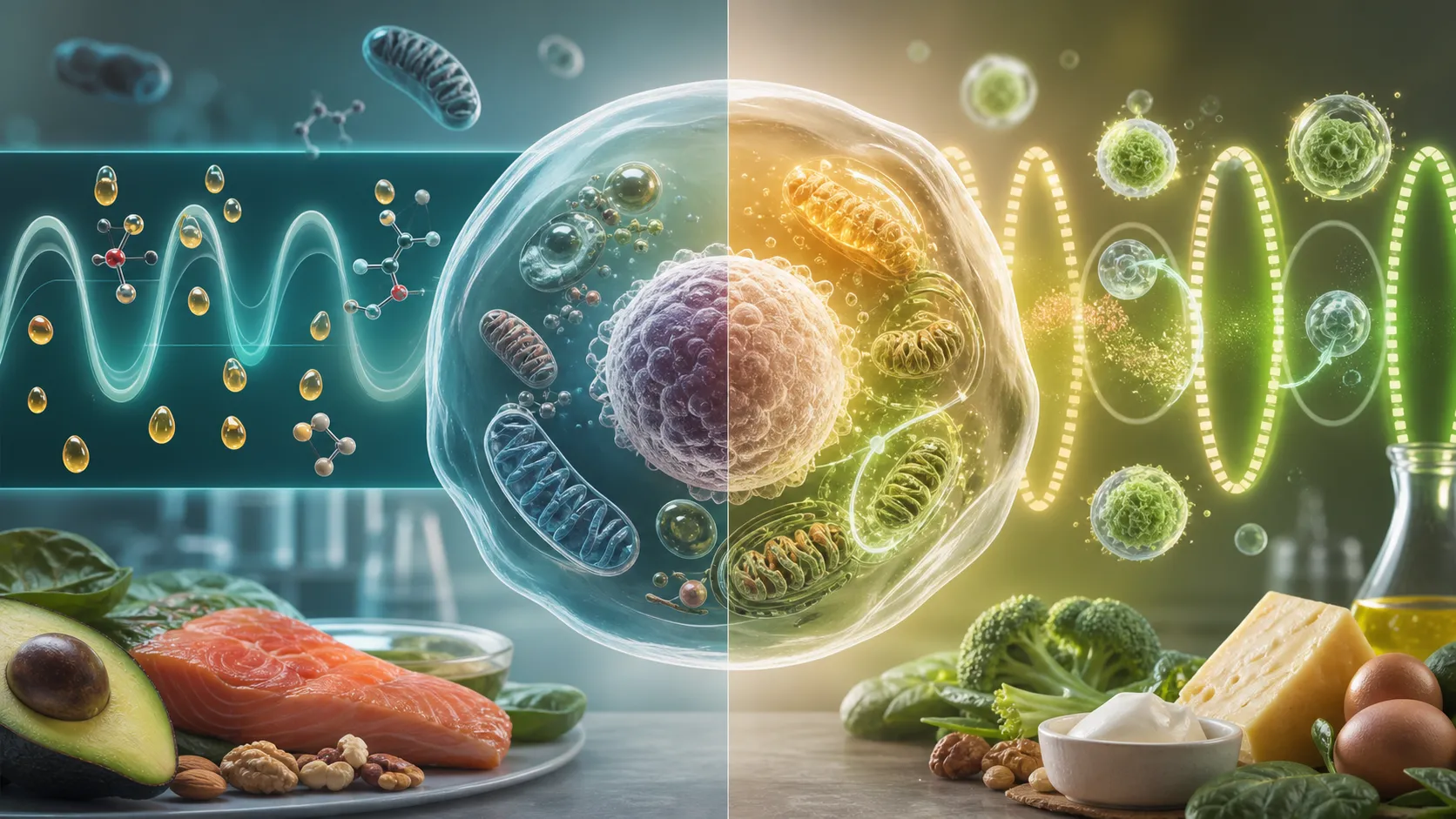
A study published in the journal Science Advances found that long-term continuous ketogenic diets cause p53-dependent cellular senescence in multiple organs, particularly the heart and kidneys, in animal models. Crucially, the same study found that intermittent ketogenic diets, with planned breaks, did not produce the same senescence burden. Senescent cells secrete inflammatory signals (the SASP) that accelerate tissue aging and raise the risk of age-related disease. The mechanism identified by UT Health San Antonio researchers involves AMPK activation, MDM2 inactivation, and p53 accumulation. The finding has significant implications for how long-term keto should be structured, particularly for adherents using the diet as a multi-year lifestyle rather than a short-term metabolic intervention.
What cellular senescence means and why it matters
Cellular senescence is a state in which cells permanently stop dividing but do not die. Senescent cells accumulate in tissues over time and secrete inflammatory signals known as the senescence-associated secretory phenotype (SASP). High levels of senescent cells in organs such as the heart and kidneys are associated with accelerated tissue aging, reduced organ function, and increased risk of age-related diseases. The Science Advances study from UT Health San Antonio found that continuous ketogenic diets increased senescent cell burden in these organs via a p53-dependent pathway involving AMPK activation and MDM2 inactivation.
What the study found in mice on continuous keto
Animals maintained on a continuous ketogenic diet for an extended period showed a significant accumulation of p21-positive senescent cells in cardiac and renal tissues. The researchers demonstrated that the mechanism involved AMPK activation, which inactivated MDM2 via caspase-2, leading to the accumulation of p53 and subsequent induction of cellular senescence. The effect was observed on two different ketogenic diet formulations, suggesting it is a general consequence of continuous ketosis rather than specific to one keto protocol. An important caveat: the study used diets with 90.5% fat calories — significantly above the 55 to 60% fat typical of standard ketogenic protocols. Whether findings from these extreme formulations extend to more moderate keto approaches is not yet established. These findings were widely reported in 2024, and are now being revisited in 2026 discussions as keto's long-term safety remains a key public health question.
Why intermittent keto avoids the problem
A critical finding of the Science Advances study was that intermittent ketogenic diet regimens, defined as keto cycles with planned dietary breaks, did not produce the same pro-inflammatory senescent cell accumulation. The researchers proposed that the periodic exit from ketosis may allow cellular cleanup mechanisms to clear accumulating senescent cells before they reach pathological levels. Additionally, the study showed that the senolytic compound ABT-263 could eliminate keto-induced senescent cells even under continuous keto, providing a potential pharmacological approach for long-term keto adherents. However, ABT-263 is not approved for human use as a dietary supplement and is currently investigational.
How relevant are these findings for humans?
The key limitation of this research is that it was conducted in mice. Human trials of long-term keto safety are still limited in duration, and cellular senescence accumulation has not been directly measured in long-term human keto followers. Researchers at UT Health San Antonio emphasised that the findings should not be interpreted as a reason to avoid keto entirely, but as a signal to avoid continuous long-term ketogenic dieting without breaks. Human metabolism differs from mouse metabolism in important ways, and the dose-response relationship for senescence induction at human-relevant keto durations is not yet established. On a more reassuring note, the study also found that when mice stopped the ketogenic diet, cellular aging markers decreased — suggesting that any accumulated senescence burden may be at least partially reversible with dietary changes.
A practical guide to cycling keto safely
Based on the available evidence, practitioners recommend against continuous keto without planned breaks for people using keto as a long-term lifestyle rather than a short-term intervention. A common cycling approach is to maintain ketosis for 4 to 6 weeks, then have a 1 to 2-week transition period with moderately increased carbohydrates before returning to keto. During breaks, the emphasis should be on whole-food carbohydrate sources rather than processed foods, to maintain metabolic health. People using keto for specific medical conditions such as epilepsy should only modify their protocol under the supervision of a neurologist or specialist dietitian, as the therapeutic effects of keto for epilepsy depend on consistent ketosis.
FAQ
Does long-term keto cause cellular aging?
An animal study published in Science Advances found that continuous long-term ketogenic diets increased senescent cell accumulation in the heart and kidneys of mice. Intermittent keto, with planned dietary breaks, did not produce the same effect. Whether this translates directly to humans is not yet established, but the finding is a meaningful signal that continuous keto may warrant caution for multi-year adherents.
What is keto cycling and is it safer than continuous keto?
Keto cycling refers to alternating between ketogenic and non-ketogenic eating periods. Based on the Science Advances research, intermittent ketogenic protocols did not produce the cellular senescence observed with continuous keto. Keto cycling may offer a way to maintain many of the metabolic benefits of keto while reducing potential long-term risks from sustained ketosis.
Should I stop keto because of the senescence research?
Not necessarily. The senescence research was conducted in mice, and the direct relevance to humans on typical keto durations is uncertain. The more actionable takeaway is to avoid extreme long-term continuous keto without any dietary breaks. For most people using keto for weight management or metabolic health, a cycling approach is both practically sustainable and consistent with reducing theoretical long-term risks.