Keto Improves Beta Cell Function in Type 2 Diabetes: 2026 Findings
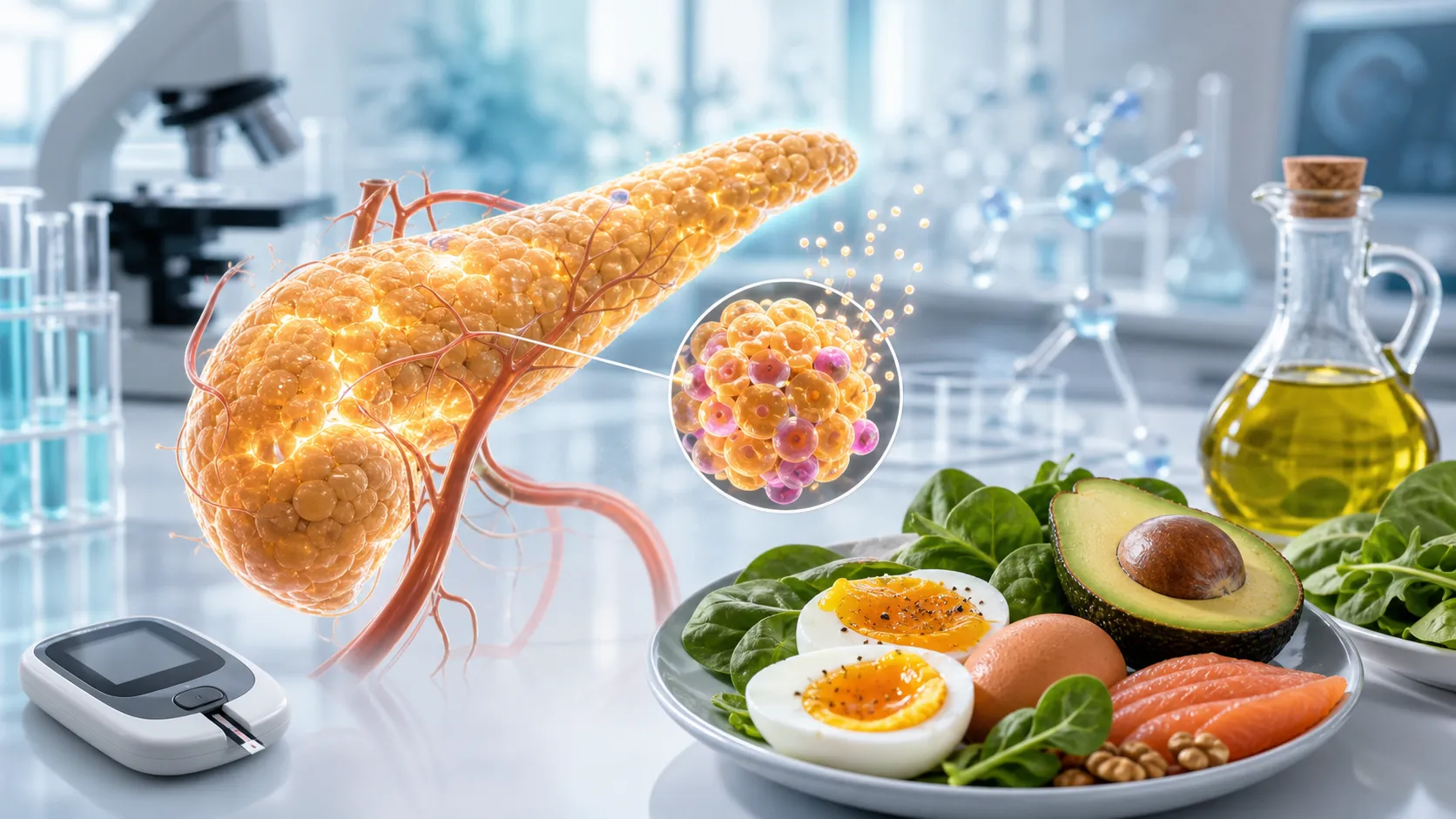
A study published in the Journal of the Endocrine Society in 2026 found that three months on a ketogenic diet significantly improved beta cell function in 51 adults with early type 2 diabetes, more so than a low-fat diet comparison group. The ketogenic diet produced a 56% greater reduction in the fasting proinsulin-to-C-peptide ratio and a 49% greater reduction after a glucose challenge compared to the low-fat group. Crucially, both diets were prescribed as weight-maintaining, suggesting that carbohydrate restriction itself, not weight loss, is the primary driver of pancreatic recovery. The findings add mechanistic depth to existing evidence that keto can help reverse or improve type 2 diabetes, and reframe diabetes remission as a question of beta cell rest rather than calorie deficit alone.
What beta cells do and why they matter in type 2 diabetes
Beta cells are the insulin-producing cells of the pancreas. In type 2 diabetes, beta cells become progressively impaired — initially they work overtime to overcome insulin resistance, leading to pancreatic stress and elevated proinsulin (the precursor to insulin). Over time, this chronic overstimulation damages beta cells, reducing their capacity to secrete sufficient insulin. Measuring the proinsulin-to-C-peptide ratio is a validated way to assess pancreatic stress: a lower ratio means the beta cells are working more efficiently and under less strain.
The 2026 Endocrine Society study
The study enrolled 51 adults with early type 2 diabetes (80% female, average age 54.5 years, baseline HbA1c below 8%) and randomized them to either a ketogenic diet or a low-fat diet for 12 weeks — both prescribed as weight-maintaining. Participants on the ketogenic diet showed a 56% greater reduction in the fasting proinsulin-to-C-peptide ratio and a 49% greater reduction post-glucose-challenge compared to the low-fat group, indicating significantly reduced pancreatic stress and improved beta cell function. Notably, changes in fasting glucose were similar between the two groups, and both groups lost only a modest amount of weight. The researchers concluded that diet composition, independent of weight loss, was the key driver of beta cell improvement.
Why keto may relieve pancreatic stress
When carbohydrate intake is dramatically reduced on a ketogenic diet, the demand on beta cells to produce insulin plummets. With less glucose entering the bloodstream, beta cells are no longer chronically overstimulated. This metabolic 'rest' may allow beta cells to recover some of their functional capacity. The 2026 study reinforces this mechanism: improvements were seen under a weight-maintaining protocol, demonstrating that carbohydrate restriction itself — not weight loss — is the primary driver of beta cell recovery. While weight loss can further improve insulin sensitivity, it is not a prerequisite for meaningful beta cell improvement on a ketogenic diet.
Beta cell recovery and diabetes reversal
The concept of beta cell recovery is central to the broader possibility of type 2 diabetes remission through dietary intervention. Recent years have seen multiple trials demonstrating that significant caloric restriction or low-carbohydrate diets can lead to diabetes remission — defined as achieving HbA1c below 6.5% without medication for at least three months. The 2026 Endocrine Society findings provide mechanistic evidence that improved beta cell function, not just reduced dietary glucose load, contributes to this outcome. This suggests that some degree of pancreatic recovery may be possible in early-to-moderate type 2 diabetes.
Clinical implications and cautions
People with type 2 diabetes who are considering a ketogenic diet should do so only under medical supervision. The diet can lower blood sugar significantly within days, which may necessitate rapid adjustments to diabetes medications — particularly insulin and sulfonylureas — to avoid hypoglycemia. Regular blood glucose monitoring is essential during the dietary transition. The 2026 findings are encouraging but based on a short-term study; long-term data on beta cell function under sustained ketosis in humans is not yet available.
FAQ
Can the keto diet restore beta cell function in type 2 diabetes?
The 2026 Endocrine Society study found that three months on a ketogenic diet produced a 56% greater reduction in the fasting proinsulin-to-C-peptide ratio compared to a low-fat diet — a significant indicator of improved beta cell function. Importantly, this was observed in a weight-maintaining study, confirming that carbohydrate restriction itself drives the benefit. Whether these improvements are sustained long-term requires further research.
What is the proinsulin-to-C-peptide ratio?
It is a biomarker of pancreatic beta cell stress and efficiency. When beta cells are under high demand, they release more proinsulin relative to processed insulin (measured via C-peptide). A lower ratio means the beta cells are working more efficiently and the pancreas is under less strain — a sign of improved metabolic health.
Is it safe to do keto if you have type 2 diabetes and take medication?
Only under medical supervision. The ketogenic diet can rapidly lower blood glucose, which may require prompt dose reductions in insulin, metformin, sulfonylureas, or other hypoglycemic agents to prevent dangerously low blood sugar. Always inform your doctor before starting a ketogenic diet if you have type 2 diabetes and are on any medication.