Instant Tea: Sugar with Tea Flavoring
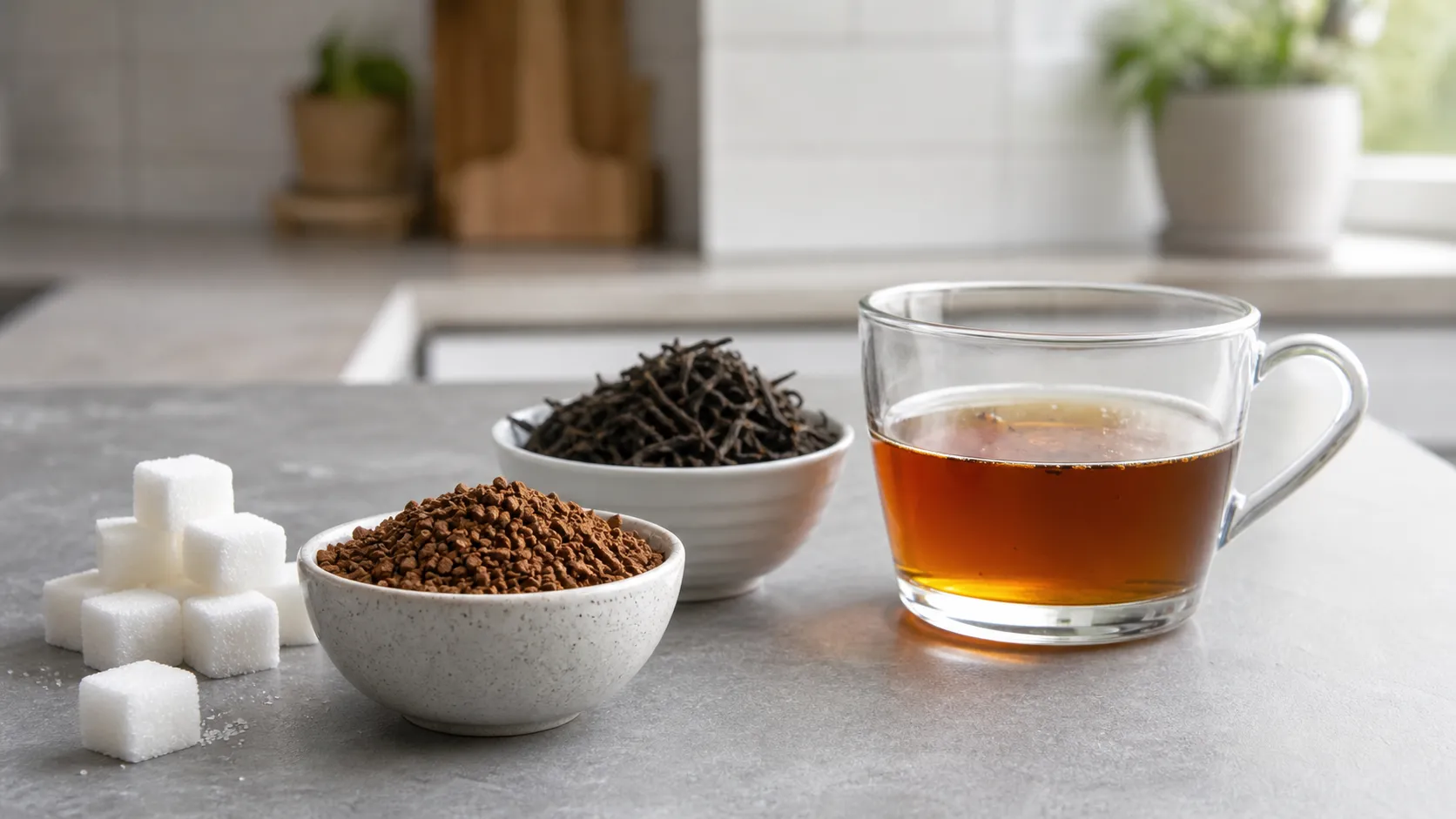
Instant tea granules are the exact opposite of real tea. They consist of 90 to 97 percent sugar or dextrose and contain only tiny amounts of actual tea extract, often less than 3 percent of the dry mass. Per prepared cup, they deliver 10 to 15 g of carbohydrates, which on a standard keto diet with a 20 to 30 g daily carb budget instantly uses up half or more. Even supposedly reduced-calorie versions often contain maltodextrin as a carrier, which raises blood sugar more strongly than table sugar (glycemic index 110 vs. 65 for sucrose). On keto, instant teas of any kind are unsuitable, and switching to real tea bags or loose leaves only takes 2 to 3 minutes longer.
Why is this not allowed on keto?
Keto warning: Instant tea is not allowed on keto. The granules consist of more than 90 percent sugar or dextrose. Per 100 g of powder, common products like Nestea Instant, Pickwick Instant or classics like Krüger Instant Tea contain up to 99 g of carbohydrates, of which 95 to 97 g is pure sugar. A prepared cup with 2 teaspoons of powder (about 12 to 15 g) therefore delivers 11 to 14 g of sugar, which is more than an entire bar of milk chocolate. Even supposedly reduced-calorie or sugar-free versions often contain maltodextrin as a carrier for the flavorings. Maltodextrin has a glycemic index of 95 to 110 and raises blood sugar even more strongly than table sugar (GI 65). The actual tea extract content in the granules is usually below 3 percent; the flavor comes mostly from added natural or nature-identical flavorings. Alternative: Reach for real tea bags or loose tea. Preparation takes only 2 to 3 minutes longer and delivers 0 g of carbohydrates. Brand recommendations for real tea: Yogi Tea, Pukka Herbs, Sonnentor, Lebensbaum or Twinings.
Keto-friendly alternatives
Replace instant tea completely with real tea bags or loose tea. Green tea (Sencha, Bancha) delivers gentle caffeine and EGCG, black tea (English Breakfast, Earl Grey) is the most intense pick-me-up, herbal teas (peppermint, chamomile, rooibos) are caffeine-free and versatile. For on the go and at the office, high-quality bags are especially well suited because they steep just as quickly as instant powder. A clever alternative for cold-tea lovers: brew a large liter of tea at home, let it cool, and take it along in a thermos. That is cheaper than instant tea and fully keto-compatible. For flavor variation, add a splash of lemon or lime juice, a dash of cream or coconut cream, some erythritol or a pinch of cinnamon. That way you replace any instant powder flavor without sugar.
Does organic quality help?
With instant tea, organic quality is irrelevant because the product is unsuitable for keto in any form. Even organic instant teas contain the high share of sugar, raw cane sugar or dextrose. Organic does not make the sugar keto-compatible. Organic syrups or organic concentrates are also problematic due to their sugar content. The only sensible organic recommendation is: instead, invest in high-quality organic tea (bags or loose leaves) from brands like Sonnentor, Lebensbaum, Pukka, Yogi Tea or Lebensbaum. That is not only keto-compatible but also cheaper per cup than most instant products. A pack of organic tea costs 3 to 5 euros and is enough for 20 to 40 cups, which is 10 to 25 cents per brew with zero carbohydrates.
Health & allergens
Instant tea can contain maltodextrin (often from corn or wheat), dextrose, artificial or nature-identical flavorings, acidity regulators (citric acid), antioxidants and colorings. With fructose malabsorption or diabetes, instant tea is especially problematic because the rapid blood sugar spike can have serious effects. With gluten intolerance, the maltodextrin (when made from wheat) can be a problem; the label provides information about the source. People with histamine intolerance sometimes react to the flavorings.
What to buy instead?
Instant tea is generally not recommended on keto, so the question of where to buy is more a question of where not to buy. Avoid well-known brands like Nestea Instant, Pickwick Instant, Krüger Cappuccino-Style or Foster Clarks. Even instant teas marketed in health food stores often contain significant amounts of sugar. Instead, buy real tea bags or loose tea. The price difference is minimal: a pack of organic tea costs 3 to 5 euros for 20 to 40 bags, which is 10 to 25 cents per cup, compared with 15 to 30 cents for instant powder. The quality, the flavor and the keto compatibility are incomparably better. Instead, invest in a good thermos (Stelton, Aladdin, Emsa) for on the go.
Nutrition values
| Nutrient | Per serving |
|---|---|
| Net carbohydrates | 10-15 g (per cup, prepared) |
| Fat | 0 g |
| Protein | 0 g |
| Calories | 40-60 kcal |
FAQ
How much sugar does instant tea really contain?
Instant tea granules consist of 90 to 97 percent sugar or dextrose. Per 100 g of powder, that means 90 to 97 g of carbohydrates. A prepared cup with 12 to 15 g of powder therefore delivers 11 to 14 g of sugar, more than two sugar cubes. That already exceeds half of a daily keto budget. Even supposedly light versions usually contain 50 to 70 percent sugar or maltodextrin.
Are sugar-free instant teas with sweeteners allowed on keto?
Conditionally yes, but be careful. Genuinely sugar-free instant teas with erythritol or stevia are rare and mostly available in health food stores. More commonly, maltodextrin is used as a carrier, which with a GI of 95 to 110 disrupts ketosis. Always check the ingredient list for maltodextrin, dextrose, glucose syrup or fructose. Real tea bags are the safer choice at zero carbohydrates.
Why is maltodextrin in instant tea problematic?
Maltodextrin is a starch breakdown product with an extremely high glycemic index of 95 to 110, higher than table sugar (GI 65). It causes blood sugar to rise quickly and thereby interrupts ketosis. Even when used as a carrier for flavorings, the amounts add up quickly across several cups to 5 to 10 g per day, which significantly disturbs ketosis.