Iced Tea: The Underrated Sugar Trap on Keto
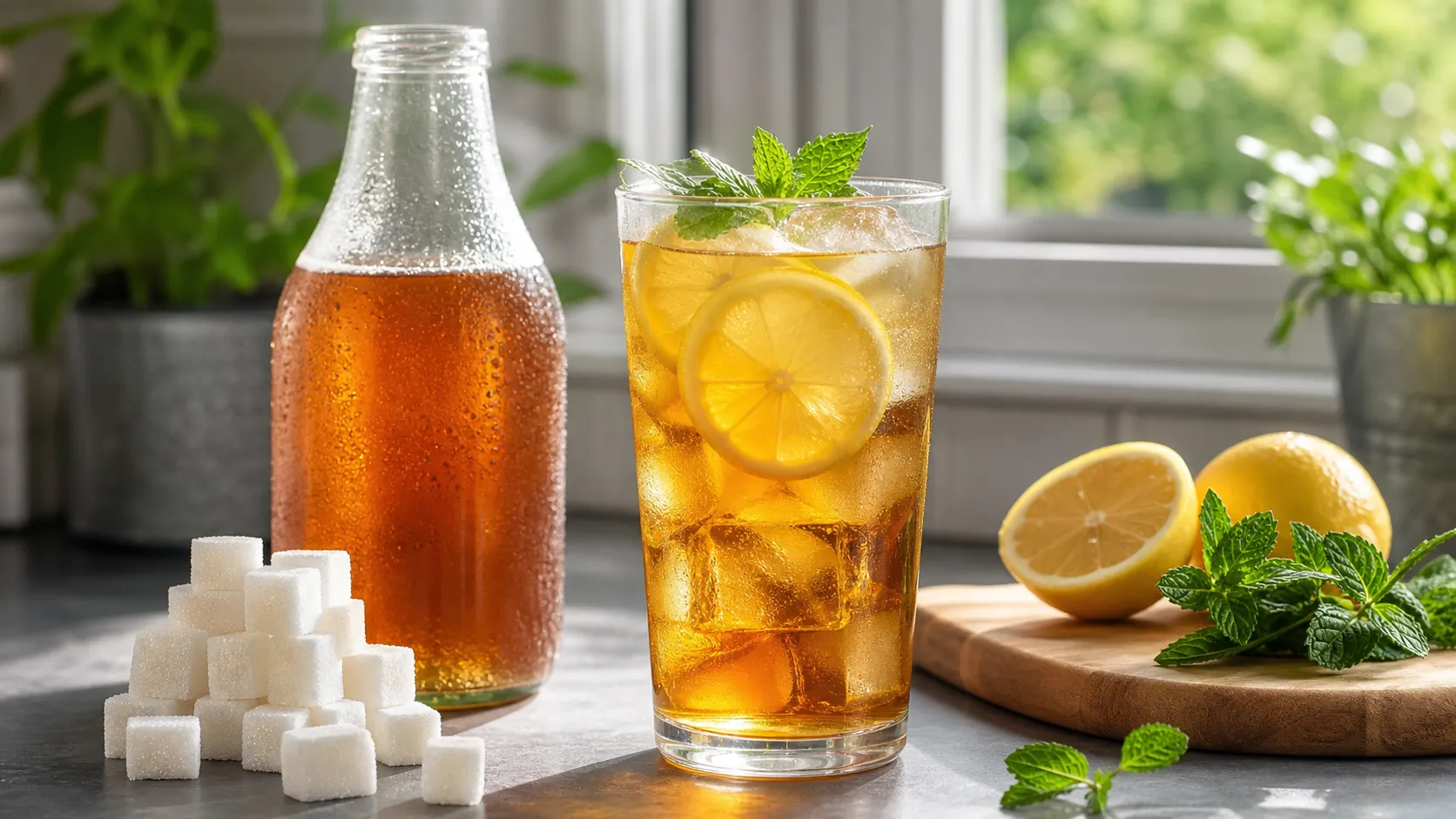
Store-bought iced tea is one of the biggest sugar traps for keto beginners. Marketed as a harmless refreshing drink, it actually contains 7 to 9 g of sugar per 100 ml, more than some sodas. A single 500 ml bottle delivers 35 to 45 g of sugar, easily exceeding the entire daily keto carb budget of 20 to 30 g. Even light versions often still contain 4 to 5 g of sugar per 100 ml. The good news: iced tea is extremely easy to make keto-friendly at home, costing just a few cents per liter and giving you full control over the flavor.
Why isn't this allowed on keto?
Keto warning: Store-bought iced tea is not allowed on keto. A 500 ml bottle of common brands such as Lipton Ice Tea, Pfanner, or Nestea delivers 35 to 45 g of sugar, the equivalent of 12 to 15 sugar cubes. That uses up the entire daily carb budget of a standard keto diet (20 to 30 g) in a single drink. Even versions labeled less sugar, light, or zero often still contain 4 to 5 g of sugar per 100 ml and become a problem if you drink more than one glass. Genuine sugar-free iced teas sweetened with stevia or erythritol are occasionally found in health food stores, but even there it pays to check the ingredient list, since maltodextrin used as a carrier strongly raises blood sugar. Alternative: Brew green tea, black tea, or hibiscus, chill the infusion in the fridge, and add fresh lemon juice, mint, and a little erythritol. Brand recommendations for homemade iced tea: Pukka or Yogi Tea bags as the base, plus erythritol or stevia (e.g. Sukrin, Born to Bio) as the sweetener.
Keto-friendly alternatives
Homemade keto iced tea is the perfect companion for summer barbecues, picnics, and as a refreshing lunchtime drink. Classic versions: black tea with lemon and erythritol (Lipton-style), green tea with mint and lime, pure peppermint tea over ice, or diluted hibiscus iced tea with rosemary. Combine cold-brewed hibiscus tea with peppermint and a splash of lime juice for a mojito-like flavor without alcohol. For a creamy version, try matcha iced tea with a splash of cream or coconut cream. With ginger slices and lemon, black-tea iced tea becomes a detox variant. Pro tip: brew the infusion hot, twice as strong as usual, then pour it over ice cubes, which prevents a watery taste. Stored in a carafe in the fridge, keto iced tea keeps for several days.
Does organic quality help?
For homemade keto iced tea, organic quality is worthwhile for the tea base to avoid pesticide residues. Conventional teas from India, Sri Lanka, or China often contain elevated pesticide levels that leach into the infusion during long cold brews. Reach for organic-certified brands such as Pukka, Yogi Tea, Lebensbaum, or Sonnentor. Organic is also worthwhile for the sweetener: erythritol from organic corn or stevia from certified sources is free of carriers like maltodextrin. Ready-made iced teas from the supermarket are not recommended anyway, and there organic quality plays no decisive role, since the sugar content is the main problem.
Health & allergens
The main danger with bottled iced tea isn't allergy, it's the hidden sugar content. Some iced teas also contain artificial flavors, preservatives such as ascorbic acid, antioxidants, and colorings. With artificially sweetened iced teas, people sensitive to aspartame may experience headaches or stomach discomfort. For diabetics, the sugar levels are a serious problem, since the rapid blood sugar spike causes long-term harm. Many iced teas are also problematic for people with fructose malabsorption.
What to buy instead
Ready-made iced teas from the supermarket are not suitable for keto, and that applies to virtually all common brands. Instead, make your own iced tea, which only takes 5 minutes of prep plus chilling time. There are a few genuine sugar-free iced teas available in health food stores or from specialized online retailers (e.g. Lipton Zero, Pfanner Ice Tea Zero), but always check the ingredient list for maltodextrin, dextrose, or glucose syrup, which are used as carriers for flavorings. To make your own, all you need is organic tea, a large pitcher, erythritol or stevia, and fresh ingredients like lemon, mint, or ginger. A family can easily save 20 to 30 euros per month compared to brand-name products while avoiding extra carbs.
Nutrition values
| Nutrient | Per serving |
|---|---|
| Net carbs | 7-9 g (per 100 ml, ready-to-drink) |
| Fat | 0 g |
| Protein | 0 g |
| Calories | 30-36 kcal |
FAQ
How much sugar is really in bottled iced tea?
Commercial iced tea contains 7 to 9 g of sugar per 100 ml according to manufacturer data. A 500 ml bottle therefore delivers 35 to 45 g of sugar, which is equivalent to 12 to 15 sugar cubes. Even light versions labeled less sugar often still contain 4 to 5 g per 100 ml. That exceeds the entire daily keto budget of 20 to 30 g of carbs.
Which tea is best for keto iced tea?
Black tea (e.g. Ceylon, Assam) gives you the classic Lipton-style iced tea. Green tea (Sencha, Bancha) provides EGCG and gentler caffeine. Hibiscus delivers the red color, but should be heavily diluted because of 7.6 g of carbs per 100 ml. Peppermint or rooibos are caffeine-free alternatives. For maximum freshness, brew fresh, double strength, and pour over ice cubes.
Which sweeteners can I use for keto iced tea?
Erythritol and stevia are the best options for keto iced tea, since they don't affect blood sugar and have a glycemic index of zero. Allulose and monk fruit are also suitable, but more expensive. Avoid aspartame, sucralose with carriers, honey, agave syrup, and coconut sugar, all of which can disrupt ketosis.