
Black Pepper: Sharp, Healthy, and Keto-Friendly
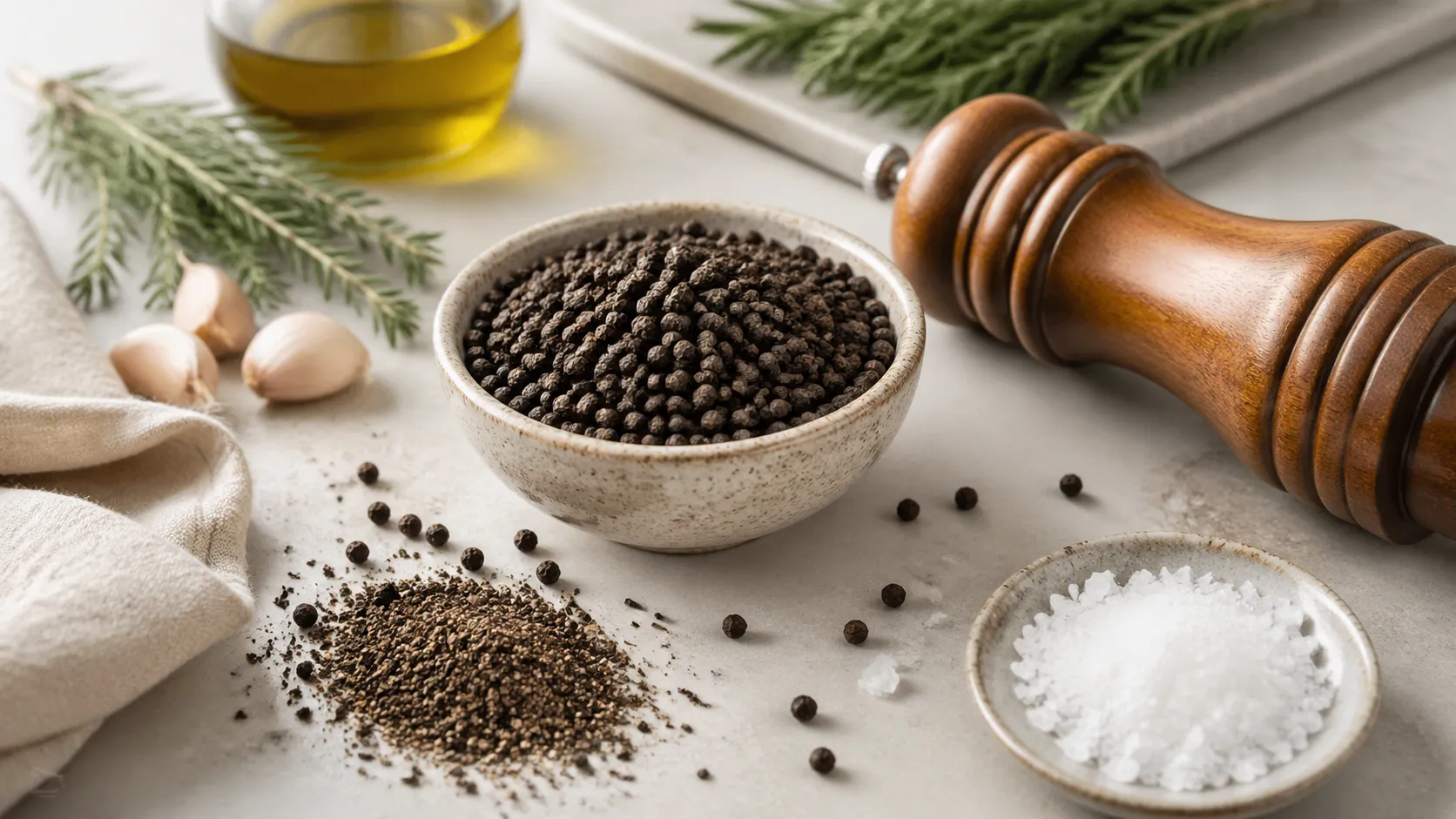
According to USDA FoodData Central, black pepper contains about 64 g of carbohydrates and 26 g of fiber per 100 g (USDA), but a typical pinch only weighs 0.1 to 0.3 g. That means a well-seasoned steak ends up with a negligible 0.1 g of net carbs from pepper. The active compound piperine (about 5 to 9 percent in black pepper) improves the bioavailability of other nutrients, for example curcumin by a factor of 20 (PubMed). Pepper also contains antioxidant compounds such as pinene and limonene, which may have anti-inflammatory effects.
Is It Recommended for Keto?
Black pepper is a basic spice that belongs in every keto kitchen. While it does provide about 64 g of carbohydrates and 26 g of fiber per 100 g (USDA FoodData Central), a typical pinch weighs only 0.1 to 0.3 g. That makes the net carbs per meal vanishingly small, around 0.1 to 0.2 g. The real value of pepper lies in its active compound piperine (5 to 9 percent content), which dramatically increases the bioavailability of other nutrients: curcumin from turmeric is absorbed 20 times better with pepper, making it the perfect partner for golden keto milk or curries. Grinding fresh is a must! Pre-ground pepper loses most of its essential oils, and therefore its aroma and heat, within weeks. A pepper mill with a ceramic grinder is the best investment for the keto kitchen.
What Goes Well With It?
Black pepper pairs with nearly every savory keto dish. Classic over steak as a pepper crust (Steak au Poivre), in eggs prepared any way, over salads with olive oil vinaigrette, on avocado toast (with keto bread), or in hearty pan dishes with mushrooms and bacon. A special combination is pepper with strawberries (in very small amounts, about 50 g) and balsamic vinegar: the heat brings out the natural sweetness without needing sugar. Pepper also unfolds its full aroma with salmon, in a pepper cream sauce with carrageenan-free cream, or over grilled halloumi. Different pepper varieties have distinct profiles: black peppercorns are sharp and earthy, white peppercorns milder and finer, green peppercorns fresh and herbaceous, pink peppercorns (fully ripe) sweet and aromatic. A colorful blend of all four varieties in the mill is an easy way to add more complexity to your food.
Pros & Cons of Organic
Organic pepper from controlled cultivation has clear advantages over conventional mass-produced varieties. Advantages: No irradiation, which conventional spices often receive for germ reduction (permitted in the EU but usually not required to be declared), and no residues of synthetic pesticides. Organic pepper is often harvested ripening on the stem and gently dried, which maximizes the content of essential oils and piperine. Brands like Sonnentor, Lebensbaum, or Herbaria offer organic pepper in various quality grades, often with origin labeling (Tellicherry, Malabar, Kampot). Disadvantages: Organic pepper costs about 30 to 80 percent more than conventional products (e.g., 4 to 8 euros per 50 g versus 2 to 4 euros). For daily use, however, this is a marginal premium for significantly better aroma. A high-quality organic Tellicherry pepper is one of the best investments for the keto kitchen and, stored whole, keeps for 2 to 3 years when properly stored.
Intolerances & Allergens
True pepper allergies are extremely rare and documented only in isolated cases in the scientific literature. Black pepper is naturally gluten-free, lactose-free, vegan, and contains no known major allergens. For very sensitive stomachs or acute gastric ulcers, large amounts of pepper can be irritating because piperine stimulates the stomach muscle and acid production. A moderate dose of 0.5 to 2 g per day (equivalent to 2 to 8 pinches) is, however, easily tolerated by healthy individuals. With irritable bowel syndrome or reflux issues, you should test individually whether pepper triggers symptoms. A rare form is contact irritation when handling large amounts of pepper powder, which leads to sneezing or eye irritation but is not a true allergy. Anyone who does not tolerate piperine can switch to milder white pepper or green pepper, both of which contain lower piperine concentrations.
Where to Buy Online or Locally
Whole peppercorns are always the better choice over pre-ground pepper. Recommended varieties and sources: Tellicherry pepper from India (Malabar Coast) is large, aromatic, and popular among connoisseurs, costing about 4 to 8 euros per 100 g in premium quality. Kampot pepper from Cambodia has a protected designation of origin (PGI) and is considered one of the best peppers in the world, although also expensive (10 to 20 euros per 50 g). Sarawak pepper from Malaysia is medium-aromatic and more affordable. In regular supermarkets you will find Fuchs, Ostmann, or store brands; for higher quality, turn to organic brands like Sonnentor, Lebensbaum, or specialized online spice retailers such as Pfefferprinz, Spice Bazaar, or Ankerkraut. Store whole peppercorns airtight, dark, and cool, and they will keep for at least 2 years. Ground pepper should be used within 3 to 6 months to minimize aroma loss.
Best Keto Recipes With It
- All hearty keto recipes (Hearty) - View recipe
Nutrition values
| Nutrient | Per 100 g |
|---|---|
| Net carbs | 64 g |
| Fat | 3.3 g |
| Protein | 10 g |
| Calories | 251 kcal |
FAQ
Do I need to count pepper toward my keto carbs?
Practically no. A generous portion of pepper (1 g, about 4 to 5 coarse grinds) contains only 0.38 g of net carbs, which is well below the measurement accuracy of most tracking apps. Only at extreme amounts of 10 g of pepper per day (which is hardly conceivable culinarily) would it add up to around 4 g of net carbs. At normal seasoning doses, pepper is keto-neutral.
Which pepper is best for keto?
In terms of flavor, Tellicherry or Kampot in organic quality; in terms of health, there is no relevant difference. More important than the variety is that you buy whole peppercorns and grind them fresh, since ground pepper quickly loses essential oils and piperine. Colorful pepper blends (black, white, green, pink) offer a special aroma for varied keto dishes.
Does the piperine in pepper help with weight loss?
Studies on piperine show a mild thermogenic effect and a possible enhancement of the absorption of curcumin or beta-carotene by a factor of 20. Direct effects on weight management at normal seasoning amounts, however, are small. The real value of pepper in a keto diet lies in its flavor, which makes sugar- and carb-rich alternatives unnecessary.