Avocado: The Number One Keto Fruit
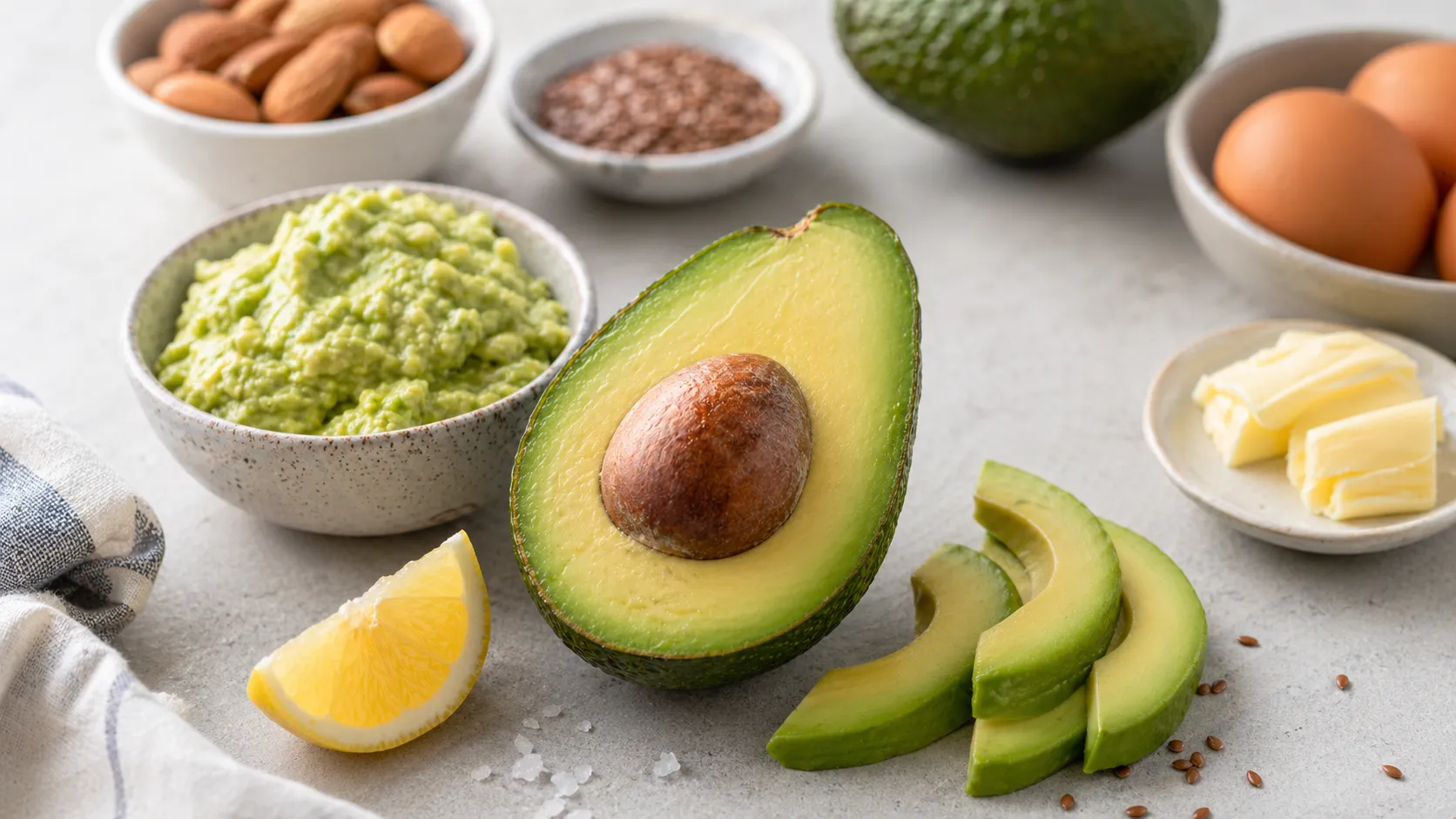
The avocado is the absolute poster child of the keto diet and is considered the ultimate superfood. Per 100 grams it delivers 15 grams of heart-healthy monounsaturated fats (mainly oleic acid) and just 1.8 grams of net carbs. On top of that, you get 485 milligrams of potassium per 100 grams, more than a banana. That potassium is a real game saver during the first few weeks of keto, since it counteracts the muscle cramps, fatigue and headaches of the dreaded keto flu. With around 7 grams of fiber per 100 grams, the avocado also supports digestion. A PubMed review (PMC3664913) shows positive effects on cholesterol levels, inflammation markers and satiety. One avocado a day is standard for many keto fans.
Is it recommended for keto?
The avocado is the uncrowned queen of keto foods and a daily must. With just 1.8 grams of net carbs per 100 grams, 15 grams of healthy fats and 485 milligrams of potassium, it is a perfect match for the ketogenic diet. A whole medium avocado (around 150 grams) provides only 2.7 grams of carbs, but about 730 milligrams of potassium, which supports your electrolyte balance. 🥑 The pit trick: Leave the pit in your guacamole or generously drizzle the cut surface with lemon juice to slow down browning. The pit alone does not magically prevent oxidation, but it does reduce the area exposed to air. Avocados ripen faster if you place them next to apples or bananas, since these release the ripening gas ethylene. Ripe but firm avocados can be paused in the fridge for several days without over-ripening.
What pairs well with it?
Avocado works anywhere, anytime. With eggs (classic avocado toast on almond flour bread, scrambled eggs with avocado slices, shakshuka with avocado cubes), with tuna or salmon (avocado tuna salad, salmon avocado bowl), with bacon (oven-baked avocado bacon boats) or as a sweet chocolate mousse substitute with cocoa, erythritol and vanilla. In smoothies it adds creaminess without sugar, blended with berries, spinach, almond milk and protein powder. In a salad with halloumi, feta cheese, arugula and olive oil it is a dream pairing. For sushi bowls and poke style it goes with salmon, soy sauce, avocado cubes and cauliflower rice. Even in soups, an avocado topping adds creaminess. Guacamole is probably the best-known use: avocado, lime juice, garlic clove, chopped cherry tomatoes and salt. About 1 gram of carbs per tablespoon of guacamole.
Pros & cons of organic
Organic and fair trade are particularly important with avocados. Pros: Conventional avocado farming is notorious for heavy pesticide use and massive water consumption (a conventional avocado needs around 320 liters of water). In Mexico, the avocado boom has led to deforestation and social conflict. Organic fair trade avocados from Spain, Italy or Israel often have a better environmental footprint because they mean less transport, fewer pesticides and fair working conditions. Cons: Organic avocados are often more expensive (around 50 percent premium) and harder to catch at the perfect ripeness. If you eat 2 to 3 avocados a week, you should at least pay attention to origin. Organic avocados available in Europe come from Spain (season from October to May), from Israel and occasionally from Italy. Produce from Mexico, Peru or South Africa has a significantly worse carbon footprint.
Intolerances & allergens
People with a latex allergy may show a cross-reaction to avocado, known as latex-fruit syndrome. Other fruits like banana, kiwi and chestnut are often affected as well. Symptoms range from itching in the mouth to more severe reactions. Anyone allergic to latex should test avocado cautiously. With severe histamine intolerance, avocado can be problematic because it contains biogenic amines. With irritable bowel syndrome, the high polyol content (sorbitol) can sometimes cause discomfort, especially in FODMAP-sensitive individuals. If you are sensitive, start with small amounts (about a quarter of an avocado) and test your tolerance. Most people, however, tolerate avocado without any issues and benefit from its healthy fats, potassium and fiber. A PubMed study (PMC3664913) also shows positive effects on HDL cholesterol and triglycerides.
Where to buy online or locally
Avocados are now available in every supermarket, discounter and organic store. Organic avocados from Europe (often Spain or Sicily during the October to May season) have a better environmental footprint than produce from South America or Mexico. When buying, check ripeness: a perfectly ripe avocado yields slightly under gentle pressure but is not mushy. Firm avocados can ripen at room temperature within 3 to 5 days, ideally next to apples or bananas, which release ethylene. Ripe avocados keep for about 5 days in the fridge. Brush cut halves with lemon juice and store them airtight; they will last 1 to 2 days. Frozen avocado cubes or frozen guacamole are a handy stockpile solution. Online, organic suppliers often offer complete cases of ripe organic avocados at fair prices.
Best keto recipes with it
- Breakfast waffles with avocado & salmon (breakfast) - See recipe
- Tuna avocado plate (lunch) - See recipe
Nutrition values
| Nutrient | Per 100 g |
|---|---|
| Net carbs | 1.8 g (net) |
| Fat | 15 g |
| Protein | 2 g |
| Calories | 160 kcal |
FAQ
How many avocados can I eat per day on keto?
Up to 2 medium avocados per day are no problem. One avocado delivers only 2 to 3 grams of net carbs, but around 30 grams of healthy fats and over 700 milligrams of potassium. If you are in the middle of the keto flu, you benefit especially from the potassium, which counteracts cramps, fatigue and headaches. The high calorie density (around 240 calories per avocado) should be factored into your daily total if weight loss is the goal.
Does avocado really help against the keto flu?
Yes, definitely. The keto flu is often caused by electrolyte deficiency, especially potassium, sodium and magnesium. A medium avocado provides around 730 milligrams of potassium, more than a banana. That helps with muscle cramps, weakness and headaches. Combined with a bit of salt (sodium) and a magnesium supplement, one avocado a day noticeably eases many keto flu symptoms. Also drink plenty of water (2 to 3 liters).
Aren't avocados too fatty?
No, on the contrary. Avocado fat is about 70 percent monounsaturated oleic acid, the same fatty acid as in olive oil. Studies (PMC3664913) show positive effects on HDL cholesterol, LDL particle size and triglycerides. On keto, high fat intake is explicitly desired because it serves as an energy source. If you want to lose weight, keep an eye on total calories, but in quality terms avocado fat is one of the healthiest there is.
Keto recipes with Avocado
20 recipes on KetoWizard use Avocado. These put the ingredient front and centre.
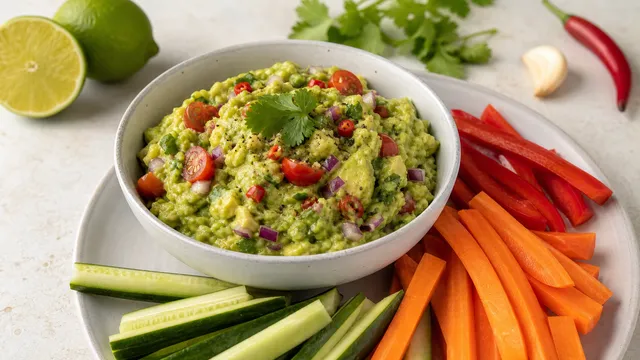
Keto Guacamole with Avocado and Lime
Creamy keto guacamole with avocado and lime: ready in approx. 10 minutes with no cooking, only approx. 3 g net carbs and 11 g fat per serving.
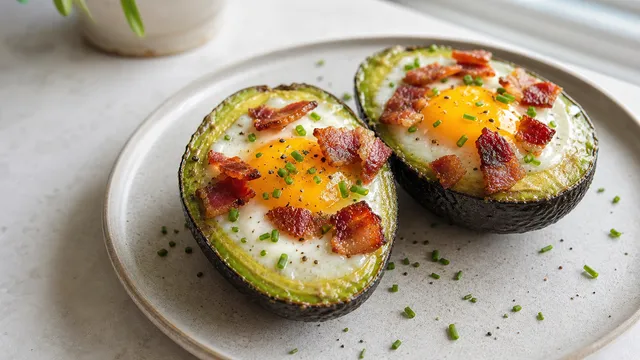
Keto Avocado with Baked Egg
Baked avocado with egg and bacon from the oven: 3 g net carbs, 36 g fat, 18 g protein. Pretty keto breakfast, ready in 20 minutes.
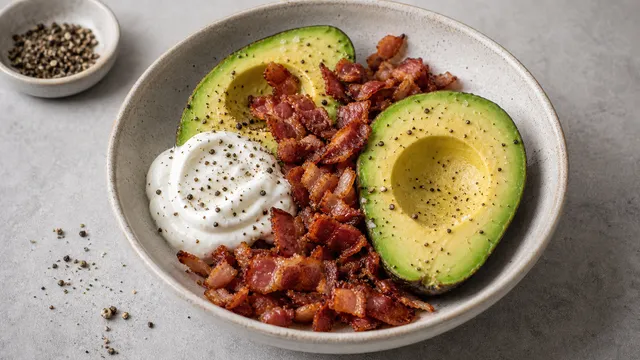
Keto Avocado Bacon Sour Cream Bowl - Savory Breakfast in 3 Minutes
Keto avocado bowl with crispy bacon and sour cream: 40g fat, only 3g net carbs, ready in 3 minutes. Savory and filling.
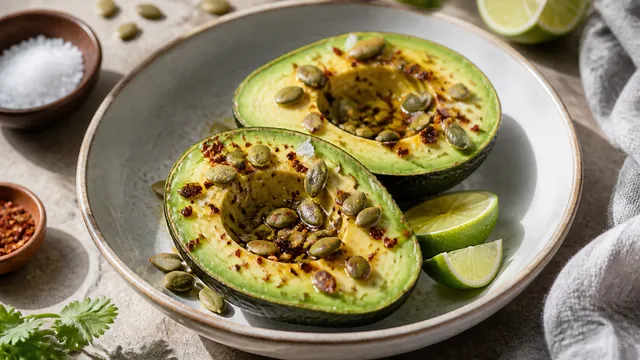
Keto Avocado Pumpkin Seed Bowl with Sea Salt and Lime
Keto avocado pumpkin seed bowl with lime and sea salt, approx. 3 g net carbs and 34 g fat per serving. Potassium from avocado, magnesium from pumpkin seeds, in 10 min.
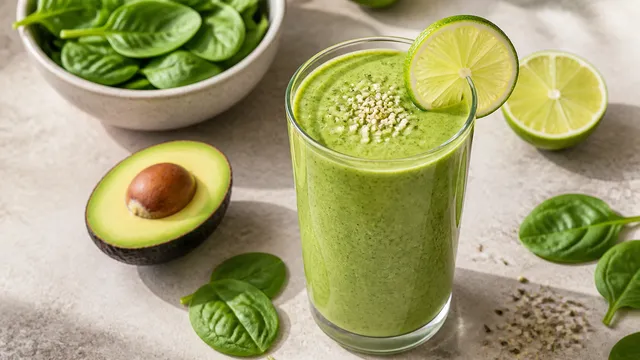
Keto Green Electrolyte Smoothie with Avocado and Spinach
Keto electrolyte smoothie with avocado, spinach and sea salt, approx. 4 g net carbs and 16 g fat per glass. Potassium, magnesium and sodium in 5 minutes.
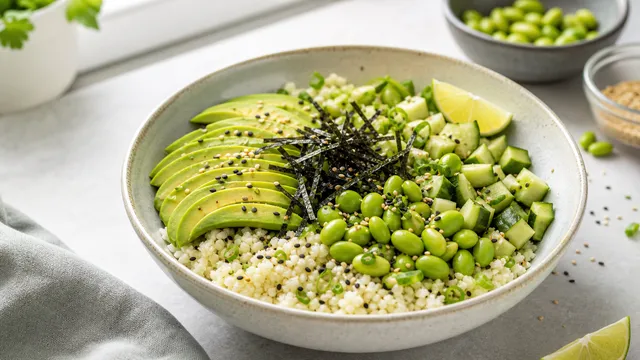
Keto Avocado Edamame Poke Bowl - Vegan & Fresh
Vegan keto poke bowl: avocado, edamame and cucumber with sesame-soy dressing over cauliflower rice - just 8 g net carbs, 40 g fat, no cooking required.
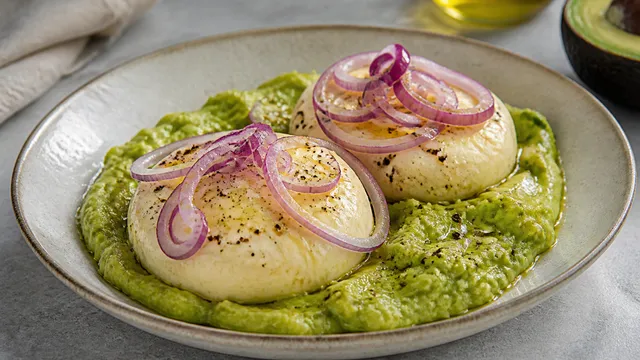
Handkase Cheese with Avocado Cream and Onions
Handkase with avocado cream, onions and lemon - approx. 5 g net carbs, 22 g fat per serving, ready in 10 minutes. A filling keto meal.
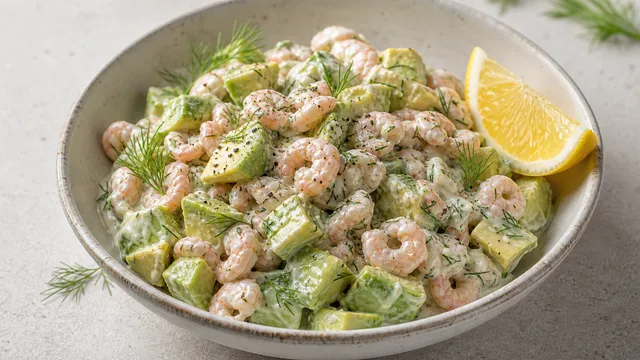
Keto Crab Salad with Avocado
Keto crab salad with North Sea brown shrimp, avocado, dill and sour cream: 3 g net carbs, 30 g fat, 26 g protein per serving. No cooking, ready in 10 minutes.
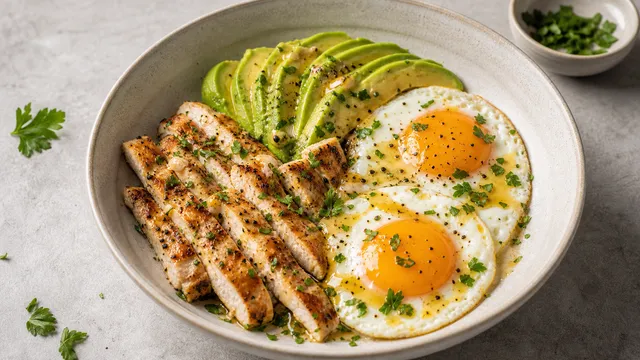
Keto Avocado Chicken Breakfast Bowl
Keto avocado chicken breakfast bowl: approx. 52 g protein, 4 g net carbs and 48 g fat - fast keto breakfast with pre-cooked chicken, ready in 13 min.
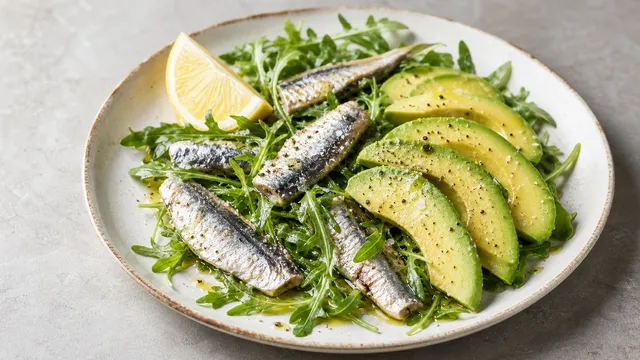
Keto Sardines Avocado Salad
Keto sardines avocado salad: sardines in olive oil with avocado, lemon and arugula. Just 3 g net carbs and 38 g fat per serving, ready in 8 minutes.
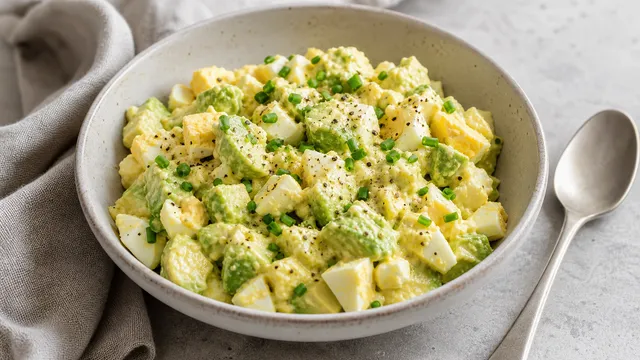
Keto Egg Avocado Salad - Quick 3-Minute Breakfast
Keto egg avocado salad for breakfast: only 2 g net carbs, 30 g fat and ready in 3 minutes - lightning fast with pre-cooked eggs.
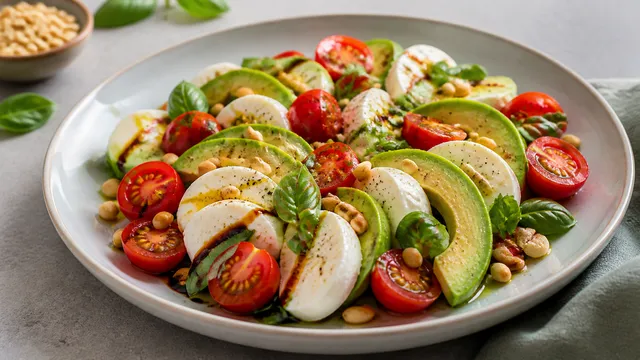
Keto Caprese Salad with Avocado and Pine Nuts
Fresh keto caprese salad with mozzarella, avocado and toasted pine nuts: ready in 15 minutes, approx. 6 g net carbs and 55 g fat per serving.